
Spotify Playlist Mix: The Artist's Guide to Getting Heard
Go beyond basic mixing. Learn how to create a strategic Spotify playlist mix and get your tracks into algorithmic and curator mixes to drive real growth.
Bad advice about spotify playlist mix treats Mix like a playback gimmick. Artists should treat it like a placement system. The crucial question is not whether a fan taps a feature. The fundamental question is whether your track keeps its spot when Spotify, a curator, or a listener starts optimizing for flow.
That changes the job.
A track that sounds strong on its own can still fail in a mix-driven environment. Intros that drag, awkward energy shifts, harsh tonal jumps, and inconsistent loudness all create friction inside playlists people want to keep running. If your song breaks momentum, it does not just lose one stream. It can lose future placement, because playlists are judged by retention, skip behavior, and how naturally one record sets up the next.
Spotify has been pushing listeners toward mix-based listening for years through personalized mixes and more active playlist playback tools. For artists, that matters because these systems train both listeners and curators to value compatibility, not just standalone appeal. Discovery increasingly happens inside context.
That is the strategic angle many articles miss. They explain how to turn Mix on. They do not explain why artists, managers, and playlist curators should care. Mixed playback puts more pressure on sequencing, track fit, and arrangement discipline. It also creates a cleaner test for promotion. If a playlist sends streams but your save rate, skip behavior, or repeat listening looks weak, the issue may be contextual mismatch, not lack of demand.
There is also a fraud angle. Bot playlists and low-quality promotional placements often produce the opposite of healthy mix behavior. The listening session feels random, genre logic is weak, adjacent artists do not make sense, and the audience data gets noisy fast. That makes spotify playlist mix useful as a screening concept, not just a listening feature. If your song cannot plausibly sit between the surrounding tracks for a real human listener, the placement is probably not helping your career.
Artists who use Mix well tend to do three things. They build owned playlists that hold attention. They shape releases so curators can slot them into coherent sequences. They reject playlist opportunities that inflate stream counts while damaging audience signals.
Introduction Beyond the Blend Button
Spotify playlist mix matters to artists for a simple reason. It exposes whether a song works in context, not just in isolation.
That changes how smart teams should evaluate playlist opportunities. A track can be well produced, well marketed, and still fail inside a session if it disrupts flow. Curators may not describe the problem in terms of tempo range, harmonic fit, or energy curve, but they hear it immediately. If your song breaks momentum, it gets skipped, moved, or removed.
For artists, the mix feature is useful because it turns playlisting into a cleaner professional test. Strong placement is no longer just about getting added to a list with the right genre tag. It is about whether your song can hold up between adjacent tracks and keep the listener in the session. That has direct implications for discovery, saves, repeat listening, and how your release performs once Spotify starts grouping it with similar music.
Spotify also leaves practical gaps that matter to working artists and managers. Mix is not available on every playlist, and public product guidance does not answer the questions promotion teams care about, such as which playlists are likely to support smooth transitions, how much sequence quality affects retention, or why some placements generate streams without producing useful audience signals. Those gaps are exactly why spotify playlist mix deserves strategic attention.
The clearest shift is this: playlist quality is becoming easier to hear.
Listeners can do more than press play. They can refine transitions and hear where a track feels natural versus forced. For artists, that raises the standard for promotion in a measurable way:
- Owned playlists carry more strategic value: They let you frame your catalog next to credible neighboring tracks and test whether a new single belongs in that lane.
- Mix-friendly songs are easier to place: Curators keep tracks that preserve flow. Songs with abrupt intros, awkward level jumps, or tonal clashes create work for the curator.
- Weak or artificial placements stand out faster: Bot-driven or low-quality playlists often sound incoherent. The surrounding tracks do not share a believable mood, audience, or sequencing logic.
That last point matters more than many artists realize. Bad playlist promotion does not just inflate the wrong streams. It can attach your song to irrelevant listening behavior, making it harder to judge whether a campaign reached real fans or random traffic.
Good playlist strategy starts with a stricter question than “Can this get streams?” Ask whether the placement creates a session a real person would keep listening to. If the answer is no, the playlist may still produce numbers, but it is unlikely to produce career traction.
The Three Mix Ecosystems Artists Must Master
Artists who treat Spotify mixes as a single bucket usually misread what is driving results. A save from a fan playlist, a placement inside a personalized mix, and an appearance in Blend can all produce streams, but they do not send the same career signal.
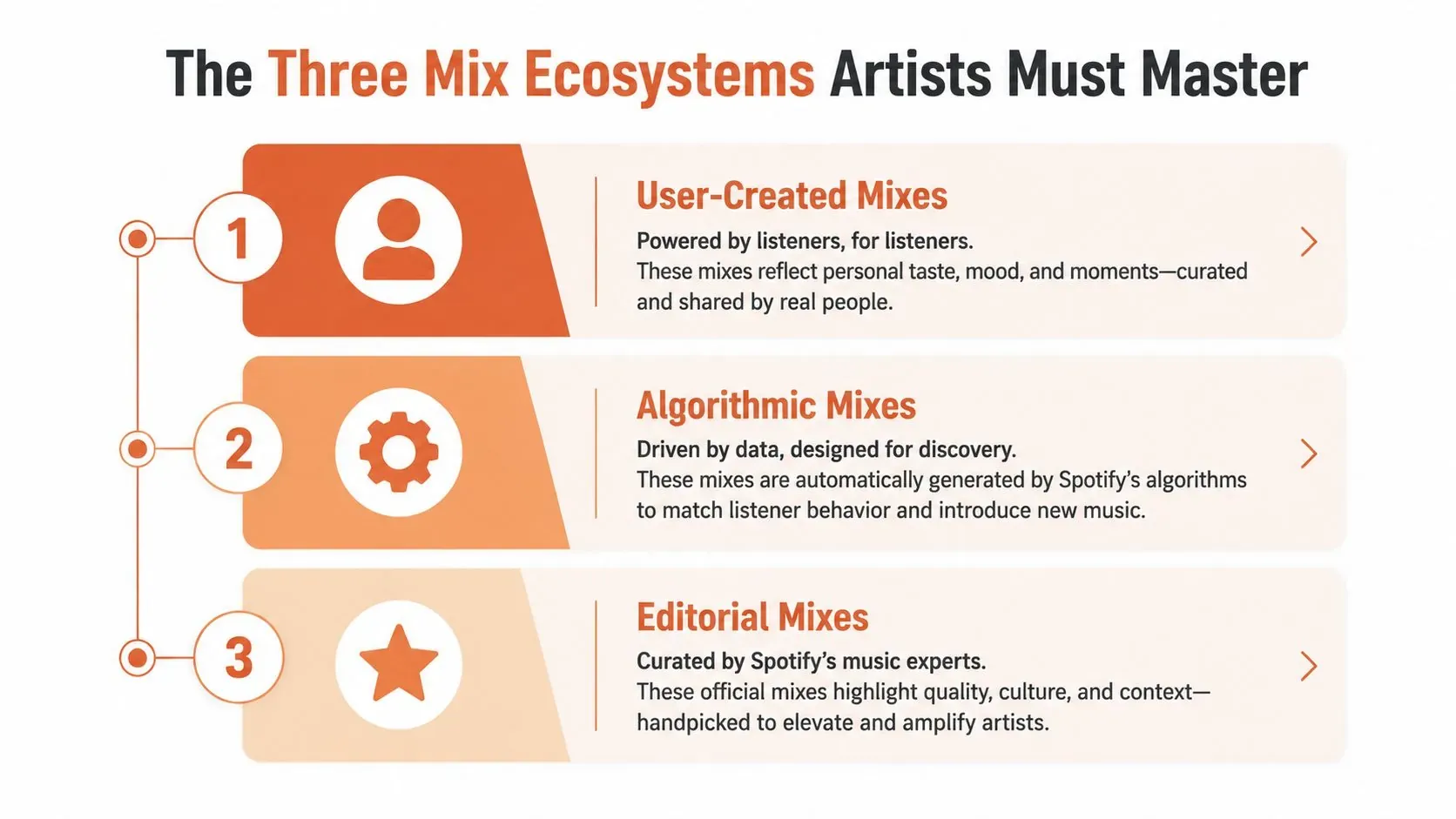
The practical job is to separate these ecosystems by who controls entry, what behavior keeps a track there, and what each one is useful for in promotion.
User-created mixes
This is the ecosystem artists can influence most directly. A real person decides whether your song improves the playlist. That person might be a fan building a lifting playlist, a micro-curator running a niche mood series, or an artist manager testing how a release sits next to reference tracks.
What gets rewarded here is not genre labeling. It is usefulness in sequence. Tracks with long dead air, harsh level jumps, or intros that derail momentum get skipped or removed even when the song itself is strong.
That makes user-created mixes a clean testing ground. If your song consistently survives in hand-built playlists with believable neighbors, you have evidence that the track fits an actual listening session. If it only lands in scattered playlists with no sonic logic, that usually points to weak targeting or low-quality promotion. Artists planning outreach should pair this with a tighter Spotify promotion strategy for artists, not a volume-first pitching approach.
Algorithmic mixes
Algorithmic mixes matter because they convert listener behavior into recurring recommendation opportunities. Spotify groups tracks around patterns of taste, context, and repeat listening. For artists, the strategic question is simple: does your music hold attention inside the kind of sessions you want to own?
This ecosystem rewards contextual fit over one-off exposure. A track that gets added, skipped quickly, or heard from low-intent traffic can still generate streams, but it gives weaker signals than a track that keeps showing up in relevant sessions and holds listeners there.
That distinction matters for campaign evaluation. If a release gets a short spike from questionable playlists, the stream count may rise while recommendation quality gets worse. If the release gains traction through real listeners who replay similar artists, save the song, and return to the same mood lane, Spotify has better evidence about where the track belongs.
Collaborative Blends
Blend works differently because it sits between social sharing and recommendation systems. Your track can appear because it overlaps two listeners’ tastes well enough to belong in the same session.
For artists, that makes Blend especially useful for crossover music. Songs that sit between indie and electronic, rap and alternative, or ambient and singer-songwriter can perform well here because they connect adjacent audiences without sounding out of place. A narrowly optimized track may dominate one pocket of listeners. A bridge track can travel farther.
This is also one of the better sanity checks against fake momentum. Bot traffic does not create believable shared taste patterns. Real fans do.
How to act in each ecosystem
The operating differences are straightforward:
| Ecosystem | Who controls entry | What gets rewarded | Artist move |
|---|---|---|---|
| User-created mixes | Curator or listener | Sequence fit, replay value, believable neighbors | Pitch selectively and test your own tracks in real listening contexts |
| Algorithmic mixes | Spotify systems | Consistent listener behavior and session relevance | Focus on qualified traffic, saves, and repeat listening instead of raw stream spikes |
| Collaborative Blends | Shared listener taste | Cross-audience compatibility | Position songs that connect nearby scenes, moods, or fan groups |
The mistake is treating every mix placement as equally useful. They are not. User mixes help validate fit. Algorithmic mixes shape discovery at scale. Blends reveal whether your song can travel between audiences. Artists who separate those jobs make better promotion decisions and spot bad traffic faster.
Building Your Own High-Impact Playlist Mix
A playlist mix is not fan service. For artists, it is positioning.
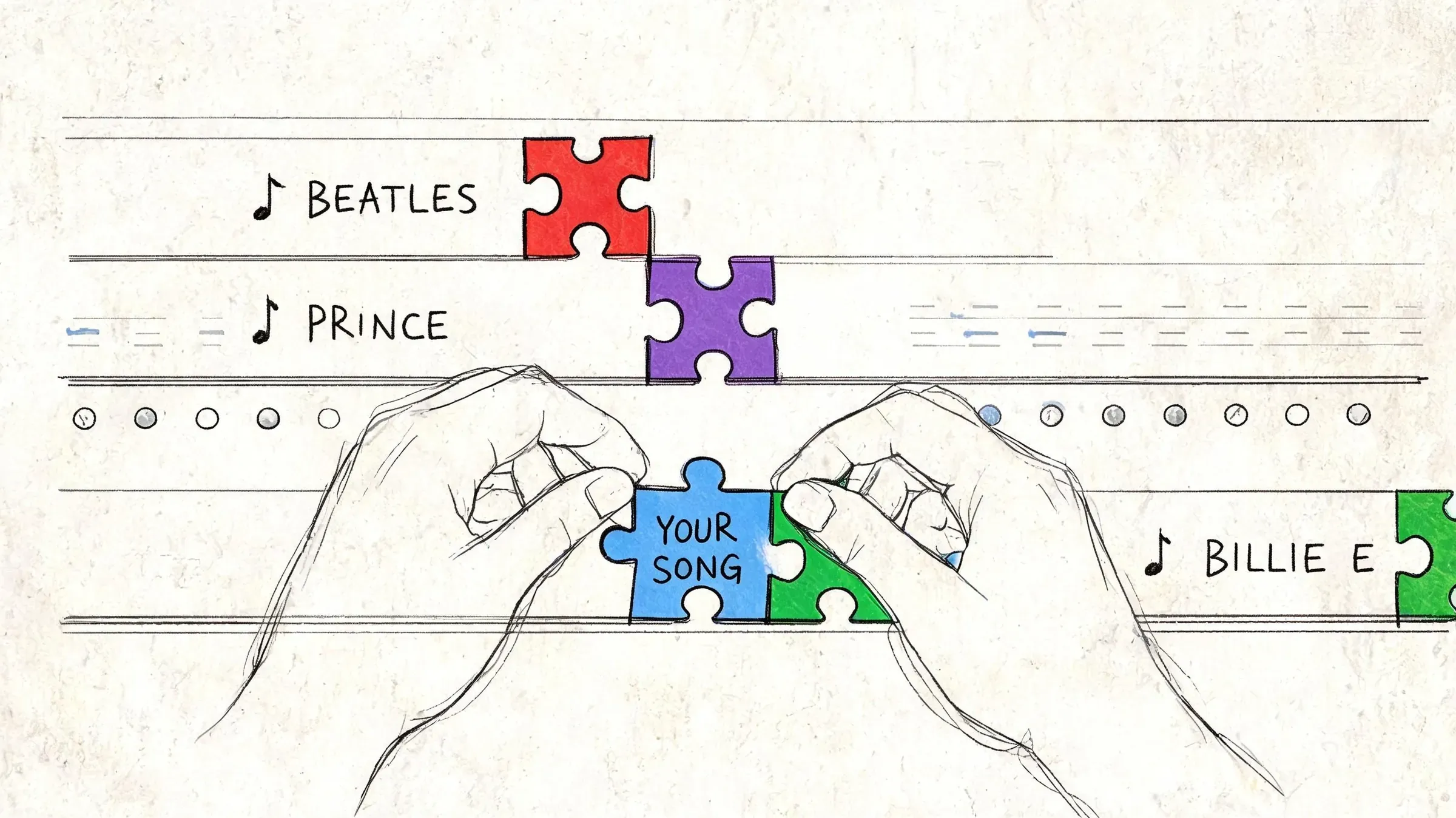
Used well, a self-built mix answers three questions fast. Where does this song belong. Which artists does it sit beside without friction. Would a real listener keep listening after your track appears. Those answers matter for outreach, release planning, and bot avoidance because believable context is harder to fake than a stream count.
Spotify gives creators enough mixing control to make that context visible. You can apply auto transitions, inspect BPM and song key, reorder tracks for better compatibility, and adjust the transition points. That is plenty for artist promotion. The goal is not to show DJ skill. The goal is to make your song feel native inside a real listening session.
Start with one commercial job
Every strong playlist mix needs a single job. If the job is vague, the playlist usually underperforms with both fans and industry contacts.
Choose one:
- Release positioning: Place a new single next to current reference tracks that define its lane.
- Audience conversion: Build a playlist for listeners who already like adjacent artists and need an easy first step into your catalog.
- Creator proof: Show curators, managers, or sync contacts that you understand your market and can sequence music with intent.
That choice changes the track list. A release-positioning playlist should stay narrow and current. An audience-conversion playlist can be a little broader if the listening mood stays consistent. A creator-proof playlist should show discipline. Twenty sharp tracks usually do more than fifty loose ones.
Sequence for retention, not ego
Artists often make the same mistake. They put their own song first.
That can work if the audience already knows you. It usually fails when the playlist is meant to introduce your music. Open with one or two tracks that establish trust, keep the energy and tempo coherent, then place your song where it benefits from the surrounding context.
A practical sequencing process looks like this:
- Pick a lane. Pull a tight set of songs that share mood, energy, and audience logic.
- Check transition fit. Use BPM and key to avoid obvious clashes between neighboring tracks.
- Build the first five songs carefully. Early skips kill confidence in the whole playlist.
- Place your track after trust is established. Usually that means the upper-middle section, not slot one.
- Trim hard. If a song weakens the sequence, remove it even if you love it.
Artist judgment matters here. Technical compatibility helps, but listener psychology decides whether the playlist gets replayed.
Build around believable neighbors
The strongest artist playlist is rarely a catalog dump. It is a curated argument for fit.
Believable neighbors make your music easier to assess. If your song sits comfortably between two known tracks without a jarring drop in energy, tone, or production quality, you have something useful for pitching. If it only works when surrounded by your own material, the playlist is telling you the market context is still unclear.
I use this as a promotion filter. Before pitching playlists or spending on discovery, I want to hear whether the song can hold its place in a sequence of real competitors. That is a better test than isolated enthusiasm from your team. For a broader campaign framework, this Spotify promotion guide for artists covers the surrounding release setup.
What usually breaks the mix
A few failure patterns show up constantly:
- Too many lanes at once: The playlist tries to cover workout, chill, and late-night listening in one sequence.
- Tag-based curation: Songs share a genre label but not an energy profile, vocal tone, or production texture.
- Overediting transitions: Effects start calling attention to weak sequencing decisions.
- Ignoring intros and outros: Long ambient openings, cold stops, or crowded vocal entrances create avoidable friction.
- Vanity stacking: Multiple songs from the same artist make the playlist feel like an ad instead of a listening product.
Each problem has a cost. Listeners skip faster. Curators trust the playlist less. Your own song gets framed in a weaker context.
A stronger template for artist-built mixes
| Playlist segment | Purpose | Selection logic |
|---|---|---|
| Opening third | Establish credibility and listening intent | Recognizable tracks with stable transitions and clear mood alignment |
| Middle section | Introduce your track in the right company | Place your song between its closest competitive neighbors |
| Final stretch | Expand taste without losing coherence | Add adjacent songs that widen the audience picture while preserving flow |
A high-impact playlist mix works as market proof. It shows that your song belongs in a specific listening environment, that you understand who the listener is, and that your promotion is grounded in real audience behavior rather than inflated numbers. That makes it more useful than a vanity playlist and more trustworthy than a campaign report with no context.
How to Make Your Music Mixable for Algorithms
Algorithms don’t need your song to be universally appealing. They need it to be placeable.
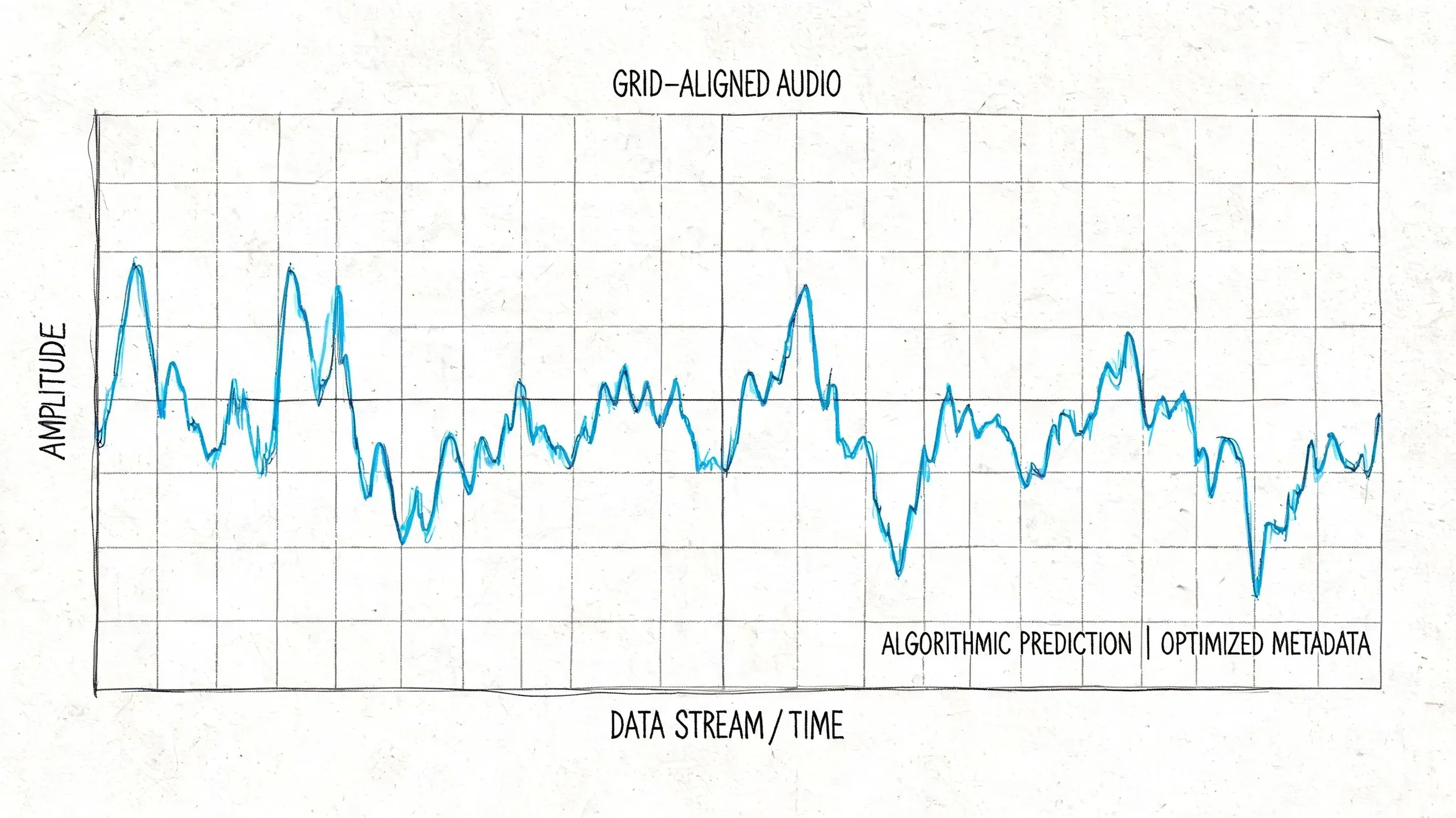
That makes mixability a production and metadata problem, not just a songwriting one. If your track sits naturally near comparable songs, Spotify and playlist curators can use it with more confidence. If it creates abrupt handoffs, your possible homes narrow fast.
The technical side of mixability
Spotify exposes enough in Mix mode to show what matters operationally. Tracks display BPM and Camelot key, which gives users enough information to make harmonic decisions without leaving the app, according to Lett Music’s guide to arranging Spotify playlists. The same commentary points to a practical rule of thumb: songs within roughly 10 BPM of each other tend to blend more cleanly, and adjacent Camelot relationships such as 2A with 1A, 3A, or 2B reduce clashes.
That doesn’t mean every song has to be dance music. It means unpredictability has a cost. If your release swerves too sharply in tempo or tonal center relative to its target lane, transition options get thinner.
What artists can control
You can’t control where every listener places your song. You can control whether the track is easy to place.
Focus on these inputs:
- Tempo discipline: Know the BPM range common to your lane and avoid accidental outlier status unless the outlier is the point.
- Harmonic awareness: If you’re releasing multiple songs, understand how their keys relate and which tracks can support playlist sequencing.
- Clean intros and outros: Curators and users need usable edges. Long dead air, chaotic pickups, and abrupt cuts create problems.
- Accurate positioning: Genre, mood, and similar-artist framing need to reflect what the song is.
Those choices help both humans and systems classify the record correctly.
Metadata is creative direction in spreadsheet form
Artists routinely underuse metadata because it feels administrative. It’s not. Metadata is instruction. It tells platforms and curators what neighborhood your song belongs in.
That becomes especially important when you’re researching adjacent playlist territory and recommendation fit. If you want a useful reference point for how songs get matched to playlist contexts, this article on Spotify playlist recommendations is worth reading alongside your release prep.
What doesn’t help
What doesn’t help is building a release plan around abstract “vibes” while ignoring sequence behavior. A track can be emotionally strong and still be hard to place. It can also be sonically polished and still fight every neighboring record because the transitions don’t work.
Mixability isn’t the whole game. Distinctiveness still matters. But distinctiveness travels farther when it’s packaged in a form that other songs can live next to.
Vet Playlist Opportunities and Avoid Fake Streams
A playlist that can’t deliver real listeners is worse than useless because it corrupts your read on what works.
The temptation is obvious. Someone offers placement, the playlist looks active, and the follower count seems large enough to justify the fee or the effort. That’s the wrong evaluation method. In spotify playlist mix terms, you need to vet both audience quality and playlist construction quality.
Third-party analysis tools have made the construction side easier to inspect. SongData.io says its Spotify Playlist BPM & Key Analyzer can inspect public playlists and surface BPM, key, Camelot key, and energy for mixing use, with energy scored on a 0 to 10 scale, and it recommends sorting by BPM for beat-matching and by key for harmonic mixing, according to SongData.io’s Spotify playlist analysis page. That kind of data is useful because a legitimate curator usually builds with some internal logic. Even when the playlist isn’t formally mixed, the track-to-track relationships tend to make sense.
What to check before you pitch
A healthy playlist usually shows coherence in more than one way. The tracks fit together, the curator’s choices look intentional, and the audience behavior doesn’t look synthetic.
Here’s a practical screening framework:
- Sequence logic: Does the playlist move in a believable way, or does it jump wildly between incompatible songs?
- Track compatibility: Are neighboring songs close enough in feel that a real listener would stay engaged?
- Curator behavior: Does the playlist appear maintained, or does it look abandoned except for random adds?
- Audience quality: Are the surrounding signs consistent with real listener interest, not purchased activity?
If you need a deeper framework for the fraud side specifically, this guide on how to spot fake Spotify streams covers the warning signs in more detail.
Why transition data helps fraud detection
Transition data won’t prove a playlist is clean, but it can expose nonsense. If a playlist claims to serve one mood or scene yet the sequencing is chaotic, that mismatch is useful evidence. Real curators may be imperfect, but they usually optimize for an actual listening outcome. Fake playlist operators often optimize for optics.
A second clue is inconsistency between branding and construction. A playlist named for a use case like workout, deep house, or sleep should show some musical logic that supports that use case. If the BPM spread, key movement, or energy contour feel random, the playlist may be assembled for surface appearance rather than listener retention.
This walkthrough is useful if you want to see a playlist review process in action.

Tools are useful only if you ask the right question
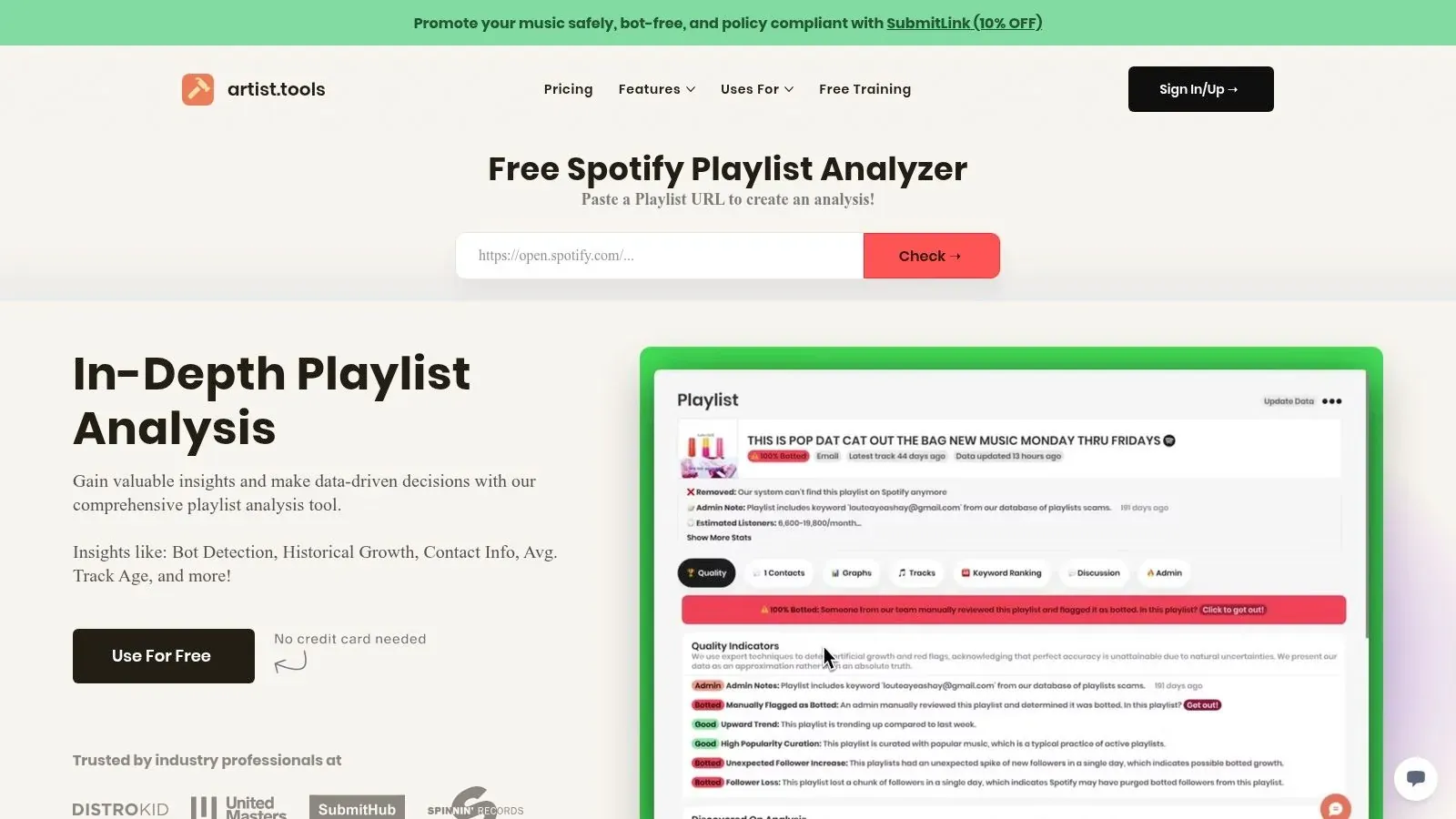
artist.tools offers a Playlist Analyzer that examines playlist integrity through factors including follower growth history, estimated listeners, curator data, historical adds and removes, search visibility, and bot detection signals. That’s useful because the right question isn’t “Can I get on this playlist?” The right question is “If I get on this playlist, will the resulting data help or hurt my campaign?”
Bad playlists don’t just waste budget. They train you on bad feedback.
The strongest habit is simple. Treat every placement as a data source. If the playlist is musically incoherent, operationally suspicious, or audience-light, skip it. A smaller playlist with real listeners and believable sequencing is usually the better asset.
Conclusion Turning Mixes into Career Momentum
Spotify playlist mix matters because it turns sequencing into strategy. Once Spotify shows users BPM, key, transition controls, and auto-mix options, placement stops being a binary add-or-not-add decision. It becomes a question of whether your song improves the listening session.
That changes how smart artists should work. Build your own playlists with technical discipline, not just taste. Release songs that are distinctive but easy to place next to believable neighbors. Pitch playlists that have real audience quality and actual sequencing logic. Ignore vanity placements that look large but produce weak signals.
The larger point is simple. Mixes aren’t just where listeners consume music. They’re where context gets assigned. Context shapes retention, recommendation fit, curator trust, and the way new listeners interpret your catalog.
Artists who treat spotify playlist mix as a professional tool gain an edge because they stop thinking like submitters and start thinking like programmers. That’s a better way to promote records. It’s also a better way to build a catalog that keeps traveling once the release week push is over.
artist.tools helps musicians evaluate Spotify opportunities with data on playlists, bots, growth history, search visibility, stream patterns, and curator research. If you’re building a release campaign around playlist strategy instead of guesswork, artist.tools is a practical place to start.