
Your Guide to Tracking a Song on Spotify
Learn how tracking a song on Spotify unlocks growth. This guide covers key metrics, artist tools, and playlist strategies to boost your music's reach.
Tracking a song isn’t just about watching a stream counter tick up anymore. In today’s music business, it’s about digging into the complete story behind your numbers—who’s listening, where they are, and how they found your music in the first place.
Why Tracking a Song Is a Modern Artist’s Superpower
Forget about vanity metrics. Real song tracking is a direct feedback loop from your global audience, turning raw data into a strategic roadmap for your career. Think of it less like staring at a spreadsheet and more like having a conversation with your fans, where every stream, save, and playlist add is telling you something important.
This move from just passively watching to actively strategizing is what separates the pros from the hobbyists. Once you really get a handle on the data, you can start answering the big questions that actually shape your growth.
From Data Points to Career Milestones
The information you can pull from platforms like Spotify for Artists is a goldmine of actionable insights. It gets you out of the guessing game and into making smart, informed decisions.
Here’s how tracking a song can lead to some real-world wins:
- Planning Your Next Tour: Noticing a sudden surge of listeners in Berlin or São Paulo? That’s a clear signal to add that city to your next tour schedule or, at the very least, run some targeted social media ads in that area.
- Dialing In Your Marketing Spend: Did a specific TikTok video blow up and cause a spike in streams? It’s time to double down on that style of content and put your promo budget where you know it’s working.
- Shaping Your Creative Vision: If a deep cut or B-side is getting an unusually high save rate, that’s your audience screaming that they love that sound. This kind of feedback can directly influence the vibe of your next single or even a whole album.
The core idea is simple: Listen to what the data is telling you. A high save rate is a powerful signal to Spotify’s algorithm, indicating genuine fan engagement that can lead to more algorithmic playlist placements.
Understanding the Modern Music Economy
The whole reason tracking is so vital is because of how dominant streaming has become. The global music streaming market hit a valuation of $46.7 billion in early 2025, with a massive user base of 667 million subscribers back in 2023. This insane scale means every single stream contributes to a huge pool of data just waiting to be analyzed.
This dashboard is a great visual of how listener data, playlist adds, and geographical info all come together to paint a picture.
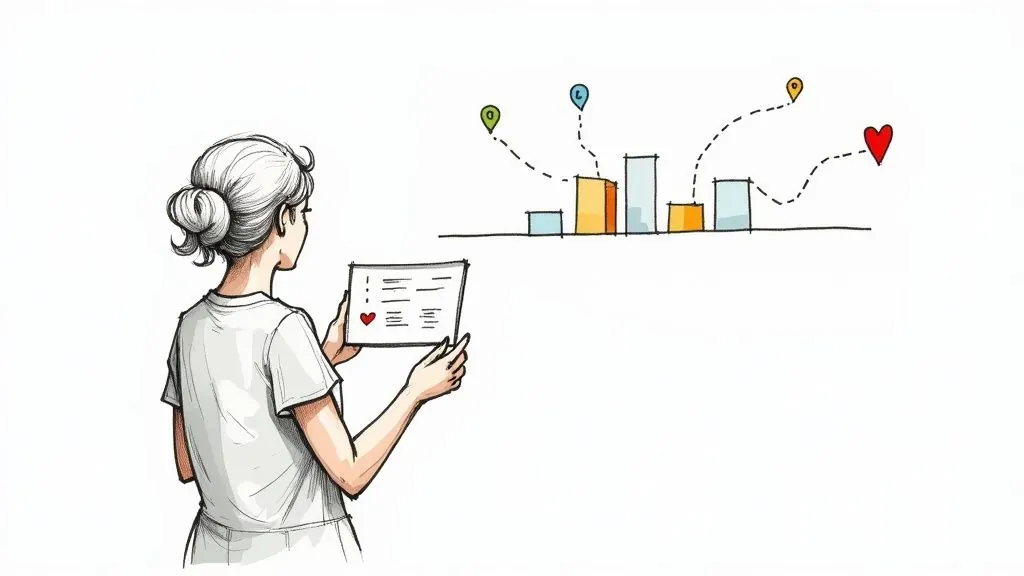
Every element on a screen like this represents a decision you can make—from targeting a new city for a promo run to figuring out which playlists are actually driving real, engaged listeners. Getting a deep understanding of these numbers is fundamental, and you can learn how to boost your music career with Spotify stream data insights in our detailed guide.
Getting Started with Spotify for Artists
Before you can really start digging into your song’s performance, you need to get access to the data hub. This all starts by claiming your profile on Spotify for Artists, the free platform that essentially acts as your mission control. This isn’t just a vanity step; it’s the move that takes you from being just another artist on the platform to an informed business owner calling the shots.
Once you’re verified, that dashboard becomes your command center for song analytics. One of the first things you should do is set up your team. You can easily grant different levels of access to managers, label contacts, or your bandmates. This keeps everyone in the loop without you having to pass around your personal login details—a simple but crucial step for smooth collaboration.
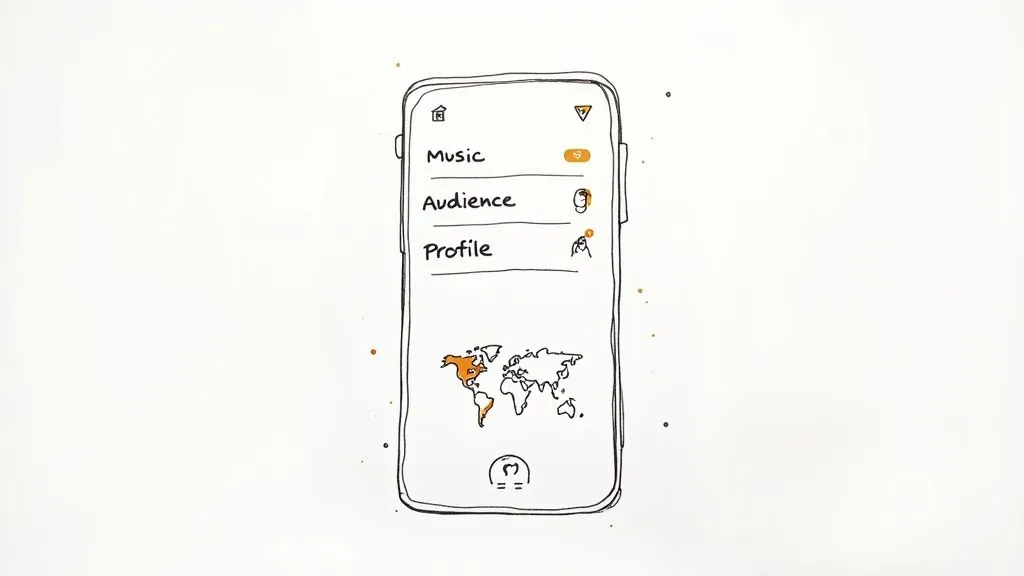
Navigating Your Core Data Tabs
When you first log in, you’ll probably gravitate toward three main tabs. Each one gives you a different piece of the puzzle, and knowing where to look from day one is key to tracking your music effectively.
- Music Tab: This is where you’ll live during a new release. It offers a song-by-song breakdown, including those crucial real-time stream counts for the first seven days. You can also dive into historical data for your entire catalog here.
- Audience Tab: This tab answers the question: who is listening? You’ll find valuable demographic info like age and gender, but the real gold is the location data. That world map feature is brilliant for spotting surprise fanbases popping up in cities you never expected.
- Profile Tab: While it’s less about raw numbers, this is where you control your brand. You’ll manage your artist pic, write your bio, and list your tour dates. A sharp, up-to-date profile absolutely impacts how listeners engage with you.
A key metric to watch early on is your listener-to-stream ratio. If one person streams your new single five times, it sends a much stronger signal to the algorithm than five different people streaming it just once and moving on.
Making Sense of Your First Data Points
Once you get comfortable clicking around, you’ll start connecting the dots. For instance, maybe your latest track has a modest stream count overall, but you notice a surprisingly high number of listeners in Stockholm. That’s not a random stat. It’s a direct signal that your music is hitting a nerve with a specific audience, giving you a clear opportunity for some targeted promotion.
This platform is your foundation, but you can build on it. By exploring the full range of Spotify for Artists essential tools, you can paint a much more complete picture of your song’s journey. From here, it’s all about identifying patterns and building a strategy based on what real listeners are actually doing—not just what you think they’re doing.
Reading the Story in Your Song’s Data
Once you get access to your analytics, the sheer volume of numbers can feel like a tidal wave. But don’t get overwhelmed. Hidden within those figures is a powerful story about your music and the people connecting with it. Real song tracking isn’t about staring at the total stream count; it’s about decoding the metrics that show you what listeners are actually doing.
Let’s dig deeper than the surface level. The most important data points are the ones that signal active engagement, not just passive listening. Metrics like saves, playlist adds, and the source of streams chart are where the real story unfolds. A high save rate, for example, is one of the strongest positive signals you can send to Spotify’s algorithms. It tells them your track is hitting home, encouraging them to show it to more people.
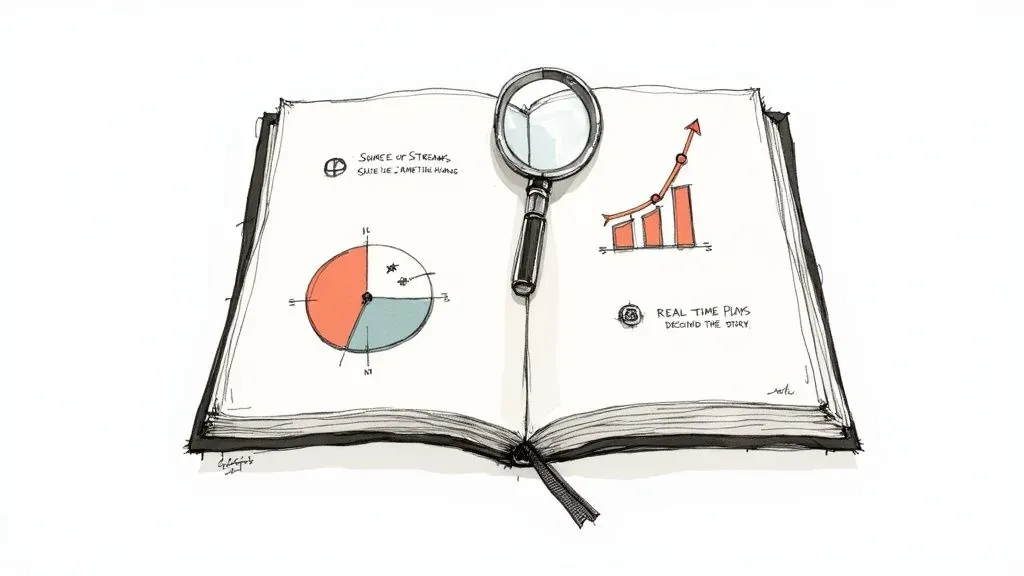
Unpacking Your Sources of Streams
Think of the “source of streams” chart as your diagnostic tool. It shows you exactly how people are finding your music, and each source tells a different part of the story, pointing you toward a specific strategy. It’s basically a roadmap showing which of your promo channels are actually working.
Here are a few real-world scenarios you’ll see:
- Listener’s Own Playlists and Library: This is the holy grail. It means people have saved your song or added it to their personal collections—a clear sign of genuine fandom and repeat listening. These are your true fans.
- Algorithmic Playlists (e.g., Release Radar, Discover Weekly): Seeing a healthy number of streams here is validation. It confirms your music is clicking with the algorithm and that your pre-release work and early engagement paid off.
- User-Generated Playlists: A spike from this source points to organic, word-of-mouth buzz. Listeners are finding your track on their own and adding it to their personal mixes, which is a powerful form of social proof you can then amplify.
This kind of large-scale data tracking is made possible by the incredible volume of daily streams. Just in 2023, Americans streamed around 4.1 trillion songs. Every single stream becomes a data point that powers these very charts. With over 600 million music streaming subscribers globally, this data doesn’t just track popularity—it actively shapes music culture.
Interpreting Engagement Signals
Beyond just the sources, you need to look at how different metrics relate to each other. A song with thousands of streams but a really low save rate might be stuck on playlists where people are hitting skip. On the flip side, a track with modest streams but a high save-to-stream ratio is a hidden gem that listeners are genuinely falling in love with.
Pay close attention to the save rate (saves divided by listeners). A rate above 10-15% is generally considered strong. This signals that your track has the legs for long-term, organic growth as more listeners discover and save it.
This level of analysis is how you build real momentum. Understanding these patterns lets you fine-tune your promotions, pitch to the right curators, and make smarter decisions about your next release. By spotting these streaming trends using Spotify analytics, you can turn passive data collection into an active strategy for career growth. Every number tells part of the story; your job is to listen.
Using Third-Party Tools for Deeper Insights
Look, Spotify for Artists is an absolute must-use. It’s the baseline. But if you’re serious about turning your music into a career, it only gives you a fraction of the story. To really get ahead, you have to look past the native dashboard and tap into specialized third-party platforms. This is where you go from just watching numbers to actively protecting and growing your music.
Imagine you just dropped a new track and you’re pushing it hard with a social media campaign. A Stream Tracker that records your counts every day shows you the impact of that campaign day by day. You can see whether a specific ad or influencer post moved your listeners, then double down on what’s working or kill what isn’t.
Vetting Opportunities and Protecting Your Music
One of the biggest minefields for any artist is playlist pitching. It’s frustrating enough to waste a pitch on a dead playlist, but getting added to a list packed with bots? That can be a career-killer. This is exactly where advanced tools become non-negotiable.
A Playlist Analyzer lets you peek under the hood of any playlist before you even think about submitting. You can see its entire follower history, spot the tell-tale signs of bot activity, and get a real feel for its actual, active listener count. This simple check can be the difference between a great placement and getting your music tangled up with fraudulent streams that could get your track pulled from Spotify for good.
artist.tools brings these tools into one place, from track analytics to playlist checks.
This isn’t just about more data; it’s about having a command center for your career, putting the most critical information right where you need it.
From Raw Streams to Financial Forecasting
Beyond just keeping you safe, these tools help you translate abstract data into a real business plan. Tracking a song isn’t just about celebrating stream counts; it’s about knowing what those streams are actually worth and how they feed your bottom line.
This is where a Royalties Calculator is so powerful. By plugging in your stream numbers, you can get a solid forecast of your potential income. The conversation shifts from “my song is getting popular” to “my song is on track to generate X dollars this quarter.” That kind of financial clarity is what allows you to reinvest in your career—whether that’s funding a music video, planning a small tour, or finally hiring a publicist.
The single biggest threat to an artist’s career on Spotify today is fraudulent stream activity. Using a Bot Detection tool isn’t just a good idea; it’s essential insurance. These features scan your profile for sketchy patterns and help you report them, protecting your music from being flagged or, even worse, taken down.
Ultimately, bringing a dedicated artist analytics platform into your workflow is about making smarter, more proactive decisions. It helps you find legitimate growth opportunities, dodge career-ending mistakes, and build something sustainable based on clear, comprehensive data.
Spotify for Artists vs. Advanced Artist Tools
Spotify for Artists gives you the official, foundational data directly from the source. It’s crucial, but it has its limits. Third-party tools are built to fill the gaps, offering specialized features for protection, deep analysis, and outreach that you just can’t get from the native platform.
Here’s a quick breakdown of how they stack up:
| Feature | Spotify for Artists | Advanced Tools (e.g., artist.tools) |
|---|---|---|
| Stream Data | 24-hour delay, basic trends | Real-time stream tracking, historical data |
| Playlist Analysis | Shows playlists you’re on | Deep analysis of any playlist, follower history, listener data |
| Bot Detection | No dedicated public feature | Sophisticated algorithms to detect fraudulent activity |
| Royalty Estimates | No feature available | Detailed royalty calculators based on location and streams |
| Market Research | Limited to your own audience | Analyze any artist, playlist, or keyword on Spotify |
| Curator Outreach | No contact information | Provides public contact info for thousands of curators |
In short, Spotify for Artists tells you what has happened. Advanced tools help you understand why it happened and give you the power to influence what happens next. Using both together gives you a complete, 360-degree view of your music’s performance and potential.
Turning Your Data into Real-World Wins

Collecting data is one thing, but the real magic happens when you translate those numbers into actual career growth. Every stream, save, and playlist add tells a story. Learning to read that story lets you make strategic moves that get results.
Think of it this way: what if your data shows a song is blowing up in Mexico City? That’s not just a cool fact—it’s a massive opportunity. Now you have a reason to run targeted ads in that specific region, reach out to a local artist for a collab, or make it a priority stop on your next tour. It’s about turning analytics into action.
This process is really about moving from basic analysis to smart forecasting.
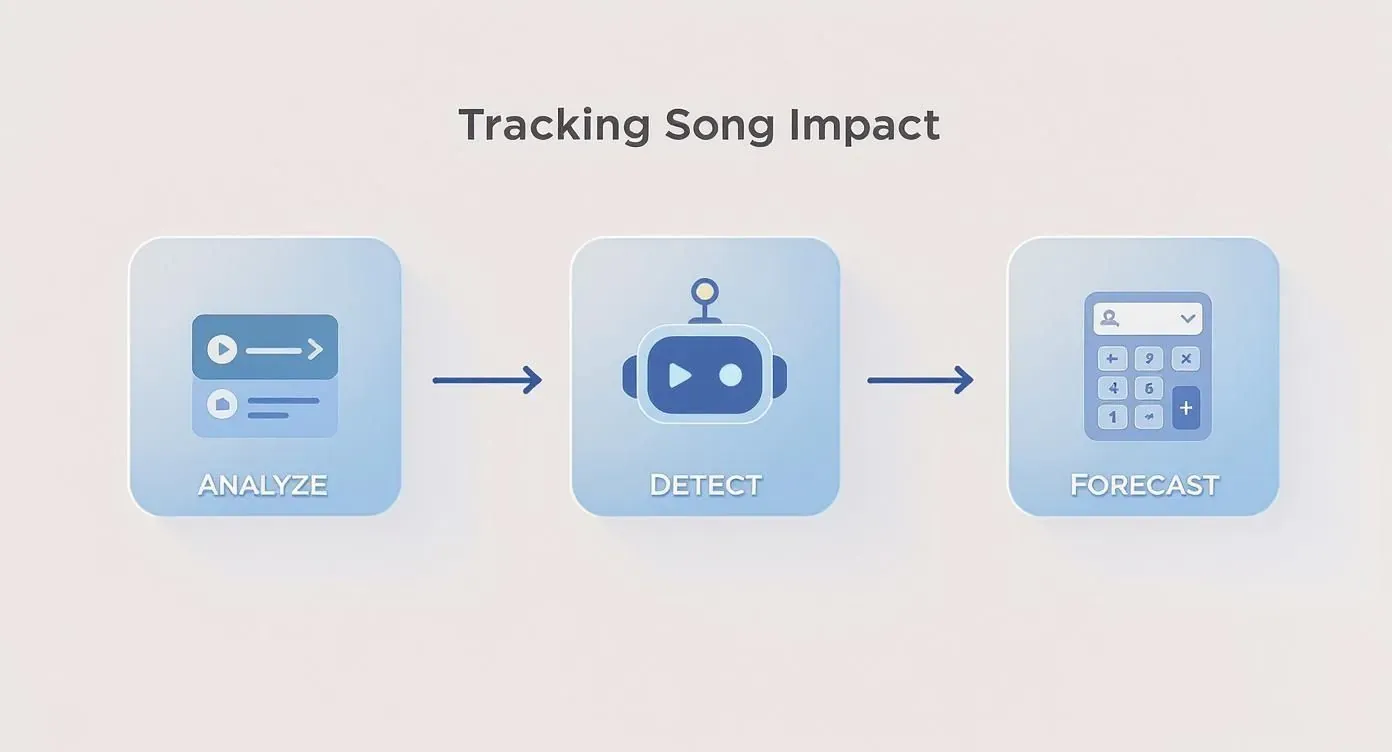
The core idea is simple but powerful: analyze your playlist performance, keep an eye out for red flags like bots, and use that info to forecast your income and plan your next move.
Creating a Strategic Feedback Loop
Your goal should be to build a constant cycle of improvement. It’s a straightforward loop: track the data, figure out the story behind it, take action, and then track the results of that action. This is how you refine your strategy over time, making sure you put your time and money where it actually counts.
Don’t just look at what happened; ask why it happened. A sudden stream spike after a blog feature is a clear signal to build relationships with more writers in that niche. That’s how you create repeatable success.
Here’s another common scenario. Let’s say your new track has a fantastic save rate, but it’s not getting many playlist adds. This is actually a powerful piece of leverage. When you pitch that song to curators, you can point to the high save rate as hard proof that listeners are connecting with it. You’re not just saying “my song is good”—you’re showing them data that proves it.
Adapting to a Data-Driven Music Industry
This intense focus on granular data isn’t a fad; it’s a direct reflection of how the music business works now. The industry’s health is measured in digital consumption metrics.
For instance, in the first half of 2023, global recorded music revenues grew to $18.3 billion, with streaming subscriptions making up more than half of that pie. This shift means platforms like Spotify are driving more revenue growth than traditional rights companies. It solidifies stream counts and listener engagement as the new gold standard for success. You can dive deeper into these trends and read the full report on global music revenues from MIDiA Research.
By embracing this data-first mindset, you shift from being a passive artist to an active strategist. Every decision, from your next marketing push to your next collaboration, becomes informed by what your listeners are already telling you. This is how you build real momentum and turn one song’s performance into a long-term career.
Got Questions About Tracking Your Song? We’ve Got Answers.
When you’re deep in the trenches of a new release, questions are going to pop up. It happens to everyone. You’re glued to your screen, waiting for the numbers to move, and trying to make sense of it all. Getting a straight answer can be the difference between a smart move and a wasted opportunity. Let’s clear up some of the most common questions artists ask when tracking a song.
How Quickly Does Spotify Data Actually Update?
This is probably the first thing you’ll wonder. You’re refreshing Spotify for Artists, expecting to see those stream counts climb, but nothing’s happening. What gives?
Here’s the deal: for the most part, your core stats refresh once every 24 hours, typically around 3 PM EST. But there’s one massive exception that every artist needs to know about.
For the first seven days of a new release, Spotify gives you a live stream count. This is your golden window to see the immediate results of your promo, social media pushes, and ad campaigns in real-time. After that first week, your track settles into the standard daily update rhythm. Just be aware that the deeper data, like listener demographics, can take a bit longer to catch up and populate fully.
“I Think I Have Bots. What Do I Do?”
Seeing weird activity on your track is a gut-wrenching feeling. You might notice a huge, unnatural spike from a single city, plays from oddly named playlists, or a massive stream count with almost no saves. These are all major red flags for bot activity.
Acting fast here is non-negotiable.
Your first move should be to run the track through a Bot Detection tool to confirm what’s going on. If it flags fraudulent activity, you need to report it to your distributor immediately. This shows Spotify you’re being proactive and aren’t trying to game the system, which can save your music from being taken down or penalized.
Let me be crystal clear: never, ever pay for streams. The risk of getting flagged by a bot farm is astronomical, and the damage it can do to your reputation and your standing with Spotify is almost impossible to come back from.
“My Song Got on a Huge Playlist, But Nothing Happened. Why?”
This is a classic—and incredibly frustrating—scenario. You land a spot on a playlist with tens of thousands of followers and brace for the flood of streams… but it’s just a trickle. So, what happened? A few things could be at play.
- Dead Playlist: The playlist might have a ton of followers, but if nobody is actually listening, it’s just a ghost town. Follower count means nothing without active listeners.
- Bad Placement: Where your song sits on the list is everything. If you’re buried at #97 on a 100-song playlist, the odds of anyone even getting to your track are slim to none.
- Wrong Vibe: The playlist’s listeners might just not be your people. If your indie folk song lands in a high-energy workout playlist, you’re going to get skipped. A lot. And skips don’t count as streams.
This is exactly why you need to vet playlists before you pitch them. Using a Playlist Analyzer to check out a playlist’s real engagement metrics is a total game-changer. It helps you find curators whose audience genuinely fits your music, making your outreach so much more effective.
Ready to stop guessing and start making data-driven moves? artist.tools gives you daily stream tracking, bot detection, and deep playlist analysis you need to protect your music and actually grow. Start making smarter decisions for your career today at https://artist.tools.