Spotify Playlist Name Ideas: 10+ Names to Try
- Nov 29, 2025
- 16 min read
Updated: May 29
TL;DR
The best Spotify playlist names pair a clear, searchable hook with a specific mood, activity, era, genre, audience, or theme — and you can speed up brainstorming with the artist.tools Playlist Name Generator.
Lead with what listeners actually search: mood, activity, era, genre, artist, audience, or energy level.
Add specificity (e.g., "Sunday Morning Chill" beats "Chill") so your name feels targeted, not generic.
Match the name to the music — poetic, narrative, or fusion names only work if the tracks deliver on the promise.
Use the playlist description to add context, keywords, and seasonal updates.
Brainstorm faster with the artist.tools Playlist Name Generator.
Looking for spotify playlist name ideas that actually get clicks? A great playlist starts with a great name. It's the first thing listeners see and a critical factor in whether they press play. In the crowded ecosystem of Spotify, a generic title like 'Chill Vibes' or 'Workout Mix' gets lost in a sea of identical compilations. A name that is clever, descriptive, and thoughtfully chosen for search, however, can help your playlist stand out and reach more listeners. The right name acts as a hook, a promise, and a search beacon all in one.
This guide is your definitive resource for crafting the best names for Spotify playlists. We move beyond basic ideas and provide categorized options designed to resonate with specific audiences and support discovery in search. You will find names organized by mood, genre, activity, and creative wordplay, each with a brief explanation of why it works.
More importantly, we will show you how to think like a successful curator. You’ll learn actionable strategies for creating titles that not only perfectly capture a vibe but also rank high in Spotify’s search results. This turns your curation effort into a powerful discovery engine, connecting new listeners with great music and helping artists find their next wave of fans. Let’s dive into the names that get clicks.
Short on inspiration? You can also generate fresh names for spotify playlists in seconds with the artist.tools Playlist Name Generator and adapt the results to fit your vibe.
1. Mood-Based Names
Mood-based names are some of the most effective and popular choices because they tap directly into user intent. Listeners often search for music to match or influence their emotional state, making names like 'Late Night Feels' or 'Productive Morning' highly discoverable. This approach works by clearly communicating the playlist’s core emotional value, allowing users to instantly recognize it as a solution for their current need. By focusing on the feeling, you create a powerful, intuitive connection that transcends genre.
Why It Works
The strength of this strategy lies in its psychological resonance. A name like 'Sad Girl Hours' immediately validates a listener's feelings and promises a curated experience for that specific emotional space. Similarly, Spotify’s editorial playlists, such as 'Feel Good Pop' and 'Peaceful Piano', have popularized this method, training users to search for music based on their mood. This makes it a powerful tool for curators aiming for organic growth and high user engagement.
How to Implement It
Combine Mood with Specificity: Don't just stop at 'Chill'. Elevate it by adding context, such as 'Sunday Morning Chill' or 'Rainy Day Chill'. This added detail makes the playlist feel more personal and targeted.
Use Emojis to Enhance Vibe: Emojis are a visual shorthand for emotion. A name like 'Energy Boost ⚡️' or 'Late Night Vibes 🌙' uses them to grab attention and reinforce the playlist's mood in search results.
Update Descriptions Seasonally: Keep your mood playlist fresh. For a 'Happy Hits' playlist, you could update the description in the summer to mention "songs for a road trip" and in the winter to reference "cozy feel-good tunes". This small tweak can improve relevance and search visibility.
2. Activity-Based Names
Activity-based names are powerful because they provide an immediate, functional purpose for the listener. Users frequently search for music to accompany a specific task, making names like 'Workout Energy' or 'Study Focus' highly effective and discoverable. This strategy frames the playlist as a tool, clearly communicating its utility and helping users find the perfect soundtrack to enhance whatever they are doing. By tying music to a real-world activity, you create a playlist that is both practical and easily searchable.

Why It Works
This method thrives on context and user intent. When someone needs music for their morning commute, a playlist named 'Morning Commute Mix' directly solves their problem with zero ambiguity. The rise of fitness apps, productivity communities, and Spotify’s own contextual algorithm has trained listeners to seek out playlists for activities. Official playlists like 'Deep Focus' and 'Beast Mode' prove the success of this model, making it a reliable strategy for curators looking for practical and one of the best names for Spotify playlists.
How to Implement It
Align Tempo with the Task: Research the optimal tempo for the activity. A 'High-Intensity Workout' playlist might feature songs in the 130-150 BPM range, while a 'Cool-Down Yoga' playlist would be much slower. Mentioning this in the description adds value.
Add Specific Modifiers: Go beyond generic labels. Instead of 'Running', try '5K Training Run' or 'Marathon Pacing Hits'. This specificity attracts a more dedicated and engaged audience.
Create Variations for Intensity: A single activity can have different energy levels. For cooking, you could create both a 'Chill Kitchen Prep' playlist for weeknights and an upbeat 'Dinner Party Anthems' playlist for entertaining guests.
3. Time-Period References
Tapping into nostalgia or a specific moment in time is a powerful way to attract listeners. Time-period names like 'Throwback 90s Hits' or 'Summer of 2023' work by targeting a listener’s desire to relive memories or capture a current cultural moment. This approach is highly effective because it anchors the music to a shared experience, making the playlist instantly relatable. Whether it's a decade, a year, or a season, these names provide clear context and set immediate expectations for the listener.
Why It Works
The success of this strategy is rooted in the powerful connection between music and memory. A name like '2000s Pop Perfection' doesn't just promise a certain sound; it promises to transport the listener back to a specific time in their life. Spotify itself has capitalized on this with features like Wrapped and playlists such as 'All Out 80s', which have conditioned users to seek out era-specific collections. This creates a built-in audience for playlists that clearly label their temporal focus, making them some of the best names for Spotify playlists aiming for nostalgic appeal.
How to Implement It
Combine Era with Genre: Increase specificity and reduce competition. Instead of a generic '80s Hits', create '80s New Wave Classics' or 'Late 80s Hair Bands' to attract a more niche, dedicated audience.
Use Specific Years: For recent history, naming a playlist 'Best of 2022' can be more searchable than a broader '2020s Hits'. This works especially well for annual "best of" compilations that you can update yearly.
Reference Cultural Moments: Tie your playlist to a significant event or trend from that era in the description. For a '90s R&B' playlist, mentioning iconic movies or fashion from the time adds a rich layer of context that enhances the nostalgic experience.
4. Genre Fusion and Mashup Names
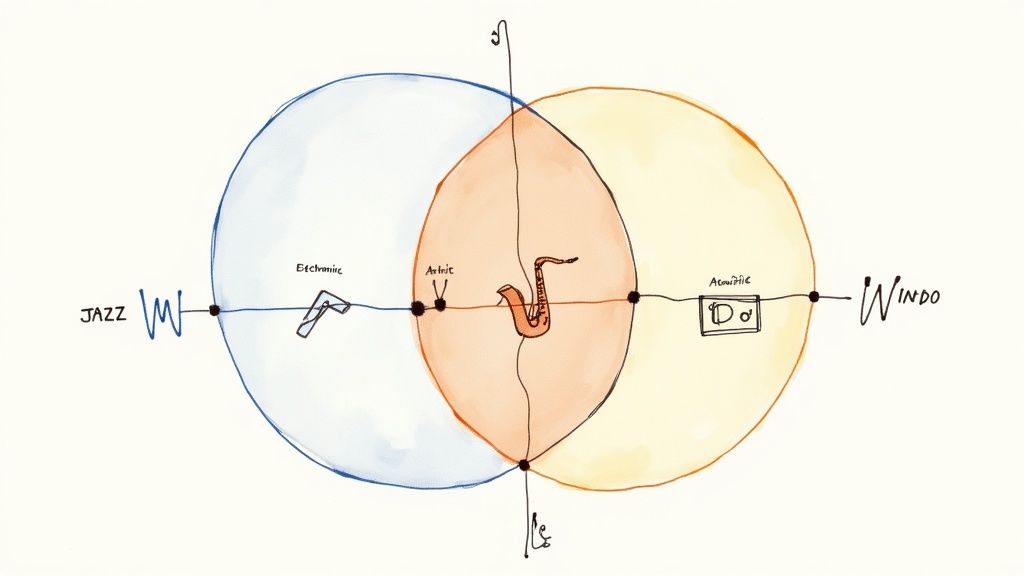
Genre fusion names target adventurous listeners seeking new sonic experiences by explicitly combining different music styles. This approach carves out a niche by blending familiar genres into something unique, appealing to users bored with traditional categories. Names like 'Hip-Hop Soul Jazz' or 'Indie Electronic Dreams' immediately signal a curated, cross-genre journey, attracting listeners who appreciate musical discovery and complexity. This strategy is perfect for showcasing under-the-radar artists or creating a distinct, memorable vibe.
Why It Works
This method thrives on the "best of both worlds" principle. Playlists like the massively popular 'Lo-Fi Hip-Hop' phenomenon prove that combining a mood (lo-fi) with a core genre (hip-hop) can create an entirely new, highly searchable category. These names act as keywords for users exploring the fringes of their favorite genres, making them highly effective for organic discovery. They promise a specific, hybrid sound that standard genre labels can't capture, which is a powerful draw for sophisticated listeners.
How to Implement It
Use Clear Connectors: Employ simple terms like 'meets', 'x', or 'fusion' to make the combination explicit. For example, 'Funk Meets Disco' or 'Folk x Electronic' leaves no doubt about the playlist's content.
Explain the Rationale: Use your playlist description to explain why these genres work together. Describe the shared energy, lyrical themes, or instrumental textures that create a cohesive listening experience. This adds depth and authority.
Maintain Quality Control: Ensure the tracks genuinely blend well. A poorly executed fusion can sound disjointed and turn listeners away. The curation must justify the name's promise of a seamless experience.
5. Seasonal and Holiday Names
Tying a playlist name to a specific season, holiday, or time of year taps into high-volume, time-sensitive search traffic. Listeners actively seek out music to complement cultural moments, making names like 'Summer Road Trip 2024' or 'Cozy Christmas Morning' incredibly effective. This strategy leverages temporal relevance, aligning your playlist with what people are already thinking about and searching for. By capturing the essence of a specific time, you create an instantly relatable and highly discoverable playlist.
Why It Works
The power of this approach comes from its alignment with user behavior and major marketing calendars. Playlists like Spotify’s own 'Christmas Hits' or user-generated 'Spooky Szn' collections become go-to resources during their respective periods. Users search for these terms with high intent, looking for a pre-made soundtrack for their activities. This creates a predictable surge in traffic that savvy curators can capitalize on, making it one of the best names for Spotify playlists aimed at rapid, periodic growth.
How to Implement It
Publish Early: Create and publish your seasonal playlist 2-3 weeks before the event or season begins. This gives it time to get indexed by Spotify's algorithm and gain traction just as search volume starts to peak.
Use Thematic Emojis: Add visual flair and improve search visibility with relevant emojis. A name like '4th of July BBQ 🎆' or 'Autumn Acoustic 🍂' stands out and instantly communicates the theme.
Plan a Content Calendar: Map out holidays and seasons for the entire year. This allows you to prepare playlists in advance and seamlessly rotate your promotional efforts from one theme to the next. Proper planning is a key part of any successful promotional strategy; find more details in our guide on how to promote a Spotify playlist.
6. Lyrical and Poetic Names
Lyrical and poetic names use creative wordplay, famous song lyrics, or artistic phrasing to create a more evocative and imaginative title. Names like 'Neon Nights and Starlight' or 'Where Words Meet Rhythm' move beyond simple descriptions to tell a small story, appealing to listeners who appreciate artistry and a well-crafted theme. This approach transforms a playlist from a mere collection of songs into a curated artistic experience, communicating a deep, nuanced atmosphere that a straightforward name might miss.
Why It Works
This method thrives on emotional and intellectual connection. A name like 'Urban Jungle Chronicles' doesn't just promise a certain genre; it promises a narrative and a specific perspective. This attracts a dedicated niche audience that values creativity and storytelling in their music discovery. Such names are memorable and highly shareable, often resonating with independent music communities and listeners who see playlists as a form of self-expression. They suggest a high level of care and curation went into the track selection.
How to Implement It
Use Metaphors and Imagery: Connect your title to the music's content. A playlist full of introspective indie-folk could be named 'Sweater Weather Soliloquies', using imagery to evoke a specific feeling and setting.
Borrow from Lyrics (Carefully): Using a well-known but not overused lyric can create an instant connection. For a nostalgic 90s rock playlist, a title like 'Smells Like Teen Spirit' is too direct, but a deeper cut like 'A Denial' could attract true fans.
Align the Name and Vibe: A poetic name sets high expectations. Ensure the music in 'Chasing Dreams and Melodies' truly feels aspirational and melodic. A mismatch will feel inauthentic and lose listeners. For more ideas, you can explore the playlist name generator on artist.tools.
7. Artist and Collaboration-Based Names
Leveraging artist recognition is a powerful strategy for attracting listeners. Playlist names that feature specific artists, collaborations, or even fan-curated "essentials" tap directly into existing fanbases. Names like 'Best of Taylor Swift' or 'Collaborations with The Weeknd' immediately signal the playlist's content and appeal to users searching for their favorite musicians. This method capitalizes on an artist’s established brand and search volume, making it an excellent choice for discoverability.
Why It Works
This approach works because it targets high-intent listeners. A user searching for "Drake" is already a fan, and a playlist titled 'Drake: The Complete Collection' offers exactly what they want. Spotify itself has validated this model with its official "This Is [Artist Name]" series, training users to look for artist-centric compilations. This method provides a clear value proposition, promising a deep dive into an artist's catalog and attracting a dedicated, engaged audience looking for the best names for Spotify playlists.
How to Implement It
Be Specific and Official: Use the artist's full, official name for maximum searchability. Avoid nicknames unless they are widely known and searched for. A title like 'Kendrick Lamar Essentials' is more effective than 'K-Dot's Best'.
Highlight a Unique Angle: Instead of a generic "best of," try a more specific theme. Consider 'The Evolution of Lady Gaga' (chronological) or 'Featuring Post Malone' (collaborations only) to stand out.
Update with New Releases: Keep your artist-based playlists relevant by adding new singles, album tracks, and collaborations as soon as they drop. Mentioning "Updated with the latest album!" in the description can also boost clicks.
8. Demographic and Audience-Targeted Names
Targeting a specific demographic is a powerful way to create a playlist that resonates deeply with a particular community. These names directly address a listener's identity, making them feel seen and understood. Playlists like 'Millennial Nostalgia' or 'Gen Z Anthems' work because they promise a highly relevant and culturally specific experience, tapping into shared memories and trends that bond a group together. This approach transforms a simple music collection into a cultural touchstone for a defined audience.
Why It Works
This strategy excels by fostering a sense of belonging. A name like 'Women of Indie' or 'LGBTQ+ Pride' creates an immediate connection by aligning with a listener's identity. Spotify has embraced this with editorial collections like 'For the Culture' and 'EQUAL,' which have normalized searching for music that reflects specific communities. By naming your playlist for a distinct audience, you make it instantly discoverable for those seeking representation and validation through music.
How to Implement It
Be Authentic, Not Stereotypical: Avoid broad clichés. Instead of a generic 'Mom's Rock' playlist, try something more specific like '80s Power Ballads for the PTA Mom'. Specificity shows genuine understanding of the target audience.
Use Inclusive Language: Ensure your playlist title and description are welcoming. For a pride playlist, use phrases like "celebrating all identities" to create a safe and inclusive space for listeners.
Collaborate for Credibility: If you are creating a playlist for a community you're not part of, collaborate with members of that group. This ensures the music and messaging are authentic and respectful. You can master Spotify playlist SEO by ensuring your keywords and naming conventions align with how that audience actually searches.
9. Thematic and Narrative Names
Thematic and narrative names transform a playlist from a simple collection of songs into an immersive, story-driven experience. This approach frames music around a specific concept, story, or setting, like 'Heartbreak Hotel' or 'Midnight City Stories'. By creating a narrative, you invite listeners into a world, making the music feel like the soundtrack to a specific moment or a chapter in a larger tale. This method is perfect for crafting a unique identity that stands out and builds a dedicated following.

Why It Works
This strategy excels because it creates a strong emotional and imaginative hook. A name like 'Cinematic Soundscapes' or 'Coffee Shop Chronicles' instantly establishes a scene and a mood, promising a cohesive listening journey. It appeals to listeners who want more than just background noise; they want an atmosphere. This method, popularized by film soundtrack culture and indie curators, fosters deep engagement by making the listener a participant in the story your playlist tells.
How to Implement It
Build a World with Your Description: Use the playlist description to set the scene. For a playlist named 'Late Night Conversations,' describe the setting: "Music for hushed talks under city lights after everyone else has gone to sleep."
Order Tracks to Create an Arc: Arrange your songs to tell a story. A 'Summer Romance Soundtrack' could start with upbeat, hopeful tracks, move into passionate mid-tempo songs, and end with bittersweet, reflective ones.
Use Cohesive Cover Art: Your cover art should visually represent the theme. A name like 'Midnight Drive' pairs perfectly with an image of an empty, rain-slicked road at night, reinforcing the entire narrative package.
How to Pick a Spotify Playlist Name That Performs in Search
10. Energy Level and Intensity Names
A memorable playlist name is only half the job — it also needs to match how listeners actually search. A few practical tips: keep it short and scannable, use words your target listener would type, avoid misleading names that don't match the tracks, and reinforce the theme in your playlist description. For a deeper dive into keyword research, genre alignment, and track context, the artist.tools SEO help center walks through how playlists can be structured for better discoverability. When you need a head start on names, the Playlist Name Generator can surface ideas you can refine to fit your audience.
Writing a Playlist Description That Adds Context
Naming playlists based on energy level or intensity directly addresses a listener's functional need. Users often seek music to match a specific activity's required energy, from a high-octane workout to a low-key study session. Names like 'Maximum Energy Cardio' or 'Gentle Background Ambience' leave no room for ambiguity. This approach functions by signaling the playlist's role as a tool, helping users select the perfect soundtrack for their desired physical or mental state, which is why it's a staple for some of the best names for Spotify playlists.
Your description is where you reinforce what the name promises. Mention the mood, the activity, the era, or the kind of listener it's for, and weave in a few natural keywords without stuffing. If the playlist is seasonal, refresh the description as the season changes. If it leans into a specific genre blend, briefly explain why those styles work together. Clear context helps listeners decide to press play — and gives your playlist more relevant text for search to work with.
Why It Works
The effectiveness of this strategy lies in its utility. A name like 'Aggressive Metal Workout' sets a clear expectation and promises a specific outcome, making it highly discoverable for users with a performance-oriented goal. This naming convention has been popularized by fitness apps and workout brands, which have trained users to look for music categorized by intensity. Spotify's own editorial playlists, such as the wildly successful 'Beast Mode' for workouts or 'Chill Hits' for relaxation, validate this user behavior, proving its power for curators targeting activity-based listening.
How to Implement It
Create Tiered Series: Develop a collection of related playlists with varying intensities, such as 'High Energy Run', 'Medium Energy Jog', and 'Low Energy Walk'. This encourages listeners who like one playlist to explore the others in your collection.
Include BPM in Descriptions: For fitness or focus-oriented playlists, adding a BPM (Beats Per Minute) range to the description provides valuable technical detail. For example, "A high-energy mix of electronic and pop tracks between 140-160 BPM."
Combine with an Activity: Pairing an intensity level with a specific activity enhances clarity. Instead of just 'High Intensity', use 'High Intensity Coding Session' or 'Mellow Sunday Cooking' to create a more targeted and appealing title.
Comparison of 10 Spotify Playlist Name Styles
Naming Style | Implementation Complexity 🔄 | Resource Requirements ⚡ | Expected Outcomes 📊 | Ideal Use Cases 💡 | Key Advantages ⭐ |
|---|---|---|---|---|---|
Mood-Based Names | Low 🔄 — quick to create, common formats | Low ⚡ — minimal curation, periodic updates | High 📊 — strong engagement & repeat listens | Mood discovery, daily/ambient playlists | High relatability and shareability ⭐ |
Activity-Based Names | Low–Medium 🔄 — needs activity-specific tuning | Medium ⚡ — tempo/duration research, sequencing | High 📊 — targeted discovery and habitual use | Workouts, study sessions, commutes 💡 | Practical, easy to market to audiences ⭐ |
Time-Period References | Low 🔄 — straightforward chronological grouping | Low–Medium ⚡ — era research, refresh planning | Medium–High 📊 — nostalgia-driven spikes | Throwbacks, decade features, year recaps 💡 | Strong emotional resonance, easy curation ⭐ |
Genre Fusion & Mashup Names | Medium–High 🔄 — careful blending to keep coherence | Medium ⚡ — selective curation, aesthetic cover art | Medium 📊 — niche discovery, engaged explorers | Cross-genre discovery, trend-driven playlists 💡 | Differentiates curator, supports experimental artists ⭐ |
Seasonal & Holiday Names | Low–Medium 🔄 — timing and theme management | Medium ⚡ — annual updates, themed artwork | High (seasonal) 📊 — concentrated engagement windows | Holiday campaigns, seasonal marketing, retail 💡 | Timely relevance and predictable refresh cycles ⭐ |
Lyrical & Poetic Names | Medium 🔄 — creative naming that must fit vibe | Low–Medium ⚡ — writing effort, curated matching | Medium 📊 — memorable but niche appeal | Indie/artistic audiences, branded/curated series 💡 | Distinctive, emotionally evocative, highly memorable ⭐ |
Artist & Collaboration-Based Names | Low–Medium 🔄 — obvious structure; legal care needed | Medium ⚡ — permissions, timely updates | High 📊 — immediate fan-driven engagement | Artist retrospectives, collaboration showcases 💡 | Built-in audience and clear searchability ⭐ |
Demographic & Audience-Targeted Names | Medium 🔄 — requires cultural research and nuance | Medium ⚡ — community input, inclusive curation | High 📊 — strong engagement within target groups | Community playlists, diversity-focused features 💡 | Creates belonging and targeted relevance ⭐ |
Thematic & Narrative Names | High 🔄 — needs storyline and emotional arc | High ⚡ — sequencing, artwork, sustained curation | High 📊 — deep engagement and high replay value | Cinematic collections, immersive listening experiences 💡 | Distinct identity and loyalty-building ⭐ |
Energy Level & Intensity Names | Low–Medium 🔄 — requires BPM/energy tagging | Medium ⚡ — testing BPM ranges, tiering | High 📊 — excellent for fitness/wellness use cases | Workouts, relaxation, therapy, tiered series 💡 | Clear match to physical/psychological state; science-backed ⭐ |
How to Pick and Validate Your Playlist Name with Data
Navigating the vast ocean of Spotify requires more than just a great collection of songs; it demands a name that acts as a beacon, guiding listeners directly to your curated world. Throughout this guide, we've explored a wide spectrum of naming strategies, from mood-based and activity-specific titles to genre fusions and lyrical wordplay. Each category offers a unique angle to capture attention, but the true art lies in bridging the gap between creative intuition and strategic validation.
The ultimate goal is discoverability. A clever name that nobody searches for is a missed opportunity. This is why the most successful curators, artists, and music marketers treat playlist naming not just as a creative exercise, but as a crucial component of their Spotify SEO strategy. The difference between a playlist with ten followers and one with ten thousand often comes down to a data-informed decision.
From Creative Idea to Strategic Asset
Your journey to finding the best names for Spotify playlists doesn't end with a brainstorming session. The real work begins when you take your shortlist of ideas and put them to the test. This is where a professional approach separates amateurs from experts.
Step 1: Uncover User Intent: Use tools like Spotify's native search bar or a dedicated platform's Search Suggestions feature to understand what listeners are actively looking for. This initial research grounds your creative ideas in real-world demand.
Step 2: Analyze the Competition: Once you have a few strong contenders, dive deeper with a Keyword Explorer. Assess the search volume, analyze the difficulty of ranking, and study the top-performing playlists for your target keywords. This helps you find a niche where you can realistically compete and win.
Step 3: Track and Adapt: After launching your playlist, the work isn't over. Consistently monitor your position using a Playlist Search Rankings tool. This feedback loop is invaluable. It tells you which keywords are working and allows you to adapt your strategy over time, ensuring sustained growth.
Mastering this process transforms your playlist from a simple hobby into a powerful marketing tool. It’s how you build a dedicated following, drive streams to featured artists (including yourself), and establish a reputable brand on the platform. A well-named, discoverable playlist is an asset that works for you 24/7, connecting the right music with the right audience at the right time. Your final name choice should be an intentional, strategic decision that sets you up for long-term success.
Ready to stop guessing and start naming with intent? Pair these spotify playlist name ideas with the artist.tools Playlist Name Generator to brainstorm faster, then explore artist.tools to keep refining your playlist strategy.
.png)
Comments