

10 Proven Formulas for Good Playlist Names That Dominate Spotify in 2026
Discover 10 formulas for good playlist names that rank high on Spotify. Learn SEO tips and naming strategies to get more listeners and followers in 2026.
12
- 1. Mood-Based Naming Convention
- 2. Genre-Specific with Sub-Genre Modifiers
- 3. Narrative or Story-Driven Naming
- 4. Artist/Influencer Collaboration Naming
- 5. Time-Based and Temporal Naming
- 6. Activity-Based and Functional Naming
- 7. Numeric and List-Based Naming
- 8. Aesthetic and Vibe-Based Naming
- 9. Cultural and Regional Naming
- 10. Hybrid and Descriptive Modifier Naming
- Comparison of 10 Playlist Naming Styles
- From Name to Fame: Putting Your Playlist Strategy into Action
A great playlist is more than just a collection of songs; it’s an experience. But in a sea of millions of playlists on Spotify, even the most perfectly curated list can go unheard if its name doesn’t connect. The right name isn’t just a label-it’s your most powerful marketing tool, a hook that grabs a listener’s attention, and a critical piece of your Spotify SEO strategy. An effective name communicates mood, genre, and purpose in a split second, making the difference between a listener scrolling past and hitting ‘play.’
This guide moves beyond generic advice to provide a strategic framework for creating good playlist names that attract listeners and rank in search. We’ll explore ten proven, actionable naming conventions used by successful curators to dominate Spotify search results and build loyal followings. You will learn not just what to name your playlist, but why specific approaches work.
We’ll break down the psychology behind each method, providing clear templates and real-world examples to guide you. More importantly, you’ll learn how to validate your ideas with data-driven tools like artist.tools, uncovering untapped keyword opportunities and optimizing for discoverability. Whether you’re a musician building a brand, a curator growing a following, or a label promoting new releases, mastering the art of the playlist name is the first step toward building a real audience. This comprehensive list provides the specific, actionable insights you need to turn a simple playlist into a powerful discovery engine.
1. Mood-Based Naming Convention
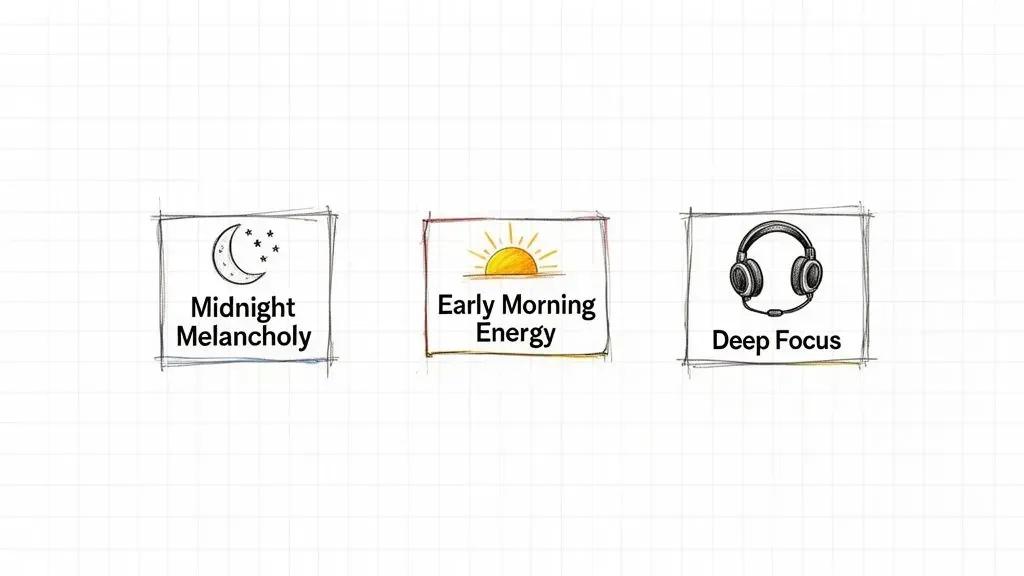
The mood-based naming convention is a powerful strategy that categorizes music by its emotional state or atmosphere. This approach creates highly intuitive and relatable playlist titles that directly address what a listener wants to feel. Instead of focusing solely on genre, these names promise an experience, making them incredibly effective for discovery.
This method aligns perfectly with user search behavior. Listeners frequently look for music to match a specific activity or emotional need, using keywords like “focus,” “chill,” “sad,” or “workout.” By incorporating these terms, your playlist becomes a direct solution to their search query, significantly boosting its visibility through Spotify’s algorithm.
Why This Strategy Works
This is one of the best methods for creating good playlist names because it taps directly into listener intent. Official Spotify playlists like ‘Peaceful Piano’ and ‘Lo-Fi Beats to Study To’ dominate search results because their names clearly communicate their function and emotional tone. Similarly, Apple Music often combines mood and energy cues in its flagship playlists. This approach makes your playlist not just a collection of songs, but a functional tool for the listener’s life. For a deeper dive, explore our guide on how to curate top playlists by mood on artist.tools.
How to Implement Mood-Based Naming
To effectively use this strategy, combine a primary mood with a secondary descriptor for specificity and better SEO performance.
- Combine Mood + Genre: Instead of a generic “Sad Songs,” try a more targeted title like ‘Melancholy Indie’ or ‘SAD Rap’. This attracts listeners looking for a specific sound within that emotional context.
- Combine Mood + Activity: Pair an emotion with an action. Examples include ‘Deep Focus Coding’, ‘Late Night Drive Vibes’, or ‘Sunday Morning Chill’.
- Use SEO Tools: Leverage a platform like artist.tools to validate your ideas. Use its Keyword Search to find high-volume mood keywords and the Autocomplete tool to spot emerging trends. This data-driven approach ensures you’re naming your playlist based on what people are actually searching for.
2. Genre-Specific with Sub-Genre Modifiers
This naming strategy involves combining a broad, highly-searched primary genre with a niche sub-genre modifier. This approach creates good playlist names that are both discoverable through popular search terms and highly specific, attracting listeners with refined tastes. Instead of a generic “Hip-Hop” playlist, a title like ‘Trap Soul’ or ‘Cloud Rap’ carves out a distinct identity.
This method works by balancing broad appeal with targeted curation. While a general genre playlist competes in a saturated field, adding a sub-genre descriptor appeals directly to a passionate, engaged audience. Spotify’s algorithm rewards this specificity because it leads to higher listener satisfaction and retention. Playlists like ‘Bedroom Pop’ and ‘Hyperpop’ grew from niche communities into defined, influential categories using this exact model.
Why This Strategy Works
This is a powerful method because it captures long-tail search traffic. Listeners often search for the specific sounds they love, not just the parent genre. Playlists like Apple Music’s ‘Afrobeats Essentials’ or Spotify’s editorial sub-categories prove that combining a primary genre with a descriptor (‘Essentials’) or a sub-genre is an effective way to attract a loyal following. It signals to a potential listener that the playlist is expertly curated and understands the nuances within a larger musical landscape.
How to Implement Genre-Specific Naming
To use this strategy effectively, you must identify trending or underserved sub-genres and pair them with their parent categories for maximum impact.
- Combine Parent Genre + Sub-Genre: Go beyond the basics. Instead of “Electronic,” specify with ‘Dark Synthwave’ or ‘Progressive House’. This immediately clarifies the playlist’s unique sound.
- Merge Two Genres: Create a unique identity by blending related styles. Titles like ‘Lofi Boom Bap’ or ‘Indie Folk-Pop’ attract fans from both sides of the musical spectrum.
- Use SEO Tools: Validate your sub-genre choices with artist.tools. Use the Keyword Search to check the search volume for terms like “phonk” or “trap soul” across different markets. Analyze competitor playlists with the Playlist Analyzer to see which sub-genre combinations are performing well. This data-driven approach ensures you are targeting a relevant and active audience. For a closer look at this in action, see our ultimate Spotify hip-hop playlist guide.
3. Narrative or Story-Driven Naming
The narrative or story-driven naming convention transforms a playlist from a simple collection of songs into an immersive experience. This strategy frames the music within a specific story, scenario, or emotional journey, making the title instantly relatable and compelling. Instead of just describing the music, these names create a scene, inviting listeners to step into a particular moment.
This approach is powerful because it builds a deep emotional connection. Listeners don’t just find music; they find a soundtrack for their own lives. When someone searches for “songs to drive to at night” or “getting over a breakup,” they are looking for a playlist that understands their specific context. Narrative-driven names meet this need directly, making them highly effective for organic discovery and listener loyalty.
Why This Strategy Works
This is one of the best methods for creating good playlist names because it leverages the universal power of storytelling. A playlist titled ‘Villain Era’ tells a more compelling story than a generic “confidence boost” playlist. Official playlists like Apple Music’s ‘New Music Daily’ use a narrative of constant discovery, while user-generated hits like ‘Songs to Stare at the Ceiling To’ create a vivid, relatable scene. This strategy makes a playlist memorable and shareable, as it becomes part of the listener’s personal story.
How to Implement Narrative-Driven Naming
To succeed with this strategy, balance creative storytelling with clear, searchable keywords that reflect listener intent.
- Create a Specific Scenario: Frame your playlist around a distinct event or feeling. Titles like ‘Road Trip to Redemption’, ‘First Date Jitters’, or ‘Studying in a Rainy Cafe’ are highly specific and evocative.
- Balance Story with SEO: While a creative title is good, it must be discoverable. Pair a narrative element with a functional keyword. For example, instead of just “The Long Drive Home,” try ‘Late Night Drive Vibes’ to capture search traffic.
- Use Autocomplete for Ideas: Use a tool like artist.tools’ Autocomplete to see what narrative-driven phrases people are actually searching for. You might find trends like “songs for a main character moment” or “music for a cinematic life” that can inspire your next great playlist name.
- Update the Narrative: Keep your story fresh. A playlist like ‘Winter Morning Coffee’ can be updated seasonally to ‘Summer Evening Chill’, maintaining relevance and encouraging listeners to revisit it throughout the year.
4. Artist/Influencer Collaboration Naming
The artist/influencer collaboration naming strategy leverages the credibility and established audience of a well-known figure to boost a playlist’s authority and reach. This method involves creating names that explicitly reference a specific artist, producer, or influencer, such as ‘As Picked by [Artist Name]’ or ‘Inspired by [Producer]’. This immediately associates your playlist with a trusted name, attracting their dedicated fanbase.
This approach is highly effective because it piggybacks on an existing search demand. Fans actively search for playlists curated by or related to their favorite artists. Official series like Spotify’s ‘This Is [Artist Name]’ are a prime example, but user-generated playlists like ‘RZA’s Hip Hop Essentials’ or ‘Produced by Timbaland’ can also gain significant traction by appealing to a niche, knowledgeable audience.
Why This Strategy Works
This is one of the more powerful methods for creating good playlist names because it taps into the power of social proof and borrowed authority. When a playlist is associated with a respected name, listeners perceive it as having higher quality and relevance. This strategy creates a direct path for an artist’s followers to discover your curation, turning their name into a high-intent search keyword for your playlist. It’s a shortcut to building trust with a new audience.
How to Implement Artist/Influencer Collaboration Naming
To execute this strategy, focus on relevance and authenticity. The music must genuinely align with the figure you are referencing to retain listener trust.
- Reference a Specific Sound: Create playlists around influential producers whose sound defined an era or genre. Titles like ‘The Neptunes Sound’ or ‘Rick Rubin’s Essentials’ attract listeners searching for a particular sonic texture.
- Leverage Influencer Curation: Collaborate with music journalists, bloggers, or content creators to lend their name and credibility. A title such as ‘Curated by [Influencer Name]’ can draw in their dedicated followers.
- Use Data to Find Key Figures: Identify high-influence artists or producers in your genre using a tool like artist.tools. Analyze their monthly listeners and audience demographics to find a relevant figure with a strong, engaged following. From there, you can monitor the performance of your playlist name using the Playlist Search Rankings feature to see if your chosen association is driving discovery.
5. Time-Based and Temporal Naming
The time-based and temporal naming convention anchors your playlist to a specific period, season, or cultural moment. This strategy taps into the power of nostalgia, timeliness, and seasonal relevance, making playlists instantly relatable. By connecting music to a specific year, decade, or time of day, you create a powerful contextual hook that draws listeners in.
This method is highly effective because it aligns with how people naturally categorize and search for music. Listeners often seek songs that remind them of a particular era, like their high school years, or playlists that fit the current season. Official playlists like Spotify’s annual ‘Wrapped’ retrospectives and seasonal rotations like ‘Summer Hits’ capitalize on this behavior, proving its massive appeal.
Why This Strategy Works
This approach is one of the best for creating good playlist names because it leverages built-in search demand tied to specific timeframes. Playlists like ‘90s Rock Anthems’ or ‘Best Songs of 2024’ have a clearly defined and easily searchable identity. They promise a specific, curated experience that is easy for listeners to understand and find, making them highly discoverable through organic search. This method transforms a simple list of songs into a time capsule, delivering a potent dose of nostalgia or a snapshot of the current musical landscape.
How to Implement Time-Based Naming
To maximize the impact of this strategy, be specific and data-driven in your approach. Combine a time element with a genre or mood for greater targeting.
- Combine Time + Genre: Instead of a broad “Throwback,” create a more focused title like ‘2000s Pop-Punk Hits’ or ‘80s R&B Classics’. This attracts listeners with specific nostalgic cravings.
- Focus on Seasons and Events: Create playlists for specific times of the year, such as ‘Autumn Acoustic’, ‘Holiday Party Mix’, or ‘Summer Road Trip’. Plan these playlists 2-3 months in advance to build momentum before peak season.
- Use Keyword Research: Leverage artist.tools’ Keyword Search to find which decades, years, or seasons have the highest search volume. For example, you can identify if ‘90s Hip Hop’ is searched more often than ‘80s Hip Hop’. Monitor Autocomplete to spot emerging yearly or seasonal trends and create playlists ahead of the curve.
6. Activity-Based and Functional Naming
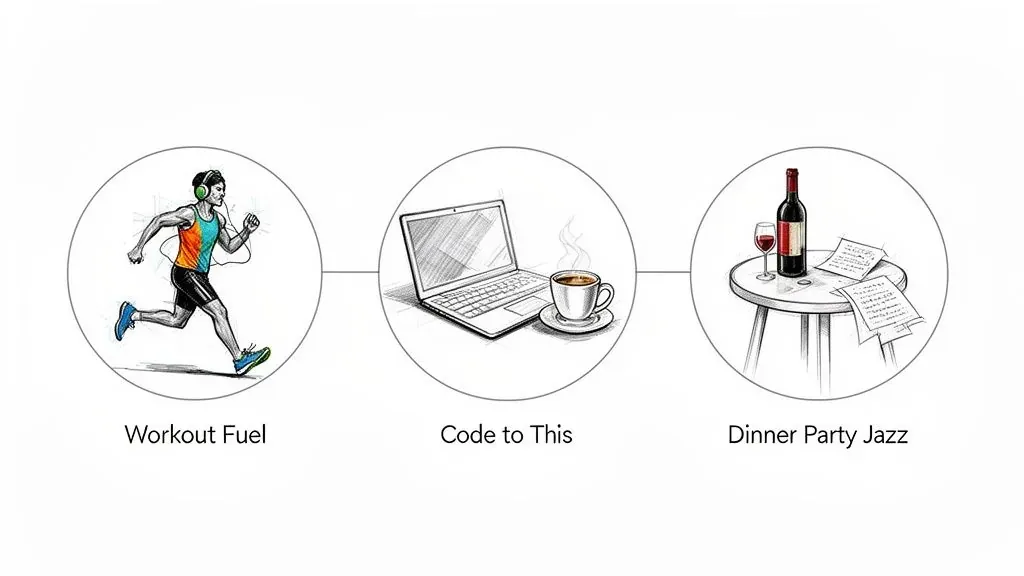
The activity-based naming convention frames a playlist as a soundtrack for a specific task, event, or routine. This strategy is exceptionally powerful because it focuses on utility, positioning the music as a tool to enhance an experience. Instead of describing the music itself, the name describes what the listener will do while listening, making it a direct solution to a user’s need.
This approach is one of the most successful methods for generating good playlist names because it aligns perfectly with how people search for music to accompany their daily lives. Keywords like “workout,” “study,” “gaming,” or “dinner party” are high-intent search terms. Naming your playlist around these activities makes it incredibly discoverable through Spotify’s search algorithm and user recommendations.
Why This Strategy Works
This method thrives because it solves a problem for the listener. Mega-playlists like ‘Lo-Fi Beats to Study To’ and ‘Workout Motivation’ have millions of followers precisely because their names clearly communicate their function. This strategy was largely popularized by independent curators who saw gaps in the market for specific use-cases, and it has since been adopted heavily by Spotify itself. The playlist becomes an essential part of the listener’s routine, whether for productivity, fitness, or relaxation.
How to Implement Activity-Based Naming
To create a successful activity-based playlist, identify a specific user need and build the name and curation around it. Use data to validate your ideas and find untapped niches.
- Combine Activity + Genre/Mood: Broad terms like “Workout” can be hyper-competitive. Niche down by adding a genre or mood, such as ‘Heavy Metal Gym Session’, ‘Chill Coding Marathon’, or ‘Upbeat House Cleaning’. This targets a more specific audience with a higher likelihood of engagement.
- Focus on Time or Event: Tie the playlist to a specific moment or social gathering. Titles like ‘Pre-Game Hype’, ‘Sunday BBQ Jams’, or ‘Date Night Romance’ instantly communicate the playlist’s purpose.
- Use SEO Tools for Validation: Leverage artist.tools to discover what activities people are searching for. Use the Autocomplete feature to find trending activity keywords and the Keyword Search to see their search volume. This ensures you are targeting an activity with proven demand, giving your playlist a much stronger chance of being discovered.
7. Numeric and List-Based Naming
The numeric and list-based naming convention leverages the universal appeal of ranked or numbered lists to create highly compelling playlist titles. This strategy promises a definitive, finite collection of songs, such as ‘Top 50’ or ‘100 Greatest’, which immediately communicates value and authority to the listener. It sets clear expectations about the playlist’s size and scope.
This approach taps into a powerful psychological trigger: people are naturally drawn to lists. Titles like these suggest a carefully curated, canonical selection, making them appear more credible and essential. This is a popular and effective technique used by major platforms like Spotify with its official ‘Top 50’ charts and by music publications famous for their ‘Best Of’ rankings.
Why This Strategy Works
This is one of the most effective methods for generating good playlist names because it provides structure and implies quality. Listeners understand that a numbered list has been thoughtfully assembled, representing the best or most important tracks within a certain category. This perceived authority makes the playlist a go-to resource, whether for discovering genre essentials or keeping up with current hits.
By using numbers, you transform a simple collection into a definitive guide. Playlists like ‘Top 50 Global’ or ‘100 Greatest Hip-Hop Songs’ become reference points, attracting high search traffic from users seeking a comprehensive listening experience. The finite number also makes the playlist feel completable and less overwhelming than an endless scroll.
How to Implement Numeric and List-Based Naming
To succeed with this strategy, focus on clarity, credibility, and relevance. The number you choose should be both ambitious enough to be comprehensive and realistic enough for you to curate effectively.
- Combine Number + Genre/Theme: Create specific, searchable titles like ‘Top 50 Classic Rock Hits’ or ‘100 Essential Indie Songs’. This targets users searching for the best songs in a particular niche.
- Incorporate a Timeframe: Add a year or decade to keep your playlist fresh and relevant. Examples include ‘The 2024 Essential Hits’ or ‘50 Years of Pop History’. This allows you to update the playlist annually and recapture interest.
- Validate with Data: Use a tool like artist.tools to research which numeric thresholds have high search volume. The Playlist Search Rankings feature can also help you analyze the competition for numeric-based playlists, allowing you to find a sweet spot where you can rank effectively.
8. Aesthetic and Vibe-Based Naming
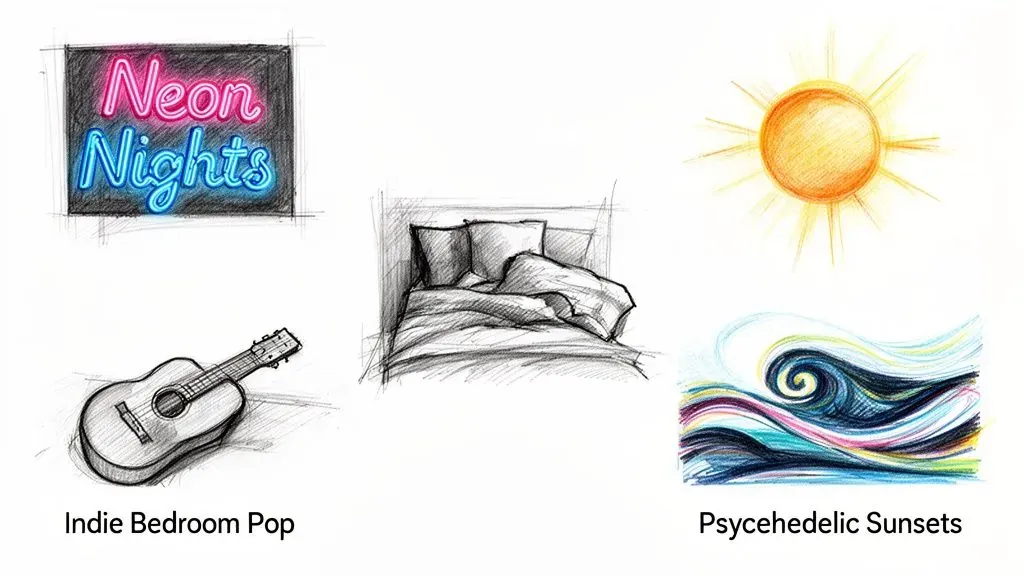
Aesthetic and vibe-based naming moves beyond genre or mood to capture a complete sensory experience. This strategy uses descriptive language to evoke a specific visual style, subculture, or overall atmosphere, appealing to listeners who curate their lives around particular aesthetics. These titles promise a world to step into, making them highly immersive and shareable.
This approach is heavily influenced by platforms like TikTok and Instagram, where visual and musical aesthetics merge. Gen Z and younger curators have popularized this method, building entire communities around playlists that define a lifestyle, from ‘Cottagecore’ to ‘Dark Academia.’ These names often function as cultural signifiers, making them powerful tools for building a niche audience.
Why This Strategy Works
This is a fantastic method for creating good playlist names because it taps into highly engaged, niche communities. Aesthetics like ‘Vaporwave’ or ‘Synthwave’ are more than just genres; they are multimedia subcultures with distinct visual and sonic identities. By naming your playlist to align with one of these aesthetics, you connect with an audience that is actively seeking content to match their identity. This creates a strong sense of belonging and can lead to dedicated, long-term followers.

How to Implement Aesthetic-Based Naming
Success with this strategy depends on authenticity and staying current with cultural trends. Your music selection must genuinely reflect the chosen aesthetic.
- Identify Emerging Aesthetics: Use social media and tools like artist.tools’ Autocomplete to spot rising aesthetic keywords. Look for terms gaining traction in your target market like ‘Cyberpunk Drive’ or ‘Gothic Americana’.
- Combine Aesthetic + Function: Add clarity by pairing the aesthetic with an activity or mood. For example, ‘Dark Academia Study Session’ or ‘Cottagecore Morning Coffee’ are more specific and SEO-friendly.
- Ensure Visual Cohesion: The playlist cover art is critical. It must visually represent the aesthetic of the name. A playlist titled ‘Neon Nights’ requires a vibrant, glowing cover to complete the experience and attract the right listeners. This visual-sonic alignment is key to credibility.
9. Cultural and Regional Naming
The cultural and regional naming strategy connects music directly to its geographic origins, cultural movements, or specific local scenes. This approach taps into a powerful sense of identity and authenticity, attracting listeners who are passionate about a particular culture’s sound. Instead of broad genres, these names tell a story about a place, its people, and its musical pulse, making them highly compelling for both locals and global fans.
This method is incredibly effective because it aligns with how music culture spreads globally. Listeners often search for music based on its origin, using keywords like “K-Pop,” “Afrobeats,” or “Latin Trap.” By creating good playlist names that anchor your collection to a specific scene, you appeal to a dedicated audience and enhance discoverability for users exploring music from around the world.
Why This Strategy Works
This is a powerful method for creating good playlist names because it leverages cultural identity and a sense of belonging. Spotify’s global expansion has led to the rise of market-specific playlists like ‘K-Pop ON! (온)’ and ‘Viva Latino’, which have become massive cultural hubs. Similarly, independent curators who genuinely represent a local scene can build immense credibility. This strategy positions your playlist not just as a music collection but as a cultural artifact and an authoritative source for a particular sound.
How to Implement Cultural and Regional Naming
To use this strategy authentically, ground your playlist in genuine knowledge of the scene you are highlighting. Combine a cultural or regional signifier with a genre or descriptive term.
- Combine Location + Genre: Instead of just “Hip-Hop,” specify a scene like ‘NYC Boom Bap’ or ‘New Delhi Underground’. This targets fans of a very specific regional sound.
- Combine Culture + Movement: Capture the energy of a global phenomenon with titles like ‘Afrobeats Rising’, ‘K-Pop Revolution’, or ‘Reggaeton Hits’. These names convey excitement and relevance.
- Use SEO Tools for Global Insights: Leverage artist.tools to validate your ideas across different markets. Use its Keyword Search to see how a regional term like “Reggaeton” performs in the US versus Spain. Monitor Autocomplete in specific countries to spot emerging cultural trends before they go global, ensuring your playlist stays ahead of the curve.
10. Hybrid and Descriptive Modifier Naming
The hybrid and descriptive modifier approach involves layering multiple keywords to create highly specific, long-tail playlist titles. Instead of relying on a single descriptor like “Chill” or “Rock,” this strategy combines elements like genre, mood, instrumentation, era, or artist type to build a precise playlist identity. This method is incredibly powerful for targeting niche audiences and capturing specific search queries.
This strategy is a direct response to how listeners and algorithms operate. Users often search with multiple terms to find exactly what they want, like “upbeat indie rock for running” or “sad female acoustic songs.” By constructing a name that mirrors these detailed queries, your playlist becomes a perfect match, dramatically improving its chances of ranking high in search results. Good playlist names often use this specificity to stand out.
Why This Strategy Works
This approach excels because it reduces competition and increases relevance. A playlist named ‘Hip-Hop’ competes with millions, but ‘Lo-Fi Hip-Hop Study Beats’ targets a well-defined niche with a clear purpose. Data-driven curators and Spotify’s own algorithm favor such descriptive names because they deliver a better user experience. By accurately describing the content, you build listener trust and attract a dedicated following looking for that exact sound.
For a comprehensive guide on optimizing your titles for search, check out our deep dive on Spotify playlist SEO tips to boost visibility on artist.tools.
How to Implement Hybrid and Descriptive Naming
To effectively use this strategy, methodically stack relevant descriptors and validate their combined search potential.
- Start with a Core Genre: Begin with a primary genre, like ‘Indie Pop’ or ‘Electronic’.
- Add Modifiers: Layer on additional descriptors. This could be a mood (‘Uplifting’), a theme (‘Summer Hits’), a specific year (‘2024’), or an artist characteristic (‘Female-Fronted’). This turns a generic title into something highly specific like ‘2024 Indie Pop Summer Hits’.
- Test Keyword Combinations: Use a tool like the artist.tools Keyword Search to check the search volume for different descriptor combinations. This helps you identify which layered terms are most frequently searched together.
- Analyze Competitors: Use the Playlist Analyzer to see how top-ranking playlists in your niche are using descriptive modifiers. Note which combinations appear most often and find opportunities to create an even more specific, underserved playlist. Start with two or three key descriptors and only add more if the search data supports it.
Comparison of 10 Playlist Naming Styles
| Approach | 🔄 Implementation Complexity | ⚡ Resource Requirements | 📊 Expected Outcomes | 💡 Ideal Use Cases | ⭐ Key Advantages |
|---|---|---|---|---|---|
| Mood-Based Naming Convention | Low — simple naming & A/B tests | Moderate — keyword research & monitoring | High discoverability for mood searches; steady traffic | Everyday playlists, mood-driven listening moments | ⭐ Strong SEO alignment; timeless, broad appeal |
| Genre-Specific with Sub-Genre Modifiers | Medium — needs accurate classification | Moderate — genre research & competitor analysis | High engagement from niche audiences; faster ranking on long-tail | Scene-specific curation, niche audience targeting | ⭐ Clear style signaling; effective long-tail SEO |
| Narrative or Story-Driven Naming | Medium — creative planning & updates | Low–Moderate — storytelling curation, occasional refreshes | Medium — strong shareability and retention when done well | Emotional journeys, shareable/social playlists | ⭐ Memorable branding; increases social sharing |
| Artist/Influencer Collaboration Naming | High — partnerships & permissions required | High — relationship management & cross-promo resources | High — immediate credibility and fanbase-driven spikes | Promotional launches, artist-led curated lists | ⭐ Access to artist audiences; strong credibility |
| Time-Based and Temporal Naming | Medium — scheduling and periodic updates | Moderate — seasonal research & regular edits | Predictable seasonal/yearly traffic spikes | Yearly retrospectives, seasonal campaign playlists | ⭐ Timely relevance; repeatable refresh cycles |
| Activity-Based and Functional Naming | Low — straightforward to implement | Low–Moderate — activity keyword research & curation | High — consistent search volume and repeat usage | Workout, study, commute, focus playlists | ⭐ High intent discovery; encourages repeat listens |
| Numeric and List-Based Naming | Medium — maintaining counts and accuracy | Moderate — curation to meet numeric promise | Medium–High — strong click-through from list-seekers | “Best of” lists, countdowns, canonical compilations | ⭐ Clear expectations; high search intent clarity |
| Aesthetic and Vibe-Based Naming | Medium — needs cohesive visual + name | Moderate — visual assets & trend monitoring | Medium — high memorability and social share potential | Visual-led playlists, social/branding campaigns | ⭐ Distinctive branding; cross-genre appeal |
| Cultural and Regional Naming | High — requires authentic cultural knowledge | High — local research, localization & sensitivity checks | High within target regions; strong community engagement | Regional showcases, cultural movement promotion | ⭐ Deep regional relevance; authentic targeting |
| Hybrid and Descriptive Modifier Naming | Medium — balancing multiple descriptors | Moderate — keyword testing for descriptor combos | High for long-tail queries; precise discovery | Niche targeting combining mood/genre/activity/year | ⭐ Reduced competition; highly specific targeting |
From Name to Fame: Putting Your Playlist Strategy into Action
We’ve journeyed through the intricate landscape of playlist creation, moving far beyond the simple act of choosing a few songs. You are now equipped with a comprehensive toolkit of naming conventions, strategic formulas, and powerful SEO tactics. The central lesson is clear: crafting good playlist names is not a finishing touch, but a foundational element of your music discovery strategy. It is the bridge between your meticulously curated sound and the listeners actively searching for it.
The most successful playlist titles are rarely born from a single moment of inspiration. They are the result of a deliberate process that blends creativity with data-driven precision. They capture an emotion, define a function, tell a story, and, most critically, align with the language your target audience uses to find new music. This is where art meets analytics.
Key Takeaways: From Concept to Curation
Let’s distill the core principles from our exploration into actionable insights that will guide your next steps. These are the pillars that support a powerful playlisting strategy.
- Specificity is Your Superpower: Vague titles like “Chill Vibes” get lost in a sea of sameness. In contrast, a hybrid name like “Lofi Chillhop for Late Night Coding” immediately connects with a specific user and their specific need. It leverages both a genre-specific modifier (Lofi Chillhop) and an activity-based function (Late Night Coding) to dominate a niche.
- The Listener’s Language is Your North Star: The best names mirror the search queries of your audience. Don’t invent terminology; tap into existing user behavior. Use tools to understand what keywords people are actually typing into the Spotify search bar. Are they searching for “sad indie songs” or “melancholy acoustic”? Knowing the difference is crucial.
- A Playlist is a Living Asset, Not a Static List: Your work isn’t done once you hit publish. The digital music ecosystem is constantly evolving. A title that performs well today might be outranked tomorrow. This is why continuous monitoring and optimization are non-negotiable for long-term growth and visibility. Treat your playlist like a product that requires ongoing refinement.
Your Actionable Roadmap to Playlist Success
Knowledge without action is just potential. It’s time to translate these concepts into a concrete workflow. Here is your go-forward plan to transform your playlists from personal collections into powerful discovery engines.
- Audit and Refine Your Existing Playlists: Start with what you already have. Go through your current playlists and evaluate their names against the conventions we’ve discussed. Are they generic? Are they optimized for search? Apply a hybrid naming model to one of them, perhaps combining a mood with a specific sub-genre, and track its performance over the next month.
- Embrace Data-Driven Brainstorming: Before launching your next playlist, dedicate time to keyword research. Use a tool like Keyword Search to validate your ideas. Brainstorm a list of 10-15 potential names, then analyze their search volume, competition, and relevance. This proactive step saves you from investing effort in a title that is destined to be invisible.
- Analyze the Competition, Then Innovate: Identify the top-ranking playlists for your target niche using a Playlist Search Rankings tool. Don’t just copy them; deconstruct their success. What keywords are they using in their titles and descriptions? What is the thematic consistency of their tracks? Find the gap in the market they aren’t serving and create a playlist that fills it.
Mastering the art and science of good playlist names is one of the highest-leverage activities you can undertake as an artist, manager, or curator on Spotify. It’s not just about getting more followers; it’s about connecting the right music with the right listener at the perfect moment. That connection is what builds a loyal fanbase, drives streams for emerging artists, and transforms a simple playlist into an influential cultural signal. Your playlist is more than a list of songs; it’s a brand, a mood, and a destination. Give it the strategic, memorable name it deserves.
Ready to stop guessing and start ranking? The insights and strategies in this article are supercharged when paired with the right data. Sign up for a free trial of artist.tools to access the Keyword Search, Playlist Search Rankings, and other essential features that turn your creative instincts into a measurable advantage. Start optimizing your playlists today at artist.tools.