
10 Proven Music Playlist Names That Attract Listeners in 2025
Discover 10 powerful strategies for creating music playlist names that get noticed on Spotify. Includes actionable tips, examples, and SEO best practices.
12
- 1. Mood-Based Naming (e.g., ‘Midnight Vibes’, ‘Golden Hour’)
- 2. Activity-Based Naming (e.g., ‘Gym Power Hour’, ‘Study Session’)
- 3. Decade/Era-Based Naming (e.g., ‘80s Synth Classics’, ‘Y2K Nostalgia’)
- 4. Genre-Specific Naming (e.g., ‘Deep House Essentials’, ‘Indie Folk Gems’)
- 5. Artist/Collaboration-Based Naming (e.g., ‘Tested & Trusted by [Artist]’, ‘Producer Series’)
- 6. Thematic/Narrative-Based Naming (e.g., ‘Breakup Anthems’, ‘Summer Love Stories’)
- 7. Collaborative/Community-Based Naming (e.g., ‘[Community Name] Favorites’, ‘Fan-Curated Hits’)
- 8. Location/Culture-Based Naming (e.g., ‘Tokyo Underground’, ‘Brooklyn Indie Scene’)
- 9. Descriptive/Adjective-Based Naming (e.g., ‘Cinematic Soundscapes’, ‘Ethereal & Hypnotic’)
- 10. Seasonal/Temporal-Based Naming (e.g., ‘Summer 2024 Bangers’, ‘Holiday Hits 2024’)
- 10 Playlist Naming Styles Compared
- Putting It All Together: Your Data-Driven Playlist Naming Strategy
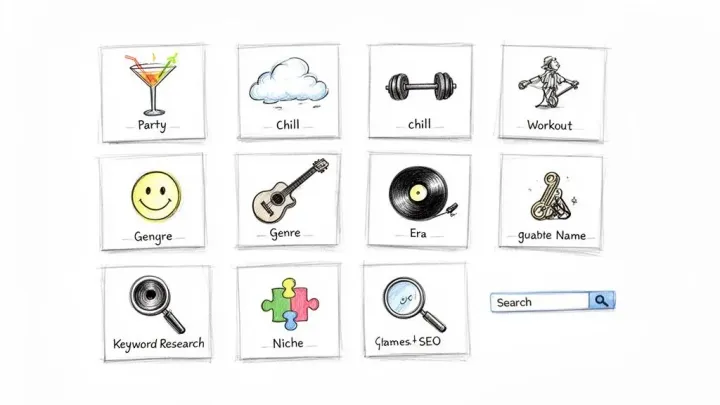
In the crowded world of music streaming, a playlist’s success often hinges on its name. A great name isn’t just a label; it’s a powerful marketing tool, a discovery magnet, and a clear promise to the listener. It is the first and often only chance to capture attention, making the difference between a click and a scroll. For artists, curators, and managers, a well-chosen name directly impacts visibility and stream counts on platforms like Spotify.
This guide moves beyond generic titles to break down 10 proven categories of music playlist names that top curators use to attract millions of listeners. We will explore the strategy and psychology behind each approach, providing actionable tips you can implement immediately. You will learn how to create names that resonate with specific moods, activities, and genres while also enhancing searchability.
Think of this not just as a list of creative ideas, but as a strategic blueprint for discoverability. Mastering the art of playlist naming is your first and most crucial step toward building an engaged, dedicated audience. Let’s dive into the frameworks that turn simple playlists into influential platforms for music discovery.
1. Mood-Based Naming (e.g., ‘Midnight Vibes’, ‘Golden Hour’)
Mood-based naming is one of the most powerful strategies for creating effective music playlist names. This approach focuses on the emotional context or feeling the music evokes, rather than its genre. By tapping into a listener’s desired state, you create an instantly relatable and searchable playlist. Listeners often search for music based on how they want to feel, making titles like ‘Chill Hits’ or ‘Peaceful Piano’ incredibly successful on platforms like Spotify.
This method connects your music curation directly to a specific activity, time of day, or atmosphere, such as ‘Late Night Drives’ or ‘Cozy Autumn Reads’. It’s about selling an experience, not just a collection of songs.
Actionable Tips for Mood-Based Names
To stand out in a crowded space, combine a core mood with descriptive keywords. This creates a unique and memorable title that still targets popular search queries.
- Combine Keywords: Pair a primary mood like “Chill” with a secondary descriptor like “Morning” or “Lofi” to create a more specific name, for instance, ‘Chill Morning Lofi’.
- Use Atmospheric Language: Words like ‘Midnight,’ ‘Golden Hour,’ ‘Electric,’ or ‘Rainy Day’ add a strong visual and emotional layer that enhances the playlist’s appeal.
- Reinforce with Visuals: Ensure your playlist cover art visually represents the mood. A ‘Golden Hour’ playlist should feature warm, sun-kissed imagery to create a cohesive brand.
2. Activity-Based Naming (e.g., ‘Gym Power Hour’, ‘Study Session’)
Activity-based naming is a highly effective strategy for creating practical music playlist names that directly address a listener’s needs. This approach ties your playlist to a specific task, such as working out, studying, or cooking, making it an instant utility for users. By clearly stating the playlist’s purpose, you align with user search intent, as listeners often look for music to accompany their daily routines, making titles like ‘Beast Mode’ or ‘Deep Focus’ incredibly popular.
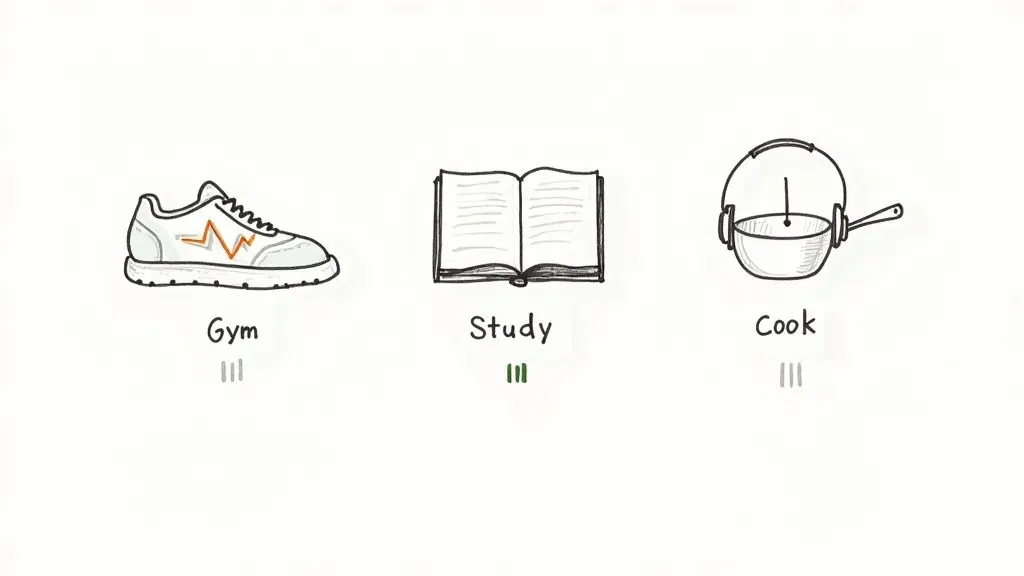
This method transforms your playlist from a simple song collection into a functional tool. It promises a specific outcome: enhanced focus for studying, higher energy for a workout, or a relaxed atmosphere for cooking. To succeed with this strategy, you must deliver on that promise by carefully curating music that matches the energy and tempo of the activity.
Actionable Tips for Activity-Based Names
To capture listener attention, your title must be explicit and functional. Combine the core activity with compelling descriptors that promise a better experience.
- Be Specific: Clearly state the activity in the title. Use direct terms like ‘Running,’ ‘Coding,’ ‘Meditation,’ or ‘Party Prep’ to attract the right audience.
- Add Emojis: Use relevant emojis like 🏋️, 📚, or 🧑🍳 to make your title more visually appealing and instantly recognizable in search results.
- Match the Vibe: Pair the activity with an adjective that sets expectations, such as ‘Uptempo Running Hits,’ ‘Ambient Study Music,’ or ‘Feel-Good Cooking Jams.’
3. Decade/Era-Based Naming (e.g., ‘80s Synth Classics’, ‘Y2K Nostalgia’)
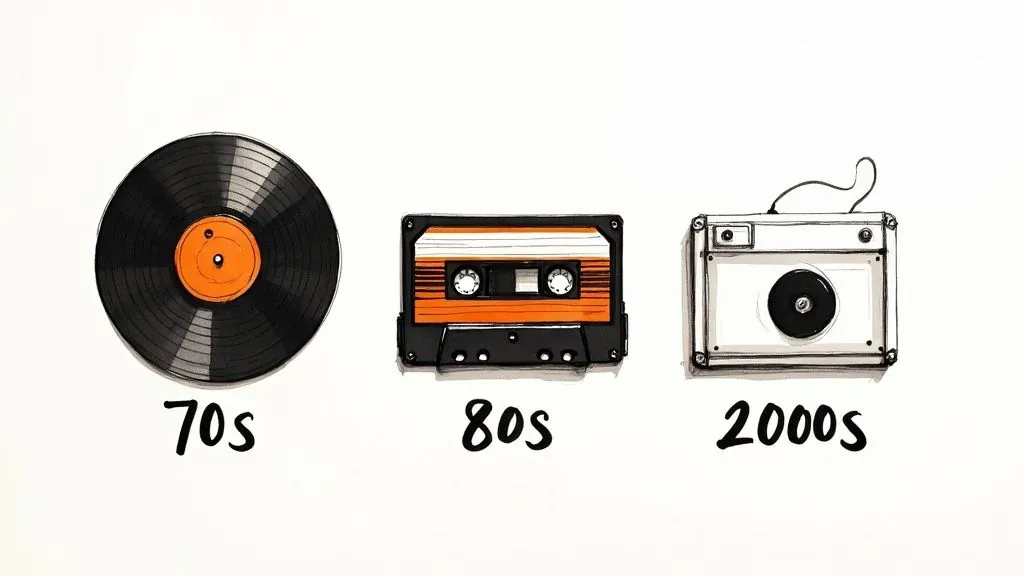
Tapping into nostalgia is a timeless strategy for creating popular music playlist names. This approach centers your curation on a specific decade, era, or generational theme, instantly connecting with listeners who experienced that time and younger audiences discovering ‘vintage’ music. These playlists work because they offer a reliable and familiar listening experience, built on the cultural significance of periods like the 70s, 80s, or the Y2K era.
By organizing songs chronologically, you create a musical time capsule. Listeners actively search for terms like ‘90s Hits’ or ‘2000s Pop,’ making these names highly effective for discovery on platforms like Spotify and YouTube, where nostalgia-driven content thrives.
Actionable Tips for Decade-Based Names
Specificity is key to standing out. While a broad title like ‘80s Music’ is good, a more niche name often attracts a more dedicated audience and faces less competition.
- Specify Subgenres: Instead of a generic decade, focus on a specific movement. ‘90s Grunge Essentials’ is more compelling and searchable than just ‘90s Rock’.
- Mix Hits and Deep Cuts: Include the massive chart-toppers that define an era, but add lesser-known tracks to provide authenticity and surprise for dedicated fans.
- Use Era-Specific Imagery: Your playlist cover art must reflect the aesthetic of the chosen decade. Use distinct fonts, color palettes, and imagery from the period to create a cohesive brand.
4. Genre-Specific Naming (e.g., ‘Deep House Essentials’, ‘Indie Folk Gems’)
Genre-specific naming is a classic, straightforward strategy for creating effective music playlist names. This method prioritizes clarity, telling listeners exactly what kind of music to expect. It directly targets users who search with specific genres in mind, making it highly effective for music enthusiasts and purists looking for a particular sound, like ‘Trap Bangers’ or ‘Progressive Rock Legends’.
While mood-based naming has surged in popularity, genre-focused playlists remain a foundational part of music discovery. They serve listeners who know what they want, providing a reliable and clear-cut way to explore new artists within a familiar sonic landscape. Titles like ‘Indie Folk Gems’ or ‘Deep House Essentials’ promise a curated selection that respects the listener’s taste.
Actionable Tips for Genre-Specific Names
To make your genre playlist stand out, add descriptive qualifiers that signal its unique angle or focus. This helps differentiate it from thousands of other playlists with similar names.
- Add Qualifier Words: Use adjectives like ‘Essential,’ ‘Modern,’ ‘Underground,’ or ‘Gems’ to add value and indicate the curation style, for example, ‘Underground Hip-Hop Gems’.
- Combine Genres: Merge a primary and secondary genre to attract a niche audience. A name like ‘Synthwave-Electronic Noir’ is far more intriguing and specific than just ‘Synthwave’.
- Use Descriptive Adjectives: Go beyond the genre itself. ‘Aggressive Metalcore’ or ‘Melodic Death Metal’ sets a more precise expectation of the energy and style.
5. Artist/Collaboration-Based Naming (e.g., ‘Tested & Trusted by [Artist]’, ‘Producer Series’)
Artist-based naming leverages the credibility and fanbase of a specific creator, making it a highly effective strategy for generating instant interest in music playlist names. This approach positions the playlist as an authentic curation, directly endorsed or created by a trusted artist, producer, or brand. It builds on an existing audience’s loyalty, transforming a simple collection of songs into an official recommendation.
This method works because it offers fans a deeper connection to the artists they admire, giving them a glimpse into their influences and favorite tracks. Playlists like Spotify’s official artist-curated series or a producer’s handpicked “Beat Tape” instantly stand out as high-quality, trustworthy selections in a saturated market.
Actionable Tips for Artist-Based Names
To maximize impact, the artist’s identity must be central to the playlist’s branding, from the title to the description and visual elements.
- Clearly State the Curator: Use the artist’s name directly in the title, such as ‘Handpicked by [Artist Name]’ or ‘[Artist Name]’s Studio Essentials’. This is crucial for search visibility and immediate recognition.
- Leverage Visual Branding: Use an official press photo of the artist or custom-branded artwork for the playlist cover. This reinforces the authenticity of the collaboration.
- Create a Series: Frame the playlist as part of an ongoing series (e.g., ‘Producer Series: Vol. 1’) to encourage followers to return for future updates and installments.
- Cross-Promote Heavily: The collaborating artist should promote the playlist across all their social media channels, driving their dedicated fanbase directly to the music.
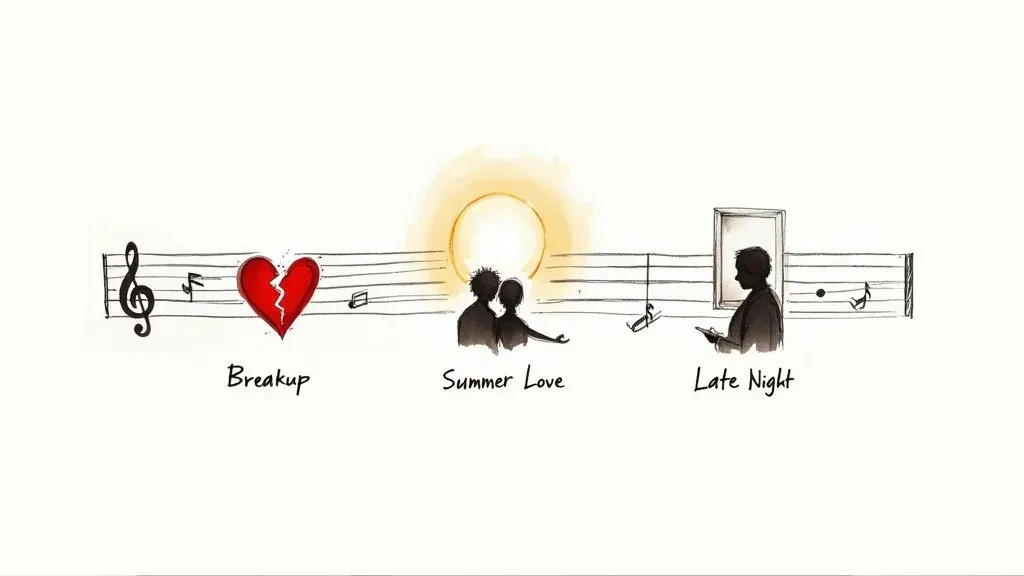
6. Thematic/Narrative-Based Naming (e.g., ‘Breakup Anthems’, ‘Summer Love Stories’)
Thematic naming transforms your playlist from a simple song collection into a cohesive narrative or experience. This strategy builds a playlist around a specific concept, life event, or story, creating powerful emotional resonance. Instead of targeting a general mood, it taps into shared human experiences, making music playlist names like ‘Getting Over You’ or ‘Late Night Confessions’ intensely relatable and shareable.
This approach is highly effective because it tells a story, inviting listeners to see the playlist as the soundtrack to a specific chapter in their own lives. It creates a deep, personal connection that encourages listeners to follow, save, and return to the playlist during similar moments.
Actionable Tips for Thematic/Narrative Names
To create a compelling narrative playlist, your title and curation must work together to tell a clear and engaging story. Focus on themes with universal appeal while adding your unique perspective.
- Choose Resonant Themes: Focus on universal experiences like love, heartbreak, ambition, or nostalgia. Titles like ‘Crying in the Club’ or ‘Therapy Sessions’ are popular because they tap into highly specific yet widely understood emotional states.
- Use Evocative Language: Employ poetic or story-driven words that set a scene. ‘Songs to Sing in the Car’ instantly creates a vision of a road trip with friends, defining both the theme and the ideal listening environment.
- Write a Compelling Description: Use the playlist description to expand on the narrative. Explain the story behind the song choices and guide the listener through the emotional arc you’ve created.
7. Collaborative/Community-Based Naming (e.g., ‘[Community Name] Favorites’, ‘Fan-Curated Hits’)
Collaborative naming leverages the power of community to create engaging and authentic music playlist names. This approach involves sourcing song suggestions, votes, or even the title itself from an audience, such as fans, followers, or members of a specific online group like a Discord server or subreddit. This method fosters a strong sense of ownership and belonging among listeners, transforming passive consumption into active participation.
Playlists like ‘Reddit’s Indie Heads Picks’ or a Twitch streamer’s ‘Community Voted Anthems’ succeed because they are built with the audience, not just for them. This strategy is excellent for building a loyal following around an artist, brand, or content creator by making the community an integral part of the curation process.
Actionable Tips for Community-Based Names
To effectively manage a community playlist, establish clear guidelines and a consistent submission process. This ensures the playlist remains cohesive while celebrating collective taste.
- Establish Clear Rules: Set a theme, genre, or mood for each curation cycle (e.g., ‘Monthly Throwback Submissions’) to maintain focus and quality.
- Create a Submission Funnel: Use tools like Google Forms, a dedicated Discord channel, or social media threads to streamline song suggestions and voting.
- Credit Contributors: Acknowledge top contributors or guest curators in the playlist description to reward participation and encourage future engagement. Highlighting community stories behind song choices adds a personal touch.
8. Location/Culture-Based Naming (e.g., ‘Tokyo Underground’, ‘Brooklyn Indie Scene’)
Location and culture-based naming is a highly effective strategy for crafting niche music playlist names. This approach ties your music curation to a specific geographic place, city, or cultural movement, creating a powerful sense of authenticity and discovery. It appeals directly to listeners interested in exploring local scenes, travelers seeking a soundtrack for their adventures, or cultural enthusiasts.
This method transforms a playlist from a simple collection of songs into a cultural artifact, offering a window into a specific scene. Playlists like ‘Berlin Trap’ or ‘Austin Live Music’ succeed by connecting sound directly to place, giving listeners an immersive, location-specific experience that goes beyond genre alone.
Actionable Tips for Location/Culture-Based Names
To capture the essence of a location, combine geographical keywords with specific scene identifiers. This provides context and attracts listeners searching for an authentic sound.
- Combine Keywords: Pair a city or region like “Nashville” with a subgenre or scene identifier like “Deep Cuts” to create a specific, searchable title, for instance, ‘Nashville Country Deep Cuts’.
- Use Local Elements: Incorporate authentic local slang or language elements where appropriate to deepen the cultural connection. Ensure your playlist cover art features iconic geographical or cultural imagery.
- Feature Local Artists: Prioritize music from local and independent artists from that region to reinforce the playlist’s authenticity and provide a genuine platform for discovery.
9. Descriptive/Adjective-Based Naming (e.g., ‘Cinematic Soundscapes’, ‘Ethereal & Hypnotic’)
Descriptive naming uses evocative adjectives to paint a sonic picture, focusing on the texture and aesthetic of the music itself. Unlike mood-based names that target an activity, this approach sells the sound. It promises a specific auditory experience, making it a powerful strategy for curating music playlist names with a strong, consistent identity, like ‘Warm & Fuzzy’ or ‘Dark & Hypnotic’.
This method is particularly effective for atmospheric, instrumental, or niche genres where the sonic qualities are the main draw. By using sensory-rich language, you attract listeners searching for a particular sound profile, such as ‘Lush & Atmospheric’ or ‘Gritty Urban Soundscapes’. It’s about defining the music’s character before the first note is even played.
Actionable Tips for Descriptive Names
To create compelling descriptive titles, focus on words that trigger sensory and emotional responses. This helps your playlist stand out and accurately set listener expectations.
- Combine Adjectives: Pair two complementary or contrasting adjectives to create depth and intrigue. Examples include ‘Cinematic & Moody’ or ‘Raw & Powerful’. This technique adds a layer of sophistication to your title.
- Use Poetic Language: Employ words that evoke texture, color, and feeling, such as ‘Ethereal,’ ‘Glistening,’ ‘Jagged,’ or ‘Velvet.’ These artistic terms create a more memorable and appealing name.
- Align Visuals and Descriptions: Your playlist cover and description must match the sonic aesthetic. A ‘Cinematic Soundscapes’ playlist should feature epic, expansive imagery and a description that reinforces its grand, emotional scope.
10. Seasonal/Temporal-Based Naming (e.g., ‘Summer 2024 Bangers’, ‘Holiday Hits 2024’)
Seasonal or temporal-based naming is a highly effective strategy for creating timely and relevant music playlist names. This approach ties your playlist directly to a specific season, holiday, or time period, capitalizing on recurring search trends and listener habits. Listeners actively seek out music that fits the current moment, making titles like ‘Summer Hits’ or ‘Christmas Classics’ perennial favorites on platforms like Spotify.
This method transforms your playlist into a recurring event, encouraging listeners to return year after year. By aligning your curation with the calendar, such as ‘Back to School 2024’ or ‘Holiday Party Hits’, you tap into a built-in audience with a predictable demand, making your playlist an essential part of their seasonal experience.
Actionable Tips for Seasonal/Temporal-Based Names
To maximize engagement, focus on timeliness and consistency. Your goal is to become the go-to playlist for a particular time of year, building a loyal following that anticipates your annual updates.
- Always Include the Year: Adding the current year (e.g., ‘Summer 2024’) signals that the playlist is fresh and up-to-date, dramatically increasing its click-through rate.
- Plan Ahead: Begin curating and promoting your seasonal playlist 4-6 weeks before the season officially starts to build momentum and capture early interest.
- Create a Consistent Series: Build brand recognition by releasing annual editions, like ‘Winter Essentials 2023’, ‘Winter Essentials 2024’, and so on.
10 Playlist Naming Styles Compared
| Naming Style | 🔄 Implementation Complexity | ⚡ Resource Requirements | 📊 Expected Outcomes | 💡 Ideal Use Cases | ⭐ Key Advantages |
|---|---|---|---|---|---|
| Mood-Based Naming (e.g., “Midnight Vibes”) | Medium — needs coherent mood definition and curation | Moderate — curation time, imagery, A/B testing | High — strong discoverability and saves | Streaming discovery, relaxation, mood listening | Emotional connection; flexible genre mix |
| Activity-Based Naming (e.g., “Gym Power Hour”) | Low — direct, action-oriented titles | Moderate — tempo/BPM matching, sequencing | Very high — intent-matched engagement and retention | Workouts, study sessions, commuting | Clear utility; high search intent match |
| Decade/Era-Based (e.g., “80s Synth Classics”) | Medium — requires historical accuracy | Moderate — research, era-specific assets | High — nostalgia-driven virality and longevity | Throwbacks, nostalgic marketing, archival features | Strong nostalgia; cross-generational appeal |
| Genre-Specific (e.g., “Deep House Essentials”) | Low — taxonomy-based naming | Low–Moderate — genre expertise and tagging | Reliable — attracts genre-focused listeners | Fan communities, music blogs, genre discovery | Clear expectations; SEO- and fan-friendly |
| Artist/Collaboration-Based (e.g., “Artist Picks”) | High — needs artist buy-in and coordination | High — partnerships, promotion, rights considerations | Very high — credibility and fan engagement | Artist promos, label showcases, exclusive series | Built-in audience; high trust and authenticity |
| Thematic/Narrative-Based (e.g., “Breakup Anthems”) | Medium–High — requires storytelling and coherence | Moderate — creative writing, cover art, curation | High — strong shareability and emotional resonance | Emotional moments, social campaigns, playlists series | Distinctive, memorable, highly shareable |
| Collaborative/Community-Based (e.g., “Fan-Curated Hits”) | High — systems for submissions and moderation | High — community management, moderation tools | High — increased engagement and diverse curation | Fan communities, Discord/Reddit, event-led lists | Builds loyalty; reflects audience taste |
| Location/Culture-Based (e.g., “Tokyo Underground”) | Medium — needs local scene knowledge | Moderate — research, local partnerships | Moderate–High — authentic discovery; niche appeal | Tourism, cultural discovery, local artist promotion | Unique differentiation; supports local scenes |
| Descriptive/Adjective-Based (e.g., “Cinematic Soundscapes”) | Medium — must maintain sonic consistency | Moderate — artistic direction, visual branding | Moderate — appeals to aesthetic-focused listeners | Ambient, soundtrack fans, art-focused curation | Evocative and memorable; artistic credibility |
| Seasonal/Temporal-Based (e.g., “Summer 2024 Bangers”) | Low — straightforward but recurring updates needed | Ongoing — periodic refreshes, timely promotion | High during season — predictable engagement spikes | Holiday campaigns, seasonal marketing, annual series | Recurring freshness; timely relevance and promotion opportunities |
Putting It All Together: Your Data-Driven Playlist Naming Strategy
We’ve explored a comprehensive toolkit of strategies, moving from mood-based concepts like ‘Midnight Vibes’ to niche-specific titles such as ‘Tokyo Underground’. Each approach offers a unique pathway to connect with listeners, but the true catalyst for growth lies in bridging your creative intuition with empirical data. The search for perfect music playlist names is not a one-time event; it’s a dynamic, iterative process of refinement.
The most successful curators on platforms like Spotify don’t just create playlists; they engineer them for discovery. They understand that a name is more than a label. It’s a strategic asset, a beacon that guides listeners through a sea of millions of options. Your playlist name is the first, and often most critical, touchpoint in a listener’s journey.
From Creative Spark to Strategic Action
The core takeaway is this: your initial idea, whether it’s ‘Gym Power Hour’ or ‘Y2K Nostalgia’, is just the starting point. The real work begins when you validate that idea against actual listener behavior. Are people actively searching for these terms? Is there an opportunity to rank for a specific keyword that has high search volume but low competition? This is where a data-driven mindset separates amateur curators from professional tastemakers.
To put this into practice, here are your actionable next steps:
- Brainstorm & Categorize: Start by generating a list of potential names using the ten categories we discussed. Don’t self-censor; capture every idea that comes to mind.
- Validate with Data: This is the most crucial step. Use a specialized tool to analyze your list. Look at search volume, keyword difficulty, and related search queries to identify the names with the highest potential for organic discovery.
- Optimize for Intent: Refine your chosen name based on user search patterns. If data shows people are searching for “90s rock workout,” consider adapting your ‘Rock Workout’ playlist to be more specific and capture that targeted audience.
- Track & Iterate: Once your playlist is live, monitor its performance. Use search ranking tools to see where you stand for your target keywords. If you aren’t gaining traction, don’t be afraid to tweak the name or description and test a new hypothesis.
Ultimately, building a powerful playlist brand is a marathon, not a sprint. By consistently applying these principles, you move beyond guesswork and into a realm of informed decision-making. You’re no longer just hoping listeners will find you; you are actively paving the way for them to connect with your music. This strategic approach elevates your curation from a simple hobby into a powerful tool for audience growth and musical influence.
Ready to stop guessing and start strategizing? artist.tools provides the essential data you need, including Keyword Search and Playlist Search Rankings, to validate your music playlist names and optimize them for maximum visibility on Spotify. Transform your curation process by signing up at artist.tools and unlock the insights that drive real growth.