
A Guide to the 8 Core Techno Music Types in 2026
Explore the 8 essential techno music types, from Minimal to Industrial. Get production tips, artist examples, and Spotify strategies for each subgenre.
Techno is not a monolith. It’s a rich universe of subgenres, each with a distinct sonic identity, history, and culture. For producers, DJs, and industry professionals, understanding the differences between these techno music types is essential for creative and strategic success. Moving beyond generic descriptions, this guide provides a definitive breakdown of eight core subgenres, from the soulful origins of Detroit to the relentless pulse of Berlin’s warehouses.
This article delivers more than just definitions. We will dissect the crucial characteristics of each style, including BPM ranges, sonic signatures, and the key artists who shaped them. You’ll gain a practical framework for identifying and producing within these specific niches, ensuring your sound is authentic and well-defined.
Most importantly, this guide provides actionable strategies for navigating the modern music ecosystem. For each subgenre, we will outline a data-informed approach to Spotify promotion. You will learn how to:
- Pinpoint the right playlist targets using specific keywords.
- Optimize your track’s metadata for maximum discoverability.
- Craft effective pitches that resonate with curators.
Whether you are refining your next production or building a targeted marketing campaign, this resource is your roadmap. It’s designed to help you master the diverse landscape of techno and connect your music with the right audience.
1. Minimal Techno
Minimal techno is an exercise in intentional restraint. It strips electronic music down to its fundamental components, focusing on repetitive loops, sparse arrangements, and subtle, progressive variations. Originating in the 1990s, this subgenre prioritizes hypnotic rhythm and textural evolution over melodic complexity. Small sonic changes feel momentous over the course of an extended track, where silence and space are as crucial as the sounds themselves.
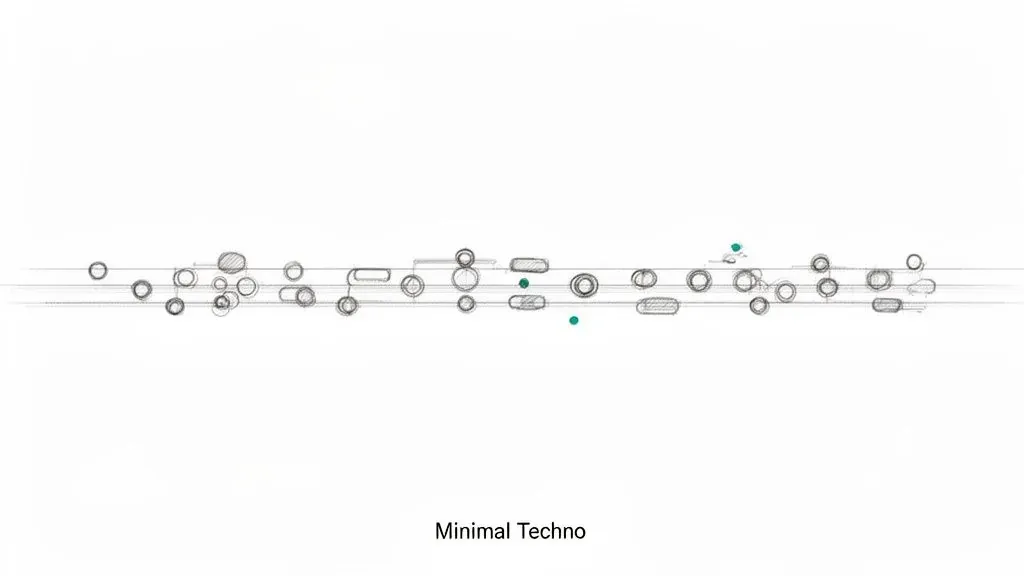
This ‘less is more’ approach creates a deep, meditative atmosphere that has a dedicated following on platforms like Spotify. Listeners seek out minimal techno for focus, driving, and deep listening sessions, making it a powerful niche for artists to occupy.
Sonic & Production Cues
- BPM Range: Typically 120-130 BPM. The tempo is steady and hypnotic, designed for long-form mixing and gradual immersion.
- Arrangement: Characterized by sparse instrumentation. A kick drum, a sub-bass line, and one or two percussive or textural elements often form the entire track.
- Production: Focus on high-fidelity sound design and micro-details. Subtle filter sweeps, fractional delay shifts, and evolving reverb tails replace traditional melodic hooks. The track’s progression comes from gradual addition or subtraction of these core elements.
Key Artists & Tracks
- Richie Hawtin (Plastikman): His work, especially on the album Sheet One, is a foundational text for the genre.
- Luciano: Known for blending minimal aesthetics with Latin percussive influences.
- Robert Henke (Monolake): A master of texture and atmospheric sound design.
- Carsten Nicolai (Alva Noto): Explores the intersection of art, science, and glitch-infused minimalism.
Spotify Playlisting Strategy
Positioning a minimal track on Spotify requires a targeted approach. Success hinges on reaching curators who value deep, nuanced electronic music.
- Playlist Research: Use Playlist Search to find curators specifically managing lists with keywords like “Minimal Underground,” “Deep Minimal,” or “Hypnotic Techno.” Avoid pitching to broad “Techno” playlists where your track might get lost.
- Competitor Analysis: Research artists similar to your style. Use tools to see which playlists propelled their growth and target those same lists. This provides a proven path for your music.
- Monitor Performance: After securing a placement, track your performance. A high skip rate might indicate a poor playlist fit, while a high save rate shows you’ve found the right audience. You can get a clearer view of the most impactful techno playlists to identify your best targets.
2. Acid Techno
Acid techno is defined by the unmistakable squelching, resonant sound of the Roland TB-303 Bass Line synthesizer. Born from the Chicago house scene and warehouse raves of the late 1980s, this subgenre injects a dose of chaotic, psychedelic energy into techno’s disciplined framework. It retains the driving 4/4 kick drum but builds everything around the hypnotic, filter-swept modulations of the 303, creating tracks that are both aggressive and playful. The result is a high-energy sound that is one of the most recognizable in all of electronic music.
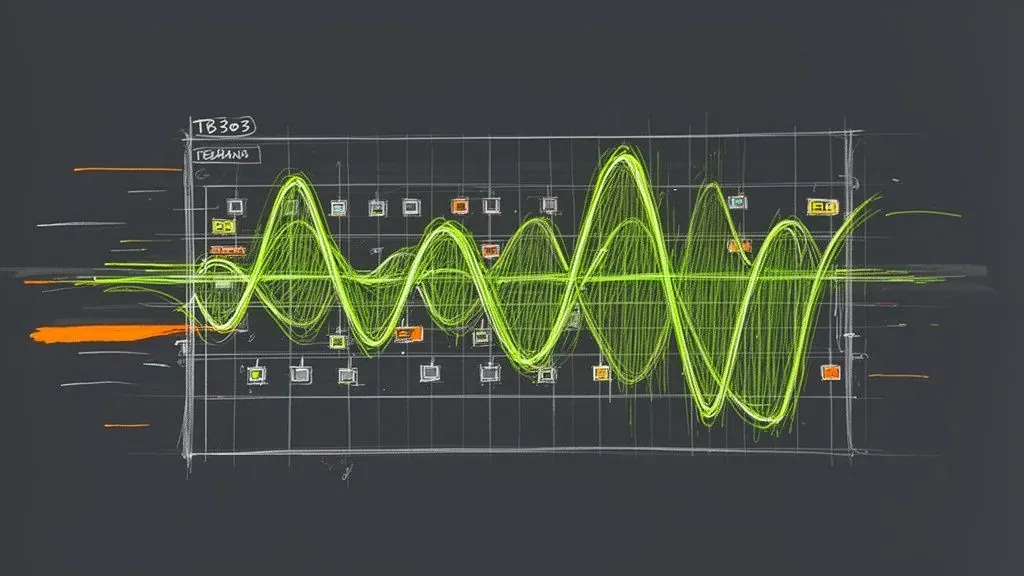
This distinctive sound gives acid techno a broad appeal, attracting both hardcore techno purists and listeners from adjacent genres like acid house. For producers, the iconic 303 sound provides a powerful and immediate hook, making it a potent style for gaining traction on Spotify.
Sonic & Production Cues
- BPM Range: Typically faster than minimal, ranging from 130-150 BPM. The pace is relentless and built for peak-time dancefloors.
- Arrangement: The TB-303 is the star. Its manipulated bassline, characterized by high resonance and cutoff frequency modulation, forms the central melodic and rhythmic hook. This is layered over a hard-hitting kick drum and crisp hi-hats.
- Production: The focus is on making the 303 sequence evolve. Producers heavily automate the filter cutoff, resonance, and envelope modulation to create the signature “squelchy” and “wobbling” effects. Distortion and delay are often applied to give the 303 line extra grit and dimension.

Key Artists & Tracks
- Phuture (DJ Pierre): Their track “Acid Tracks” is widely credited as the first acid house/techno record, establishing the genre’s sonic template.
- Trax Records: The legendary Chicago label that released many of the earliest and most influential acid tracks.
- Plastikman (Richie Hawtin): While a minimal pioneer, his acid-influenced work showed how the 303 could be used in darker, more hypnotic contexts.
- Rødhåd: A contemporary artist who frequently incorporates raw, powerful acid lines into his modern, atmospheric techno productions.
Spotify Playlisting Strategy
The iconic sound of acid techno makes it highly discoverable, but successful pitching requires targeting the right audience.
- Playlist Research: Use Playlist Search to find lists with keywords like “Acid Techno,” “303 Worship,” or “Hard Acid.” Analyze these playlists for bot activity to ensure you’re pitching to lists with real, engaged listeners.
- Competitor Analysis: Track the monthly listener growth of established and rising acid techno artists. Identify the key playlists that contributed to their spikes and prioritize those curators in your outreach.
- Monitor Performance: Once placed, use a track stream tracker to see how your song performs. High save and completion rates on an “Acid Techno Essentials” playlist signal a perfect fit, validating your outreach strategy and providing data for future pitches.
3. Detroit Techno
Detroit techno is the foundational sound that started it all. Born in the mid-1980s from the post-industrial landscape of Detroit, Michigan, it fuses the soulful, funk-infused grooves of its city’s heritage with futuristic, often melancholic synthesizer melodies. Pioneered by the ‘Belleville Three’ - Juan Atkins, Derrick May, and Kevin Saunderson - this original blueprint for techno music types is defined by its emotional depth, musicality, and a vision of a high-tech, soulful future. It’s a genre that tells a story, blending the humanity of its creators with the cold precision of machines.
This blend of man and machine gives Detroit techno a timeless appeal. On Spotify, it attracts not only electronic music purists but also crossover listeners who appreciate its rich musical heritage and soulful qualities, making it a powerful and respected category.
Sonic & Production Cues
- BPM Range: Generally 125-135 BPM. The tempo is energetic and danceable but retains a soulful, less rigid groove than harder techno styles.
- Arrangement: Often more complex and melodic than its descendants. It features distinct chord progressions, string-like synth pads, and basslines influenced by funk and soul music, built around a Roland TR-909 drum machine framework.
- Production: The sound is a product of its time’s technology, embracing analog synthesizers and drum machines. It has a characteristic warmth and rawness, with a focus on creating an immersive, science-fiction-inspired atmosphere alongside a driving rhythm.
Key Artists & Tracks
- Juan Atkins (Model 500): His track “No UFOs” is often cited as the first Detroit techno record, establishing the genre’s sonic signature.
- Derrick May (Rhythim Is Rhythim): “Strings of Life” is an iconic anthem, showcasing the genre’s capacity for soaring, emotional expression.
- Kevin Saunderson (Inner City): Brought techno to the pop charts with hits like “Good Life,” proving its crossover potential.
- Underground Resistance: A collective known for its politically charged, militant aesthetic and uncompromising sound.
Spotify Playlisting Strategy
Promoting Detroit techno requires honoring its legacy while connecting with modern listeners. The goal is to reach audiences who appreciate electronic music with soul and a story.
- Playlist Research: Use the “Detroit techno” keyword on Spotify. Beyond official lists like ‘Detroit Techno Essentials,’ look for user-curated playlists with titles like “Techno Origins,” “Electronic Soul,” or “Classic House & Techno.”
- Competitor Analysis: Analyze artists like Carl Craig or Jeff Mills to see which contemporary and throwback playlists feature them. This reveals curators who bridge the gap between old-school and modern electronic music.
- Monitor Performance: When submitting, highlight the track’s soulful or melodic elements. A placement on a “throwback” playlist can generate algorithmic traction, leading Spotify to recommend your track to listeners of classic electronic music, creating a new wave of discovery.
4. Berlin Techno (Hard Techno)
Berlin techno is the relentless, driving sound forged in the city’s post-reunification club culture. Also known as hard techno, this style emerged from the dark, cavernous spaces of 1990s Berlin, prioritizing raw energy and industrial-influenced aesthetics. It combines techno’s repetitive foundation with the confrontational textures of EBM and industrial music, creating a dystopian, high-impact sound built for peak-time dance floors.
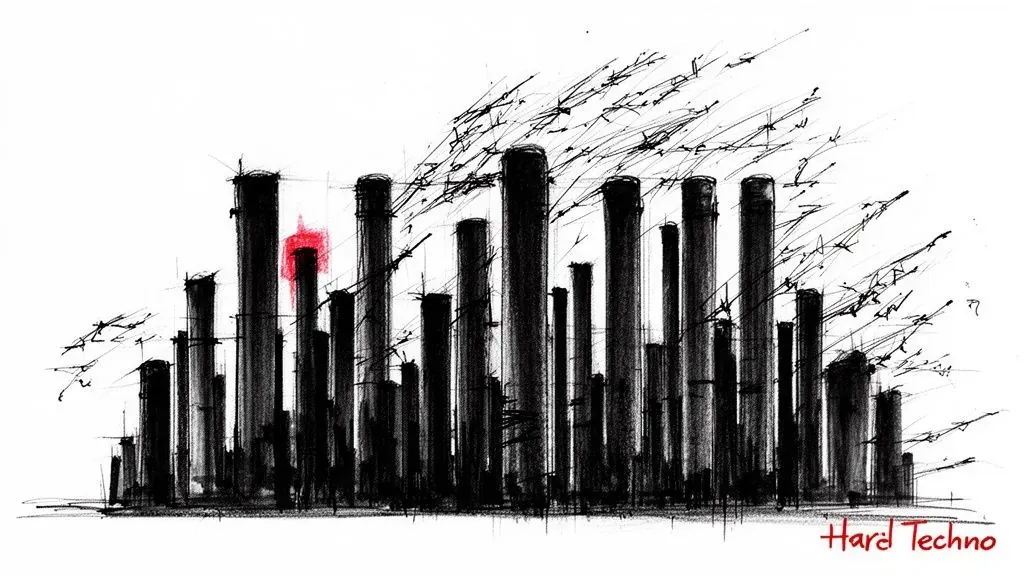
Unlike more subtle techno music types, Berlin techno is defined by its intensity. The sound has a massive following on Spotify, particularly within European markets, appealing to listeners who crave aggressive, club-centric electronic music. For artists, this subgenre offers a direct line to a dedicated audience that values power and atmosphere.
Sonic & Production Cues
- BPM Range: Typically 135-150 BPM. The pace is fast and unyielding, designed to create a sense of urgent momentum.
- Arrangement: Dominated by a punishing, often distorted kick drum. Layers of aggressive synth stabs, industrial percussion, and atmospheric pads create a dense, overwhelming soundscape.
- Production: Focuses on distortion, saturation, and heavy compression to achieve a powerful, overdriven character. Production is less about pristine clarity and more about creating a feeling of raw, untamed energy. Reverb is often used to evoke large, industrial spaces.
Key Artists & Tracks
- Ellen Allien: A cornerstone of the Berlin scene, her label BPitch Control has shaped the city’s sound.
- Marcel Dettmann: As a Berghain resident, his style defines the club’s hard-hitting, hypnotic aesthetic.
- Surgeon: A UK artist whose industrial and experimental influences were crucial in forming the hard techno sound.
- Berghain Records / Ostgut Ton: The label’s output serves as a definitive guide to the modern Berlin sound.
Spotify Playlisting Strategy
Success with Berlin techno requires connecting with curators who champion intense, underground sounds, often with a geographic focus on Europe.
- Playlist Research: Use Playlist Search with geographic filters to pinpoint playlists popular in Germany and other European techno strongholds. Search for keywords like “Berlin Techno,” “Hard Techno,” and “Industrial Techno.”
- Competitor Analysis: Analyze established Berlin techno artists. See which region-specific and club-focused playlists are driving their streams and target those same curators. This gives your track a proven pathway to the right audience.
- Monitor Performance: After getting placed, use a Stream Tracker to see how your track performs on club-focused playlists. High engagement and save rates confirm you’ve hit your target demographic. To submit your music to an impactful network, you can find the most effective techno playlists for your specific sound.
5. Progressive Techno
Progressive techno is a journey in sound, meticulously crafted to build tension and release it over an extended duration. It merges the driving, rhythmic foundation of techno with the emotive, melodic storytelling of progressive house. Instead of a static loop, these tracks, often 8 to 12 minutes long, gradually introduce new sonic layers, from evolving synth arpeggios to atmospheric pads, creating a rich and dynamic listening experience.
This subgenre has a wide appeal, finding a home in both massive festivals and intimate clubs. Its strong algorithmic performance on Spotify, bridging the gap between underground and mainstream listeners, makes it a potent category for artists looking to grow their audience. It’s one of the most versatile techno music types for playlisting.
Sonic & Production Cues
- BPM Range: Typically 120-130 BPM. The moderate tempo provides a solid groove for dancing while allowing ample space for melodic and textural development.
- Arrangement: Characterized by long, evolving structures. Tracks often feature extended intros, gradual builds, a central melodic or atmospheric climax, and long, smooth outros perfect for DJ mixing.
- Production: Focus is on clean, powerful sound design with a polished finish. Smooth filter automation, layered synthesizers, and spacious reverbs are common. The mix is dynamic, with elements entering and exiting to guide the listener’s emotional arc.
Key Artists & Tracks
- Sasha & John Digweed: Their legendary sets and compilations helped define the genre’s expansive, journey-like feel.
- Adam Beyer: Much of his recent work on his Drumcode label embodies a powerful, modern take on progressive techno.
- Richie Hawtin: While known for minimal, his more progressive-oriented releases showcase a deep understanding of evolving arrangements.
- Loco Dice: Often blends percussive techno with deep, progressive elements.
Spotify Playlisting Strategy
Progressive techno’s popularity provides numerous opportunities for playlist placement, from editorial lists to user-curated ones. A data-informed approach is critical.
- Playlist Research: Use Playlist Search to find high-traffic editorial playlists like “Progressive Techno” and “Techno Pulse.” Also identify independent curators focusing on keywords like “Melodic Techno Journey” and “Deep Progressive.”
- Competitor Analysis: Analyze successful tracks by similar artists. See which playlists gave them initial traction and which larger ones they graduated to. This creates a clear roadmap for your own submissions.
- Monitor Performance: After getting placed, track listener engagement. Pay close attention to completion rates on your longer tracks. If listeners drop off during a specific breakdown or build-up, that data can inform the arrangement of your next production.
6. Hypnotic/Psychedelic Techno
Hypnotic or psychedelic techno is a journey into the mind, merging the repetitive drive of techno with elements designed to induce an altered state. It prioritizes swirling synths, complex sonic layering, and surreal atmospheres over pure dancefloor function. The genre is less about peak-time energy and more about creating an introspective, hallucinogenic experience through sound.
Extended track lengths are common, allowing deep, immersive soundscapes to unfold gradually and envelop the listener. This cerebral approach makes it a perfect fit for Spotify listeners seeking experimental electronic music, as well as those looking for focus or meditation aids, opening a unique cross-promotional pathway for artists.
Sonic & Production Cues
- BPM Range: Usually 120-130 BPM. The tempo is often a steady, trance-inducing pulse that acts as a canvas for textural exploration.
- Arrangement: Characterized by dense layers, evolving pads, and unconventional sound design. Tracks build and recede slowly, with an emphasis on creating a continuous, dreamlike flow rather than distinct drops or breaks.
- Production: Advanced use of effects like long delays, deep reverbs, phasers, and flangers is key. The goal is to create a sense of infinite space and movement. Field recordings and organic textures are often processed and woven into the rhythmic framework to add a surreal, tactile quality.
Key Artists & Tracks
- Shpongle: While often categorized as psybient, their techno-influenced work is a cornerstone of psychedelic electronic music.
- Kompakt Records: The label has released numerous tracks that walk the line between minimal, ambient, and psychedelic techno.
- Nicolas Jaar: His experimental productions often incorporate the slow-burning, atmospheric qualities of this style.
- Merkin: Known for deep, tribal, and distinctly psychedelic techno productions.
Spotify Playlisting Strategy
Success with this niche of techno music types requires finding curators who appreciate its introspective and experimental nature. The focus is on mood and mental state.
- Playlist Research: Use a Playlist Search tool to locate lists with keywords like “Psychedelic Techno,” “Hypnotic Electronic,” or “Trance Techno.” These niche playlists have a self-selected, dedicated audience.
- Cross-Genre Pitching: Look beyond traditional techno. Pitch to curators of “Deep Focus,” “Meditation,” or “Ambient” playlists. Frame your track as a tool for concentration or introspection to appeal to a wider audience.
- Keyword Discovery: Research underserved keywords such as “hypnotic techno” and “psychedelic electronica.” Artists who optimize their profiles and track metadata for these terms can capture valuable search traffic from listeners actively seeking this specific sound.
7. Techno House Fusion (Tech House)
Tech house is the ultimate bridge between two of electronic music’s biggest worlds. It merges the groovy, soulful character of house music with the raw, machine-driven precision of techno. This fusion results in tracks that are both rhythmically compelling and sonically sophisticated, pairing house’s dancefloor energy with techno’s darker, more methodical structure. First gaining traction in the late 90s and early 2000s, it has become one of the most dominant and commercially successful techno music types.
This hybrid nature gives tech house its broad appeal, allowing it to thrive in underground clubs, at massive festivals, and on major Spotify playlists like ‘Tech House Essentials’. Its balance of accessible groove and technical depth makes it a strategic genre for artists aiming for wide listenership without losing credibility.
Sonic & Production Cues
- BPM Range: Generally sits between 120-130 BPM. This tempo is perfect for maintaining house’s signature groove while allowing for the progressive layering found in techno.
- Arrangement: Built on a solid four-on-the-floor kick, it often features prominent, filtered house-style basslines, short vocal chops, and crisp, techno-inspired percussion. Tracks progress by adding and removing layers to build tension and release.
- Production: The sound is clean, punchy, and bass-heavy. A key element is the interplay between the kick and a rolling sub-bass. You’ll often hear percussive elements with a metallic or industrial sheen, a nod to its techno parentage.
Key Artists & Tracks
- Claude VonStroke: His label, Dirtybird Records, is a standard-bearer for the quirky, bass-heavy side of the genre.
- Green Velvet: A legendary figure whose work often blurs the lines between house and techno with iconic vocal hooks.
- Loco Dice: Known for his powerful, percussive sets that perfectly embody the genre’s driving energy.
- Luciano: Blends minimal and tech house with Latin rhythms, creating a distinctive and highly influential sound.
Spotify Playlisting Strategy
Tech house’s popularity on Spotify presents a major opportunity, but also stiff competition. A smart submission strategy is critical for gaining traction.
- Playlist Research: Use Playlist Search to find curators managing playlists with keywords like “Tech House,” “Groove Tech,” or “Festival House.” Analyze these lists to ensure their sound matches your track’s specific vibe.
- Cross-Genre Pitching: Submit to both house and techno playlists. Your track’s unique blend can appeal to curators in both camps, increasing your chances of placement and exposing your music to different listener segments. For more on this, check out these house music playlist tips.
- Analyze Competitors: Use a Monthly Listeners Tracker to monitor artists with a similar sound. See which playlists are driving their growth and target those curators with a personalized pitch, referencing your shared sonic space.
8. Industrial/Dark Techno (Power Electronics Influenced)
Industrial or dark techno is a descent into aggressive, dystopian soundscapes. It draws heavily from industrial music, power electronics, and EBM (Electronic Body Music), resulting in a sound defined by harsh textures, distorted elements, and a confrontational aesthetic. This style of techno music often feels cinematic and apocalyptic, prioritizing raw impact and atmospheric tension over conventional groove. It’s the sound of decaying factories and future-shock anxiety, built for warehouses, not sunny festival fields.
This sonic intensity has cultivated a dedicated underground audience on Spotify. Industrial techno finds its home not just in dedicated genre playlists but also in experimental, horror, and thriller-themed collections, offering artists a unique cross-promotional pathway.
Sonic & Production Cues
- BPM Range: Generally sits between 130-145 BPM. The tempo is driving and often relentless, contributing to the music’s aggressive feel.
- Arrangement: Features heavily distorted kick drums, noisy percussive elements, and atonal textures. Arrangements often incorporate martial rhythms, metallic clangs, and cinematic drones, building a sense of foreboding.
- Production: The focus is on sonic aggression and textural depth. Heavy saturation, bit-crushing, and abrasive reverb are common. The production values atmosphere and impact, often sacrificing clean mixdowns for raw power and emotional weight.
Key Artists & Tracks
- Surgeon: A pioneer whose work often blends techno with industrial and EBM influences, known for his raw, powerful sound.
- Andy Stott: His later work, particularly on albums like Luxury Problems, blurs the line between industrial, ambient, and techno.
- Tresor Records: The legendary Berlin label has been a bastion for harder, darker forms of techno for decades.
- Kareem Ali: A contemporary artist pushing the boundaries of harsh, experimental techno.
Spotify Playlisting Strategy
Marketing industrial techno on Spotify means connecting with curators who appreciate its abrasive and atmospheric qualities.
- Playlist Research: Use a Playlist Analyzer to pinpoint active “Dark Techno” and “Industrial Techno” playlists. Prioritize curators with high follower engagement to ensure your track reaches an active audience, not just a list with a large but dormant following.
- Keyword Exploration: Go beyond the obvious. Use a Keyword Search to research niche terms like “harsh techno,” “dystopian,” or “industrial electronics.” Targeting playlists built around these underserved keywords can help you find a foothold.
- Adjacent Genre Pitching: Think thematically. Use a Playlist Search tool to find lists in adjacent categories like “Horror Soundtracks” or “Dark Ambient.” Pitching your track as a tone-setter for cinematic or thriller content can open up unexpected placement opportunities.
Comparison of 8 Techno Subgenres
| Subgenre | 🔄 Implementation Complexity | ⚡ Resource Requirements | 📊 Expected Outcomes | 💡 Ideal Use Cases | ⭐ Key Advantages |
|---|---|---|---|---|---|
| Minimal Techno | 🔄 High — precision mixing & subtle automation needed | ⚡ Moderate — sparse instrumentation but time‑intensive arrangements | 📊 Strong niche engagement; high playlist discoverability | 💡 Niche/meditative playlists, consistent artist branding | ⭐ Clear identity; editorial curator demand |
| Acid Techno | 🔄 Medium — requires TB‑303 programming/emulation skills | ⚡ Moderate — distinctive synth programming and energy in production | 📊 Good crossover potential; high engagement on energetic playlists | 💡 Club peaks, high‑energy playlists, crossover sets | ⭐ Distinctive sonic signature; easy to market |
| Detroit Techno | 🔄 High — melodic composition + humanized drum programming | ⚡ Moderate — synth work and careful arrangement (sometimes vintage gear) | 📊 Strong editorial legitimacy and crossover appeal | 💡 Historical/roots playlists, soulful techno sets, crossover promos | ⭐ Emotional depth and authenticity; editorial credibility |
| Berlin Techno (Hard Techno) | 🔄 Medium — focused on impactful sound design rather than complexity | ⚡ High — heavy processing, loudness and high‑BPM mastering demands | 📊 Strong club/geographic performance; niche global reach | 💡 Underground club sets, regionally targeted playlists (Europe/Germany) | ⭐ Strong club credibility; bold, recognizable sound |
| Progressive Techno | 🔄 High — long‑form arrangements and narrative structuring | ⚡ High — extended production & mixing time for long tracks | 📊 Excellent algorithmic compatibility; long stream durations boost metrics | 💡 Journey playlists, extended DJ mixes, editorial features | ⭐ Broad appeal; improves completion and algorithmic placement |
| Hypnotic/Psychedelic Techno | 🔄 High — advanced textural sound design and layering | ⚡ High — immersive mixes and long track mastering | 📊 High replay value in niche markets; good for focus/meditation lists | 💡 Ambient/meditation playlists, experimental/immersive sets | ⭐ Distinctive immersive aesthetic; strong crossover with ambient |
| Tech House (Techno House Fusion) | 🔄 Medium — balancing groove and techno precision | ⚡ Moderate — accessible production but competitive landscape | 📊 Highest algorithmic compatibility; broad mainstream & club reach | 💡 Club radio, mainstream playlists, audience‑growth campaigns | ⭐ Broad listener appeal; strong playlist placement potential |
| Industrial / Dark Techno | 🔄 High — specialized aggressive processing and dynamics | ⚡ High — complex, cinematic sound design and mastering | 📊 Passionate niche audience; limited mainstream playlisting | 💡 Cinematic projects, horror/thriller playlists, underground venues | ⭐ Unique, low‑competition sonic identity; strong experimental credibility |
Finding Your Place in the Techno Spectrum
This deep dive into the world of techno music types reveals a genre defined not by a single sound, but by a rich and interconnected network of styles. We’ve explored the foundational grooves of Detroit Techno, the mind-bending patterns of Acid, the disciplined pulse of Minimal, and the relentless drive of Berlin’s Hard Techno. Each subgenre offers a unique sonic canvas for producers and a specific community of listeners on platforms like Spotify.
The journey from a finished track in your DAW to a listener’s headphones is about more than just good music; it’s about strategic positioning. Understanding the subtle yet crucial differences between Progressive Techno’s melodic builds and Hypnotic Techno’s cyclical trances is the first step. This knowledge is your map, guiding you toward the right playlists, curators, and fanbases who are actively searching for your specific sound. Simply tagging a track as “techno” is no longer enough. Precision is key.
Turning Knowledge into Action
The most successful artists and labels are those who pair creative intuition with data-driven strategy. The descriptions of sonic characteristics, BPM ranges, and key artists provided for each subgenre are not just trivia; they are practical tools for refining your musical identity and marketing approach.
Consider these actionable next steps:
- Refine Your Genre Identity: Listen critically to your own unreleased music. Does it truly align with the rhythmic precision of Minimal Techno, or does it share more DNA with the raw, distorted textures of Industrial Techno? Be honest and specific, as this self-assessment will dictate your entire promotional campaign.
- Audit Your Spotify Profile: Ensure your artist bio, “About” section, and “Discovered On” playlists accurately reflect your chosen subgenre. If you produce Dark Techno, being featured on a lighthearted Tech House playlist can confuse both your new listeners and Spotify’s algorithm.
- Create Targeted Playlist Pitches: When you contact curators, move beyond generic requests. Reference their existing playlists and explain exactly why your track, with its specific sonic elements (e.g., “the 303-style bassline in my track ‘XYZ’ would fit perfectly in your ‘Modern Acid’ playlist”), is a perfect match. This shows you’ve done your homework.
Ultimately, navigating the complex ecosystem of techno is a continuous process of creation, analysis, and connection. The lines between subgenres often blur, creating exciting new fusions and possibilities. By grounding your artistic output in a clear understanding of the genre’s history and its current landscape, you position yourself not just to be heard, but to be remembered. Your music becomes part of the ongoing story of techno, contributing to its evolution while finding its rightful place within the spectrum.
Ready to stop guessing and start targeting the right playlists? artist.tools gives you the data you need to pinpoint the perfect curators and playlists for any of the techno music types discussed in this article. Find your niche, connect with real curators, and grow your streams by visiting artist.tools today.