Boost Your spotify playlist hip hop: 7 Essential Tools
- Dec 10, 2025
- 17 min read
Getting your music onto a high-performing spotify playlist hip hop curators actually listen to can be a career-defining moment. With millions of options available, however, pinpointing genuine growth opportunities amidst a sea of bot-filled or inactive lists is a significant challenge for any artist. A successful playlisting strategy isn't about blanketing the platform with submissions; it’s about surgical precision. This requires targeted research, professional outreach, and a clear understanding of a playlist’s audience and overall health.
This guide moves beyond generic advice. We're providing a comprehensive breakdown of seven essential tools and platforms that empower artists to find, analyze, and effectively pitch to the right hip hop playlists. We'll show you not only where to find these playlists but how to use data-driven insights to make smarter decisions, ensuring your promotional budget and valuable time are invested for maximum impact. Each entry includes specific, actionable steps, screenshots for clarity, and direct links to get you started immediately.
By the end of this article, you will have a clear, actionable framework for your next release campaign. You'll be equipped with the same resources and methodologies that top-tier artists and their teams use to secure meaningful placements, drive streams, and build a dedicated fanbase. This isn't just a list; it's a strategic roadmap to navigating the complex world of spotify playlist hip hop promotion.
1. Spotify: The Foundation of Your Hip Hop Ecosystem
Before diving into third-party tools, it's crucial to master the native platform where your music lives and breathes. Spotify itself is the primary, most powerful resource for researching the spotify playlist hip hop landscape. It's not just a streaming service; it's a dynamic ecosystem where artists can directly observe listener trends, identify key editorial gatekeepers, and discover burgeoning user-curated playlists.
The platform is home to the most influential hip hop playlists in the world. Accessing Spotify is free with an ad-supported tier, while a Premium subscription (starting at $10.99/month for individuals) unlocks ad-free listening and offline downloads, essential for uninterrupted research.
Why It's the Starting Point
Spotify’s main advantage is direct access to the source. You can see precisely how flagship editorial playlists like RapCaviar, Most Necessary, and Get Turnt are programmed. This provides invaluable, real-time insight into the sounds and artists currently being championed by Spotify's own curation team. This is the ultimate goal for many artists, and understanding the sonic texture of these lists is the first step.
The user experience is seamless, allowing you to quickly move from a playlist to an artist's profile, to their "Discovered On" section, revealing other playlists that support their music. This creates a powerful research trail.
Key Research Strategies on Spotify
To leverage Spotify effectively, artists and their teams should focus on a few core activities:
Analyze Editorial Hubs: Spend time dissecting the major hip hop playlists. Note the sub-genres, song structures, and artist tiers present. For example, is a list leaning more toward melodic trap, conscious lyricism, or drill? This informs your own pitching angle.
Track "Discovered On": When you find an artist similar to yourself, visit their profile and scroll down to the "Discovered On" section. This is a goldmine for finding active, independent playlists that are already receptive to your style of music.
Use the Search Function Strategically: Go beyond searching for "Hip Hop." Use niche keywords that define your sound, such as "Lofi Hip Hop," "UK Drill," "Conscious Rap," or "Trap Workout." This will surface highly specific user-generated playlists that often have more accessible curators and a dedicated listener base.
Actionable Tip: Create a private "Playlist Research" folder in your Spotify library. As you find relevant editorial and user-curated lists, save them there. Regularly check these playlists to monitor track changes, which helps you understand their refresh cadence and what kind of new music they are adding.
While Spotify doesn't provide direct curator contacts or detailed analytics, its role is foundational. It’s where you build your initial list of target playlists and develop a deep understanding of the sonic trends that will inform your entire pitching strategy.
Website: https://www.spotify.com/
2. Playlist Push: Scaling Your Independent Outreach
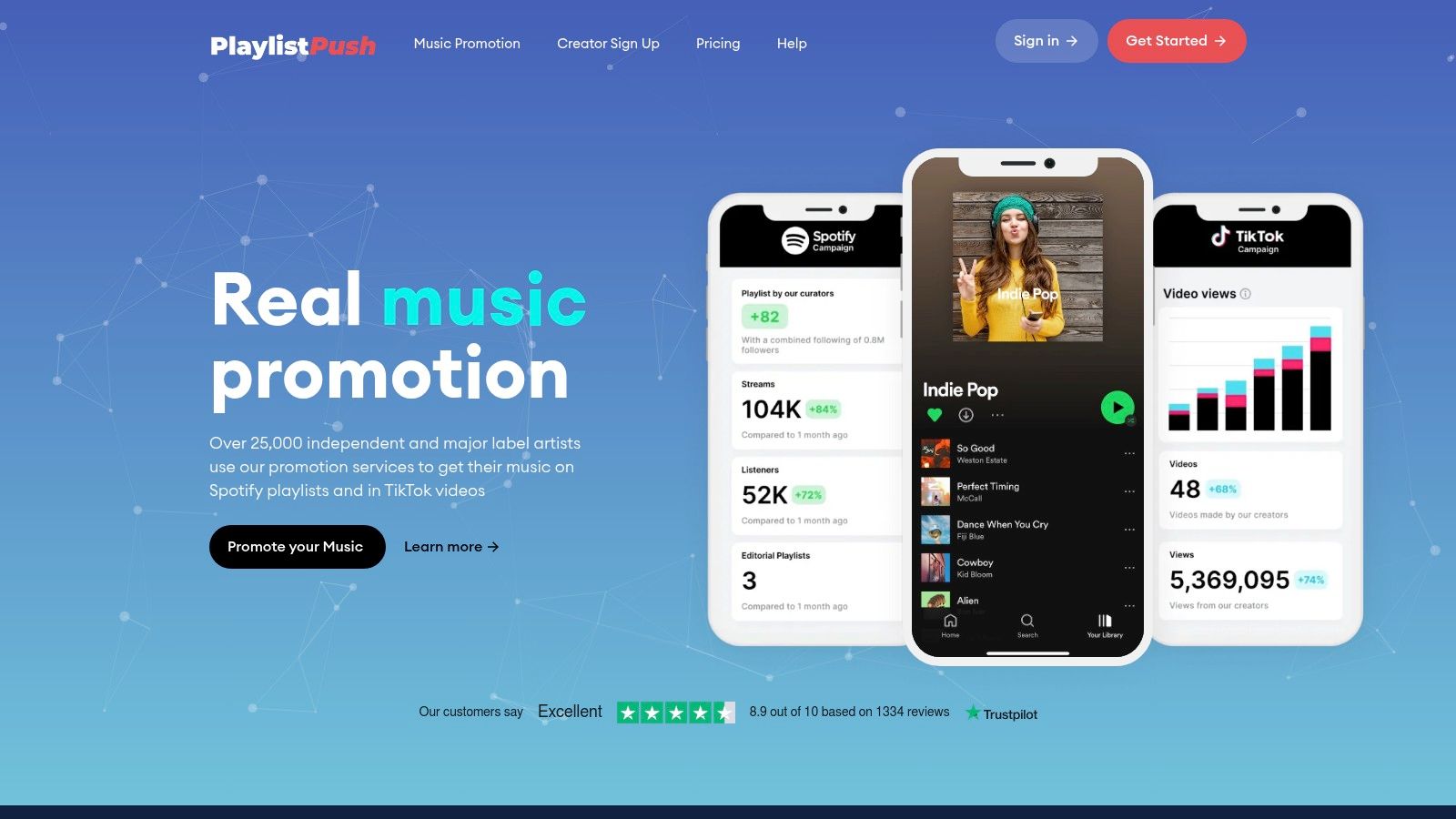
Once you’ve identified potential playlist categories on Spotify, the next challenge is scale. Manually finding and contacting hundreds of independent curators is a time-consuming process. This is where a service like Playlist Push comes in, acting as a bridge between your music and a vast network of verified, independent spotify playlist hip hop curators.
Playlist Push is a paid campaign-based service designed to automate and streamline the pitching process. Instead of you hunting for contacts, the platform submits your track to curators whose playlists match your specific hip hop sub-genre. Campaigns start at around $300 and scale up depending on the size and scope of the outreach.
Why It's an Efficient Next Step
The primary advantage of Playlist Push is its efficiency. It saves artists dozens, if not hundreds, of hours of manual research and outreach. The platform vets its curators for playlist quality and listener engagement, providing a layer of quality control that is difficult to achieve when prospecting on your own. This is not about getting on RapCaviar; it’s about systematically targeting the massive independent playlist ecosystem.
The user experience is built around a campaign dashboard. Here, you can track which curators have reviewed your song, see any feedback they’ve provided, and monitor which playlists have added your track. This transparency is a key differentiator, as you see exactly where your budget is going.
Key Research Strategies on Playlist Push
To maximize your investment and get the most out of a campaign, a strategic approach is essential:
Target with Precision: During campaign setup, be extremely specific with your genre and "similar artists" targeting. Don't just select "Hip Hop." Choose sub-genres like "Boom Bap," "Cloud Rap," or "Trap" and name artists who genuinely share your sonic DNA. This ensures your song reaches the most relevant curators.
Analyze Your Campaign Report: After your campaign runs, the dashboard provides invaluable data. Pay close attention to the curator feedback, even from those who rejected the track. This is direct market feedback that can inform your future releases or pitching angles.
Leverage Placements for Social Proof: When you do secure placements, use them. Share the playlists on your social media, tag the curators to build relationships, and add the best ones to the "Discovered On" section of your own artist website or EPK.
Actionable Tip: Before launching a full campaign, ensure your Spotify for Artists profile is fully optimized with a high-quality bio, professional photos, and links to your social media. Curators who like your song will almost certainly click through to your profile, and a polished presence can be the deciding factor for an add.
While Playlist Push requires a budget and doesn't guarantee placements, it offers a powerful, scaled solution for reaching hundreds of active independent curators. It’s an ideal tool for artists who have a quality track and are ready to invest in serious, targeted promotion beyond their immediate network.
Website: https://playlistpush.com/
3. Daily Playlists: The Self-Serve Submission Marketplace
For artists ready to move beyond manual research and directly pitch their music, Daily Playlists offers a streamlined marketplace connecting them with thousands of independent curators. It functions as a high-volume submission platform designed to help you get your spotify playlist hip hop tracks in front of a wide array of playlist owners, from niche micro-influencers to larger, established tastemakers.
The platform operates on a freemium model. Artists can start with a free account, which provides a limited number of submission credits per week. For more extensive campaigns, users can purchase additional credits or subscribe to a Professional plan (starting at $15/month) for more credits, advanced tools, and better campaign management features.
Why It's a Key Tool for Outreach
Daily Playlists’ main advantage is its scale and accessibility. It consolidates a massive, searchable directory of user-curated playlists into one interface, saving artists countless hours of manual searching on Spotify. The platform acts as a middleman, standardizing the submission process and ensuring that your track is delivered to the curator for consideration.
This approach democratizes access to playlisting. Instead of needing personal contacts, you can use the platform's credits to guarantee a listen from curators who have opted into the system. The user interface is straightforward, allowing you to filter playlists by genre, follower count, and other metrics to find the perfect fit for your sound.
Key Research Strategies on Daily Playlists
To maximize your success on Daily Playlists, a targeted approach is more effective than a scattergun one:
Filter with Precision: Use the platform’s search filters to narrow down the vast directory. Search for specific sub-genres like "Boom Bap," "Cloud Rap," or "R&B Infused Hip Hop." Pay close attention to the playlist descriptions and recently added tracks to ensure your song is a sonic match.
Start Small and Test: Before committing a large budget, use your free credits or a small batch of paid credits to test submissions to a few different types of playlists. Track which ones provide feedback or add your song. This helps you identify receptive curators and refine your targeting for future campaigns.
Utilize the Feedback System: The Professional tier offers community feedback tools. Submitting your track for review from other artists and curators can provide valuable insights on your mix, production, or overall vibe before you spend credits pitching it widely. This pre-flight check can significantly improve your placement odds.
Actionable Tip: When submitting, always write a short, personalized pitch for each curator. Mention a specific track already on their playlist that you enjoy and briefly explain why your song would be a good fit alongside it. This small effort shows you’ve done your research and can make your submission stand out from generic, copy-pasted messages.
While Daily Playlists doesn't guarantee placements, it provides a powerful, low-cost entry point for artists to systematically engage with a large volume of relevant hip hop playlist curators, making it an essential tool for scaling your outreach efforts.
Website: https://dailyplaylists.com
4. SubmitHub: The Curator Marketplace
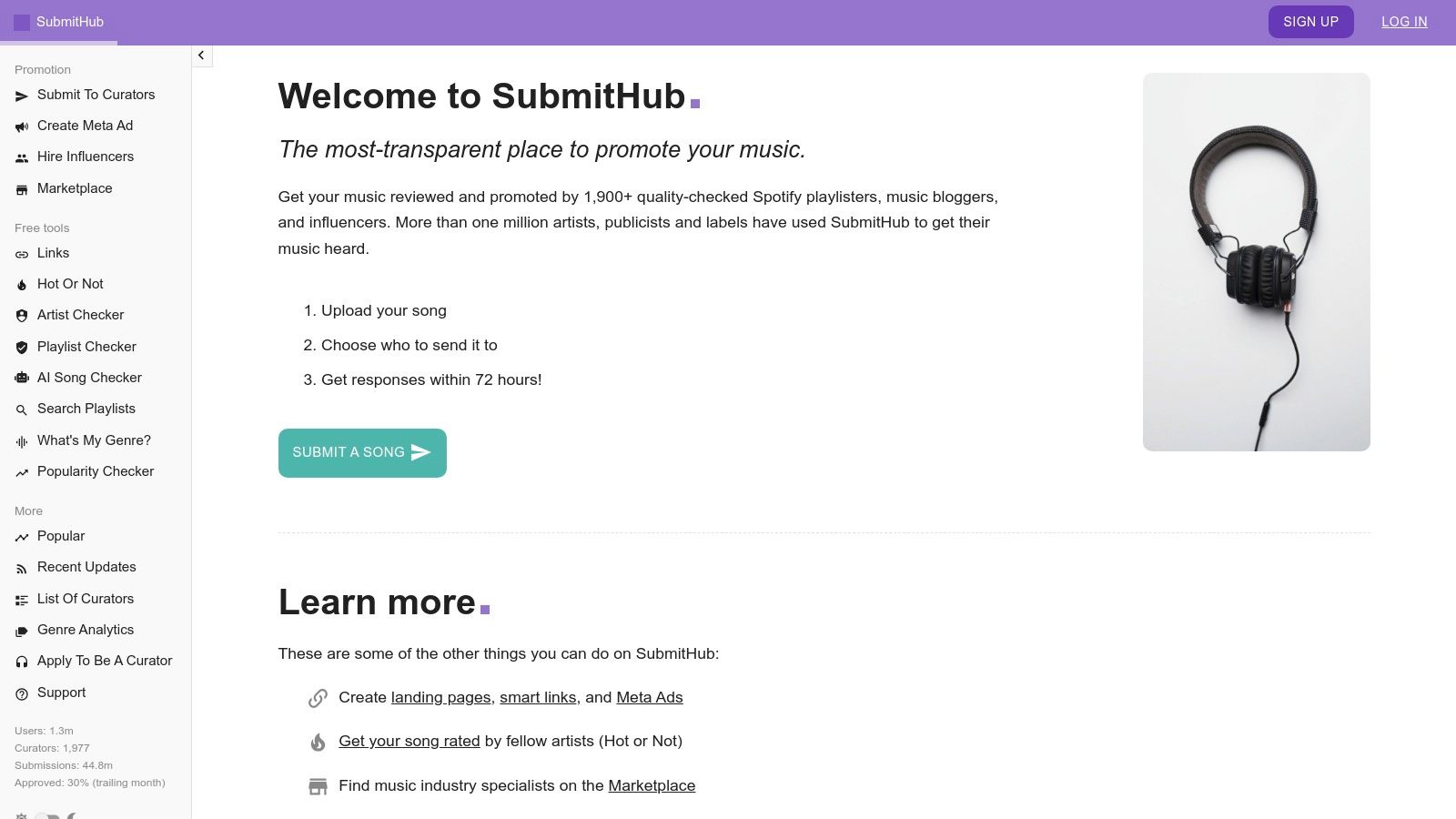
SubmitHub shifts the focus from broad platforms to a direct, one-to-one marketplace model. It connects artists with individual playlist curators, bloggers, and influencers, allowing for highly targeted pitching. Instead of just searching for a spotify playlist hip hop and hoping to find a contact, SubmitHub provides a structured channel to get your music heard by specific gatekeepers.
The platform operates on a credit-based system. Artists can use free "standard" credits, which have lower priority, or purchase premium credits (starting around $6 for 5 credits) to guarantee a curator listens to their track within a specific timeframe and provides feedback if the song is rejected. This model creates a clear value exchange between the artist and the curator.
Why It's a Targeted Approach
SubmitHub’s primary advantage is its granular filtering and direct feedback loop. You aren't just sending your music into a void. Premium submissions force a decision, and if a curator doesn't listen or respond within the allotted time, your credit is refunded. This transparency is invaluable for artists looking to test a new track, get honest opinions, and secure placements on niche playlists.
The user interface is built around search and discovery. You can filter curators by genre, playlist size, approval rating, and other metrics, ensuring you only spend credits on those who are a genuine fit for your sound. Many curators who are difficult to find elsewhere maintain an active presence here.
Key Research Strategies on SubmitHub
To maximize your budget and success rate on SubmitHub, a strategic approach is essential:
Vet Curators Rigorously: Don't just look at follower counts. Examine a curator's approval rating, average feedback quality, and linked playlists. Use a tool like Artist.Tools to verify the playlist's health before spending credits. A high follower count with low engagement is a major red flag.
Start with a Small Test Campaign: Before launching a large-scale campaign for your single, pitch it to a small, diverse group of 5-10 curators. Analyze the feedback. If multiple curators mention mixing issues or a weak hook, you've gained crucial market feedback.
Personalize Your Pitch: Even with a structured system, a short, personalized message can make a difference. Mention why you feel your track fits their specific playlist, referencing a song currently on it. This shows you've done your research. While it's one of many platforms to submit music, some consider it among the best free Spotify playlist submission sites available because of its dual credit system.
Actionable Tip: Use the "Really Good" filter when searching for curators. This filter shows curators who have a high approval rating and are known for sharing high-quality, relevant music. It's a great way to find reliable partners and avoid wasting credits on less effective ones.
While the pay-to-play model isn't for everyone and success is never guaranteed, SubmitHub offers a level of access, transparency, and direct feedback that is hard to find elsewhere. It’s an excellent tool for testing the waters with a new track and building relationships with independent curators.
Website: https://www.submithub.com
5. Soundplate: The Accessible Submission Gateway
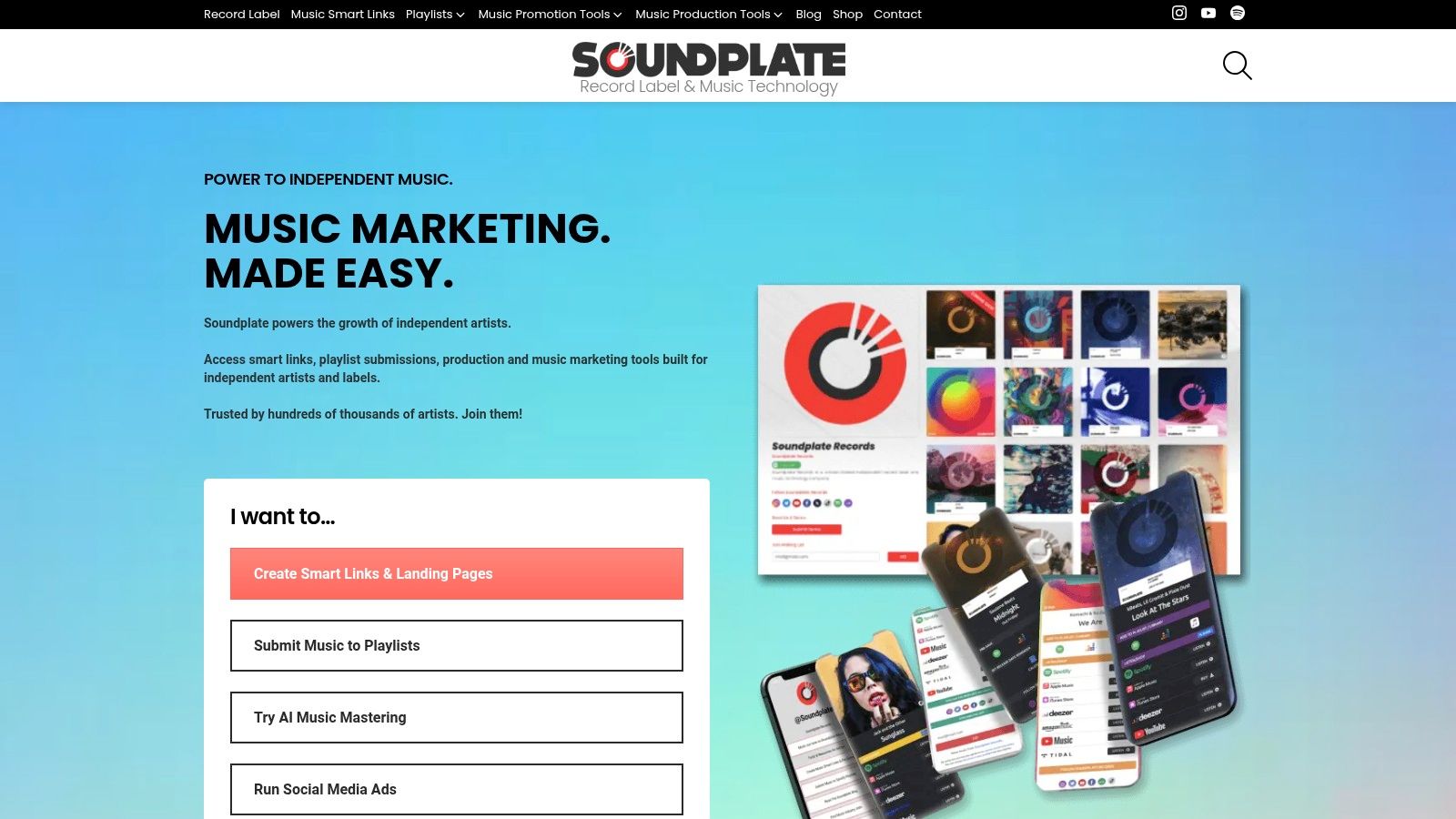
Soundplate serves as a curated playlist directory and submission portal, acting as a bridge between independent artists and a wide network of playlist curators. It stands out by offering a significant number of free submission opportunities for a variety of spotify playlist hip hop genres, making it an excellent starting point for artists working with a limited budget or those looking to gain initial traction.
The platform is free to use for its core submission features. Artists can browse genre-tagged playlists and submit their tracks directly through the site without any upfront cost, although some playlists may have premium placement options.
Why It's a Valuable Tool
Soundplate’s primary advantage is its accessibility and ease of use. It removes the friction of manually finding and vetting hundreds of independent curators by centralizing their submission forms. For emerging hip hop artists, this means you can quickly get your music in front of dozens of playlist owners who are actively seeking new tracks. The platform is designed for high-volume, top-of-funnel pitching.
The user interface is straightforward, presenting playlists with clear submission links. While it lacks the deep analytics of paid campaign tools, its value lies in providing a direct, no-cost pathway to potential placements that can lead to initial listener discovery and algorithmic boosts on Spotify.
Key Research Strategies on Soundplate
To maximize your efforts on Soundplate, a targeted and efficient approach is crucial:
Filter by Hip Hop Sub-Genres: Don't just browse the general "Hip Hop" category. Use Soundplate’s genre tags to find playlists specific to your niche, like "Chill Hop," "Lofi Hip Hop," or "Trap." Submitting to a well-matched, smaller playlist often yields better results than a generic, larger one.
Analyze Playlist Vitals Before Submitting: Click through to the actual Spotify playlist before you submit. Check its follower count, the engagement on recent tracks (using tools like Chartmetric if possible), and the overall sonic cohesion. Ensure it's a legitimate, active playlist that aligns with your brand.
Leverage Track Analysis Snippets: When you submit, Soundplate sometimes shows basic track analysis data like tempo and energy. Pay attention to this and compare it to the overall vibe of the target playlist. This helps you confirm if your track is a good technical fit for the curator's sound.
Actionable Tip: Batch your Soundplate submissions into focused sessions. Dedicate one hour per week to browse new hip hop playlists on the platform and submit your track to 10-15 highly relevant ones. Track your submissions in a spreadsheet to monitor which playlists add your music, helping you identify curators who are receptive to your sound for future releases.
While Soundplate doesn't guarantee placements and the quality of playlists can vary, it is an indispensable tool for casting a wide net. It's the perfect platform for securing those initial playlist adds that help build momentum and provide your new release with its first wave of listeners.
Website: https://soundplate.com/
6. Chartmetric: Data-Driven Playlist Intelligence
Where tools like artist.tools are for direct pitching execution, Chartmetric is the industry-standard intelligence platform for strategic planning. It provides professional-level analytics for researching the spotify playlist hip hop landscape, allowing artists and labels to identify the right playlists based on data, not just intuition. It's an essential tool for tracking playlist follower growth, understanding song journeys, and making informed decisions before you ever send a pitch.
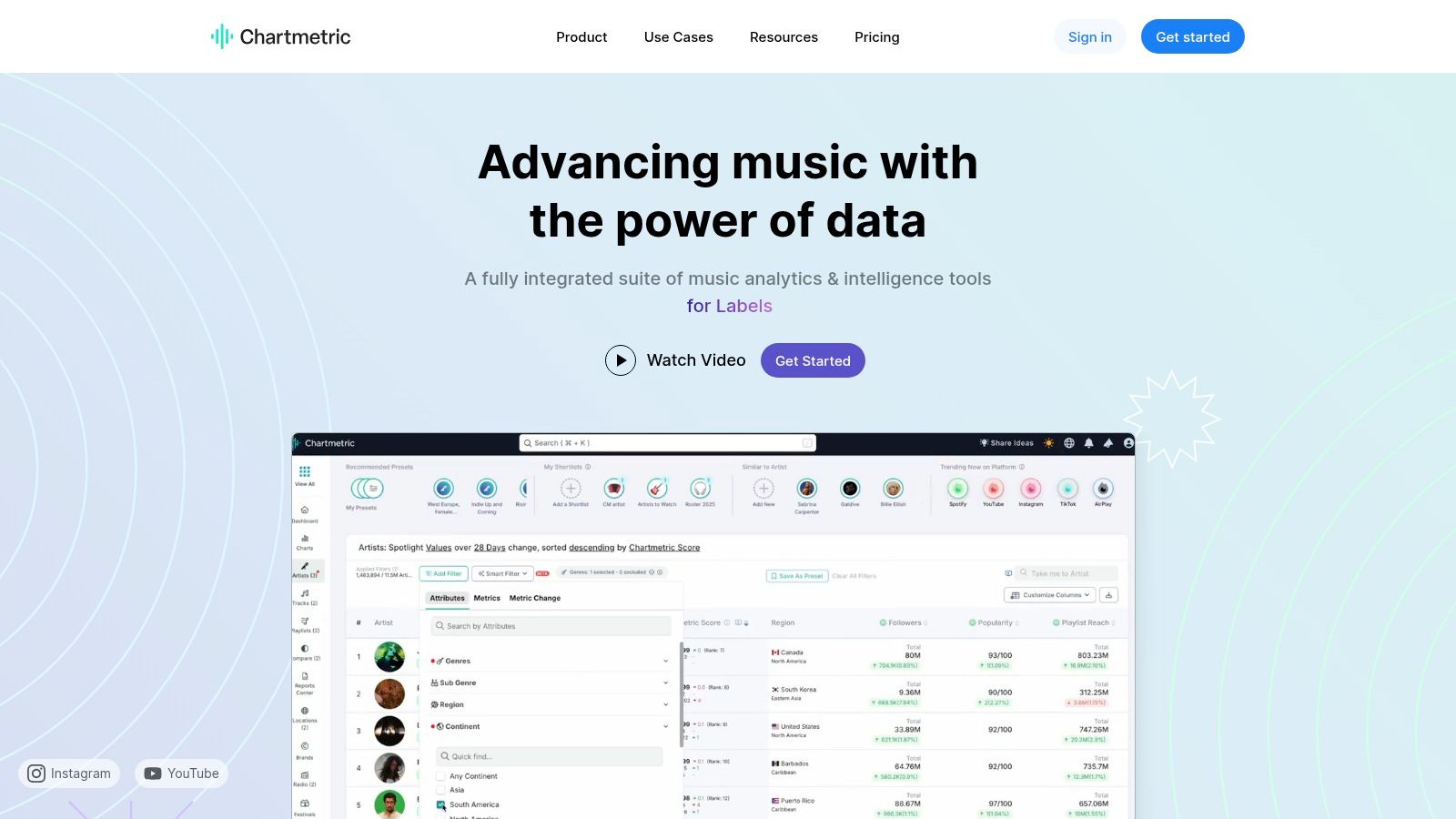
Access to Chartmetric requires a subscription, with a free tier offering limited data and paid plans (starting at $140/month for the Premium Artist plan) unlocking its full suite of powerful analytics. While a significant investment, it’s a tool used by major labels and serious independents for a reason.
Why It's a Strategic Advantage
Chartmetric’s core strength is its massive, cross-platform database. It doesn't just show you a playlist; it shows you its history, its growth trajectory, and its influence across Spotify, Apple Music, social media, and more. This holistic view helps you differentiate between a playlist with inflated follower counts and one with genuine, engaged listeners that can actually move the needle for your career.
The platform excels at revealing the interconnected web of the playlisting world. You can see how smaller "feeder" playlists often lead to placements on larger editorial ones, providing a clear, data-backed roadmap for your outreach campaign. If you want to dive deeper into leveraging this kind of information, you can explore more about how artists use Spotify data analytics to grow their careers.
Key Research Strategies on Chartmetric
To maximize your Chartmetric subscription, focus on these strategic data points:
Analyze Playlist Journeys: Use the "Playlist Journeys" feature to see the lifecycle of a successful hip hop track. Trace its path from small independent lists to medium-sized blogs and eventually to major editorial placements like RapCaviar. This reveals which smaller curators have the ears of the major players.
Filter for High-Quality Targets: Use the extensive filtering options in the playlist database. Filter by genre ("Hip Hop"), follower growth rate, and even curator type (e.g., "Major Label," "Independent"). This allows you to narrow down thousands of potential targets to a manageable list of high-impact opportunities.
Vet Playlists Before Pitching: Before you pitch a playlist, look up its profile on Chartmetric. Check its follower timeline for sudden, unnatural spikes, which could indicate bot activity. A playlist with steady, organic growth is always a more valuable target.
Actionable Tip: Identify 5-10 artists who are one or two steps ahead of you in their careers and have a similar sound. Use Chartmetric to analyze their "Discovered On" playlists and track their playlist journey over the past 6-12 months. This provides a proven, reverse-engineered strategy for your own music.
While Chartmetric is a research tool and does not facilitate submissions, the intelligence it provides is unparalleled. It empowers you to stop guessing and start building a hip hop playlisting strategy that is targeted, efficient, and backed by verifiable data.
Website: https://chartmetric.com/
7. Indiemono
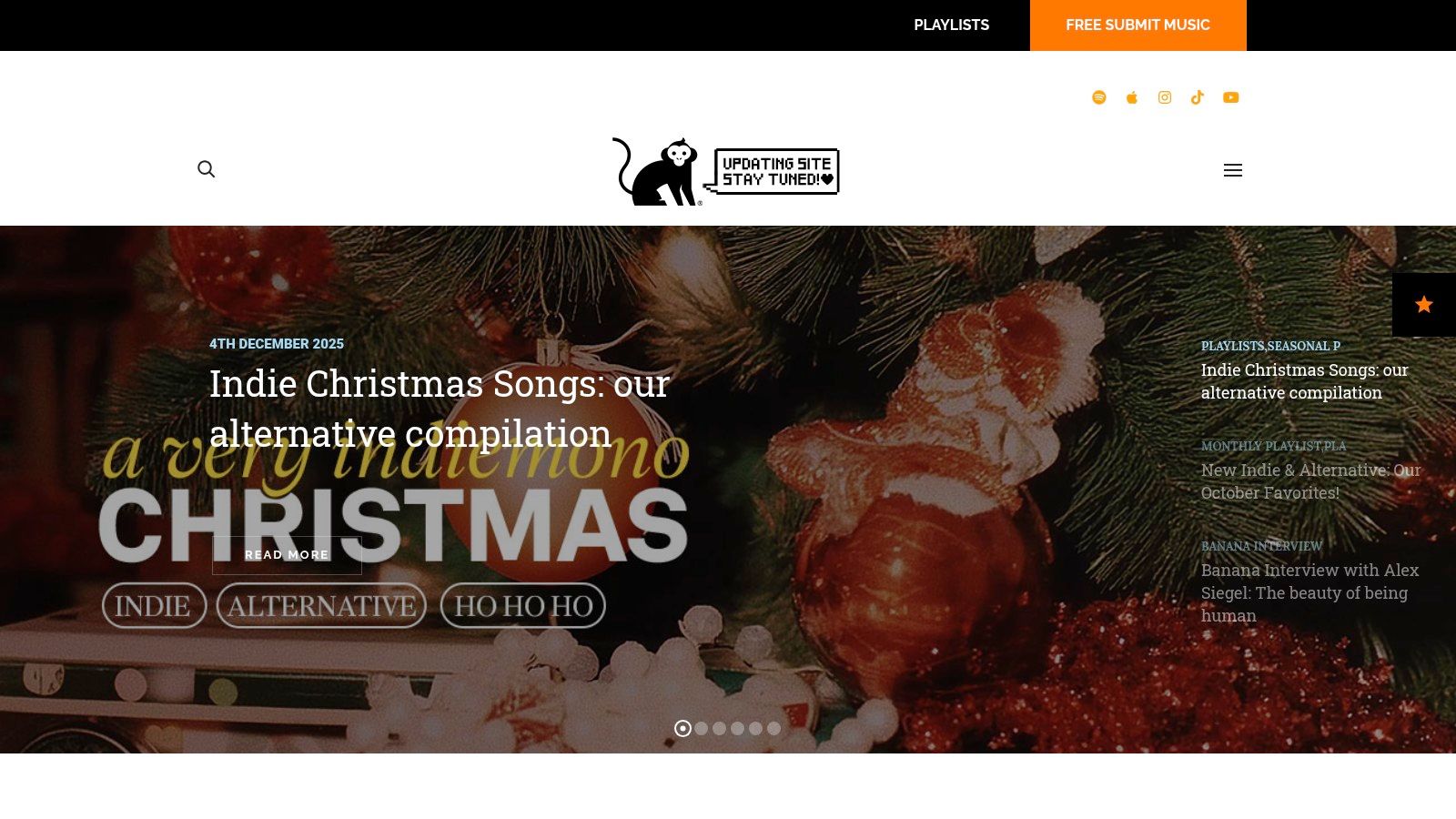
Indiemono stands out as a highly respected, independent curator collective that manages a vast network of genre-specific playlists. For artists navigating the spotify playlist hip hop scene, it represents a valuable, no-cost gateway to human-curated lists with engaged, niche audiences. Rather than pitching to a single playlist, artists submit to a central system, and the Indiemono team places suitable tracks across their relevant properties.
This system is completely free to use, making it an accessible and legitimate option for independent artists. The platform is transparent about its high submission volume and operates a system where artists can submit one track every 20 days, ensuring the curation team isn't overwhelmed and can give each submission fair consideration.
Why It's a Key Resource
Indiemono’s primary advantage is its efficiency and human touch. Submitting once gives your track a chance to land on multiple themed playlists, such as Jazzy Hip Hop, Lo-Fi Beats, or Hip Hop Workout. This saves immense time compared to researching and pitching dozens of individual user-curated lists. The curation is done by real people passionate about music, which often leads to more thoughtful and genre-appropriate placements.
The user experience on their submission portal is straightforward. You connect your Spotify account, select your track, and provide genre information. This simplicity removes many of the barriers artists face when trying to get their music heard by influential playlisters.
Key Research Strategies on Indiemono
To maximize your chances with Indiemono, a targeted approach is crucial. It’s not just about submitting; it’s about submitting the right track at the right time.
Explore Their Playlist Network: Before submitting, browse Indiemono’s complete playlist portfolio on their website or directly on Spotify. Identify the hip hop playlists that are a perfect sonic match for your music. This helps you tailor your genre tags and description during submission.
Submit Your Strongest Track: With a 20-day cooldown between submissions, you only get one shot at a time. Always lead with your most polished, professionally mixed and mastered track that you believe has the broadest appeal within your sub-genre.
Check Spotify for Artists for Placements: Indiemono doesn't always send email notifications for placements. The best way to confirm if your track was added is to monitor the "Playlists" tab in your Spotify for Artists dashboard. Look for any new playlists managed by "Indiemono."
Actionable Tip: Frame your submission strategically. In the genre and comments section of the Indiemono form, be specific. Instead of just "Hip Hop," use descriptive tags like "Chill Boom Bap," "Conscious Lyrical Rap," or "Aggressive Trap." This helps their curators quickly understand your sound and match it to the right playlist.
While the high volume of submissions makes it competitive, Indiemono is a legitimate and powerful ally for independent artists. A successful placement can result in meaningful, incremental growth and expose your music to dedicated genre enthusiasts.
Website: https://indiemono.com/
Hip-Hop Spotify Playlist Promotion: 7-Platform Comparison
Platform | Implementation complexity 🔄 | Resource requirements ⚡ | Expected outcomes 📊 | Ideal use cases 💡 | Key advantages ⭐ |
|---|---|---|---|---|---|
Spotify | Low — consumer‑facing; editorial placement limited access | Free tier available; Premium improves UX; modest time investment | High mainstream reach if editorially placed; strong ongoing discovery | Artists seeking official editorial exposure; listeners wanting curated hip‑hop | ⭐ Massive catalog, top editorial playlists, robust recommendations |
Playlist Push | Medium — set up campaigns and targeting | Paid service (campaign fees); moderate management time | Variable placement rate; scaled outreach to many independent curators | Labels/artists wanting scaled outreach without building lists | ⭐ Streamlined outreach at scale; transparent reporting |
Daily Playlists | Low–Medium — self‑serve submission workflow | Free tier + paid credits; low cost to start | Variable; broad niche coverage with many small placements | Low‑budget artists targeting many hip‑hop niches | ⭐ Affordable, large directory for niche targeting |
SubmitHub | Medium — per‑curator targeting and credit management | Credit‑based costs per curator; time to research targets | Targeted feedback and potential placements; outcomes vary by curator | Testing songs/artwork and collecting curator feedback | ⭐ Granular targeting; guaranteed listen windows for paid credits |
Soundplate | Low — quick directory submissions | Mostly free submissions; minimal time per submission | Top‑of‑funnel discovery; inconsistent engagement | Rapidly submitting to many playlists for initial exposure | ⭐ Easy, free submissions with basic track analytics |
Chartmetric | Medium–High — research platform with learning curve | Subscription cost; time for data analysis | Data‑driven targeting and measurable playlist fit; improved pitching ROI | Managers/labels planning strategic outreach and tracking growth | ⭐ Industry dataset, playlist histories, audience analytics |
Indiemono | Low — free submission into editorial "boxes" | Free submissions; competitive due to volume | Incremental placements across themed playlists; variable impact | Artists seeking no‑cost themed playlist placement | ⭐ Human curation across multiple genre playlists; free access |
Build Your Strategy With Data, Not Guesses
Navigating the complex landscape of Spotify playlisting requires more than just a standout track; it demands a sophisticated, data-driven strategy. The platforms we've explored, from direct submission portals like SubmitHub and Playlist Push to discovery engines like Soundplate and Indiemono, each offer a unique pathway to potential listeners. Yet, their true power is only unlocked when you move beyond surface-level pitching and adopt a methodical, analytical approach.
The fundamental takeaway is this: every submission you make should be an informed decision, not a shot in the dark. Simply finding a "spotify playlist hip hop" with a high follower count is an outdated and often ineffective tactic. Today's successful artist leverages data to understand the story behind the numbers. This means verifying playlist health, confirming audience authenticity, and ensuring your specific sub-genre of hip hop aligns perfectly with the curator's taste and the playlist's existing catalog.
Synthesizing Your Playlist Pitching Workflow
To transform this knowledge into a coherent campaign, you need to build a repeatable workflow. This process integrates the discovery, vetting, and outreach stages into a single, efficient system.
Discovery: Begin by casting a wide net using the tools discussed. Use Spotify’s native search, browse platforms like Daily Playlists, and explore communities on SubmitHub. The goal here is to generate a large, initial list of potential playlist targets that seem relevant to your sound.
Verification: This is the most critical step. Take your raw list and vet each playlist using a powerful analytics tool like artist.tools. This is where you separate legitimate opportunities from dead ends. Analyze follower growth patterns for signs of artificial inflation, check listener-to-follower ratios to gauge engagement, and use bot detection features to ensure the audience is real. A playlist with 200,000 followers and 90% bots is far less valuable than one with 10,000 followers and a genuine, engaged audience.
Qualification: Once a playlist passes the verification stage, qualify its fit. Does your track's specific vibe-be it lo-fi, trap, conscious, or boom-bap-align with the other songs on the list? Listen to the existing tracks. Does your production quality match? Answering these questions honestly prevents you from wasting time and resources pitching to curators who would never consider your music.
Outreach: With a refined, high-integrity list of qualified targets, your outreach becomes hyper-focused. Whether you're submitting through a portal like Playlist Push or finding direct contact information, your pitch will be stronger because it's backed by research. You can confidently approach curators knowing their playlist is a genuine fit and a valuable platform for your music.
The Right Tool for the Right Job
Each platform serves a distinct purpose in your promotional toolkit. SubmitHub excels at providing direct feedback and guaranteed listens from a wide curator pool, while Chartmetric offers enterprise-level data for tracking market-wide trends. Daily Playlists provides a free avenue for discovery, and Playlist Push offers a managed campaign approach for those with a larger budget.
However, the connecting thread that enhances the effectiveness of all these platforms is a dedicated playlist analysis tool. This is your verification engine, your quality control checkpoint. By integrating deep analytics into your workflow, you can confidently engage with any spotify playlist hip hop, regardless of where you discovered it, armed with the knowledge that you are pursuing a genuine opportunity. Stop guessing and start strategizing. Your music deserves an audience, and a data-informed approach is the most reliable way to find it.
Ready to stop pitching blindly and start building a data-backed promotion strategy? artist.tools provides the industry's most powerful Playlist Analyzer, Curator Search, and bot detection to ensure every submission for your spotify playlist hip hop campaign is a smart one. Take control of your music's future and start your free trial at artist.tools today.
Comments