How to Become a Musical Artist: Your Path to Stardom
- Dec 27, 2025
- 16 min read
To really make it as a musical artist, you need a mix of disciplined practice and smart branding. The whole game is about nailing your signature sound, building an identity online that people connect with, and then figuring out how to get your music heard in a seriously crowded market. It’s one part creative genius, one part savvy entrepreneur.
Build Your Foundation by Mastering Your Sound
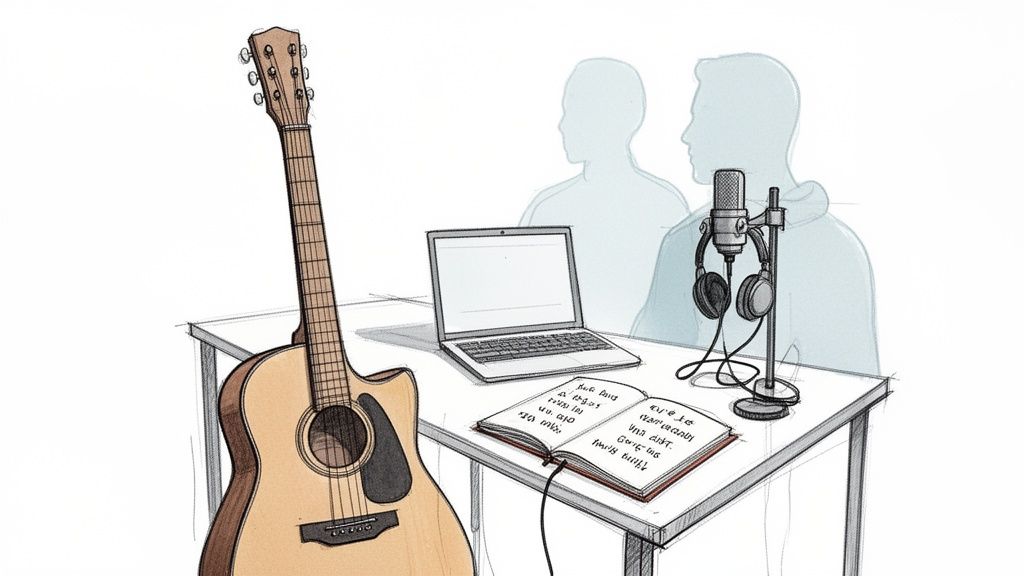
Before you even think about Spotify playlists or social media promos, let's get one thing straight: it all comes down to the music. Your sound is your signature, the bedrock everything else is built on. This isn't about chasing what's hot this week; it's about putting in the work to turn your unique vision into something people can't forget.
The jump from "person who makes music" to "professional artist" happens when you start treating your craft like a job. That means showing up every day, even when you're not feeling it. A killer song almost never just falls out of the sky. It’s built, piece by piece, through routine and a commitment to the process.
Cultivate a Consistent Creative Habit
Forget waiting for that lightning bolt of inspiration. The pros know that creativity is a muscle you have to build through habit. It doesn't mean you have to churn out a masterpiece daily, but you absolutely have to engage with your music consistently.
Block out dedicated time: Put it in your calendar. Whether it’s 30 minutes of vocal warm-ups, an hour running scales, or a two-hour songwriting block, protect that time like it's sacred.
Embrace the "voice memo" dump: Get every little idea down. That random melody, a cool turn of phrase, that chord progression you stumbled on—capture it on your phone. Most of it will be junk, but those raw snippets are the seeds for your next great track.
Practice structured songwriting: Don't just noodle aimlessly. Give yourself starting points. Build a song from a drum loop, write lyrics to a song title you just came up with, or see what happens when you start with just a killer bassline. The goal is to find a process you can repeat.
Your goal is to create a connection. That process starts with authentic, well-crafted songs that reveal a piece of your own humanity and connect with the listener on a deeper level.
Create Your Home Studio and Production Workflow
You don't need a million-dollar studio anymore. The tech we have today gives independent artists an insane amount of power. A simple, solid home setup is all you need to get your ideas recorded and out into the world.
Start by focusing on getting clean, high-quality audio. Here’s a basic checklist to get you going:
A Decent Microphone: A versatile condenser mic is your best friend. Something like an Audio-Technica AT2020 or a Rode NT1 is a perfect starting point for both vocals and acoustic instruments.
An Audio Interface: This is the box that connects your mic to your computer. The Focusrite Scarlett series or a PreSonus AudioBox are industry-standard for a reason—they just work.
A Digital Audio Workstation (DAW): This is your recording software. You can start for free with GarageBand (Mac) or Cakewalk (PC), or jump into pro-level DAWs like Ableton Live, Logic Pro X (Mac), or FL Studio.
Quality Headphones: Don't skip this. A good pair of studio headphones like the Sony MDR-7506 or Beyerdynamic DT 770 PRO is non-negotiable for getting an accurate sound while you record and mix.
Having this simple setup means you can go from idea to demo in no time. That quick feedback loop is where the magic happens. It’s how you get better, refining your sound and your production chops with every single track you finish. The whole point is to build a workflow that lets your creativity flow without friction.
Define Your Brand and Build an Online Identity
Let's be real: your music is the heart of everything. But your brand? That's the story that gets people to not just listen, but to actually care. A solid brand isn't about manufacturing a persona—it's about finding what's already authentic about you and your art and turning up the volume.
It’s the difference between a one-off stream and a fan who buys your merch, follows your every move, and screams your lyrics back at you from the front row. The whole process starts by looking inward. What's the core message behind your sound? What do you want people to feel? Your brand is just the consistent answer to those questions, everywhere from your Instagram grid to your Spotify bio.
Crafting Your Core Message and Visuals
Before you even think about a logo or a color scheme, you have to lock in your "why." What's the fire that makes you create? Is your music a call to action, a late-night vibe for introspection, or pure, high-energy escapism? Once you nail this down, you can build a story that feels both epic and completely true to you.
Think of it as building a world. Your sound, your look, and your story should all feel like they belong together.
Your Sonic Identity: The genre, mood, and lyrical DNA of your music.
Your Visual Aesthetic: The colors, fonts, photos, and general design vibe that looks like your music sounds. Are you clean and minimalist, or raw and gritty?
Your Core Narrative: The story of who you are, what you stand for, and what your music is really about.
A killer artist brand is all about consistency. When a fan sees your album art, watches a video, or lands on your website, it should immediately scream "you." That cohesion builds trust and makes you unforgettable.
This consistency is absolutely critical on platforms like Spotify, where your artist profile is prime real estate. Your profile picture, header, and bio are the first handshake with potential fans and, just as importantly, playlist curators. For a masterclass on nailing that first impression, check out our guide on how to write an artist bio that truly connects.
Building Your Digital Home Base
Your online presence needs a central hub where your community can live and breathe. Social media is great for quick hits and daily chatter, but a dedicated website gives you total control. It's your command center for everything: tour dates, merch drops, and that all-important email list.
From there, pick your social media battlegrounds wisely. You don't need to be everywhere. Find the one or two platforms where your ideal listeners are already hanging out and go all-in on creating content that feels right for that space.
Platform | Content Focus | Best For |
|---|---|---|
High-quality visuals, behind-the-scenes Reels, and direct fan interaction via Stories. | Artists with a strong visual aesthetic. | |
TikTok | Short-form video, viral trends, and showing a more personal, unpolished side. | Reaching a broad, new audience quickly. |
YouTube | Music videos, live performance recordings, lyric videos, and long-form vlogs. | Building a comprehensive visual catalog of your work. |
Engaging Your Community Authentically
The last piece of the puzzle is turning passive listeners into an active, ride-or-die community. This isn't about spamming "new single out now!" It's about letting people in on the journey.
Share a messy demo clip. Ask your followers which single art they like best. Actually reply to the comments. Show them the human behind the music.
Remember, building an identity is a marathon, not a sprint. You're creating a world around your music that people are genuinely excited to explore. When you share your story with real passion, you give them a reason to connect with your art on a much deeper level.
Master Your Music Release Strategy
Hitting "upload" on your finished track is an incredible feeling, but it’s just the starting line, not the finish. If you want to cut through the noise, your release strategy needs to be as carefully crafted as the music itself. A great launch is a planned event, not a happy accident.
This means you need to think beyond just dropping a song and hoping for the best. You need a modern playbook that covers everything from distribution and pitching to building that crucial pre-release hype. That's how you give your music the best possible shot at connecting with listeners from day one.
Choosing Your Music Distributor
First things first: you need a music distributor. This service is your ticket to getting your tracks onto Spotify, Apple Music, and all the other major streaming platforms. They handle the messy technical stuff and, most importantly, collect the royalties you've earned.
Plenty of options are out there, but they mainly differ in their fees and features. Here’s a quick look at the common models:
Annual Fee Model: Services like DistroKid charge a yearly fee for unlimited uploads. This is a fantastic deal if you're planning on releasing a lot of music.
Per-Release Fee Model: Platforms like TuneCore often charge a one-time fee for each single or album you put out.
Commission-Based Model: Some distributors skip the upfront fees but will take a percentage of your royalty earnings instead.
Think about how often you plan to release music and what your budget looks like. If you're aiming for consistency, an unlimited plan usually offers the best value in the long run.
Building a Pre-Release Timeline
A powerful release doesn't just happen—it's built over time. You need to map out a pre-release marketing timeline, typically spanning 4-6 weeks, to get people excited. A structured plan like this is essential for building momentum before your song even drops.
This timeline is all about defining your brand, creating cool assets, and getting your audience hyped for what's coming.
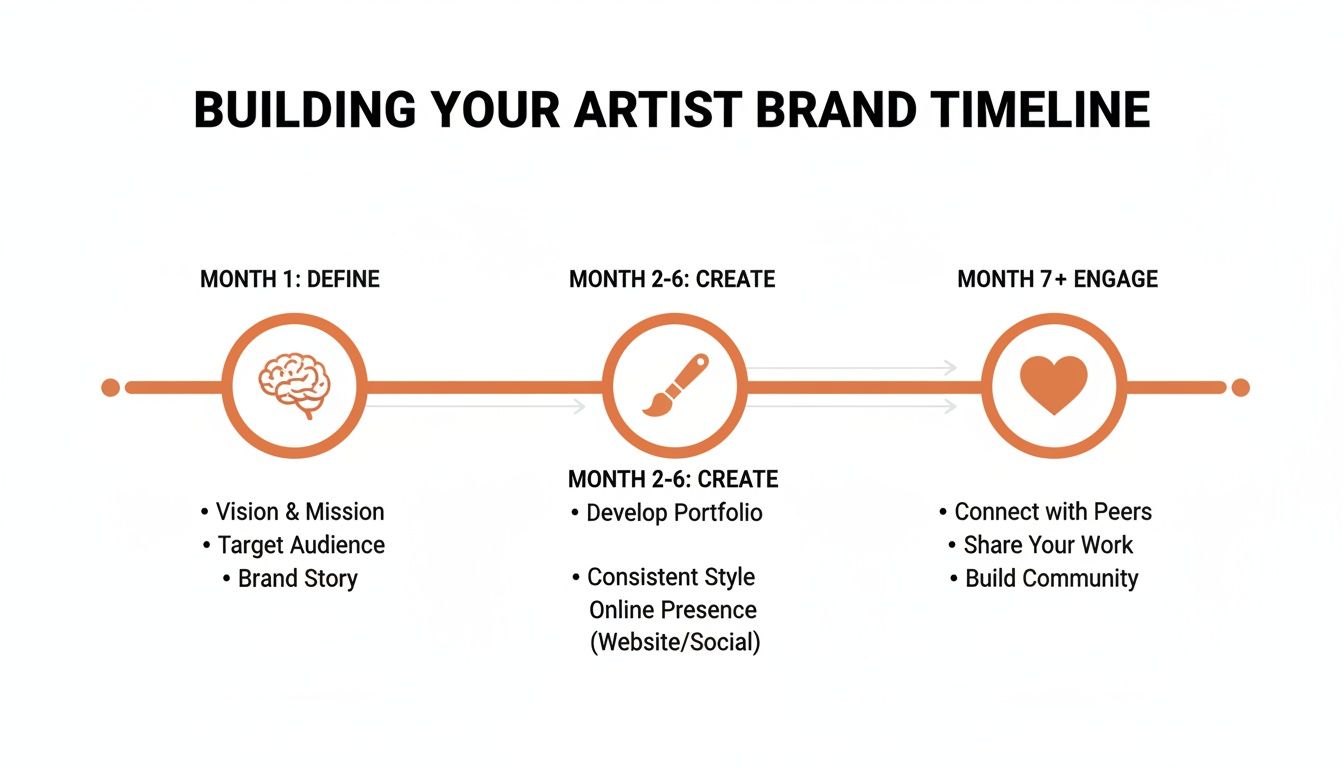
As you can see, a successful journey moves from a clear idea to creative execution and, finally, to building a real community of fans. A huge piece of this strategy is setting up a pre-save campaign. Pre-saves are critical because they signal to Spotify's algorithm that your track is already gaining traction, which can seriously boost its visibility on release day. To learn more, check out our guide on how to pre-save on Spotify and boost your release.
The Art of the Spotify Editorial Pitch
Landing your song on an official Spotify editorial playlist can be a game-changer, exposing your music to millions of new listeners overnight. You get this opportunity by submitting a pitch through your Spotify for Artists account at least 7-10 days before your release date.
Your pitch has to be short, sharp, and professional. This is your one shot to convince a human curator that your song is perfect for their audience. You'll need to clearly explain your song's story, genre, mood, and any marketing plans you have in the works.
A great pitch isn't just about describing the song; it's about selling the story behind it. Tell them why you made it, who it's for, and what makes it special. Make it personal and memorable.
With thousands of songs submitted every single day, you have to stand out. Tools can definitely give you an edge here. For example, the artist.tools AI Editorial Pitch Generator can help you write persuasive pitches by analyzing data from submissions that actually landed on major playlists.
To make sure your release goes off without a hitch, a checklist is your best friend. It keeps you organized and ensures you don't miss any crucial steps along the way.
Here’s a simple checklist to guide you through the process:
Essential Release Checklist
Phase | Key Actions | Tool/Resource |
|---|---|---|
Preparation (4-6 Weeks Out) | Finalize master track & artwork. Choose a distributor. | Your DAW, Canva, DistroKid/TuneCore |
Setup (3-4 Weeks Out) | Upload to distributor. Submit Spotify editorial pitch. | Spotify for Artists |
Hype Building (1-3 Weeks Out) | Set up pre-save link. Announce release date on socials. | artist.tools, Instagram, TikTok |
Release Week (Final 7 Days) | Post daily content (teasers, BTS). Engage with followers. | Social Media Platforms |
Release Day & Beyond | Share links everywhere. Thank fans. Monitor initial data. | Spotify for Artists, artist.tools |
Following a structured plan like this takes the guesswork out of releasing music and sets you up for success from the very beginning.
Navigating a Crowded Streaming World
Let's be real: becoming a musical artist today means competing on a global stage. Global recorded music revenues are closing in on $30 billion, with streaming accounting for 69% of that total. Spotify is the main arena, with over 11.3 million artists on the platform. To make your mark, you need every advantage you can get.
A data-driven approach isn't optional anymore—it's essential for growth.
Playlist Search: A tool like the one from artist.tools lets you sift through millions of playlists to find the ones that perfectly match your genre and vibe, often with curator contact info included.
Bot Detection: Protect your career by avoiding playlists with fake streams. Bot activity can get your music removed from Spotify, so vetting every opportunity is non-negotiable.
By combining smart distribution, a well-planned timeline, and a killer pitch, you set the stage for a release that doesn't just go live—it launches.
Promote Your Music on Spotify with Data
Alright, your music is officially live on Spotify. Pop the champagne, take a breath... because now the real work starts. Getting your track onto the platform is a huge milestone, but if you want to build a real audience and a career, you have to switch hats from creator to marketer.
This means getting way more strategic than just crossing your fingers for a lucky playlist placement. It's about digging into the data and understanding how the Spotify ecosystem actually works. Modern tools have leveled the playing field, giving independent artists like you the power to find real listeners, dodge career-killing mistakes, and build sustainable growth, one smart move at a time.
Find Authentic Playlists with Precision
Every artist dreams of landing on a massive editorial playlist, but that journey is almost always built on a foundation of smaller, independent playlist adds. The real challenge? Finding the right ones. We're talking about playlists run by actual music lovers with engaged followers who are genuinely into your specific genre. Spraying and praying by submitting to every playlist you stumble upon is a massive waste of time and can even get you a bad reputation.
This is where a dedicated Playlist Search tool becomes your secret weapon. Forget endless manual searching. Instead, you can sift through millions of playlists using super-specific criteria to find your perfect match.
Genre and Mood: Zero in on playlists that fit your vibe, whether it's "Lofi Chillhop" or "Indie Rock Workout."
Follower Count: You can target playlists of any size, from micro-influencers to curators with a massive following.
Curator Contact: Many tools even give you the direct contact info you need to build a real relationship instead of just sending a cold email into the void.
By getting this specific, you can spend your valuable time crafting personalized pitches to people who are actively looking for music just like yours. This targeted approach will skyrocket your chances of actually getting placed.
Vet Every Opportunity to Protect Your Music
Let's be real: not all playlists are created equal. The dark underbelly of Spotify promotion is filled with playlists propped up by fake followers and botted streams. Getting your track on one of these can be disastrous. Best case, you get fake numbers; worst case, Spotify flags your track and might even take it down, torching your credibility in the process.
It is your job as an artist to protect your music. Vetting every single playlist opportunity isn't optional—it's absolutely essential for the health and longevity of your career on the platform.
A powerful Playlist Analyzer is your best line of defense. Before you even think about pitching a curator, you should run their playlist through an analyzer to check its vital signs. You're looking for red flags and signs of genuine, organic engagement.
Metric to Analyze | What It Tells You | Red Flag Example |
|---|---|---|
Follower Growth | Is the growth steady and organic, or are there suspicious, unnatural spikes? | Gaining 10,000 followers overnight after months of no growth. |
Bot Activity Score | Uses data to sniff out the probability of fake, botted streams. | A high score is a dead giveaway that the listeners aren't real. |
Listener Count | Puts follower numbers in perspective by showing actual listener data. | A playlist boasts 50,000 followers but only has 500 monthly listeners. |
Track History | How often are tracks being added or removed from the playlist? | A playlist that completely swaps out all its tracks weekly might be part of a bot farm. |
Using a tool like the artist.tools Playlist Analyzer gives you this critical intelligence, turning a risky guess into a calculated business decision. This small step protects all your hard work and makes sure your streams are coming from actual human beings.
Understand What Your Future Fans Are Searching For
Playlisting is huge, but it's not the only game in town. Millions of listeners are heading straight to Spotify's search bar every single day, typing in keywords to find the perfect soundtrack for a specific mood, moment, or activity. If you know what they're looking for, you can get your music right in front of them.
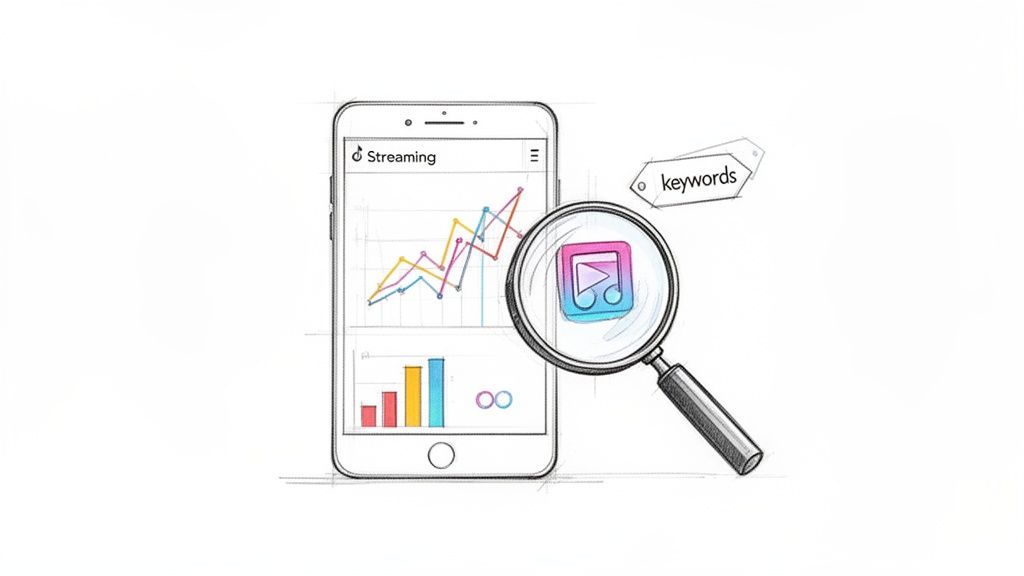
A Keyword Explorer tool pulls back the curtain on this behavior. It shows you exactly what people are searching for, how often they're searching for it, and which playlists are showing up at the top for those terms. You might find that a niche term like "rainy day indie" gets a ton of searches but has way less competition than a broad term like "sad indie."
This kind of intel is gold. Here’s how you can use it:
Smarter Playlist Pitching: You can tell a curator your track is a perfect fit for their playlist that's already ranking for a popular keyword.
Your Own Playlists: If you're building your own playlists, you can target underserved keywords to pull in organic traffic and new listeners.
Optimize Your Bio: You can sprinkle relevant, high-traffic keywords into your Spotify artist bio to boost your own searchability on the platform.
When you start using data from tools like these, you stop just throwing things at the wall and hoping they stick. You start running a targeted, effective marketing campaign for your music. That strategic mindset is what separates hobbyists from artists who are serious about building a career.
Turn Your Music Into a Career: Analytics & Monetization
Look, making great music is the heart of it all. But if you want a long-term career, you have to treat it like a business. It's time to shift your focus from just creating the art to building a sustainable operation around it.
This is where your passion meets the practical side of being an artist. Once your tracks are out there, you need to know how they're doing and how to turn those streams into actual income.
Guessing what works is a recipe for burnout. Hope isn't a strategy. You need to know—really know—what's connecting with listeners, where they are, and how they're finding you. That's the only way to double down on what's working and stop wasting time on what isn't.
Use Data to Make Smarter Moves
Data sounds scary, but it’s really just feedback. It’s your audience telling you what they like. And with the right tools, it's not intimidating at all; it's a clear picture of your growth.
A Stream Tracker is your daily report card. Did that playlist add yesterday actually do anything? Is your latest TikTok video sending people to Spotify? This is how you connect the dots between your promotional efforts and real-world results. It’s incredibly empowering.
Then you have a Monthly Listeners Tracker, which gives you the 30,000-foot view. It’s not just about that one number; it’s about the trends. You can see your listener growth over time, how your follower count is trending, and what your popularity score looks like. This helps you understand the bigger picture and whether your music has staying power.
This isn't just about counting streams. It’s about getting inside your listeners' heads. When you understand their behavior, you can build a real connection and make decisions that actually grow your career.
Get Paid for Your Art
Monetization is the part where this all starts to feel real—where your art can actually support you. For most artists starting out, that journey begins with streaming royalties.
I know, the payout per stream is tiny. But it absolutely adds up. Forecasting that income is the key to planning your next steps.
A Royalties Calculator can be a serious wake-up call. It turns abstract stream counts into real dollar figures, giving you a tangible goal to shoot for. When you have that clarity, you can budget for new gear, a marketing push, or your next music video. If you want to dive deeper into how the numbers really work, check out our comprehensive guide to royalties for Spotify.
But here's the thing: you can't put all your eggs in the streaming basket. The artists who make it long-term build multiple streams of income.
Live Gigs: This is a classic for a reason. You get paid from ticket sales and merch, sure, but you also build an irreplaceable connection with fans. Start small. Research local venues, coffee shops, even open mic nights. Put together a simple electronic press kit (EPK) with your music and a few good photos to send out.
Sync Licensing: Getting your music placed in a TV show, movie, ad, or video game can be a massive paycheck. Look up music libraries and sync agents that fit your sound. The key here is to have your tracks professionally mixed and mastered, with instrumental versions ready to go at a moment's notice.
By tracking your numbers and opening up new ways to get paid, you stop being just a musician. You become the CEO of your own music business. That shift in mindset is what separates a hobby from a career in today's industry.
Your Most Pressing Questions, Answered
Jumping into the music industry means you're going to have a ton of questions. As you start figuring out this whole "how to become a musical artist" thing, you'll hit roadblocks that can feel pretty overwhelming. Let's cut through the noise and get you some clear, straightforward answers.
How Much Money Do I Actually Need to Start?
Honestly, this varies wildly. You could technically get the ball rolling with just a few hundred bucks. Grab a decent USB microphone, an audio interface, and some recording software, and you've got a basic home studio. Plus, building a following on social media can be done for free if you're willing to put in the time.
But let's be real—as you get more serious, the costs will go up. Professional mixing and mastering for a single track can run you hundreds, and a targeted ad campaign can easily push into the thousands. The smartest way to play it? Start lean. Reinvest every dollar you make from your music right back into the project. Scale your budget as your audience and your income grow.
Do I Need a Record Label to Make It?
Not anymore. The idea that you need a label to have a successful music career is officially dead. Thanks to digital distributors and powerful data platforms like artist.tools, independent artists have more control than ever before. It all comes down to having an entrepreneurial mindset and a solid marketing plan.
Sure, a label brings a big budget and a network of contacts to the table. But tons of artists are building massive careers while keeping 100% of their creative and financial control. Going indie means you build a direct line to your fans and create a business that's truly yours, which is an incredibly powerful place to be.
Forget the old gatekeepers. In today's music world, your success is defined by your strategy, your consistency, and your ability to connect with an audience—not by a record deal.
Seriously, How Long Does It Take to Succeed?
There’s no magic number here. For some, it takes years of grinding day in and day out to build a sustainable career. For a lucky few, a track goes viral overnight. The timeline is completely unique to you and depends on the quality of your music, how effective your marketing is, how consistently you release, and a little bit of luck.
Instead of getting obsessed with some far-off finish line, focus on hitting small, measurable goals. Celebrate finishing that new song. Get hyped about your first placement on a fan-made playlist. Feel good about booking a local gig. Success is a marathon, not a sprint, and it's built one small win at a time.
Ready to stop guessing and start growing? artist.tools gives you the data and insights you need to find authentic playlists, protect your music from bots, and make smarter marketing decisions. Take control of your music career by exploring our features.
.png)
.png)
Comments