How to Get Your Music Heard A Modern Artist's Guide
- Aug 2, 2025
- 13 min read
Let's be real. Getting your music heard in today's crowded market boils down to two things: building a professional brand that gatekeepers actually take seriously, and then executing a smart digital strategy. It all starts with crafting a compelling story and professional assets before you even think about asking for that first stream.
Build a Brand That Gets You Noticed
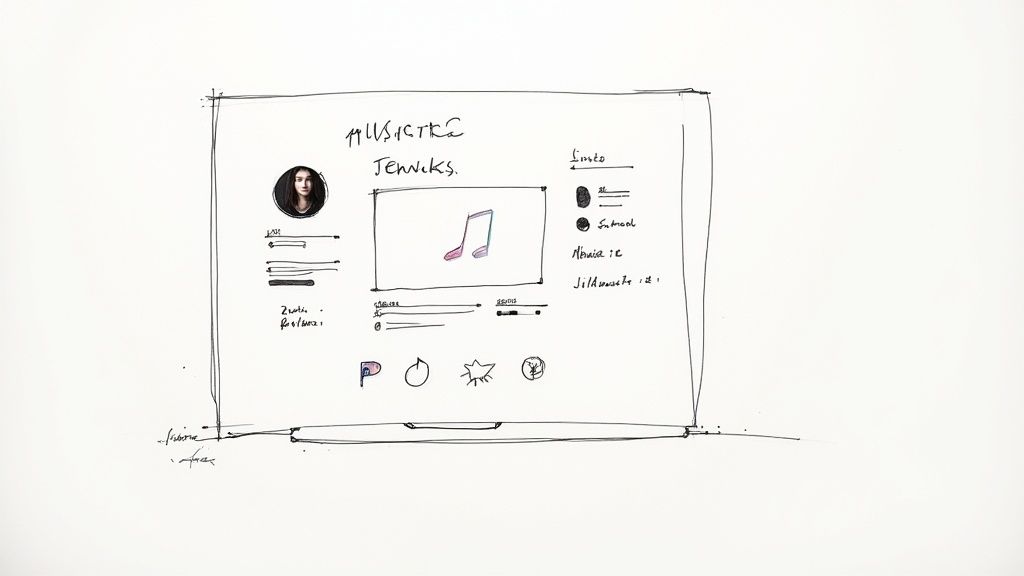
Before anyone even clicks play, they see you. Think of your brand as the visual and narrative handshake you offer to potential fans, playlist curators, and industry pros. It’s often the deciding factor that separates a serious artist from a hobbyist in their eyes.
This foundation is so much more than a cool logo or a moody press photo. It's about creating a cohesive identity that tells a story. Why do you make the music you do? What's the message hiding in your sound? Answering these questions helps you build a narrative that people can connect with on a much deeper level.
Crafting Your Essential Assets
To look the part, you need a toolkit of high-quality assets ready to go at a moment's notice. This is your Electronic Press Kit (EPK), and it needs to be polished and easy to share.
A Compelling Bio: Ditch the "I've loved music my whole life" line. Your bio needs to tell your unique story, describe your sound in a way people can feel, and highlight any notable achievements. Keep it punchy and engaging.
High-Quality Press Photos: Seriously, invest in a professional photoshoot. You need a mix of shots—headshots, performance-style photos, creative portraits—that all feel like they belong to your brand's world.
Your Artist Story: This is the soul of your brand. It’s the "why" behind your music. For instance, an artist who overcame crippling stage fright can build a brand around vulnerability and courage. That’s a story that resonates.
Your brand is your first impression. A strong, authentic story doesn’t just attract listeners; it makes bloggers, A&R scouts, and curators feel like they’ve discovered someone with real potential.
Connecting With a Growing Global Audience
A solid brand sets you up to capitalize on a music market that's blowing up globally. The growth is happening faster than ever, especially in new territories.
It's projected that by 2025, the number of paid music streaming subscribers will hit a massive 827 million—a huge leap from 752 million in 2024. A lot of this explosion is happening in emerging markets where streaming is just now taking hold. This opens up incredible opportunities for artists who are ready to meet them. You can discover more insights about this global music growth on Music Business Worldwide.
Master Your Digital Distribution Strategy
Your brand is polished, your music is mixed and mastered. Now what? Getting your tracks onto Spotify and Apple Music is actually the easy part. The real challenge is making sure people hear them, especially when you're up against 120,000 new songs uploaded every single day.
This is where a smart distribution strategy comes in. It’s more than just uploading files and hoping for the best; it’s about making deliberate choices that set you up for discovery.
Choosing Your Music Distributor
Your first big decision is picking a digital distributor. Think of services like DistroKid, TuneCore, and CD Baby as the couriers that deliver your music to all the major streaming platforms. They all get the job done, but they work on different payment models and offer different perks. The "best" one for you really boils down to your release plans and your budget.
Are you an artist who plans on dropping a steady stream of singles all year? A distributor with a flat annual fee, like DistroKid, might save you a lot of money in the long run. On the other hand, if you're focused on releasing a single album and want to pay for it once and be done, a per-release model like CD Baby's could be a better fit.
Don't just go with the first name you recognize. Take a hard look at their fee structures and weigh them against your long-term goals.
Here’s a quick breakdown to help you compare some of the most popular options:
Choosing Your Music Distributor
Feature | DistroKid | TuneCore | CD Baby |
|---|---|---|---|
Pricing Model | Annual subscription (unlimited uploads) | Annual fee per release | One-time fee per release (no recurring costs) |
Artist Split | 100% of royalties | 100% of royalties | 91% of digital royalties (9% commission) |
Key Features | Fast distribution, simple interface, lots of free extras (lyrics, credits, etc.) | Comprehensive publishing administration, detailed sales analytics. | Physical distribution (CD/vinyl), sync licensing, robust one-time package. |
Best For | Prolific artists releasing music frequently. | Artists who want publishing admin and detailed analytics. | Artists releasing a single album or EP who prefer a one-time fee. |
Ultimately, the right choice depends on your specific needs. Do your homework, read the fine print, and pick the partner that aligns with your career path.
Optimize Your Streaming Profiles for Discovery
Once your distributor delivers your music, your streaming profiles become your new digital storefronts. An empty or outdated profile is a red flag to potential fans and, just as importantly, to playlist curators. It signals that you might not be taking your career seriously.
The absolute first thing you need to do is claim your [Spotify for Artists](https://artists.spotify.com/) and Apple Music for Artists pages. This is non-negotiable. It's like getting the keys to your own shop.
These dashboards are command central for your brand on these platforms, giving you control and a ton of valuable data. Here’s a quick checklist to get them in shape:
Update Your Bio and Photos: Your artist bio needs to be compelling and your photos should be high-quality and consistent with the brand you've worked so hard to build.
Use the Artist Pick Feature: On Spotify, you can pin a new single, an album, or even a playlist you’re digging to the top of your profile. It’s a simple way to show you're active.
Write a Compelling Bio: Tell your story. Hook people in the first sentence. What does your music sound like? What makes you different from everyone else?
A fully optimized profile does more than just look professional. It actively encourages new listeners to hit the 'Follow' button, converting passive streams into an active audience. It's a small effort with a massive impact on your growth.
A Simple Framework for Social Promotion
Driving traffic to these shiny new profiles is the next piece of the puzzle. Consistent promotion is what builds momentum and gets people to actually click over and listen. The infographic below lays out a straightforward, repeatable process for using social media to your advantage.
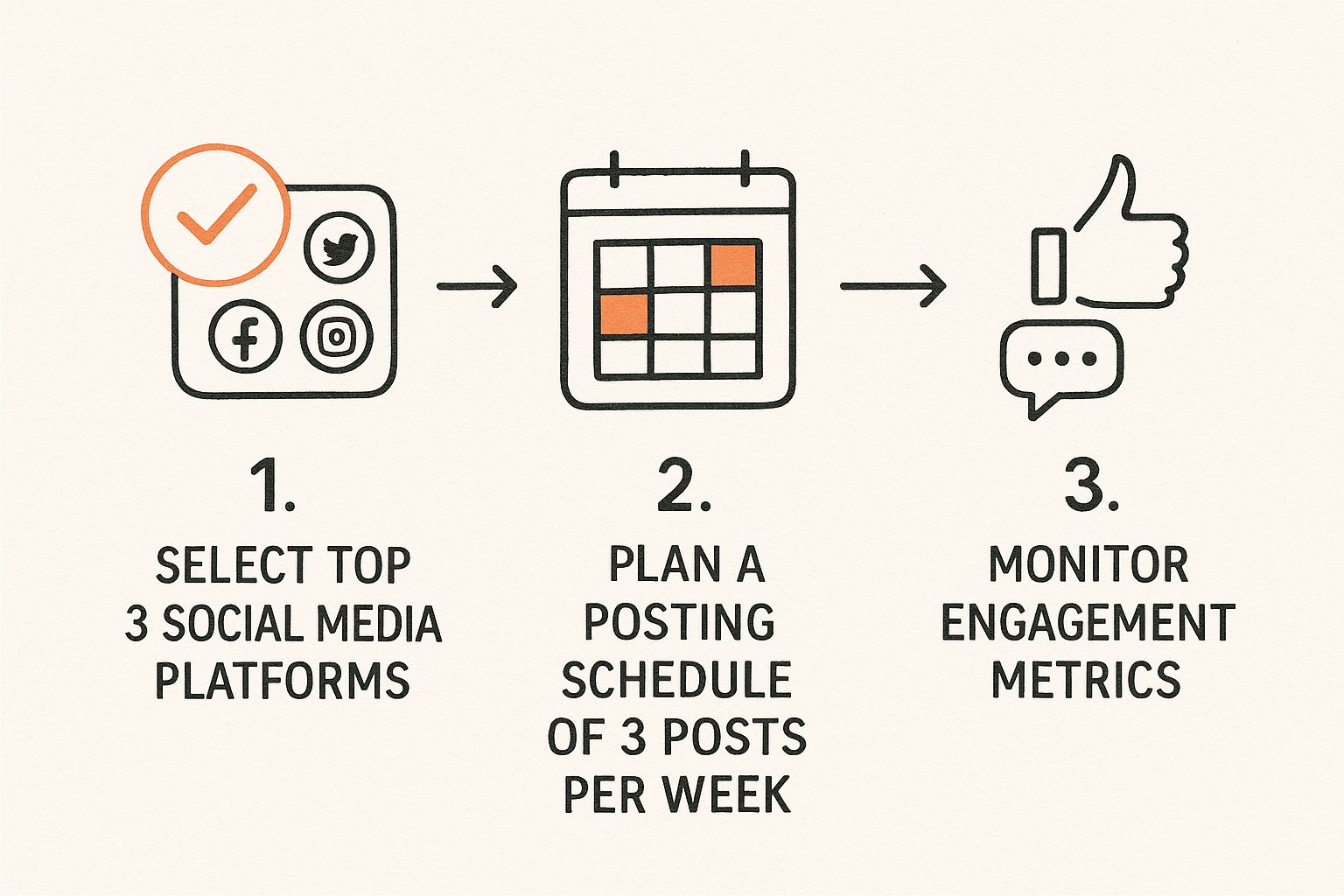
As you can see, a focused and consistent approach is way more effective than just posting randomly whenever you feel like it. Picking your key platforms, planning your content, and actually looking at the results is a cycle. Mastering this cycle is fundamental to getting your music heard by new audiences.
The Art of Pitching to Playlists
Getting your music onto playlists is, without a doubt, one of the most powerful ways to get heard today. But the world of playlisting isn't a single path. It's split into two crucial avenues, and to truly succeed, you need to get good at navigating both: pitching to Spotify's in-house editors and reaching out to the thousands of influential independent curators.
Your journey starts with the official channel. You absolutely must submit your track through your Spotify for Artists dashboard at least four weeks before it goes live. This isn't just a box to tick; it's your direct line to the editorial teams building career-making playlists like New Music Friday and Lorem.
Think of your Spotify for Artists dashboard as mission control. It’s where you’ll find the official submission tool and all the vital data about who’s listening to your music. This pitch is your one shot to make a case for why your song deserves a spot.
Crafting the Perfect Official Pitch
Your official Spotify pitch has to be tight, compelling, and straight to the point. Editors are sifting through an ocean of new music, which means you have just a few seconds to make an impression. You need to quickly nail down the song's genre, mood, what instruments are featured, and—critically—any marketing plans you have in place.
For instance, a solid pitch might look something like this: "This is a high-energy indie rock track with anthemic female vocals and a driving bassline, perfect for workout or party playlists. We're running a targeted TikTok campaign focused on this sound and have a music video premiere scheduled with a prominent blog."
See how that works? It tells them everything they need to know: the sound, the vibe, and the fact that you're hustling to promote it yourself. For a deeper dive, check out our guide on how to get on Spotify editorial playlists, which breaks down the entire process.
A great pitch isn't just about describing your song—it's about selling its potential. Show the editors you're a serious artist with a plan, and they'll be far more likely to listen.
Reaching Independent Curators
While landing on official playlists is a huge win, don't sleep on the power of independent curators. These are the music lovers, bloggers, and influencers who have built loyal followings around their specific tastes. Getting placed on just a few of the right independent playlists can drive thousands of real, engaged streams.
The trick is finding the right curators. Don't just blast your track to every playlist that fits your genre. That’s a waste of everyone’s time. Instead, use a service like artist.tools to analyze a playlist's health. You need to check for authentic follower growth and steer clear of any playlist that shows signs of bot activity.
Once you’ve built a list of quality targets, your outreach email needs to be personal and brief.
Personalize Your Subject Line: Something like "Music Submission: [Your Artist Name] - For Your 'Midnight Drive' Playlist" is worlds better than a generic "Music Submission." It shows you've actually listened.
Keep It Short: Introduce yourself, drop a genuine compliment about their playlist, link to your song, and give a one-sentence description. That's it.
Make It Easy for Them: Always use a direct streaming link, preferably to Spotify. Never, ever attach MP3 files to an email.
Think of it from their perspective: curators are doing you a favor by even pressing play. Respect their time by being professional, personal, and getting straight to the point. This thoughtful approach is how you not only get heard but also build the kind of relationships that can sustain your career for the long haul.
Promote Your Music Beyond Spotify
Look, getting your Spotify profile dialed in is crucial, but real, lasting growth happens when you build a world for your music that extends far beyond a single platform. If you put all your eggs in the Spotify basket, you're building on rented land. A smart, diverse promotional strategy is your insurance policy—it makes sure your music can find listeners wherever they hang out, building a fanbase that's both resilient and genuinely connected to you.
Think of it like this: Spotify is the destination where people listen, but social media is where they discover. Your job is to create moments around your music that are compelling enough to pull people out of their endless scrolling and into your world. This is about so much more than just posting "new song out now."
Using Social Media for Discovery, Not Just Announcements
Platforms like TikTok and Instagram aren't just billboards for your music; they're stages for storytelling. The goal is to wrap your music in content that gives it context and an emotional core.
TikTok & Reels: Don't just slap your song on a random video. Start a trend, get vulnerable and share the story behind the lyrics, or just film a raw, one-take performance. Create content that feels native to the platform, not like a slick, polished advertisement.
YouTube: Your official music video is just the start. Think visualizers, behind-the-scenes footage, and lyric videos. These are all shareable assets that give fans more ways to engage with a single track.
Instagram Stories: This is where you build hype. Use polls, Q&A sessions, and countdown timers to make your followers feel like they're part of the release journey.
The whole idea is to give people a reason to care about the song before they've even hit play. A powerful story or a perfectly looped video clip can be the hook that leads directly to that all-important first stream.
Don’t just promote your music; create an experience around it. A 15-second video that tells a relatable story can be more powerful than a thousand ad impressions because it builds a genuine emotional connection.
Building Real Relationships with Press and Bloggers
Getting your music covered by press and influential bloggers is still one of the best ways to build credibility and get heard. But this isn't a numbers game of blasting every music blog with a generic email. It's about building actual relationships.
Start by finding blogs and publications that actually cover your specific niche. Read what they write. Learn the names of the writers. Understand their taste. When you finally reach out, make your pitch personal and quick. Show them you've done your homework by mentioning a recent article you enjoyed before you even think about pitching your own track.
This simple shift turns a cold, easily-deleted pitch into a warm introduction, and it drastically increases your chances of getting a real response. It’s a long game, for sure, but a single glowing review from a respected outlet can open more doors than you can imagine. We cover more on building these crucial industry connections in our guide on how to promote your music on Spotify.
The Power of Direct Connection and Live Shows
Beyond algorithms and editors, your most valuable asset will always be your core fans. Building a direct line to them through an email list is priceless. It lets you cut through the social media noise and speak directly to the people who care the most. Give them exclusives, early access, and personal updates to show them they’re valued.
And never, ever underestimate the raw power of playing live. Projections show that live music revenues are on track to jump from $34.6 billion in 2024 to a staggering $38.2 billion in 2025. A gig connects you with an audience in a way that no digital campaign ever could. It’s how you turn casual listeners into true superfans who will advocate for your music both online and off.
Turn Listeners Into Lifelong Fans
Streams are a metric, but fans are a career. After all the hard work of branding, distributing, and promoting your music, this is the final, most crucial piece of the puzzle: turning those fleeting listeners into a dedicated community. This is where you graduate from just getting your music heard to building something that can actually last.
It all boils down to creating genuine connections that make people feel like they're a real part of your journey, not just another number on a stats page.
The first move is simple: shift from broadcasting to engaging. Don't just post on social media and walk away. Get in there. Dive into the comments on your YouTube videos, Instagram posts, and TikToks. When someone takes the time to say they love a lyric, respond. That small act of recognition shows there's a real person on the other side, and it can instantly convert a casual listener into a true supporter.
Go Beyond the Follow Button
A "follow" is passive. An engaged community member is active. Your goal is to create spaces where your most dedicated fans can gather and feel a much deeper sense of belonging. This is where you give them real value they can't get anywhere else.
Launch a Newsletter: An email list is a direct line to your audience, completely free from the chaos of social media algorithms. Use it to share personal stories, exclusive behind-the-scenes photos, or even early access to tickets and merch.
Create a Discord Server: For fanbases that are really fired up, a Discord server is the ultimate digital clubhouse. It’s a place for your fans to connect with each other and with you, building a genuine community around your music.
This focus on authentic connection also unlocks new ways to get paid. By building this community, you're not just selling songs; you're creating a sustainable career. Our guide on how to make money as a musician online dives deep into how these fan relationships can become the financial backbone of your work.
True fandom isn't built on algorithms; it's built on authentic human connection. Make your fans feel seen, and they won't just stream your music—they'll buy your merch, come to your shows, and tell all their friends about you.
Nurturing a Global Community
As you build these connections, don't forget that the music world is bigger than ever. The global recorded music market grew by 4.8% in 2024 to hit $29.6 billion—its tenth straight year of growth.
What's really interesting, though, is where that growth is happening. The fastest-growing markets are in emerging regions like the Middle East (+22.8%) and Latin America (+22.5%). These places represent massive, untapped audiences who are hungry to discover new artists. You can read more about these global music trends from IFPI.
This means that by building a strong digital community, you're not just reaching fans in your hometown. You're potentially connecting with superfans all across the globe.
Got Questions? We've Got Answers
If you're an independent artist, you've probably got a million questions floating around your head. It's a confusing industry, and everyone seems to have a different opinion. Let's cut through the noise and tackle some of the most common hurdles I see artists wrestling with every single day.
How Often Should I Be Releasing New Music?
Forget the old model of dropping an album once every year or two. To stay on people's radar today, you need a more consistent pulse.
For most artists starting out, putting out a new single every 6-8 weeks is the sweet spot. This approach keeps your audience hooked and, just as importantly, it continuously feeds the streaming algorithms. Each release is a new chance to pitch to playlists and build momentum, rather than starting from zero with a once-a-year album drop.
But here's the critical part: quality always, *always* beats quantity. A killer, professionally mixed track released every three months will do more for your career than a rushed, half-baked song every four weeks. Don't sacrifice quality just to stick to a schedule.
Are Music Videos Still a Thing?
The days of needing a $10,000 cinematic masterpiece for every song are long gone. But is visual content necessary? Absolutely. It’s non-negotiable.
Think of it this way: short-form video is now the main discovery engine on platforms like TikTok, Instagram Reels, and YouTube Shorts. These are incredibly powerful and, thankfully, cheap ways to get your music in front of new ears.
Your visual content is how people "see" your music on social media. Simple, engaging clips—like a cool visualizer, a lyric video you made yourself, or even just behind-the-scenes footage—can explode your reach without costing a fortune.
My advice? Save the big-budget video for your absolute smash-hit single. For everything else, have a steady stream of simple, effective visual content ready to go for each release.
Should I Pay for Playlist Promotion?
This is a minefield. You have to be incredibly careful here.
The internet is flooded with shady services promising thousands of streams for a small fee. The vast majority of these use bots and click farms. These fake streams won't build you a real fanbase, and worse, they can get your music completely removed from Spotify. It's a career-killer.
Your time and money are much better spent on two things:
Organic Outreach: Do the work. Research independent curators who genuinely love your style of music and reach out to them personally.
Official Channels: The single most important thing you can do is use Spotify's official pitching tool inside your Spotify for Artists dashboard for every single release. It's free and it's how you get on real editorial playlists.
Real, legitimate PR campaigns are expensive and focus on building relationships and telling your story—they never promise a specific number of streams. If a service guarantees stream counts, run. That's the biggest red flag in the business.
Ready to stop guessing and start growing? artist.tools gives you the real-world data to find legitimate playlist curators, spot bot activity before it hurts your profile, and track your growth with confidence. Make the data-driven decisions that will actually move your music career forward. Get started with artist.tools today.
.png)
.png)
Comments