
Spotify Playlist Manager: The 2026 Guide for Artists
Learn what a Spotify playlist manager does, how to vet playlists for bots, and choose the right tools. Your complete guide for 2026, with data-driven workflows.
Playlist placement can drive the majority of an artist’s streams in major markets. That scale changes the role of a spotify playlist manager from simple outreach into a function closer to channel strategy. The work now includes playlist selection, fraud screening, metadata judgment, and performance attribution across a fragmented ecosystem.
Two factors define whether playlisting creates real growth or expensive noise.
The first is bot detection. Industry discussion cited earlier shows that Spotify increased enforcement against artificial streaming over the course of 2025, with penalties rising materially as suspicious activity became easier to trace at scale. That matters because a playlist with inflated followers can still look attractive in a spreadsheet while sending the wrong engagement signals, weak saves, and low-quality streams that create risk instead of momentum.
The second is playlist SEO. As editorial control loosens and user behavior shifts toward search, curator strategy starts to look more like discovery infrastructure than relationship management. Playlist titles, keyword alignment, niche intent, and track metadata now influence whether a placement keeps producing listeners after the initial add. A manager who ignores that layer is treating playlists as short-term distribution instead of searchable assets.
A serious spotify playlist manager operates at the intersection of those two realities. The job is to filter out manipulated inventory before money or reputation is exposed, then concentrate effort on playlists that can rank, convert, and keep delivering discovery over time.
What Is a Spotify Playlist Manager
A spotify playlist manager is either a person, a software system, or, in any serious operation, both. The person handles judgment. The software handles scale, verification, and attribution.
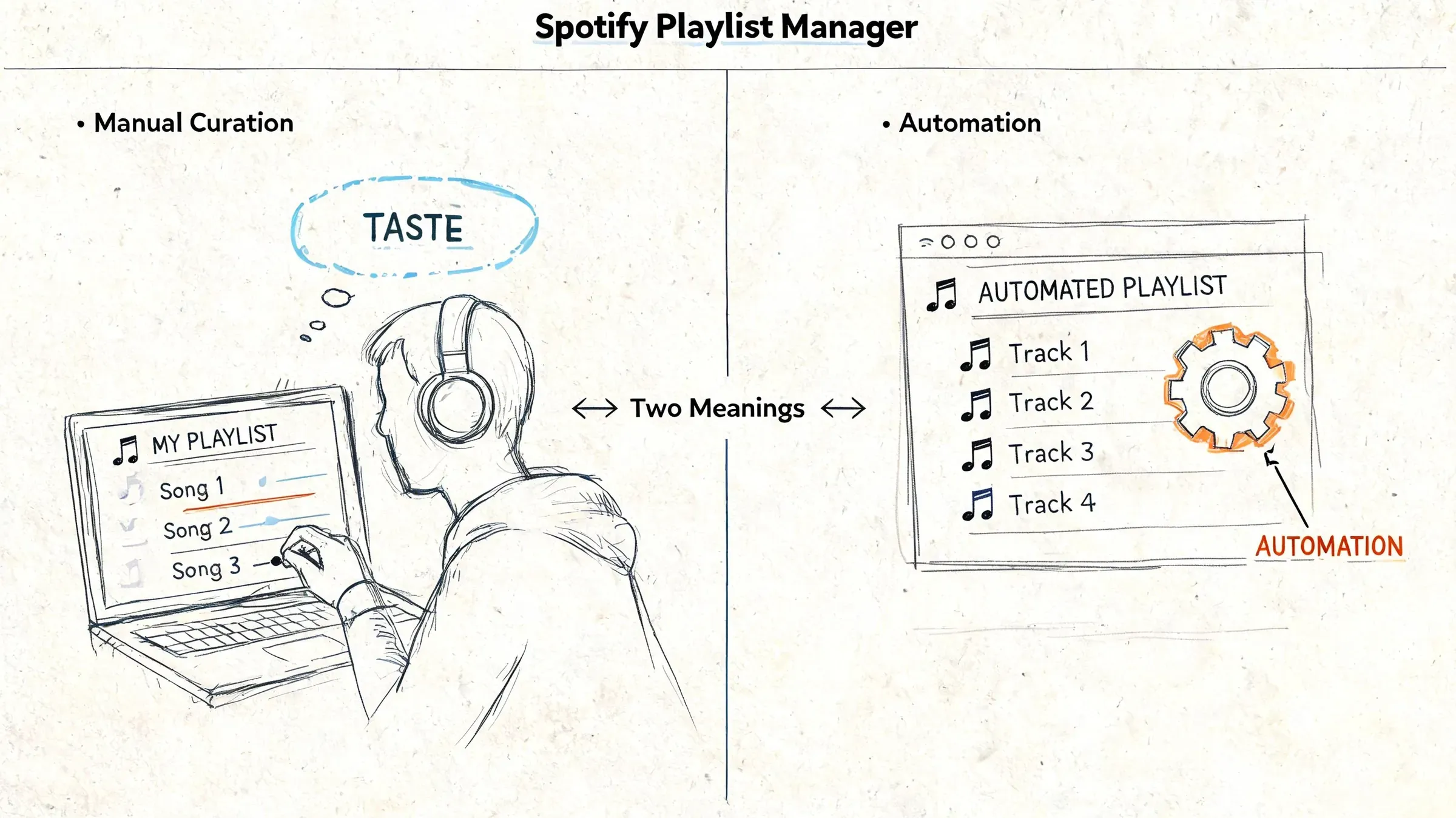
That distinction matters because playlisting is no longer a relationship-only function. It now sits closer to channel analysis. A manager has to assess playlist quality, curator behavior, search intent, track-to-playlist fit, and post-placement performance, often across a large and unstable universe of user-generated inventory. Manual research can support judgment. It cannot support consistent decision-making on its own.
The role is analytical before it’s creative
Taste still matters. A manager needs to recognize genre adjacency, listener expectations, sequencing logic, and whether a track belongs in a given listening context.
But taste is only one layer. The harder part is evaluating signals that are easy to fake on the surface and expensive to misread in practice.
A capable manager should be able to answer questions like these:
- Which playlists produce meaningful listening, not just superficial stream spikes
- Which follower counts look inflated once historical patterns are examined
- Which curators show stable add and remove behavior over time
- Which playlists have actual relevance in a target market or niche
- Which placements support retention, saves, and repeat discovery
That is why the job increasingly resembles growth analysis inside a music distribution environment.
Software provides the critical leverage
The software side matters because the workload is too large and too dynamic for spreadsheets, inbox threads, and memory. A manager may need to monitor dozens of live placements around a single campaign, compare playlist changes over time, and separate healthy discovery from manipulated traffic. Without system support, the process breaks at the exact point where risk starts to rise.
This is also where the two most ignored parts of the job become visible.
First, bot detection is a required filter, not a cleanup task. If a manager evaluates playlists after outreach instead of before it, they are screening risk too late. Fraud exposure does not start when Spotify acts on suspicious activity. It starts when an artist accepts low-quality streams that distort performance data and weaken campaign decisions.
Second, playlist SEO has become part of the job description. A placement is not only a distribution event. It is also a search visibility event. Playlist naming, keyword alignment, category intent, and metadata relevance affect whether a playlist keeps surfacing to the right listeners after the initial add. Managers who ignore that layer reduce playlists to temporary promotion slots when they can function as recurring discovery surfaces.
Why the distinction matters
Artists often hire for access when they should hire for process. Curators often optimize for headline follower count when they should optimize for integrity, search position, and listener quality.
A spotify playlist manager is best understood as a decision system. The human sets criteria and makes tradeoffs. The platform verifies patterns, tracks changes, and connects placements to outcomes. Remove either side and the work gets weaker fast. Human-only management struggles to scale and verify. Software-only management cannot judge fit, context, or campaign goals.
The useful definition is simple. A spotify playlist manager is the operating layer that decides which playlists are worth pursuing, which ones should be avoided, and why a placement created value after it happened.
Core Functions A Playlist Manager Must Master
The job has four operating functions. If one fails, the rest of the campaign produces weaker decisions.
Market-wide discovery
Discovery starts with segmentation. A manager has to separate playlists by genre fit, listener intent, update frequency, curator behavior, and search visibility before any outreach list is built.
That changes the actual unit of work. The target is not a large database of playlists. The target is a ranked pipeline of plausible placements, with enough context to decide which playlists deserve manual review and which should be excluded early.
Search behavior matters here more than many artists assume. Some playlists act like temporary exposure slots. Others keep attracting traffic because their titles, descriptions, and keyword alignment match how listeners search inside Spotify. A manager who ignores that difference misses one of the few compounding advantages in playlisting. The practical implication is simple. Discovery should surface playlists that fit the song and playlists that can keep generating discovery after placement.
Forensic vetting
Vetting comes before outreach, not after a track is placed.
A useful manager checks whether playlist behavior looks economically and operationally credible. Healthy playlists usually show a believable pattern of updates, track turnover, and audience consistency over time. Manipulated playlists often look polished at the surface and unstable underneath.
A practical review lens looks like this:
| Signal | What it suggests |
|---|---|
| Abrupt follower acceleration with no clear reason | Possible artificial growth or paid traffic |
| Long periods with no track movement | Low curator activity or an abandoned playlist |
| Regular adds and removals that fit a clear theme | Active curation and maintained audience intent |
| Metadata that matches a specific listener use case | Better odds of search visibility and sustained discovery |
This function is where software earns its keep. Historical tracking and pattern review help a manager screen many playlists quickly, then spend human judgment on the small set that still looks credible. If you are building that shortlist for outreach, a Spotify playlist submission workflow is useful only after the playlist passes this screening step.
Strategic outreach
Outreach quality depends on selection quality.
Managers who treat curator pitching like volume sales usually create noise, not placements. The stronger approach is narrower and more evidence-based. Prioritize playlists where the song fits the listening context, the curator has shown recent activity, and the playlist has a clear role in the artist’s release plan.
The message itself should reflect that homework. Reference the playlist’s audience, mood, and use case. Explain why the track belongs there now. Timing also matters. A playlist that updates consistently has a different outreach window than one that refreshes around specific release cycles or seasonal demand. Good managers do not optimize for send count. They optimize for qualified contact.
Real-time performance analysis
A placement only matters if it changes listener behavior in a way the artist can use.
Post-placement analysis has to answer three questions. Did the playlist create a measurable lift during the active window. Did listeners stick after the initial exposure. Did the placement reveal anything useful about audience fit, search intent, or future targeting.
Those answers turn playlisting from a promotion tactic into a feedback system. If a track performs well on playlists built around a specific keyword cluster or listener scenario, that pattern should influence the next round of outreach and the artist’s own playlist SEO choices. If a placement produces volume without retention, the manager has learned something different but still valuable. The playlist reached people. It did not reach the right people.
Identifying High-Value Playlists and Avoiding Bots
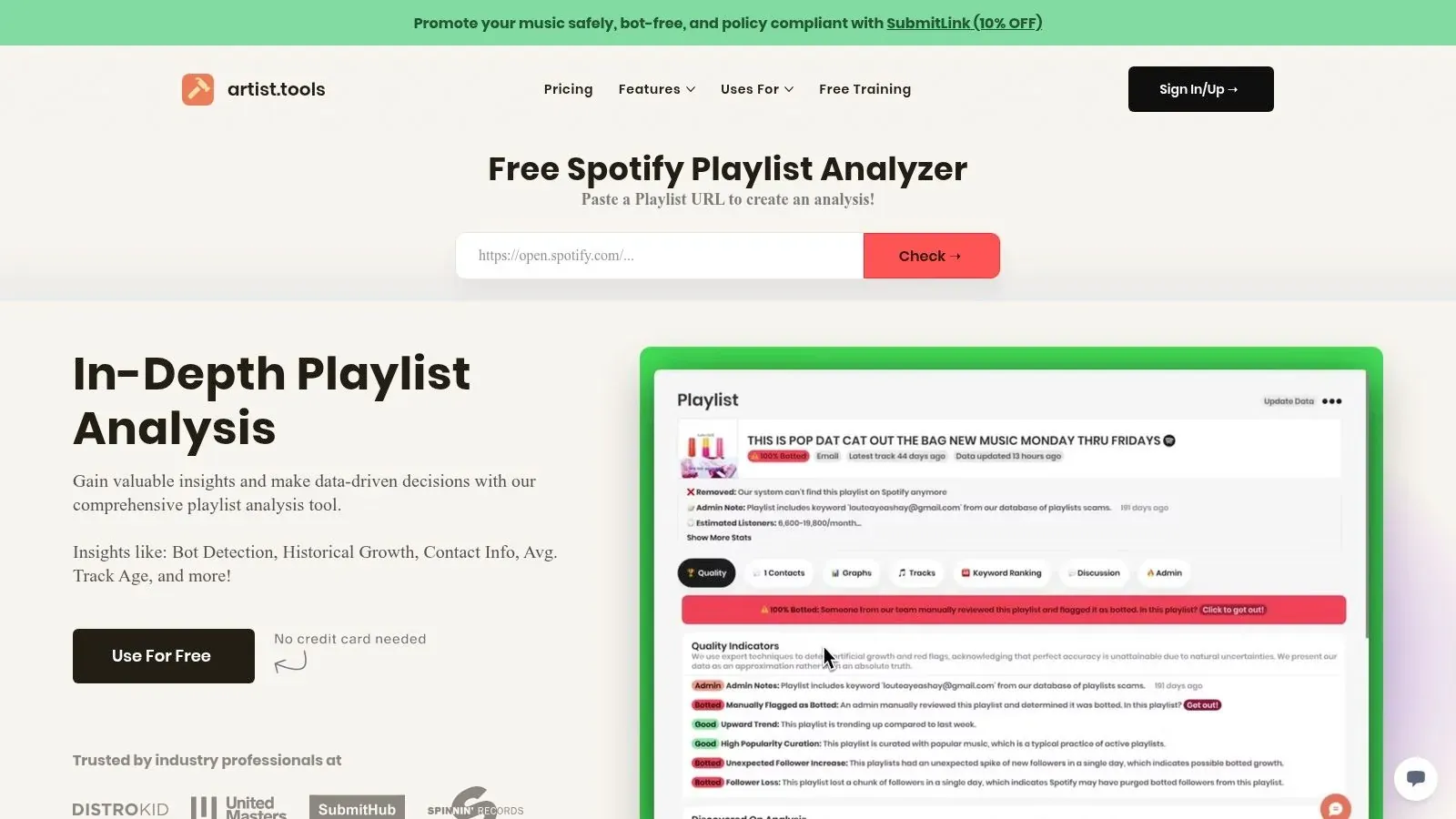
A playlist with 200,000 followers can be less useful, and far riskier, than one with 8,000 engaged listeners. That gap explains why serious playlist management starts with fraud screening, not outreach.
The operational risk is straightforward. Spotify increased enforcement against artificial streaming activity during 2025, and that shift changed the standard for playlist vetting. A manager who pitches first and audits later is not just wasting submissions. They are exposing the release to bad data, weak attribution, and possible compliance issues if the playlist’s traffic is manipulated.
Why follower count misleads
Follower count is a surface metric. It says almost nothing by itself about whether a playlist can generate real discovery, save rate, or repeat listening.
High-value playlists behave like stable media properties. Their growth curve is believable over time. Their track adds and removals suggest active editorial judgment. Their audience estimates do not collapse when compared with public scale. A manipulated playlist often fails on one of those dimensions, and sometimes on all three.
This matters for a second reason that many guides miss. Playlist quality now affects search visibility strategy. If a song lands on playlists built around strong listener intent, such as workout, sad indie, or deep house afterhours, that placement can reveal which keyword patterns and use cases deserve attention in the artist’s own curation and metadata decisions. Bad playlists distort that signal.
The signs that matter
A useful screening model is narrow and repeatable. It should answer four questions before anyone sends a pitch.
- Is the growth history credible? Multi-month or multi-year patterns are harder to fake than a large current follower number.
- Does listener activity look proportional? A playlist should show signs of real consumption, not just inflated public scale.
- Is the track turnover coherent? Consistent updates suggest maintenance. Erratic overhauls or long stagnation often point to lower value.
- Would you trust the data from a placement here? If the answer is no, the playlist fails even if it looks attractive on paper.
Teams that use Spotify playlist submission research tools after these checks usually make better decisions because they filter for safety and relevance before they spend outreach effort.
A playlist pitch is a measurement decision before it is a promotion decision.
The overlooked cost of bad placement
Bot exposure is usually discussed as a reputation problem. The larger problem is analytical contamination.
A manipulated placement can inflate stream counts while depressing retention, save rate, and downstream conversion. That makes campaign reporting less reliable. It also weakens the feedback loop a manager needs to improve future targeting. If the source data is compromised, conclusions about audience fit, playlist SEO, and curator quality become less trustworthy.
The upside works in the opposite direction. Once unsafe playlists are removed, the remaining shortlist becomes more valuable than a larger database built on follower count alone. It gives the manager a cleaner test set for two jobs at once. Reduce platform risk. Identify the playlist themes, listener intents, and keyword patterns that can improve future curation strategy.
A Practical Workflow for Playlist Management
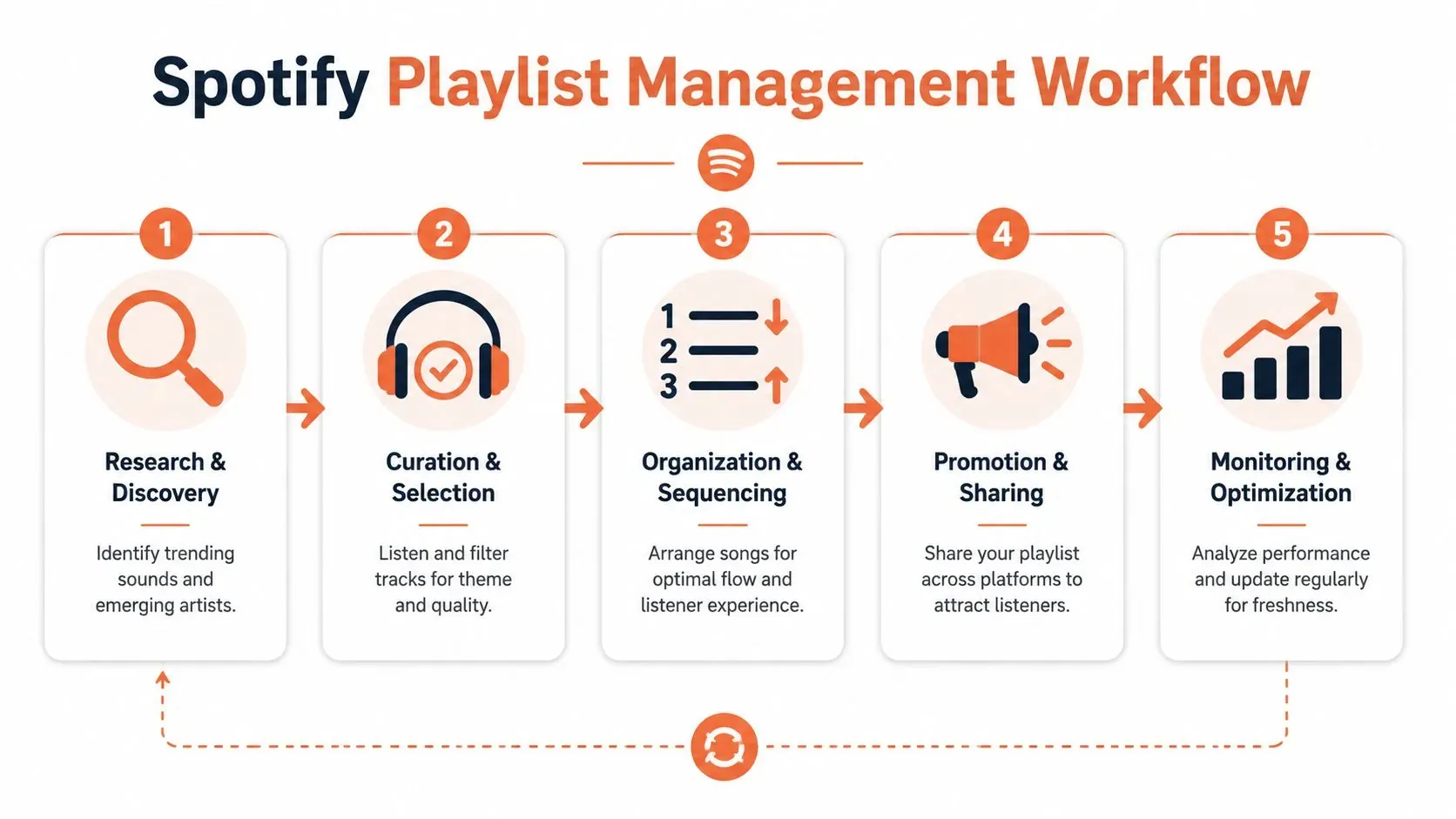
A workable workflow has to produce three things at once. It has to surface viable playlists, reject unsafe ones, and preserve enough measurement discipline to learn from every campaign.
Stage one, build the target list
Start with relevance, not volume. Pull a broad set of playlists around the track’s genre, mood, artist adjacency, and market. Then cut aggressively.
A good initial list usually includes playlists that are active, coherent, and aligned with the release context. A bad list is built from follower count and public branding alone.
For contact research, a dedicated source like Spotify playlist contact finder can reduce the manual overhead after the target list is already qualified.
Stage two, verify historical integrity
Spotify’s technical architecture makes serious playlist auditing possible. Spotify documents that its playlist system uses a snapshot-based architecture where each modification creates a unique , which allows applications to track playlist history with precision through the Spotify Web API playlist concepts documentation.
That matters operationally because historical composition changes aren’t guesswork. They can be audited as discrete states. For a manager, that means a playlist’s add and remove history can be used to detect abnormal curator behavior and artificial inflation patterns.
What to check before outreach
- Composition history Look for whether the playlist changes in a stable editorial rhythm or in abrupt, irregular bursts.
- Curator behavior Check whether adds and removals reflect a recognizable selection standard.
- Risk flags Reject playlists with patterns that suggest manipulation, even if the audience looks attractive on the surface.
The manager who skips verification isn’t saving time. They’re pushing risk downstream.
Stage three, pitch with evidence
Once the list is clean, outreach becomes straightforward. The pitch should explain fit in concrete terms. Why this track belongs in that playlist. Why the audience overlap is real. Why the timing makes sense.
Strong pitches are short because the research is doing most of the work. If you need long copy to compensate for weak targeting, the problem is upstream.
Stage four, track impact and update the model
After placement, monitor stream movement, listener retention, and whether the playlist appears to be contributing durable discovery. Then feed the result back into the next campaign.
The workflow only compounds when every placement becomes training data. Over time, you stop asking “Which playlists are big?” and start asking “Which playlists produce outcomes for this kind of track?”
Advanced Strategy Spotify SEO for Playlists
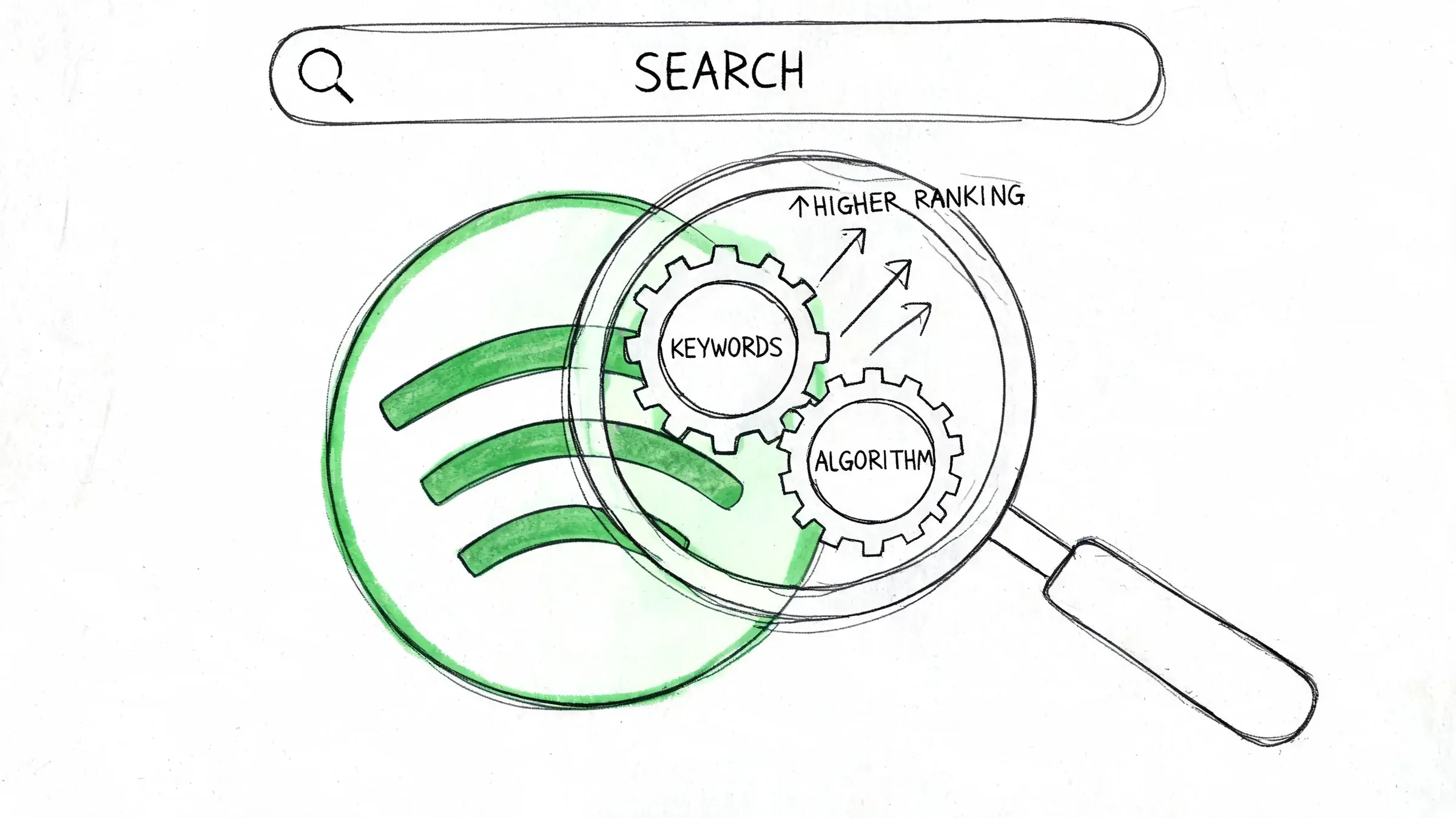
Search behavior inside Spotify changes playlist economics. As editorial influence becomes less predictable, curators who rank for high-intent queries gain a discovery channel they can shape, measure, and defend.
Search is now a playlist growth channel
A spotify playlist manager is no longer just organizing catalog and outreach. The role now includes search positioning. Playlist titles, descriptions, track mix, and regional relevance all influence whether a playlist captures intent from listeners who are searching for a mood, genre, activity, or micro-scene.
That creates both risk and opportunity.
The risk is strategic blindness. Teams still operating on an editorial-only model can miss durable discovery because they treat playlists as placement targets instead of searchable assets. The opportunity is compounding visibility. A playlist that ranks for a recurring query can attract listeners long after any one campaign ends.
The strongest curators ask sharper questions. Which queries matter in this market? Which playlists already occupy those terms? Does the playlist metadata reflect how listeners phrase demand, or how the curator talks internally?
The principles of playlist optimization
Spotify SEO is a relevance discipline. The goal is to align playlist metadata and curation choices with real search intent, then monitor whether that alignment produces rank and listening activity.
A practical framework looks like this:
| SEO element | What the manager is optimizing for |
|---|---|
| Playlist title | Match with real user search behavior |
| Description | Reinforce relevance without becoming spammy |
| Genre positioning | Align with the listener’s use case |
| Market targeting | Recognize that search intent differs by region |
| Competitive review | Understand which playlists already rank |
This work is more analytical than many guides suggest. A title is a keyword decision. A description is a relevance signal. Track selection affects whether the playlist satisfies the promise made by its metadata. If those elements drift apart, ranking may be weaker and listener retention usually suffers.
Good search strategy also filters out a common mistake. Curators often chase broad genre terms because they appear larger. In practice, narrower phrases can be more valuable because intent is clearer and competition is lower. “Indie study music” and “dark ambient focus” attract smaller audiences than broad head terms, but those searches often map more directly to listening sessions and repeat saves.
SEO only works after fraud screening
There is a sequencing issue that many playlist SEO guides miss. Search optimization should come after bot screening, not before.
A playlist can rank, attract impressions, and still be a poor asset if its audience quality is distorted by manipulation. Inflated follower counts and suspicious activity can make a playlist look stronger in search analysis than it is in reality. That leads managers to optimize around false positives, copy the wrong competitors, and misread which keywords are producing real listener value.
Search strategy is only as good as the inventory behind it. Teams that separate bot detection from SEO usually make cleaner decisions because they know which playlists deserve optimization effort in the first place.
Treat rankings like a measurable operating system
Spotify SEO becomes useful when it is tracked over time, not discussed in abstractions. Managers need visibility into position changes, query coverage, and whether search visibility corresponds with listening outcomes. That is the difference between keyword speculation and a repeatable operating model.
Tools with playlist analytics and ranking visibility help connect those layers. The important question is not whether a playlist appears in search once. It is whether ranking gains coincide with stronger discovery, healthier engagement, and better long-term performance.
The strategic conclusion is straightforward. Editorial placement still matters, but search gives curators a second growth engine, one that rewards metadata discipline, audience fit, and continuous measurement. Curators who treat Spotify SEO as part of playlist management build assets that can keep discovering listeners without waiting for someone else to open the gate.
Evaluating and Choosing a Playlist Management Platform
Most platforms are easy to demo and hard to trust. The right way to evaluate a spotify playlist manager tool is to test whether it solves the three problems that define the market: fraud risk, attribution quality, and discoverability.
Start with fraud controls
If a platform can’t help you distinguish healthy playlists from manipulated ones, it fails at the first gate. Bot detection isn’t a premium extra. It’s basic campaign hygiene.
Look for historical visibility into follower growth, track changes, and playlist behavior. A static directory is not enough. You need enough evidence to reject unsafe placements before outreach starts.
Then test attribution depth
A playlisting platform should help you connect placement activity to actual outcomes. That means stream monitoring, historical comparisons, and enough reporting clarity to tell whether a campaign produced real movement or noise.
If you want one benchmark for that evaluation, use playlist analytics capabilities as the category standard to compare against. The important question is whether the tool helps you identify cause, not just observe activity.
Finally, check for search intelligence
Most legacy playlist tools were built for outreach alone. That’s no longer sufficient. A modern platform should help you understand search behavior, ranking position, keyword opportunity, and market variation.
This is the clearest dividing line in 2026. Older tools help you send more pitches. Better tools help you make fewer, smarter decisions while building playlist visibility that compounds over time.
A platform that combines historical vetting, campaign measurement, and Spotify SEO support matches how the job now works in the field. Anything less forces the manager back into fragmented workflows and weakens every decision that follows.
artist.tools brings those workflows into one place for artists, managers, and curators who need playlist vetting, stream tracking, search research, and historical analytics without stitching together disconnected tools. If your playlist strategy has real budget, real release pressure, or real compliance risk, it’s worth evaluating artist.tools as part of your stack.