How to Promote a Music Video and Get Seen
- Sep 13, 2025
- 17 min read
Promoting a music video isn't just about hitting "upload." The real magic happens in the weeks leading up to the release, turning a simple drop into a can't-miss event for your fans. This is all about building anticipation with a clear, strategic plan. Think teasers, behind-the-scenes content, and getting your track in front of the right blogs and playlists ahead of time.
Building Hype Before Your Video Drops
A killer music video launch is never an accident. The artists who really make a splash treat their release like a movie premiere, planning every step for weeks—sometimes even months—in advance. This isn't about having a huge budget; it's about being smart and strategic, creating genuine excitement that gets fans marking their calendars. This pre-launch phase is where you lay the groundwork for a massive debut.
It's no secret that music videos are a huge deal. The market was valued at around USD 4.2 billion in 2024 and is on track to hit USD 7.1 billion by 2033. That explosion shows just how much the industry relies on strong visuals to cut through the noise.
This process breaks down how to identify your audience, pick the right channels, and schedule your content to build that unstoppable momentum.
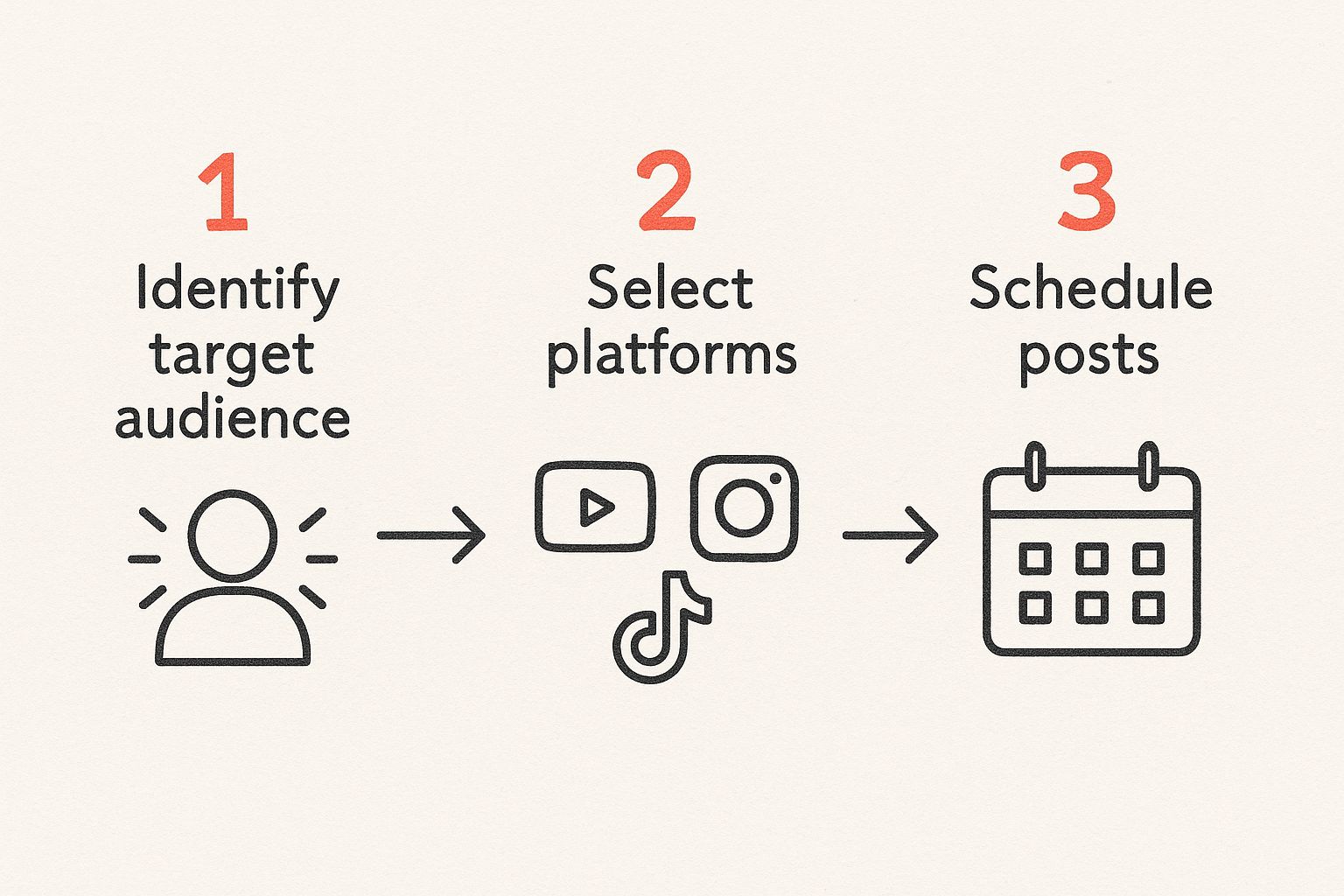
Having a visual workflow like this makes it so much easier to map out your pre-launch strategy and make sure you've covered all your bases before the big day.
Create Your Promotional Timeline
First things first: work backward from your release date. A solid timeline gives your whole campaign structure and saves you from that last-minute panic. You need to map out your key milestones and content drops to keep a steady drumbeat of excitement going without burning out your audience.
Here’s a simple timeline that works wonders:
4 Weeks Out: Announce the video and the official release date. Share some high-quality, professional stills from the video shoot to give a first taste.
3 Weeks Out: Start posting behind-the-scenes photos or short video clips. This is a great time to talk about the story or concept behind the video.
2 Weeks Out: Drop a punchy, 15-second teaser trailer. Now is when you should start your direct outreach to blogs and playlist curators you've identified.
1 Week Out: Kick off a daily countdown on social media. Use Instagram Stories with the countdown sticker to create a real sense of urgency.
This kind of structured approach transforms your release from just another upload into a story your followers can get invested in. Each piece of content builds on the last, pushing that anticipation higher and higher.
To keep everything organized, a checklist can be your best friend. Here’s a quick summary of the key actions to take in the run-up to your launch.
Pre-Launch Promotion Checklist
Timeframe | Key Action | Objective |
|---|---|---|
4-6 Weeks Out | Finalize video & set release date. | Establish a clear target and timeline. |
4 Weeks Out | Announce video & share stills. | Create initial awareness and excitement. |
3 Weeks Out | Share behind-the-scenes content. | Deepen fan connection and tell the story. |
2 Weeks Out | Release a short teaser trailer. | Build anticipation and showcase the vibe. |
2 Weeks Out | Begin outreach to blogs & curators. | Secure early press and playlist features. |
1 Week Out | Start a daily social media countdown. | Create urgency and maximize launch day views. |
Release Day | Post the full video and share widely. | Drive immediate traffic and engagement. |
Following a checklist like this ensures no crucial steps are missed and that your promotional efforts build on each other effectively.
Pinpoint Your Core Audience and Channels
Spreading yourself too thin is one of the most common mistakes I see. Instead of trying to be everywhere at once, focus your energy on the platforms where your ideal fans actually hang out.
If your music connects with a younger crowd, being active on TikTok and Instagram Reels is a no-brainer. But if your sound is more niche, you might find that specific subreddits or dedicated Facebook Groups are where your real community is.
The goal isn't just to be seen—it's to be seen by the right people. A thousand views from genuine fans who will share your video are far more valuable than 10,000 passive views from a disengaged audience.
Once you know where to find your fans, you can tailor your content to fit the platform. A polished, cinematic teaser is perfect for YouTube, while a raw, off-the-cuff behind-the-scenes clip will likely crush it on TikTok. This targeted approach makes sure your message really connects.
And don't forget to tie your video promotion into your other campaigns. For example, coordinating your video launch with a Spotify pre-save can create a powerful one-two punch. You can learn more about how to pull that off in our comprehensive guide to Spotify pre-save campaigns to see how to align your efforts for the biggest possible impact.
Mastering YouTube SEO for Your Music Video
Alright, so your video is uploaded. Don’t pop the champagne just yet. The real work is just getting started—the work of getting your video discovered by the millions of people who use YouTube as their go-to music discovery engine. Solid YouTube SEO is what separates a video that gets buried from one that keeps pulling in new listeners for months, even years.
You have to think of YouTube as more than just a video host; it’s the second-largest search engine in the world. Every single detail you input—from the title to your tags—is a signal to the algorithm. It tells YouTube what your video is about and who it’s for. If you want any chance of showing up in search results or that coveted "Recommended Videos" sidebar, you have to nail these details.
Crafting a Magnetic Title and Description
Your video's title is your first handshake. It needs to grab a human's attention while also being crystal clear for the algorithm. It should instantly communicate the artist name, song title, and maybe even the genre or vibe to hook the right kind of viewer.
A simple, effective format that works almost every time is Artist Name - Song Title (Official Music Video).
This structure is what people recognize, and it gives them everything they need to know right away. Steer clear of vague, artsy titles that don't have any keywords someone might actually search for. If your track has a specific vibe, like "Lofi Chillhop Beats" or "80s Synthwave," think about tacking those on to catch people browsing by genre.
Then there's your description. Don't you dare leave this blank. The first two or three lines are gold because they show up in search results, so make them count. Start with a quick, engaging sentence about the video or song, then drop your key links: Spotify, Apple Music, and socials.
The YouTube algorithm literally reads your description to figure out what your video is about. A well-written description, packed with relevant keywords, acts as a roadmap for both viewers and the platform itself, massively boosting your visibility in search and recommendations.
Below those main links, flesh it out. Tell the story behind the song, post the lyrics, or list production credits. This is a perfect spot to naturally sprinkle in related keywords and phrases. For a much deeper dive on this, check out our complete guide on SEO for musicians and the proven strategies that drive discovery.
Designing a Thumbnail That Demands a Click
Your custom thumbnail might just be the most critical piece of this entire puzzle. Think of it as a tiny billboard for your video, fighting for attention on a crowded screen. A blurry, dark, or boring thumbnail will get scrolled past every single time, no matter how amazing your song is.
Here are a few things that actually work for creating high-impact thumbnails:
Use High-Contrast Colors: Make your subject pop. Bright, bold colors stand out, especially on a small phone screen.
Show a Clear Face: Humans are hardwired to look at faces. A clear, expressive shot of the artist almost always performs better.
Keep Text Minimal: If you add text, make it huge, bold, and readable. Two or three words at most.
Be Consistent: Develop a recognizable style across all your thumbnails. You want fans to spot your videos instantly.
Never, ever settle for the default thumbnail YouTube spits out. Always upload a custom, high-resolution (1280x720 pixels) image that captures your video's energy and is designed to make people click.
Using Tags and Interactive Elements
Tags are another breadcrumb you can leave for YouTube's algorithm. While they aren't as powerful as they used to be, they still matter, especially for drilling down into specific genres. Use a good mix of broad and specific tags.
Specific Tags: Always include your artist name (and any common misspellings!), the song title, and the album name.
Genre Tags: Get specific with your genre and related subgenres (e.g., "indie pop," "dream pop," "bedroom pop").
Mood & Vibe Tags: How does the song feel? Think like a listener: "upbeat summer song," "sad chill music," "workout motivation."
Finally, use YouTube’s own tools to keep people watching. Add end screens to the last 20 seconds of your video to plug another one of your videos, a playlist, or your subscribe button. Pop in some info cards during the video to link out to your merch store or another relevant piece of content. These features turn one view into a longer session, which is a huge green light for the algorithm.
Executing a High-Impact Launch Day
You've laid the groundwork and the hype is real. It's time to make some noise.
The first 24 to 48 hours after your music video goes live are, without a doubt, the most important. That initial explosion of activity is a massive signal to the YouTube algorithm, telling it your video is something people care about and worth pushing to new audiences. The goal is to make your launch feel like a genuine event by coordinating a synchronized promotional blast.
This isn't just about dropping a link and hoping for the best. It’s about making your audience feel like they're part of an exclusive, shared moment. You want to concentrate all your promotional firepower into a short, high-impact window to build a powerful wave of momentum right out of the gate.

Coordinate a Synchronized Promotional Blast
On launch day, every single one of your channels needs to be a signpost pointing to your new music video. This takes a little prep work to make sure everything fires off at the same time. Get your assets ready in advance—social media posts, email newsletter, website banners—so you can hit "publish" on everything at once.
This coordinated push creates an immediate surge of traffic. When the algorithm sees viewers flooding in from all over the place right after the video is published, it flags this as high interest. That's what boosts your chances of getting pushed into recommendations.
This kind of focused engagement is everything in today's music world, especially with streaming's dominance. Global streaming revenues made up 67% of the total recorded music market revenue back in 2022. It's an environment that rewards artists who can get their audience to show up on demand, a topic covered in depth in the IFPI's Global Music Report.
Use YouTube Premieres to Create a Community Event
One of the best tools you have for launch day is YouTube Premieres. This feature lets you schedule your release and create a public watch page where you and your fans can experience the video together for the very first time. It turns what would be a passive viewing into an active, live event.
Think of it as a virtual red carpet. Fans can set reminders, and a live chat runs right alongside the video during the premiere. This is a golden opportunity to engage directly with your most passionate supporters in real-time.
Using a YouTube Premiere transforms your launch from a simple upload into a shared cultural moment. The live chat creates a sense of community and urgency, making viewers feel like they are part of an exclusive club, which dramatically boosts initial engagement metrics.
Make sure you're active in the chat before the premiere even starts. Welcome people as they show up, answer questions, and build the excitement. That personal touch goes a long way and encourages everyone else to jump in, driving up that comment count from minute one.
Stoke the Conversation and Engage Relentlessly
Your work doesn't stop once the video is live. For the next 48 hours, your mission is to engage with every single comment and share you can find. This isn't just about being nice to your fans; it's a core strategy for promoting a music video effectively.
Here’s a simple engagement plan for those first two days:
Reply to Every Comment: Thank every single person who leaves a comment on YouTube. Ask them questions to get a conversation going.
Pin a Great Comment: Find an insightful or super-enthusiastic comment and pin it to the top. It's a great way to reward a fan and set a positive vibe for the comment section.
Share Fan Posts: Hunt down people sharing your video on Instagram, X (formerly Twitter), and Facebook. Reshare their posts to your stories or timeline and be sure to tag them to show you appreciate it.
Go Live on Other Platforms: Soon after the premiere wraps, think about going live on Instagram or TikTok. You can talk about the video, thank your fans personally, and push even more traffic back to YouTube.
This constant engagement accomplishes two critical things. First, it makes your fans feel seen and appreciated, which deepens their connection to you. Second, it feeds a steady stream of positive signals to the algorithm. Every comment, share, and like is another piece of data telling YouTube that your video is generating a buzz and deserves to be shown to more people.
Extending Your Reach with Social Media and PR
Your music video is done. Awesome. But it deserves to be seen by more than just your existing followers. Real growth kicks in when you strategically break into new communities, and that’s where a smart social media and PR plan makes all the difference.
It’s all about taking your core video and slicing it into an arsenal of content designed to hook brand-new listeners. This isn't about spamming links. We're talking about creating native content for each platform—compelling TikTok clips, polished Instagram Reels, and intriguing YouTube Shorts—that feels right at home in someone’s feed. Pair that with genuine outreach to music blogs, and you can seriously expand your audience.
Repurpose Your Video for Short-Form Dominance
Think of your full-length music video as the main course. The short-form clips? They're the appetizers that get people hungry for more. Your goal is to chop your video into bite-sized, thumb-stopping moments that make viewers want to see the whole thing.
With over 1 billion active users, platforms like TikTok have become ground zero for music discovery. Don't just post a random 15-second clip and call it a day. Think like a content creator. Find the juiciest parts of your video and make them shine.
Isolate the Hook: Find the catchiest 15 seconds of your song and sync it with the most visually stunning shot from your video. This is your money clip for TikTok and Reels.
Create a "Making Of" Short: Got any behind-the-scenes footage? Overlay it with a snippet of the final track. This stuff gives viewers a personal connection to the project.
Highlight a Key Lyric: Make a simple text-on-screen video with a powerful line from your song, with the corresponding video clip playing behind it.
Showcase a Dance or Action Sequence: If your video has any choreography or a memorable moment, isolate it. Turn it into a potential trend. You never know.
This approach keeps your video circulating in different forms, maximizing its chances of being discovered. For a deeper dive into building your social presence, check out our guide on social media marketing for musicians.
Demystify Your Digital PR Outreach
Getting your music video featured on a blog or in an online zine can feel like trying to break into Fort Knox. But honestly, it's more about building relationships than having a stacked contact list. The key? Stop sending generic mass emails and start doing your homework.
Focus on outlets that actually cover your specific niche. A small, dedicated blog that genuinely loves your genre is way more valuable than a big publication that will just delete your email.
Before you even draft an email, get your assets in order. Create a clean, simple Electronic Press Kit (EPK) page on your website with everything a writer might need.
A well-crafted PR pitch isn't a sales pitch; it's an invitation. You're inviting a writer into the world you've built with your music and video, making it easy for them to see why their audience would want to join, too.
Your EPK should be a one-stop shop. No exceptions. Make sure it includes:
Your Bio: A short, compelling paragraph about who you are.
High-Res Photos: Promo shots and a few killer stills from the music video itself.
The Video Link: An unlisted YouTube link before release, and the public one after.
Streaming Links: Direct links to your stuff on Spotify, Apple Music, etc.
Contact Info: Your email or your manager's. Make it easy for them.
Crafting the Perfect Pitch Email
Alright, EPK is ready. Time to write the pitch. Keep it personal, keep it brief, and respect the writer's time. They get hundreds of emails a day, so yours needs to stand out for being professional, not for being annoying.
Here’s a simple structure that just works:
Subject Line: Make it clear and intriguing. Something like: VIDEO PREMIERE: [Your Name] - "[Song Title]" (FFO: [Artist 1], [Artist 2]). The "For Fans Of" part is gold—it immediately helps them place your sound.
Personalized Opening: Start by mentioning something they recently wrote or a playlist they put together. Show them you’re not a robot.
The Core Pitch: In one or two sentences, describe your song and the video's concept. What's the story? What makes it unique?
The Ask: Be direct. "I'd be honored if you'd consider my new video '[Video Title]' for a potential feature on [Blog Name]."
The Links: Neatly provide the link to your EPK and the private video link. Don't make them hunt for it.
Closing: A simple "Thanks for your time" goes a long way.
This approach shows you're serious and you respect their work, which dramatically increases your chances of getting a real response and landing that feature.
Keep Your Video Working For You Post-Launch
The confetti from launch day has settled, but your music video's job is just getting started. A well-made video is more than just a promotional blip; it's a long-term asset that should be pulling in new fans months—even years—down the line. The trick is to shift from a "launch" mindset to a "growth" mindset.
Think of it as turning your video into a perpetual discovery engine. This is how you get a real return on your investment. In 2020, the music video market in North America alone was worth around $3.76 billion. Labels understand this is a long game, and indie artists can play it too. By using data, repurposing content, and running smart ads, you can dramatically extend your video's lifespan and impact. You can learn more about the global music video market trends to see the full picture.
Become a Student of Your YouTube Analytics
Your YouTube Studio is a treasure trove. Seriously. It’s spilling all the secrets about who's watching your video and why. Don't just get hypnotized by the view count; you need to dig deeper to understand the story the data is telling you.
This isn't just about numbers—it's your roadmap for what to do next.
Audience Retention: This is probably your most critical metric. Find the exact moments where people are clicking away. Is there a mass exodus in the first 15 seconds? Your intro might be dragging. Do people keep rewinding a specific part? Boom. That's your next YouTube Short, right there.
Traffic Sources: Where are people coming from? Is it YouTube search? A blog feature? If you see a ton of traffic from "suggested videos," that’s gold. It means the algorithm likes you. Your job is to double down and make more content that aligns with what’s already working.
Demographics: Who’s actually watching? Knowing their age, gender, and location is invaluable. If you suddenly have a pocket of fans in a city you've never even visited, that's crucial intel for planning your next tour or running targeted ads.
Slice and Dice Your Video Into Endless Content
Your main music video isn't the final product. It's the raw ingredient. You can chop it up, remix it, and serve it in dozens of different ways to keep feeding your social media channels for weeks. This keeps your video top-of-mind without you having to sound like a broken record, constantly begging people to go watch it.
Repurposing isn't about being lazy; it's about being smart and efficient. Every new clip you create is another doorway back to the original video, giving people one more chance to discover your work.
Here are a few ideas you can steal:
Lyric Breakdowns: Make a few vertical clips for TikTok or Reels. Show a powerful scene from the video while you pop on screen to explain the story behind a specific lyric.
Acoustic Reworks: Grab a guitar and film a raw, stripped-down version of the song in a totally different location. It shows off your musicality and appeals to a different vibe.
"Making Of" Shorts: People are fascinated by the creative process. Edit your best behind-the-scenes footage into a high-energy, 30-second recap of the shoot. It's a great way to show the personality behind the music.
Run Smart, Low-Budget Ad Campaigns
Once your YouTube data has told you who your core audience is, it's time to go find more people just like them. Paid ads are the most direct way to do this. You don’t need a huge budget, either. Even just $5 a day can move the needle if your targeting is on point.
Platforms like Facebook and Instagram Ads Manager let you get incredibly specific. You can target people based on their interests (like fans of similar artists), their location, and other demographic data. This makes sure every dollar you spend is reaching someone who’s likely to actually care about your music.
Start with a simple video view campaign. Use a compelling 15-second clip from your video as the ad itself. The goal isn't just racking up views on the ad; it's to make people curious enough to click through and watch the entire video on YouTube. This is how you keep a steady trickle of new viewers coming in long after the initial launch hype dies down.
Your Music Video Promotion Questions, Answered
Let's be real—navigating a music video release brings up a ton of questions. How much money do I actually need? What does a "successful" campaign even look like? Is there a magic day to drop the video? It's easy to get stuck.
We're going to cut through the noise and tackle the most common questions artists have. No fluff, just straightforward advice from years of experience to help you make smarter moves for your career.
How Much Should I Actually Budget for This?
There's no one-size-fits-all answer here; it really depends on where you're at in your career and what you're trying to achieve. But if you want a solid starting point, here’s a rule of thumb I’ve seen work time and time again: plan to spend at least 50% of your production cost on promotion.
So, if you dropped $2,000 making the video, you should have at least $1,000 ready to push it.
Where does that money go?
Targeted Social Ads: You'd be surprised what even $5-$10 a day can do. If you know your audience, you can get your video in front of thousands of the right people on Instagram or Facebook.
PR and Blog Outreach: This could mean hiring a publicist or using submission platforms to get your video on the radar of bloggers and playlist curators who can give you a signal boost.
Influencer Marketing: Partnering with a creator who already has the attention of your ideal fans can be huge. Sometimes it's a trade for merch, other times it's a paid post, but the visibility can be well worth it.
The most important thing is to be strategic. A small, focused budget always beats a big, scattered one.
Beyond Views: How Do I Know if My Campaign is Working?
Look, a big view count feels great, but it’s a vanity metric. It doesn't tell the whole story. A video with 10,000 views from fans who are genuinely connecting is infinitely more valuable than one with 100,000 passive, forgettable plays.
Success is about engagement and impact. To see if you're really hitting the mark, you need to look a little deeper.
Metric | Why It's a Big Deal | What a "Good" Result Looks Like |
|---|---|---|
Audience Retention | This tells you if your video is actually interesting. | A high rate (anything over 40%) is solid. Pay attention to where people drop off. |
Click-Through Rate | This shows if your thumbnail and title are doing their job. | A CTR above 5% means you're grabbing people's attention effectively. |
Shares & Comments | This is where you see a real connection forming. | Look for lots of shares and comments that go beyond "cool song." |
Subscriber Growth | This is the ultimate goal: turning viewers into long-term fans. | You should see a clear bump in subscribers right after the release. |
A successful campaign doesn’t just rack up views; it builds a community. Focus on the numbers that prove people are connecting with you as an artist. Those are the fans who will buy merch, show up to your gigs, and be waiting for your next release.
What's the Best Day to Release a Music Video?
Back in the day, Tuesday was the day. But with streaming, everything has shifted. Now, Friday is king. It lines up perfectly with major playlist updates like Spotify's New Music Friday and gives you the whole weekend for your video to pick up steam.
But that's not a hard-and-fast rule. You have to know your audience. If your fans are hyper-active online on a Wednesday afternoon, maybe a midweek drop makes more sense to cut through the Friday noise.
The key isn't the specific day so much as consistency. Pick a schedule, stick to it, and make sure your audience knows when to expect new content from you.
Ready to stop guessing and start making data-backed decisions for your music? artist.tools gives you the insights to find the right playlists, understand who's listening, and build a real career on Spotify. Check out our tools and see how we can help you grow at https://artist.tools.
.png)
.png)
Comments