Making Spotify Playlists That Get Noticed
- Dec 2, 2025
- 16 min read
Making a great Spotify playlist isn't just about throwing a bunch of good songs together. It’s about creating a whole vibe, a specific identity and mood that really connects with a certain type of listener. The best playlists out there start with a super clear concept, a name that sticks, and artwork that makes you stop scrolling—all before you even hear the first note.
Crafting Your Playlist's Unique Identity
Before you even think about adding a single track, you need to nail down the concept. This is your foundation. A strong, specific idea is like your North Star, guiding every choice you make, from the music you pick to how you get the word out.
Let’s be real: generic themes like "Chill Vibes" or "Workout Mix" are just too washed out to get noticed anymore. They’re lost in a sea of sameness.
The sheer volume of playlists on Spotify tells you everything you need to know. As of 2025, users have created a mind-boggling 8 billion playlists. A full 1 billion of those were made in 2020 alone. That’s not just noise; it shows how essential curation has become to the way people listen to music.
Define Your Niche and Audience
Instead of something broad like "Chill," you have to get granular. Who, exactly, are you making this for? What specific activity or feeling are you trying to create a soundtrack for?
Think about it: a playlist called "Lofi Beats for Coding" is way more powerful and discoverable than just "Lofi." It immediately speaks to a specific person doing a specific thing. That’s the goal.
Here are a few examples of concepts that actually work:
"Midnight Drive - Synthwave & Retro": This hits a specific subgenre and instantly paints a picture. You know exactly what this feels like.
"Italian Dinner Party": This serves a purpose. It helps someone create the perfect atmosphere for a social gathering without having to stress over the music.
"Sunrise Yoga Flow": This is built for a specific routine, and you can almost feel the energy of the music rising and falling with the flow.
Build Your Playlist's Brand
Once you’ve got your concept locked in, it’s time to give it an identity. This is where your title, description, and cover art come together to pull listeners in before they even hit play.
Your playlist's name is your first impression and a massive piece of the SEO puzzle. For a full breakdown on this, you should really check out our guide on how to name playlists for growth and discovery.
Your playlist's title, description, and cover art are its storefront. They have to communicate the mood and promise of what's inside, convincing a potential listener to step in.
The description is your space to pack in keywords that describe the mood, genre, and ideal listening situations. For our "Lofi Beats for Coding" example, you’d want to use terms like focus, instrumental hip hop, concentration, and study music.
Finally, the cover art has to be on point. It needs to be visually compelling and instantly reflect the playlist’s vibe. A pixelated image for a retro playlist or a serene nature shot for a yoga mix does the job perfectly. When these three elements work together, they make your playlist look professional and memorable.
To really nail this down, think about these key elements as you build out your playlist's brand.
Key Elements of a Winning Playlist Concept
Element | Description | Example |
|---|---|---|
Target Audience | Who are you making this for? Be specific about their tastes and habits. | Students studying for exams, late-night drivers, home cooks. |
Core Mood/Vibe | What is the primary emotion or feeling you want to evoke? | Nostalgic, energetic, melancholic, focused. |
Activity/Context | When and where should people listen to this playlist? | Coding, working out, dinner parties, morning coffee. |
Genre(s) | What specific genres or subgenres will you feature? | Synthwave, Italian folk, ambient, instrumental hip hop. |
By thinking through each of these pieces, you move from a generic idea to a powerful, focused concept that has a real shot at standing out and finding its audience.
The Art of Strategic Song Curation
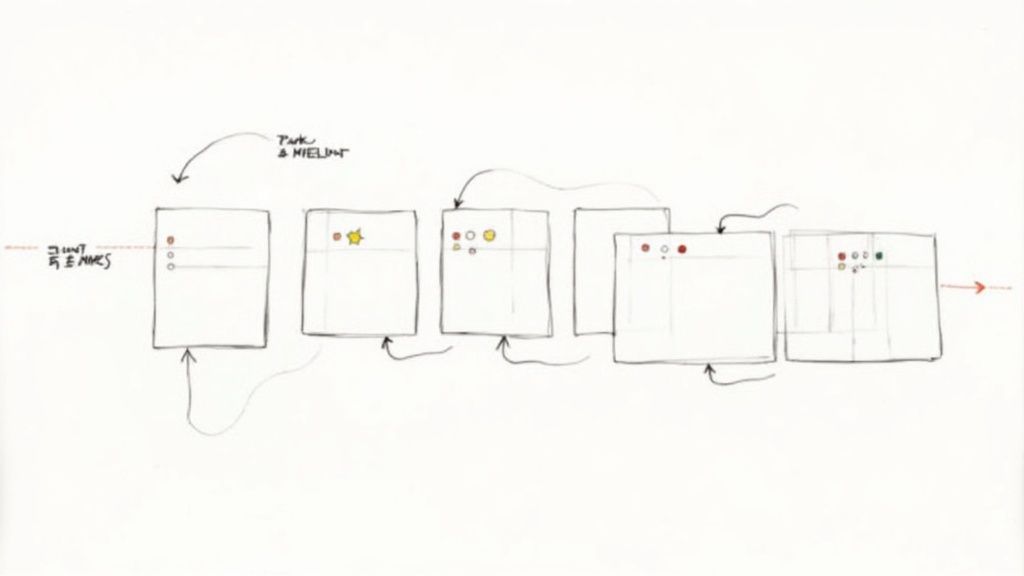
Alright, you've got a killer concept. Now comes the real craft: actually making the playlist. This isn't just about throwing songs you like into a folder. Great curation is about crafting an intentional journey for the listener, a seamless experience that makes them want to hit repeat and follow for more.
Every single track has to serve the playlist's core idea. If you're building a "Sunrise Yoga Flow" list, that killer punk track you love just won't work, no matter how good it is. Each song you add should feel like it was meant to be there, reinforcing the exact mood you're going for.
It's a huge task, especially when you consider the sheer scale of the platform. As of 2025, Spotify has over 100 million songs available, not to mention millions of podcasts and audiobooks. This massive library gives you all the raw material you could ever need to create something truly unique and specific. You can explore the latest Spotify statistics and trends to get a better sense of this vast catalog.
Balancing Familiar Hits with Hidden Gems
One of the best strategies I've seen work time and time again is the "one for them, one for you" approach. You start by anchoring the playlist with popular, recognizable tracks that perfectly match your theme. These songs are the welcome mat—they tell listeners they're in the right place and that you get the vibe.
Once you've earned that initial trust, you can start weaving in lesser-known artists and hidden gems. This is where you really provide value and build your reputation. Listeners love discovering their next favorite artist, and your playlist can be the place they do it. It’s this mix of familiar and fresh that turns a good playlist into a great one.
Think of it like this:
The Anchor: A classic that instantly sets the mood, like "Clair de Lune" in a "Peaceful Piano" playlist.
The Discovery: A stunning piece from an up-and-coming neoclassical composer that you place right after it.
This technique keeps people engaged while proving you're a genuine tastemaker who can show them something new.
Creating a Seamless Listening Flow
The order of your tracks is everything. A jarring transition can completely pull someone out of the zone you’ve worked so hard to create. To build a natural, cohesive flow, you have to think about how the songs sound back-to-back.
The trick is to focus on that moment of transition—the last few seconds of one song and the first few of the next. Do they clash, or do they complement each other? A sudden jump from a slow acoustic track to a bass-heavy electronic song is disruptive unless that contrast is exactly what you're aiming for.
A well-sequenced playlist feels like a great DJ set. Each track builds on the last, telling a story without words and guiding the listener through a carefully designed sonic landscape.
To nail this, pay attention to a few key elements:
Tempo (BPM): Try grouping songs with similar beats per minute, or create a gradual ramp-up or wind-down in tempo to manage the playlist's energy.
Key: Tracks in the same or compatible musical keys almost always blend more smoothly. It’s not a hard rule for every genre, but for things like electronic or dance music, it makes a massive difference.
Mood: This is the big one. Make sure the emotional tone flows logically. A sad song can flow beautifully into a hopeful one, but jumping from deep melancholy to pure euphoria might feel abrupt and unnatural.
Getting this sequencing right is a cornerstone of top-tier curation. For a much deeper dive into these techniques, our complete guide on Spotify playlist curation can help you build and grow your musical empire.
Keeping Your Playlist Fresh and Engaging
A playlist you just set and forget will eventually go stale. You need to update it regularly to keep your listeners engaged and to show Spotify's algorithm that your list is active and relevant. Don't worry, this doesn't mean you need to do a complete overhaul every single day.
For a mood-based playlist like "Rainy Day Reading," refreshing it with a few new tracks every couple of weeks is plenty. But for something more trend-focused, like "Fresh Indie Finds," you'll probably want to make weekly updates to keep up with new releases. Consistency is what matters. Give your followers a reason to come back, and they will.
Optimizing Your Playlist for Discovery
Look, building a perfectly curated playlist is only half the job. If nobody can find it, all that hard work just evaporates. This is where playlist SEO comes in—it’s all about tweaking your playlist so it actually shows up when people search for new music.
You have to think of Spotify as a music search engine. When a listener types in "focus electronic music" or "sad indie for rainy days," Spotify's algorithm instantly scans millions of options to serve up the best results. Your goal is to make it dead simple for that algorithm to see what your playlist is about and who it’s for.
Mastering Keywords in Your Title and Description
Let’s be blunt: your playlist title is the most critical piece of the discovery puzzle. It needs to be descriptive and loaded with the actual words people are searching for. A clever, artistic name might feel cool, but a functional one is what gets you followers.
So instead of a vague title like "Midnight Echoes," something like "Dark Academia Classical" is infinitely better. It hits a specific aesthetic, a clear genre, and a keyword that people are genuinely looking for. The whole process of making Spotify playlists that grow on their own starts with a title that does the heavy lifting for you.
Your description is your next SEO weapon. This is your space to add related keywords, moods, and activities that didn't fit in the title.
Get Specific: Mention a few key artists or subgenres that really define the playlist's sound. For example, "Featuring pensive piano pieces from Ludovico Einaudi, Nils Frahm, and Ólafur Arnalds."
Describe the Vibe: Use adjectives that capture the feeling. Words like melancholic, introspective, studying, and reading help build a much stronger profile for the algorithm.
Think Like a Listener: What would you type into the search bar to find this exact mood? Weave those phrases into your description naturally.
A great description acts like a net, catching all the related searches your title might miss. It tells both the algorithm and potential listeners exactly what to expect, building trust before they even press play.
The Power of Compelling Cover Art
Never, ever underestimate the visuals. In a sea of playlists that all look the same, your cover art is what grabs someone's attention and makes them click. A blurry, low-effort image screams "low-effort playlist," even if the curation is absolutely top-notch.
Your artwork should instantly communicate the playlist's vibe. A "Synthwave & Retro" playlist could rock neon grids and 80s graphics. A "Morning Acoustic" playlist would do well with a warm, sunlit photo. You're trying to create a visual promise that the music inside will deliver on.
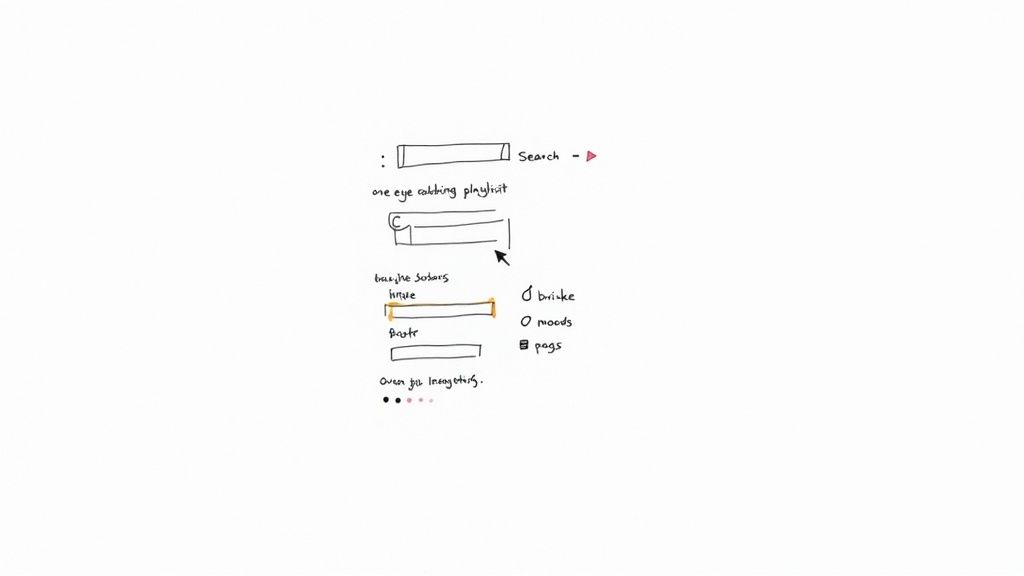
Here’s a look at the essential elements you can edit right in the Spotify app to dial in your playlist's optimization.
This screenshot shows the three core pieces you can control: the cover image, the title, and the description. Think of these as your playlist's brand identity.
A Quick Optimization Checklist
Before you even think about promotion, run through this checklist. This is about giving your playlist the best possible chance to be found by new listeners organically.
Here’s a quick reference table to make sure you've covered all your bases.
Playlist SEO Checklist
Optimization Area | Best Practice | Why It Matters |
|---|---|---|
Title | Include 1-3 primary keywords that define the genre, mood, or activity. | This is the most heavily weighted element in Spotify's search algorithm. |
Description | Add 5-10 secondary keywords, including related moods, artists, and use cases. | Provides crucial context for the algorithm and helps you rank for a wider range of search terms. |
Cover Art | Use a high-quality (at least 640x640px), relevant image that is visually distinct. | A strong visual identity increases click-through rates from search results and browsing. |
Initial Tracklist | Include a mix of well-known "anchor" tracks and undiscovered artists to build credibility. | Popular tracks help your playlist appear in searches for those artists, bringing in new listeners. |
By being methodical about these elements, you're not just making a list of songs; you're building a product designed to be discovered. This foundational work is what separates the playlists that get lost in the noise from those that build a loyal, growing following month after month.
Getting Your Playlist in Front of Real Listeners
So you've built the perfect playlist. The curation is on point, and you’ve nailed the SEO. Now comes the fun part: getting people to actually listen to it. This is where a smart, authentic promotion strategy comes in. It’s not about spamming links everywhere; it's about building a genuine community around the music you're passionate about.
Lasting growth doesn't come from tricks or shortcuts. It comes from connecting with real people in the places they already hang out to find new music. Just dropping a link and hoping for the best is a recipe for failure. Your promotion needs to be just as thoughtful as your curation.
Find Your People in Niche Communities
Social media is your best friend here, but you have to use it right. Sure, share it with your friends and family, but the real growth happens when you tap into niche communities. Platforms like Reddit, TikTok, and Instagram are filled with music fanatics who are actively looking for playlists just like yours.
The trick is to find subreddits, Facebook groups, or hashtags dedicated to the specific genre or vibe of your playlist. If you’ve made a "Dark Academia Classical" playlist, you should be hanging out in places like or forums dedicated to that whole aesthetic.
But don't just show up and drop a link. Engage first. Get involved in conversations, comment on other posts, and become a familiar face. When you finally do share your playlist, frame it as a gift to the community.
Don't do this: "Hey, check out my playlist!"
Do this instead: "I’ve been putting together a playlist of melancholic piano pieces perfect for studying and thought you guys might enjoy it. Let me know if you have any suggestions to add!"
See the difference? One is a self-serving ad; the other is a valuable contribution.
Team Up with Other Curators
You're not in this alone. There are thousands of other curators out there hustling just like you. Connecting with them is one of the most powerful ways to grow, creating cross-promotional opportunities that benefit everyone.
Start by finding playlists that have a similar sound and are around the same size as yours. Don't go messaging curators with a million followers right out of the gate—find your peers. Send them a friendly, personalized message. Tell them you like their playlist and propose a collaboration.
Building a network of fellow curators is one of the best long-term growth hacks. It creates a supportive ecosystem where everyone wins by sharing audiences and insights, instead of just competing against each other.
A simple "shoutout for a shoutout" can work wonders. Offer to feature one of their playlists in your description or on your socials if they'll do the same for you. This can drive a significant number of new followers who are already primed to like your curation style.
Use Submission Platforms and Artist Outreach
Beyond social media, you can get more direct. Many artists and their teams use submission platforms to pitch their music to playlists. Listing your playlist on these sites signals that you're open for submissions, which brings new tracks directly to your inbox and gets you on the radar of industry pros.
And don't be shy about reaching out to smaller, independent artists whose music would be a perfect fit. A personal email or an Instagram DM letting them know you've added their song can turn that artist into a huge advocate for your playlist. They'll often share it with their own fanbase, which is a massive win for you both.
A solid promotional strategy takes time and consistent effort. For a deeper dive, check out our guide on how to promote a Spotify playlist with tips that actually work. The goal is to create a flywheel of authentic growth, where good promotion attracts more listeners, which in turn makes your playlist even more appealing for future collaborations.
Tracking Performance and Avoiding Pitfalls
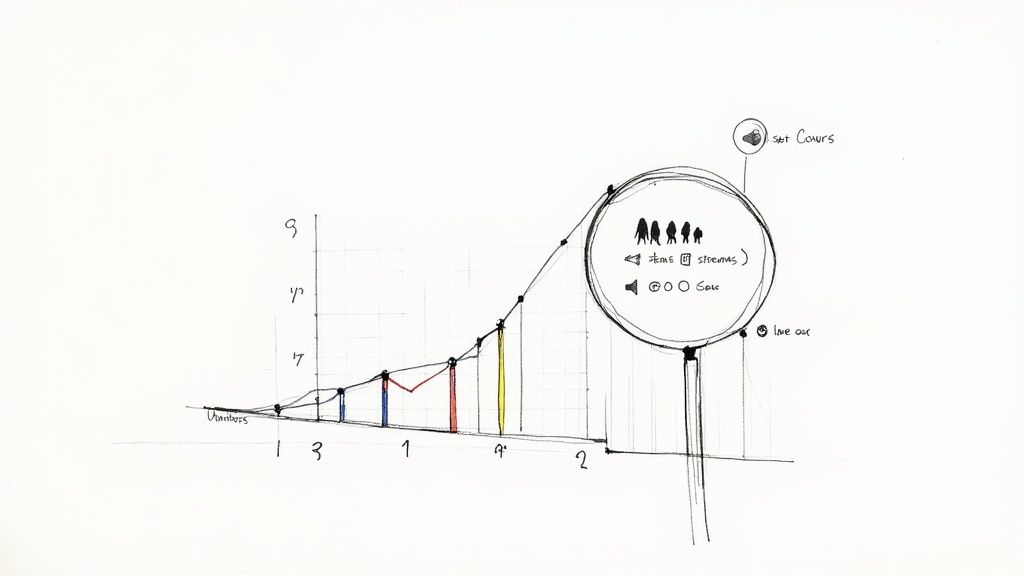
So, you've built and promoted your playlist. That’s a huge win, but the work isn't over. Not even close. If you want to build something that lasts, you have to get obsessed with what's working and what isn't. The only way to make smart decisions and grow something real is by tracking your performance.
Just watching your follower count go up won't cut it. Real success in making Spotify playlists comes from digging into the story the data tells. That means understanding listener behavior and, maybe most importantly, learning to spot the red flags that can tank all your hard work.
Key Metrics Every Curator Should Watch
The health of your playlist is more than just a follower number. To really get the full picture, you need to be looking at a mix of metrics that show how people are actually engaging with your curation. Some of this stuff is right there in Spotify, but for the deeper insights, you’ll need some specialized tools.
Here’s what should be on your radar:
Follower Growth Trends: Don't just look at the total number; watch the rate of growth. Is it slow and steady, or are you seeing massive, out-of-the-blue spikes? A consistent, gradual climb is the signature of a healthy, organically growing playlist.
Listener Engagement: Artists can see this in their Spotify for Artists dashboard. Are streams from your list turning into song saves, artist follows, or adds to other playlists? A ton of streams with zero saves is a huge red flag.
Save Rate: This metric is pure gold. It tells you how well a song is connecting with your audience. A high save rate is a powerful signal to Spotify's algorithm that you're picking winners, which can seriously boost your playlist's authority and visibility down the line.
A playlist with 1,000 highly engaged followers who save tracks and listen on repeat is infinitely more valuable than one with 50,000 ghost followers who never interact. Engagement is the real currency on Spotify.
The Critical Threat of Bots and Fake Streams
Now for the dark side of playlisting: fake, bot-driven streams. Those inflated numbers might give you a temporary ego boost, but they are pure poison for your playlist's reputation. They can get your playlist de-indexed or even "shadowbanned" by Spotify, effectively making it invisible.
Bots aren't fans. They generate empty streams that give artists nothing of value—no new followers, no saves, no real engagement. If your playlist gets associated with this kind of activity, even by accident, it destroys your credibility and can get an artist's music pulled from the platform entirely.
How to Spot a Compromised Playlist
Vigilance is your best weapon here. You have to learn the warning signs of fake activity. This is where tools that offer historical data and deep analytics, like artist.tools, become absolutely essential for any serious curator. A platform like that lets you dive into any playlist's growth history and spot shady patterns before they can do any damage.
Look out for these telltale signs of bot activity:
Explosive, Unnatural Follower Jumps: Did a playlist suddenly gain 20,000 followers overnight with no major press or promotion to explain it? Real growth almost never looks like that.
Zero Listener Engagement: An artist gets thousands of streams from a playlist but sees no new monthly listeners, no saves, and no new artist follows. The streams are coming from a void and going nowhere.
Suspicious Listener Locations: An indie folk artist from Nashville suddenly gets a flood of streams from a country where they have zero fanbase? That almost always points to bot farms.
Perfectly Flat Growth Followed by Spikes: A playlist sits dormant for months with no activity and then suddenly blows up. Organic growth always has natural ebbs and flows; it's never that clean-cut.
By keeping a close eye on these red flags, you protect the integrity you've worked so hard to build. Regularly auditing your data and using reliable third-party analyzers isn't just a good idea anymore—it's a core part of being a responsible and successful curator.
A Few Common Questions About Making Spotify Playlists
As you dive deeper into creating Spotify playlists, the practical questions start to pile up. It's one thing to get the big-picture strategy, but it’s the day-to-day decisions that really determine whether a playlist thrives or dies.
Let's walk through some of the most common questions that pop up for curators. Getting these details right can make all the difference.
How Often Should I Update My Spotify Playlist?
Honestly, there’s no magic number. The real key is consistency over frequency. Your update schedule needs to feel right for the playlist's whole vibe. If you're running a list like "New Music Friday Finds," you absolutely have to be updating it weekly. People follow that kind of playlist for what's fresh, and if you fall behind, they'll just move on to one that's on top of it.
But for a mood-based playlist—something like "Rainy Day Coffeehouse"—a slower pace is way better. You could swap a few tracks every two to four weeks to keep it from getting stale, but you don't want to mess with the familiar feeling that got people to follow it in the first place.
Remember, regular updates signal to Spotify's algorithm that your playlist is active and cared for. This can help you show up more in search and recommendations, not to mention it gives your followers a reason to keep coming back.
The best schedule is the one you can actually stick to. A playlist that goes silent loses steam fast, so pick a rhythm that you can maintain for the long haul.
What Is the Ideal Number of Songs for a New Playlist?
When you're just starting out, you want your playlist to feel complete but not overwhelming. I've found the sweet spot is usually between 40 and 80 songs. That gives you a solid two to four hours of listening time, which feels like a well-curated, thought-out experience.
If you launch with fewer than 40 tracks, it can feel a bit thin or unfinished, which might turn people off right away. On the flip side, starting with hundreds of songs can be way too much for someone who's just discovering your list.
Kicking things off in that 40-80 song range gives you a great foundation. From there, you can slowly add new music as you learn what your listeners are enjoying. It’s a great way to let the playlist grow organically with its audience.
Can I Make Money from My Spotify Playlists?
This is the big one, but let's be clear about how it works. Spotify does not pay curators directly for creating playlists. It doesn't matter if you have 100 followers or 100,000—there's no direct check coming from Spotify.
But that doesn't mean there's no money to be made. A popular, well-respected playlist can open up some interesting doors for indirect income. Here's what that usually looks like:
Brand Sponsorships: If your playlist becomes a go-to for a specific niche (think workout, study, or gaming), brands in that space might pay you to sponsor it.
Paid Placements: Sometimes artists or their teams will offer money to get a song placed. This is a really tricky area. If you go this route, you have to be incredibly careful not to compromise the quality and trust you've built with your listeners.
Promoting Your Own Stuff: This is huge for artists and producers. They build a popular playlist and use it as a powerful funnel to drive listeners to their own music, merch, or tour dates.
No matter what, the listener experience has to come first. The moment your playlist feels like a collection of paid ads is the moment you start losing the audience that made it valuable to begin with.
How Do I Know if a Playlist Is Using Bots?
Learning to spot bot activity is probably one of the most critical skills you can develop, whether you're a curator or an artist. Getting tangled up with fake streams can get your playlist blacklisted or an artist's music pulled down.
The single biggest red flag is a massive gap between follower numbers and actual listener engagement. You might see a playlist with 50,000 followers, but if a track on it gets almost no saves and doesn't lead to any new artist followers, something is very wrong.
Here are a few other warning signs to watch for:
Sudden, explosive follower growth that has no logical explanation.
A stream of listeners coming from all over the world in random locations that don't line up with an artist's typical fanbase.
An artist's monthly listener count barely budges even after the playlist supposedly delivered thousands of streams.
At the end of the day, real, genuine engagement is the only thing that matters.
Protecting your playlist from fake streams and making smart, data-driven decisions is what separates a good playlist from a great one. artist.tools gives you the insights you need, from our advanced Bot Detection to an in-depth Playlist Analyzer that shows you a playlist's true health. Stop guessing and start building a playlist with integrity by exploring our full suite of features at https://artist.tools.
.png)
Comments