Similar artists finder: Discover your sonic peers and grow your fanbase
Updated: Sep 8
Finding your sonic twins on Spotify isn't just a cool exercise—it's the single most powerful way to unlock real, targeted growth. A good similar artists finder takes you way beyond guesswork. It helps you zero in on your musical peers and tap directly into their fanbases, which is absolutely essential for getting your music in front of the right people.
Why Finding Similar Artists Is Your Secret Weapon for Spotify Growth
Forget the old "spray and pray" method of promotion. In today's music world, it's all about precision. When you identify artists who genuinely sound like you, you're not just finding a list of names; you're building the foundation for a smart, data-driven promo strategy that works with Spotify's algorithm, not against it.
Think about it. Once the platform understands who you're sonically related to, it knows exactly who to show your music to.
This feeds directly into Spotify's biggest discovery features:
Discover Weekly: These playlists are built from a user's listening habits and, you guessed it, artist similarities.
Release Radar: This is all about suggesting new tracks based on artists a user already follows and loves.
Fans Also Like: This is the most obvious sign of your sonic neighborhood, right there on your artist profile for everyone to see.
When you intentionally target the listeners of your musical peers, you're basically handing the algorithm a crystal-clear roadmap to your ideal fan. It’s worlds more effective than just shouting into the void.
Old School Promotion vs Modern Artist Discovery
The music game has changed. Streaming now makes up a massive 69% of global recorded music sales, which means data tools are no longer optional—they're a core part of building an audience. You can see just how dominant streaming has become by checking out who tops the Spotify charts on Chartmasters.org.
This shift from physical sales to digital streams has completely changed how artists find their footing. It's less about getting a lucky break and more about making smart, informed decisions.
Traditional Method | Data-Driven Approach (Using a Similar Artists Finder) | Outcome |
|---|---|---|
Blindly pitching to hundreds of generic playlists. | Identifying 5 emerging artists in your micro-genre gaining traction on niche playlists. | A targeted, personalized pitch that curators actually read and respond to. |
Paying for ads targeting broad "indie music" interests. | Running ad campaigns targeting the dedicated listeners of 3-4 specific similar artists. | Higher engagement, lower cost per click, and fans who are more likely to stick around. |
Hoping the algorithm "figures you out" on its own. | Seeding your music in playlists that already feature your sonic peers. | Faster algorithmic discovery and better placement in features like Discover Weekly. |
This data-first mindset gives you a serious advantage. Instead of just hoping for the best, you're actively guiding both listeners and the algorithm toward your music.
This is where having a dedicated platform really makes a difference. Let's say you're an indie pop artist. You could use a tool to find five up-and-coming artists in your sub-genre who are starting to pop off on some smaller, highly-engaged playlists. Now, instead of sending a generic pitch, you can reach out to those curators and say, "Hey, I see you feature artists like X and Y—my new track has a really similar vibe and I think your listeners would love it."
This approach completely flips the script. You're no longer just asking for a favor; you're offering a piece of content that genuinely adds value to their playlist and fits right in with what their audience already enjoys.
Platforms like artist.tools give you the data you need to pull this off.
You're looking at a central hub for artist data. Features like the Playlist Analyzer and Monthly Listeners Tracker are exactly what you need to move from just finding similar artists to actually validating that their audience and growth trajectory are worth targeting.
Finding Your True Sonic Peers (Beyond the Obvious)
Your first stop when looking for similar artists is probably Spotify's "Fans Also Like" section. It’s a decent starting point, giving you a quick peek at how the algorithm currently sees your music. But that’s just scratching the surface. For real, strategic growth, you need to dig way deeper and build a master list of your actual sonic peers.
This isn't just about making a list of names; it's about building a powerful marketing map. The idea is to move past simple comparisons and really understand the context behind each artist's career path.
This whole process is a feedback loop. You find the right artists, you get in front of their fans, and the algorithm starts connecting the dots, leading to more targeted exposure and new listeners.
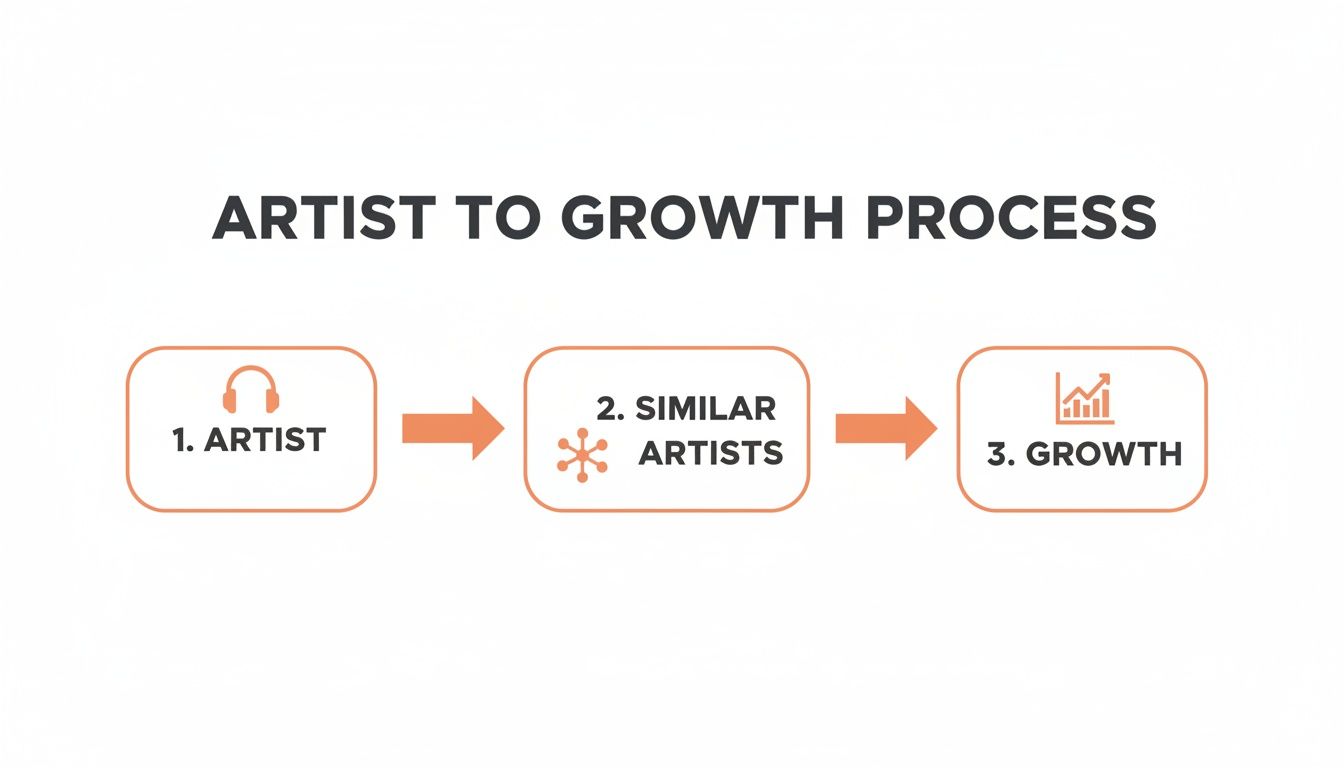
By focusing on the right peers, you essentially teach the algorithm who to show your music to, which is how you build sustainable momentum.
Going Deeper with Data
To build a list that actually works, you have to look at more than just sound. Key stats like monthly listeners, follower growth, and historical popularity scores tell the real story. This is where a dedicated similar artists finder tool becomes essential, letting you see the narrative behind the numbers.
For example, you can use the artist.tools Monthly Listeners Tracker to look up artists from your initial "Fans Also Like" list. Are they growing steadily, flatlining, or just riding a temporary spike? This data helps you qualify if an artist is a relevant target right now. For more on this, you can check out our full guide on how to analyze competitor Spotify playlists.
The best peers aren't always the biggest ones. An emerging artist with a smaller but super-engaged, rapidly growing fanbase can be a much better target than a huge act whose audience is almost impossible to reach.
How to Organize Your Master List
Once you have your data, it's time to sort your list into three strategic tiers. This simple framework will guide every move you make, from pitching playlists to targeting ads.
Aspiration Artists: These are your heroes—the bigger, established acts that influence your sound. You're not trying to collab with them tomorrow, but their audience is your long-term goal.
Peer Artists: These are your direct contemporaries. They're at a similar career stage, with a comparable number of monthly listeners. These are your prime targets for playlist swaps, collaborations, and direct audience targeting.
Emerging Artists: These are the up-and-comers who are a bit smaller than you but have incredibly passionate fans. Getting on playlists with them helps you catch new listeners early in their discovery phase.
This tiered approach turns a simple list of names into a strategic asset. It ensures every pitch and every ad dollar is spent with a clear purpose, making your outreach far more effective.
Get Your Hands Dirty: Validating Artist Fit with Real Data
A long list of potential peers is a great starting point, but let’s be honest—it’s just a collection of assumptions. Real, strategic growth happens when you can prove genuine audience overlap. It’s about moving beyond "vibes" and confirming that your sonic twins share actual listeners who are primed to discover your music. This is where you swap guesswork for hard data and start targeting authentic, active fan communities.
So, where are these artists actually getting their streams?
It’s time to find out. Using a tool like the artist.tools Playlist Search, you can pop in the name of a peer artist and get an instant rundown of every playlist they're currently on. Just like that, you’ve moved from a vague idea of "similar artists" to a concrete list of the digital spaces where their fans are hanging out.
Not All Playlists Are Created Equal
Finding a shared playlist is only half the battle. You have to be picky. Some playlists are powerful discovery engines, while others are dead in the water or, even worse, filled with fake streams that can get your account flagged. Vetting each and every playlist isn't just a good idea—it's non-negotiable.
The tools for this kind of detective work have gotten incredibly powerful. Some platforms process over 26 million playlists every single day, tracking historical data across millions of artists. That’s the kind of deep insight that lets you spot real trends and validate opportunities with confidence. If you want to nerd out on this stuff, check out the data wizards over at Chartmetric.com.
Here’s a look at how artist.tools lets you instantly audit a playlist to see if it’s legit.
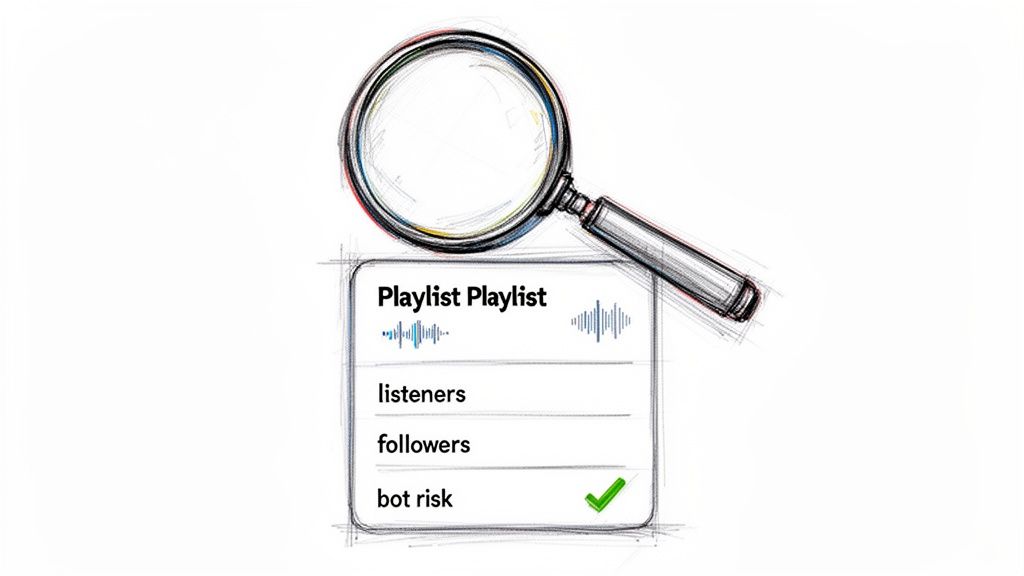
This simple view gives you critical metrics like estimated listeners and a bot risk score, telling you immediately if a playlist is worth your time or a total waste of it.
Key Metrics for Vetting Playlists
When you're digging into a playlist, there are a few key things to look for. A solid "similar artists" strategy depends entirely on getting your music in front of real, engaged human beings.
Follower Growth History: You want to see steady, organic growth over time. Huge, sudden spikes out of nowhere? That’s a massive red flag for bot activity.
Listener-to-Follower Ratio: A healthy playlist often has more monthly listeners than it does followers. This is a great sign that it's actively being discovered and streamed, not just sitting there collecting dust.
Bot Risk Score: Our Playlist Analyzer gives you a straightforward score. If it says anything other than "low risk," just walk away. It's not worth the potential damage to your profile.
By validating the playlists your target artists are on, you’re not just finding places to pitch your music. You're confirming a tangible link between your sound and an active, legitimate listener base.
This data-driven validation is the crucial bridge between identifying a peer and actually reaching their audience. It turns that master list you made into an actionable roadmap for real growth.
For a much deeper dive into using these numbers to your advantage, check out our guide on mastering music data analytics for artists. This whole process ensures that every single pitch you send is aimed at a community that’s genuinely receptive to your music, which is how you turn casual listeners into actual fans.
Crafting a Playlist Pitch That Curators Actually Read
Alright, you've put in the work. You've validated your target artists and pinpointed the exact playlists they're getting spins on. Now it's time to cash in on that research and land a spot for yourself.
A killer pitch is what turns all that data into a real-world placement. The whole game is about showing the curator you’ve done your homework. You need to prove your track is a perfect fit, not just another random track blasting into their inbox.
Your angle will shift slightly depending on who you're talking to—an independent curator versus Spotify's official editorial team. But the core principle is the same for both: name-dropping your similar artists gives them instant context. This isn't just a "nice to have"; it's a tactic that shows you respect their time and their playlist's specific vibe, which can make all the difference.
Pitching to Third Party Curators
When you're reaching out to an indie curator, whether it's through email or a submission form, personalization is everything. Let's be real: generic, copy-pasted messages get deleted before they're even fully read. You have about two sentences to prove you know what their playlist is all about.
Kick things off by mentioning their playlist by name and dropping a genuine compliment. Then, get straight to the point using your data.
The best opening line isn't about you—it's about them. Something as simple as, "Hey, I'm a huge fan of your 'Midnight Indie Drive' playlist and noticed you feature artists like The War On Drugs and Alvvays," immediately shows you're a real listener, not a spam bot.
Once you've established that connection, you can introduce your track and explicitly mention your similar artists as a frame of reference. This one move transforms your pitch from a cold, needy "please add me" into a helpful suggestion that genuinely fits their existing sound. For a full playbook on this, check out our complete guide to Spotify curator playlist pitching for detailed strategies.
To help you visualize this, think about how you'd tailor your pitch based on who you're comparing yourself to.
Strategic Pitching Based on Artist Tier
Artist Tier | Pitching Goal | Example Pitch Angle |
|---|---|---|
Peer Artists | Show you fit right in | "My new track has a similar atmospheric vibe to artists you've featured, like Men I Trust and Beach House." |
Aspiration Artists | Show you're aiming high but fit the genre | "Fans of your playlist who love bigger acts like Tame Impala will connect with the psychedelic rock sound on this." |
Emerging Artists | Show you're part of the same scene | "I saw you recently added [Emerging Artist Name], and my song shares that same raw, lo-fi energy." |
This targeted approach demonstrates a deep understanding of their curation style, making it much more likely they'll actually listen to your track.
Optimizing Your Official Spotify for Artists Pitch
The official pitch form inside your Spotify for Artists account is your direct pipeline to Spotify's own editors. You don't get to write a long, personal email here, but you do have one incredibly powerful field: "Artists you sound like."
Do not, under any circumstances, skip this section or just throw in a couple of A-list superstars. This is exactly where the research you did with your similar artists finder pays off.
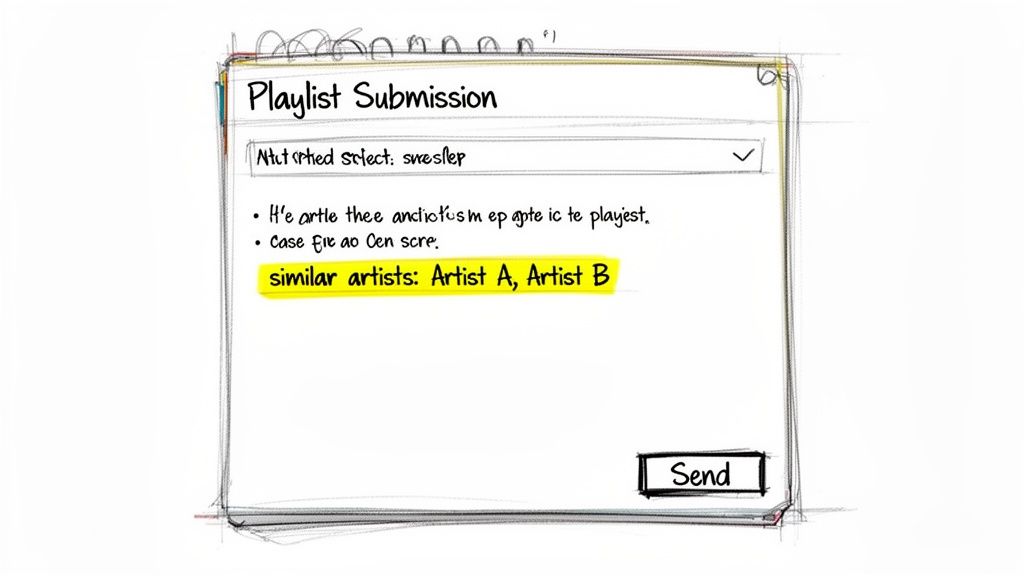
This is where you list the most relevant Peer and Aspiration artists you found earlier. That data gives the editors a direct signal about where your track belongs sonically and which of their editorial playlists could be a good home for it.
The artist.tools AI Pitch Generator is built for this. It takes your song info, marketing plans, and—most importantly—your validated list of similar artists to build a pitch that speaks the editors' language. By plugging in your confirmed artist names, the tool helps you frame your song's story and sound professionally and concisely, hitting the exact points Spotify's team is looking for.
Unlocking Advanced Growth Tactics Beyond Playlists
Landing on a few key playlists feels great, but let's be real—it's just the first step. The true power of your validated artist list comes from using it to build a complete, multi-channel growth engine. Your research isn't just a pitching tool; it's the foundation for a marketing ecosystem that fuels itself, far beyond the confines of Spotify.
Think of your similar artists' fanbases as pre-qualified audiences just waiting to discover you. With this data, you can stop shouting into the void and start getting your music in front of the right people.
Creating Hyper-Targeted Ad Campaigns
Instead of burning your budget on broad interests like "indie music" on platforms like Meta (Facebook and Instagram), you can create custom audiences based on users who follow your specific peer artists. This laser-focus ensures every dollar is spent reaching listeners who are already primed to enjoy your sound.
Peer Artist Targeting: Go straight for the low-hanging fruit. Directly target fans of the artists in your "Peer" tier—their audiences are your most immediate and relevant prospects.
Aspiration Artist Targeting: Use your "Aspiration" artists to create lookalike audiences. This helps you find new listeners who share traits with the fans of bigger acts in your genre, expanding your reach intelligently.
This method delivers a much higher return on your ad spend, leading to more meaningful clicks, follows, and streams from people who are actually likely to become long-term fans.
Finding Collaborators and Press Opportunities
That list of peers you built? It's a goldmine for strategic partnerships. Reach out to artists at a similar stage in their career for collaborations. A joint release or a simple feature can instantly cross-pollinate your fanbases, introducing both of you to a new, highly engaged audience that’s already on board with your sound.
Collaboration is one of the most organic growth hacks in music. When you work with an artist who shares your sonic DNA, you’re not just making a track—you’re co-signing each other to your respective communities.
This same data points you toward relevant blogs and publications, too. If a blog has covered one of your key peers, they're significantly more likely to be interested in your music. Use your similar artists list to build a targeted press list that actually gets you replies.
Music discovery is always changing, with algorithmic networks connecting listeners across the globe in surprising ways. Just look at Mandopop, which exploded in 2023, hitting over 500 million monthly streams globally with a staggering 45% year-over-year increase. This shows how recommendation engines can bridge cultural gaps, connecting users to new sounds they'll love. You can discover more insights about 2023 music trends on Spotify's Newsroom. A similar artists finder is your key to tapping into these powerful networks, no matter what genre you're in.
Answering Your Questions About Finding Similar Artists
Even with the best game plan, you're going to hit a few snags. It happens to everyone. Let's walk through some of the most common questions artists have when they start digging for similar artists, so you can keep moving forward without losing steam.
My goal here is to give you clear, straight answers to help you get past these common hurdles and use what you've learned with confidence.
What if My "Fans Also Like" Section Is Empty?
This is the classic chicken-or-egg problem, especially for new artists. If your profile is fresh or you've got very few streams, Spotify just doesn't have enough information to show you who your fans also like. Don't sweat it. You're not at a dead end.
This is where you have to get your hands dirty. Instead of just waiting for the algorithm to figure it out, you need to build that initial list of peers yourself. Think about it:
Artists you've opened for: Who have you actually shared a stage with? Their crowd has already heard you. That's a huge head start.
Your specific niche: Who are the main players in your micro-genre? Start with artists you look up to who have a similar sonic vibe.
Your own influences: Who made you want to start making music in the first place? You probably don't want to list superstars, but digging into their influences can uncover some real gems.
Once you’ve got a solid starter list, you can use a tool like the artist.tools Playlist Search to see what playlists they're on. Getting your music onto those same playlists is exactly how you start feeding Spotify's algorithm the data it needs to build out your own "Fans Also Like" section.
How Often Should I Update My List of Similar Artists?
Your list of similar artists isn't something you create once and forget about. It's a living, breathing part of your marketing strategy. The music scene moves fast, and new artists are breaking through all the time. A good rule of thumb is to take a fresh look at your list every quarter.
Think of it like a routine check-up for your promotional strategy. If you're working off an outdated list, you're likely missing out on new, emerging artists with super-engaged fanbases that would be perfect for you to target.
Just set a reminder in your calendar. Every three months, block out an hour or two to do a little research. Look for new artists popping up in your genre, check if your current peers are still a good fit, and see who's getting added to the big playlists. This kind of regular maintenance keeps your targeting sharp and makes sure your strategy is in sync with what's actually happening in music right now.
Ready to stop guessing and start growing with data? The artist.tools platform gives you everything you need to find your sonic peers, validate their audiences, and build a powerful promotion strategy. Start your free trial today at artist.tools.
.png)
.png)
Comments