
Spotify Market Research: Unlock Artist Growth & Data
A step-by-step guide to Spotify market research for artists. Analyze data, find playlists, & grow your audience with actionable insights.
You open Spotify for Artists, see streams moving, playlists appearing, and a few cities you didn’t expect. The dashboard looks active, but it doesn’t answer the question that matters. What should you do next?
That’s where Spotify market research becomes useful for independent artists. Not as a corporate exercise about broad demographics, but as a working system for release planning, playlist targeting, search visibility, and audience development. If you treat Spotify as a black box, you’ll react to outcomes. If you treat it as a research environment, you can make better decisions before the next release goes live.
Beyond the Dashboard A Modern Framework for Artist Research
Spotify market research starts when you stop treating the dashboard as a scoreboard and start treating it as a decision tool. Streams matter, but only in context. A stream from a programmed source tells you something different from a stream driven by active fan choice, and a city spike only matters if you know what caused it.

Stop reading metrics in isolation
Spotify is large enough to function like a real market laboratory. By 2024, Spotify reported 626 million monthly active users, generated €15.6 billion in revenue, and posted its first annual net profit, according to Business of Apps’ Spotify statistics overview. That scale matters because listener behavior on Spotify isn’t anecdotal. It’s a dense, high-signal environment where search, playlists, saves, skips, and repeat listens all interact.
Independent artists often make the same mistake brands make with larger datasets. They look at a metric, then jump straight to a conclusion. More monthly listeners must mean stronger demand. A playlist add must mean momentum. A save spike must mean the song connected. Sometimes those interpretations are right. Often they’re incomplete.
A better approach is to frame every datapoint around a decision:
- Release planning: Did pre-release activity convert into real listener intent?
- Audience targeting: Which city or market is showing organic traction, not passive exposure?
- Playlist outreach: Which placements bring engaged listeners instead of empty volume?
- Catalog strategy: Which song attributes keep pulling saves or repeat listens after launch week?
Use Spotify like a live market lab
The practical model is simple. Define a question, collect evidence, compare signals, then change something. That’s the same logic behind strong product research, and it works just as well for artist campaigns.
For artists, this mindset changes how you use analytics. You’re no longer asking whether the campaign “worked.” You’re asking which discovery source created useful listeners, which playlists exposed the wrong audience, and which keywords or adjacent artists describe your lane more accurately than your own genre tag.
If you need a cleaner way to structure that workflow, this music data analytics framework for artists is a useful companion. The key is discipline. Spotify market research works when it narrows decisions, not when it adds more charts to stare at.
Define Your Goals and Artist-Centric KPIs
Most bad research starts with a goal that’s too broad to test. “Grow on Spotify” sounds ambitious, but it doesn’t tell you what to measure, what audience to study, or what action would count as progress.
Turn vague ambition into answerable questions
Good goals sound narrower and more operational. Which playlist types produce followers instead of one-off listeners? Which city is responding to your sound before you spend on local marketing? Which track from the release is earning active interest rather than just algorithmic spillover?
Spotify for Artists already gives you a better lens than many artists use. It tracks streams, saves, playlists, and distinguishes between monthly active listeners, previously active listeners, and programmed listeners, which is important because it separates active fan intent from passive, algorithm-driven exposure, as described in the University of Nebraska–Lincoln analysis of Spotify’s data approach.
That distinction should shape your goals. If most listening is programmed, your next move might be to improve profile conversion, deepen listener retention, or refine playlist targeting. If active listeners are growing, you may have evidence that the release is building a repeat audience rather than just catching a temporary recommendation wave.
Choose KPIs that reflect fan intent
A useful KPI set mixes exposure metrics with intent metrics. Don’t rely on just one side.
Consider this working model:
| Research question | Primary KPI | Supporting signal | Why it matters |
|---|---|---|---|
| Are new listeners choosing the music? | Saves | Repeat listening patterns | Saves usually indicate stronger intent than raw plays |
| Is discovery turning into audience growth? | Follower change | Previously active listeners | Helps separate temporary reach from lasting interest |
| Are playlists helping or diluting audience quality? | Programmed listeners | Source mix across playlists | Shows whether exposure is aligned with your target listener |
| Is a market worth activating? | City-level listener concentration | Playlist and search presence in that market | Helps decide where to focus outreach |
Don’t overload your dashboard with ten competing objectives. For a single release, three to five KPIs is enough if each one maps to a real action.
The strongest artist KPIs don’t just report performance. They tell you where to push harder, where to pull back, and what to test next.
Spotify market research proves practical. You aren’t tracking numbers to impress anyone. You’re building a system that tells you whether your audience is broadening, deepening, or stalling.
Gather Core Audience and Performance Data
Research quality depends on collection quality. If your inputs are inconsistent, your conclusions will be inconsistent too. Most artists don’t need more data sources. They need a repeatable way to capture the right ones.
Build a clean data collection routine
Start with Spotify for Artists. Pull the basics on a schedule and keep them in one place. Weekly is usually enough for strategy work, and more frequent checks can help around release windows.
Your core collection checklist should include:
- Audience location data: Top cities and countries help identify where demand is concentrated.
- Source of streams: Separate algorithmic, editorial, personalized, and listener-driven traffic where possible.
- Track-level performance: Compare songs against each other, not just against your expectations.
- Saves and playlist additions: These signals help distinguish interest from casual exposure.
- Listener categories: Monthly active, previously active, and programmed listeners give necessary context.
The point isn’t to hoard screenshots. It’s to create a baseline you can compare over time.
Add historical context before making decisions
Single-day snapshots create bad strategy. A spike can look important and mean nothing. A flat week can hide a healthy long-term trend. That’s why historical tracking matters.
For artist teams that want more context beyond native dashboard views, tools that track monthly listeners over time, follower movement, and track-level changes can help. A practical example is this guide to Spotify artist analytics for career growth, which shows how historical views improve decision-making. The value isn’t the chart itself. The value is seeing whether movement started before a playlist add, after a content push, or alongside a catalog effect.
Use a simple collection stack:
- Native platform data for listener, source, and playlist context.
- Historical tracking for trend direction.
- Campaign notes so you can match activity to outcomes.
- Release timeline logs for pre-save pushes, content posts, submissions, and live moments.
A campaign notebook matters more than most people think. If you don’t log when outreach happened, when content dropped, or when a curator added your track, your analysis will become guesswork later.
Here’s the practical test. At the end of a release cycle, could someone else on your team review your records and explain what likely drove the biggest changes? If not, your data collection process is still too loose.
Analyze Playlist Integrity and Search Visibility
Playlist analysis is where Spotify market research becomes operational. This is also where a lot of artists get misled. A playlist can increase stream count and still hurt your strategy if the audience is low-intent, geographically incoherent, or artificially inflated.
Healthy playlists and noisy playlists look different
A useful playlist review goes beyond follower count. You’re looking for behavioral consistency. Does follower growth look steady or unnatural? Do track adds and removals make sense for the playlist’s positioning? Does the audience match the genre, mood, or region the playlist claims to serve?
When I review playlists for campaign planning, I’m usually checking for three things first:
- Relevance: Does the track fit the listening context?
- Integrity: Does the playlist show signs of credible growth and curator intent?
- Outcome potential: Is this likely to drive active listeners, not just passive plays?
If a playlist looks suspicious, treat it as a risk factor, not an opportunity. That applies even if it appears large.
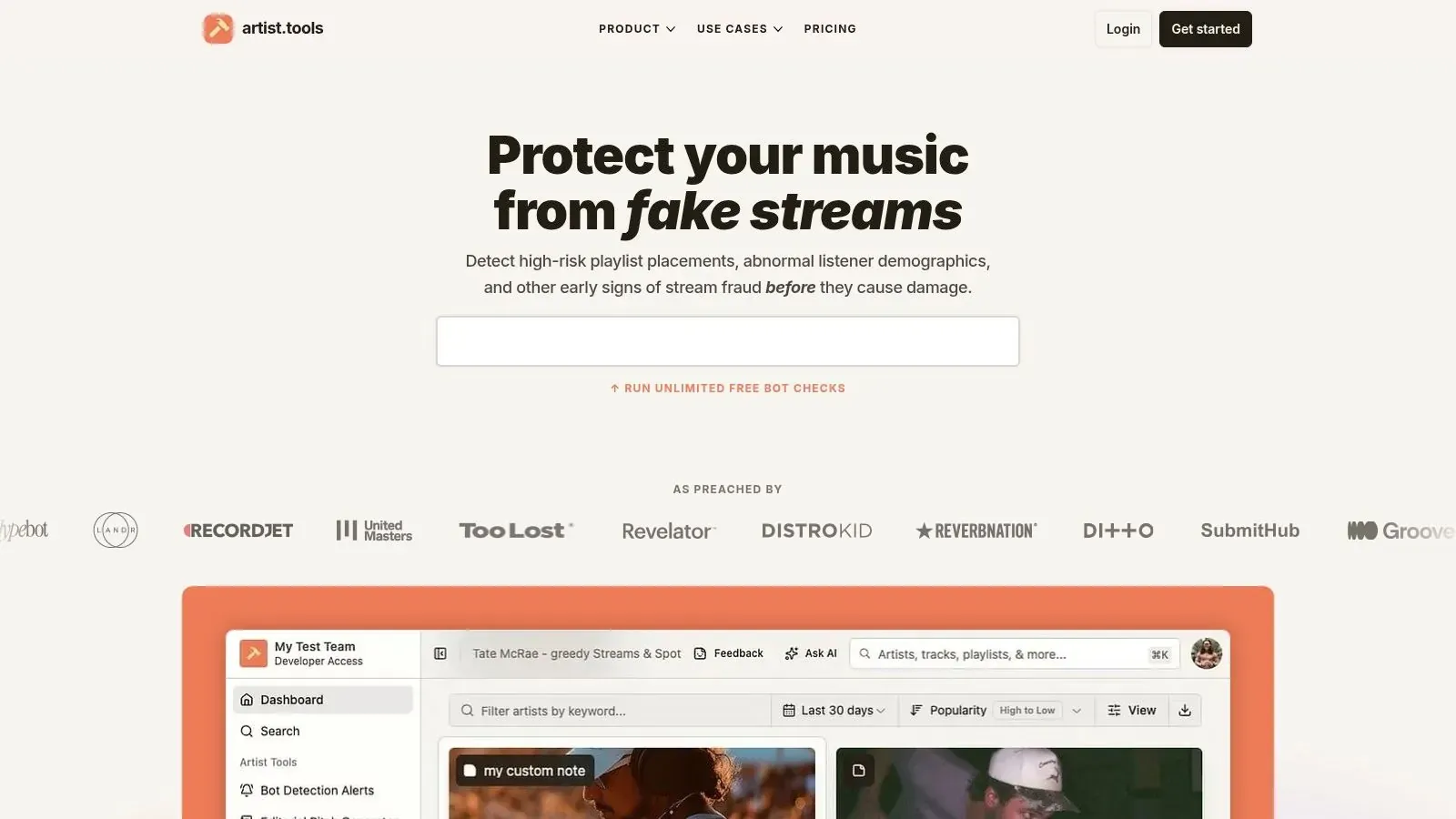
One practical workflow is to run a playlist through a dedicated analyzer before outreach or after placement. Tools in this category can help inspect follower patterns, track turnover, and related signals. For a quick first pass, the free Spotify playlist bot checker flags the warning signs.
A playlist placement is only valuable if the listeners behind it behave like real listeners.
Search behavior is part of Spotify market research
Most artists stop at demographics. That misses a major part of how discovery works on Spotify. Search is intent. If someone searches a mood, activity, niche style, or adjacent artist lane, that query tells you how they frame demand.
Spotify’s own research direction points toward a gap here. Most public Spotify market research content focuses on demographics, but the more actionable opportunity is operational. Search page features can steer demand, which means keyword research, search placement, and visibility may be more predictive of growth than broad demographic targeting alone, as discussed in Spotify Research’s article on evidence-driven product research.
That changes how curators and artists should work. Instead of asking only, “Who listens to my genre?” ask:
- What are listeners typing into Spotify search?
- Which playlists rank for those terms in different markets?
- Where is there intent but weak playlist competition?
- Which wording fits the song better than your own internal label?
This is where Spotify SEO enters the workflow. Curators can study which playlists surface for mood and activity terms. Artists can use the same logic to refine playlist outreach, subtitle naming, marketing language, and comparable-artist targeting. artist.tools is one option here because it tracks playlist search rankings, keyword patterns, and Spotify search suggestions, which can help teams research intent-driven discovery instead of relying only on genre assumptions.
Interpret Data to Find Growth Opportunities
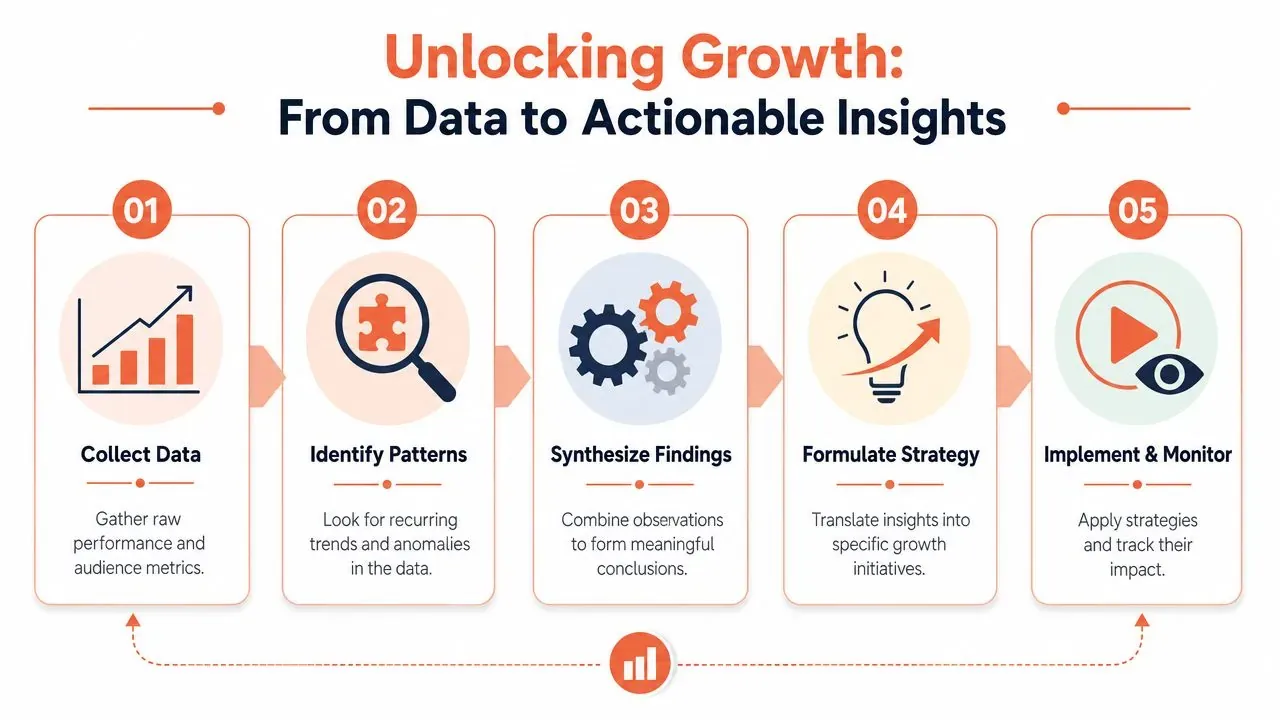
Data becomes strategy when you combine signals that explain each other. A city spike by itself is interesting. A city spike paired with playlist exposure, repeat listening, and follower movement is actionable.
Connect signals instead of chasing single metrics
Strong interpretation usually starts with triangulation. If one datapoint suggests an opportunity, look for a second and third signal before changing strategy.
A few examples:
- Unexpected city growth: Check whether the rise aligns with a playlist add, creator content, or organic search behavior. If listeners also save the track and return later, that market may deserve local outreach.
- One track outperforming the release: Review whether the song fits a clearer mood or search use case than the others. That can inform future playlist targets and short-form content framing.
- Playlist exposure with no audience carryover: If streams rise but followers, saves, or active listener behavior don’t move, the placement may be low quality or poorly matched.
A short decision table helps:
| Pattern | Likely interpretation | Next move |
|---|---|---|
| Streams rise, saves hold, followers rise | Discovery is reaching the right audience | Extend campaign and deepen retargeting |
| Streams rise, saves stay weak | Exposure is broad but low-intent | Reassess playlists and audience fit |
| One keyword cluster keeps appearing in successful playlists | Market language is clearer than your genre label | Update outreach copy and curator targeting |
| Previously active listeners return after catalog content | Back-catalog demand is opening up | Support the older track with fresh creative |
Good analysis rarely comes from one dashboard. It comes from matching listener behavior with campaign activity and discovery source.
Separate coincidence from cause
This is the discipline most artists skip. A stream spike after a playlist add doesn’t automatically mean the playlist caused the spike. Search visibility, recommendation exposure, social content, and external traffic can all move at the same time.
A major pitfall in Spotify research is mistaking correlation for causation, because playlist placement, search visibility, and algorithmic recommendations can all drive streams simultaneously. Isolating the effect often requires controlled analysis, as explained in Pragmatic Institute’s Spotify data case study.
The practical fix isn’t complicated. Change fewer variables at once. Log timing carefully. Compare one release push against another. Use holdout thinking where possible. If you pitch playlists, launch content, and run ads on the same day, you’ve made interpretation harder than it needs to be.
Create Actionable Deliverables from Your Research
Research should end in documents your team can use next week. If the output is only a spreadsheet, the process isn’t finished.
Turn findings into operating documents
The first useful deliverable is a clear audience profile. Not a vague persona with lifestyle clichés. A working listener brief built from real signals: top markets, likely discovery paths, playlist contexts, search language, and adjacent artist patterns.
The second is a vetted playlist target list. Keep it short and defensible. Include playlist fit notes, curator relevance, search visibility observations, and any integrity concerns. A smaller list of healthy, well-matched playlists is more useful than a giant export full of low-trust options.
The third is a release learning memo. Every campaign should leave behind a short record of what happened:
- What moved: Which songs, cities, or listener segments changed.
- What likely drove it: Playlist adds, content moments, catalog pickup, or search behavior.
- What didn’t convert: Placements or pushes that generated activity without deeper engagement.
- What to repeat: Tactics worth carrying into the next release.
Your best release strategy usually isn’t hidden in new data. It’s hidden in old data your team never wrote down properly.
Build better briefs and pitches
Editorial pitching improves when it reflects evidence instead of adjectives. If you already know which markets are responding, what playlists fit naturally, and how listeners are framing the music through search and discovery, your pitch becomes more credible and more specific.
That same research should shape your internal creative brief. The short version should answer four questions:
- Who is this release for on Spotify?
- How are those listeners likely to discover it?
- Which playlists and keywords match the song’s actual use case?
- What signals will tell us the campaign is working?
That’s the point of Spotify market research for independent teams. It reduces guesswork. It makes playlist outreach cleaner, editorial narratives sharper, and post-release analysis more honest.
If you want one workspace for playlist vetting, Spotify SEO research, monthly listener history, stream tracking, and editorial prep, artist.tools can support that workflow with data that’s directly relevant to release planning and Spotify growth.