
Master Spotify Playlist Reddit for Artists in 2026
Discover how Spotify playlist Reddit helps artists find real curators, ethically promote music, and avoid fake playlists. Your 2026 step-by-step guide.
You’ve probably done this already. You finish a track, open Reddit, search for Spotify playlists, and fall into a maze of subreddit threads, curator comments, “drop your song here” posts, and playlists that look promising until you realize nobody can tell you whether they drive real listeners.
That’s why the phrase Spotify playlist Reddit matters. It’s not just about finding more places to paste a link. It’s about using Reddit as a practical discovery layer for playlists, curators, and niche listener communities, then adding the operational discipline most threads skip: checking whether a playlist is worth your time before you pitch it, and measuring what happened after the add.
Why Use Reddit for Spotify Promotion
Spotify promotion gets harder the moment you realize quality music doesn’t automatically create discovery. Most independent artists don’t have a distribution problem. They have an attention problem. Reddit helps because it gathers people around scenes, moods, subgenres, production styles, and recommendation behavior that are often much more specific than what you’ll get from a generic social feed.
Reddit sits upstream of playlist discovery
Reddit matters because playlist discovery no longer lives only inside Spotify’s native interface. It also happens in user-driven communities where listeners compare playlist quality, ask for recommendations, trade niche finds, and share curator links. That behavior makes sense in a streaming ecosystem this large. Spotify reported 675 million monthly active users and 263 million Premium subscribers in Q4 2024, which helps explain why outside communities have become a meaningful discovery layer on top of the platform’s scale, as covered in this playlist data analysis from artist.tools.
For artists, that creates a practical opportunity. Reddit can expose you to smaller scenes that platform-native discovery might not surface cleanly, especially if your music lives between genres or serves a niche audience. A curator running a focused playlist for dream pop, underground house, shoegaze, ambient study music, or regional rap is often easier to find through discussion than through cold Spotify search alone.
The upside and the trap
The upside is precision. A good subreddit can put your track in front of listeners who already care about your lane. It can also reveal curators who are active, opinionated, and still open to discovery.
The trap is obvious once you’ve spent time there. Reddit is full of low-effort promo threads, abandoned playlists, and self-appointed curators who want submissions but don’t show signs of an engaged audience. If you treat every playlist mention as an opportunity, you’ll waste hours chasing vanity metrics.
A better approach is simple. Use Reddit for discovery, not blind trust. Let Reddit show you where conversations are happening, who keeps getting recommended, and which communities discuss music seriously. Then move into verification before outreach.
That’s the part most artists skip. It’s also the part that saves the most time.
Finding the Right Subreddits for Your Music
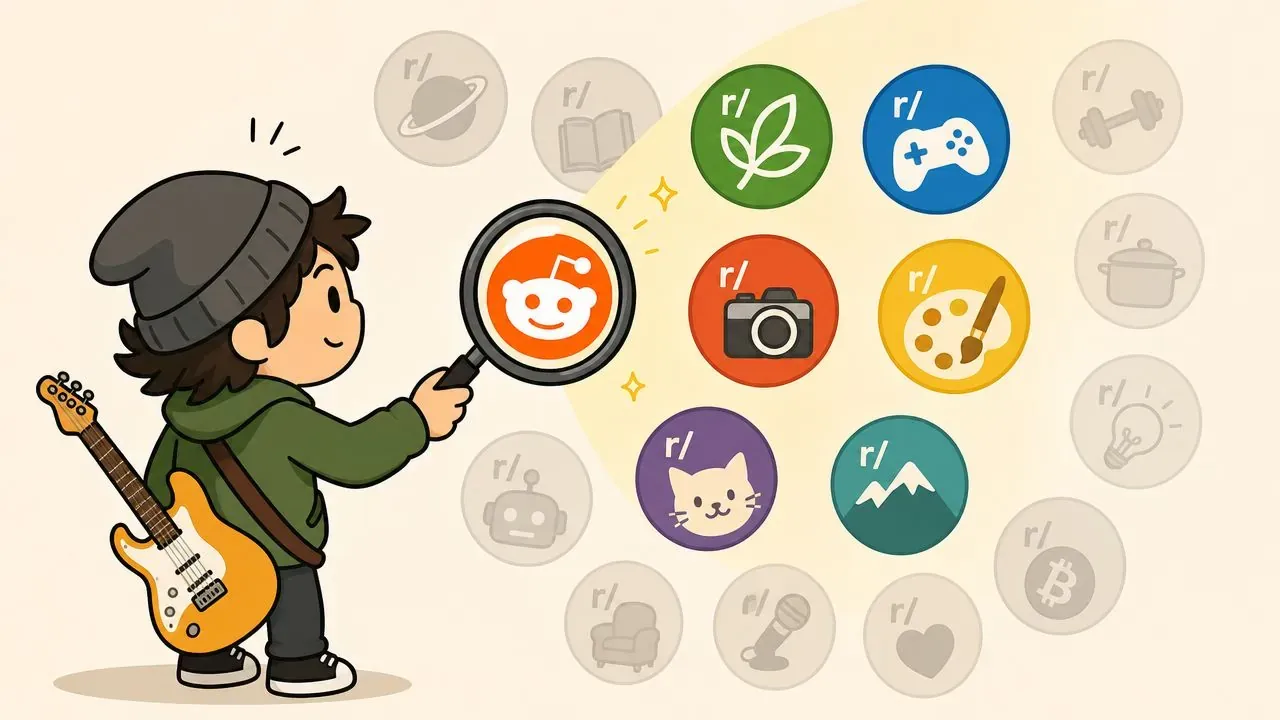
Your results depend on whether you’re searching in the right rooms. Broad playlist subreddits can be useful, but they’re rarely enough on their own. The better finds usually come from communities built around taste, not promotion.
Search for listener intent, not just playlist terms
Most artists search Reddit the same way. They type “Spotify playlist,” “playlist submission,” or “playlist curator” and stop there. That only finds the obvious threads, which are usually crowded and noisy.
Search the way a fan or curator thinks instead. Use combinations like your genre, mood, sound, scene, and “sounds like” references. If you make hazy indie pop, search for that mood language. If you produce beat tracks, search for study, focus, late night, mellow, jazzhop, and adjacent artist names. If your track fits a micro-scene, search the scene name first and playlists second.
This also helps you separate community types:
- Genre communities often reveal what listeners in that scene like.
- Feedback communities can show whether your track lands before you pitch it.
- Playlist-sharing communities surface curators, but you need stronger filtering.
- Artist and production communities sometimes expose tastemakers before they call themselves curators.
If you need a cleaner workflow for identifying actual playlist operators, this guide on how to find Spotify playlist curators is a useful companion to Reddit research.
Build a working shortlist
Don’t keep your subreddit research in your head. Build a shortlist and score it manually. You’re looking for signs of fit, activity, and norms.
A practical shortlist usually includes:
- Listener-focused communities These are where people ask for recommendations and argue about taste. They’re useful because they reveal language. That language can shape how you describe your track later.
- Submission-friendly communities Some subreddits have dedicated weekly or daily promo threads. Those threads won’t always drive much on their own, but they can surface curators watching discreetly.
- Scene-specific communities These are often the highest-quality targets. Smaller communities can outperform larger ones if the fit is strong.
- Curator-heavy threads You’ll spot these when people post playlists and others discuss sequencing, themes, updates, or follow for future releases.
Good subreddit research isn’t about scale. It’s about locating communities where your music already makes sense without explanation.
When you evaluate a subreddit, check three things before posting: what gets upvoted, what gets ignored, and what gets removed. That tells you more than the sidebar alone.
Crafting a Reddit Presence That Curators Respect
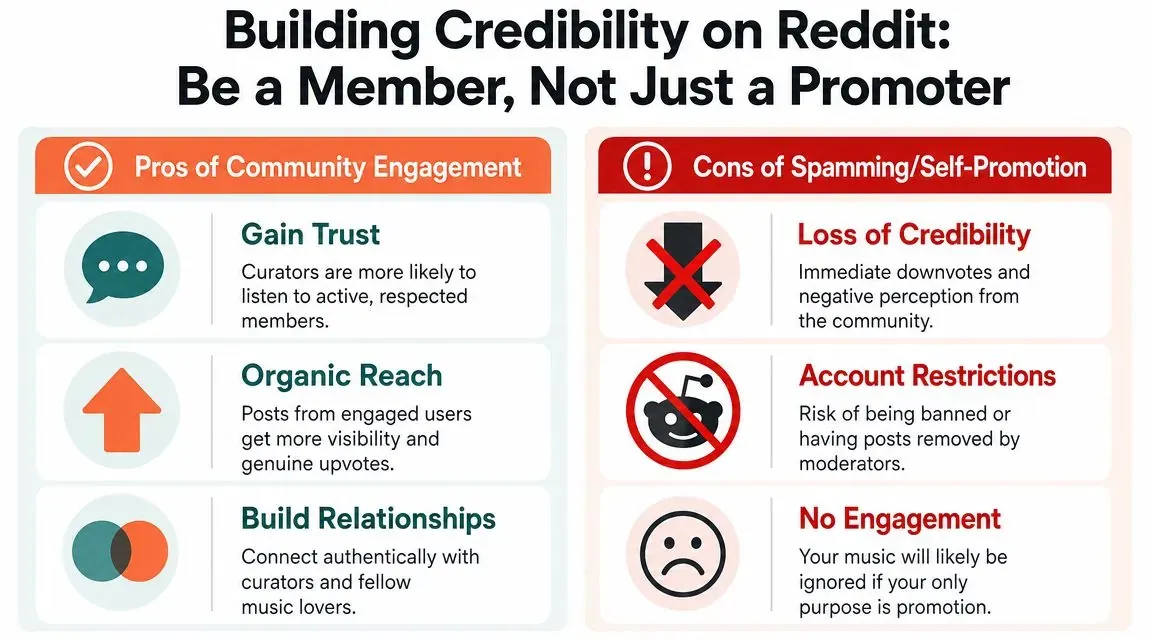
Curators can tell within seconds whether you’re participating in Reddit or just extracting from it. If your account only appears when you need streams, people read your post through that lens. Even if the song is good, the pitch lands colder.
Credibility changes how people hear your pitch
Reddit rewards pattern recognition. Moderators, regulars, and curators all notice who comments thoughtfully, who contributes recommendations, and who only shows up to promote themselves. That doesn’t mean you need to spend months roleplaying as a superfan. It means your account should show some evidence that you understand the room.
A credible Reddit presence usually includes a mix of behavior:
- Commenting with taste when someone asks for recommendations related to your lane.
- Giving feedback in music critique threads instead of only requesting it.
- Posting selectively in communities whose rules clearly allow self-promo.
- Avoiding copy-paste outreach that reads the same in every subreddit.
If your Reddit history looks like a press release feed, curators assume your message will waste their time.
That’s why short-term spam almost never compounds. You might squeeze out a click or two, but you also train communities to tune you out. A smaller number of well-placed posts from an account with normal community behavior tends to create better conversations and better curator responses.
Use the right post for the right job
Different post types do different work. Don’t use one format for every objective.
| Post Type | Primary Goal | Pro Tip |
|---|---|---|
| Feedback request | Test track reaction and positioning | Ask one focused question about arrangement, mix, or fit, not “thoughts?” |
| Weekly self-promo thread entry | Maintain visibility in rule-approved spaces | Keep it short and tailor the description to the subreddit’s taste |
| Recommendation reply | Reach listeners organically | Only drop your track if it genuinely fits the request |
| Playlist discussion comment | Start curator conversations | Mention what you liked about the playlist before pitching anything |
| Scene participation post | Build reputation | Share insight, references, or discoveries without linking your own music every time |
Some posts are for discovery. Others are for trust. Treating them as the same thing is where artists burn out.
A practical rhythm works better than constant promotion. Spend time in a few subreddits where your music belongs, contribute enough that your name isn’t unfamiliar, then post only when the fit is obvious. Reddit isn’t impressed by frequency. It responds to relevance.
How to Pitch Curators You Discover on Reddit
A curator’s Reddit username is not permission to dump a pitch into their inbox. The best outreach feels specific, brief, and easy to ignore without creating friction. That sounds counterintuitive, but it works because serious curators protect their time.
Move from public thread to direct outreach carefully
Start in public if the thread invites discussion. Reply to the playlist post, mention what you noticed about the curation, and ask whether they accept submissions. If they mention email, form, or DMs, follow that route exactly. If they don’t, don’t force it.
A lot of artists lose the room when they scrape a username, send a generic message, attach a full bio, and ask for support without showing any sign they listened. That’s not networking. It’s interruption.
A cleaner approach is to keep your message to the essentials and use the curator’s own framing. If their playlist is clearly mood-based, pitch the mood. If it’s built around new releases in a scene, pitch relevance and recency. If you need examples of what professional outreach should look like, this guide on how to contact Spotify curators effectively is worth reviewing.
What a strong pitch includes
A strong Reddit-sourced curator pitch usually has four parts:
- A real reason for contact Mention the playlist by name and reference something specific about it. Keep this honest. If you didn’t listen, don’t pitch yet.
- One-track focus Send one track, not an EP, not your catalog, not three “options.”
- A one-sentence fit statement Describe the song in terms the curator uses. Mood, tempo, texture, scene, or adjacent artist language all work if they’re accurate.
- A simple ask Ask if they’re open to considering the track. Don’t ask for guaranteed placement, feedback, follow, repost, and collaboration in the same message.
Leave out the long autobiography. Leave out desperation. Leave out the fake familiarity.
Respect shows up in editing. The shorter your message, the more likely a curator is to actually hear the song.
If they pass, move on. Reddit gives you plenty of surface area. Don’t turn one non-response into a week-long follow-up campaign.
Vetting Playlists and Spotting Red Flags
This is the step most Spotify playlist Reddit discussions fail to handle. They’ll tell you where to look, which subreddits to search, and how to contact curators. They usually won’t tell you how to decide whether a playlist is legitimate before you send your track.
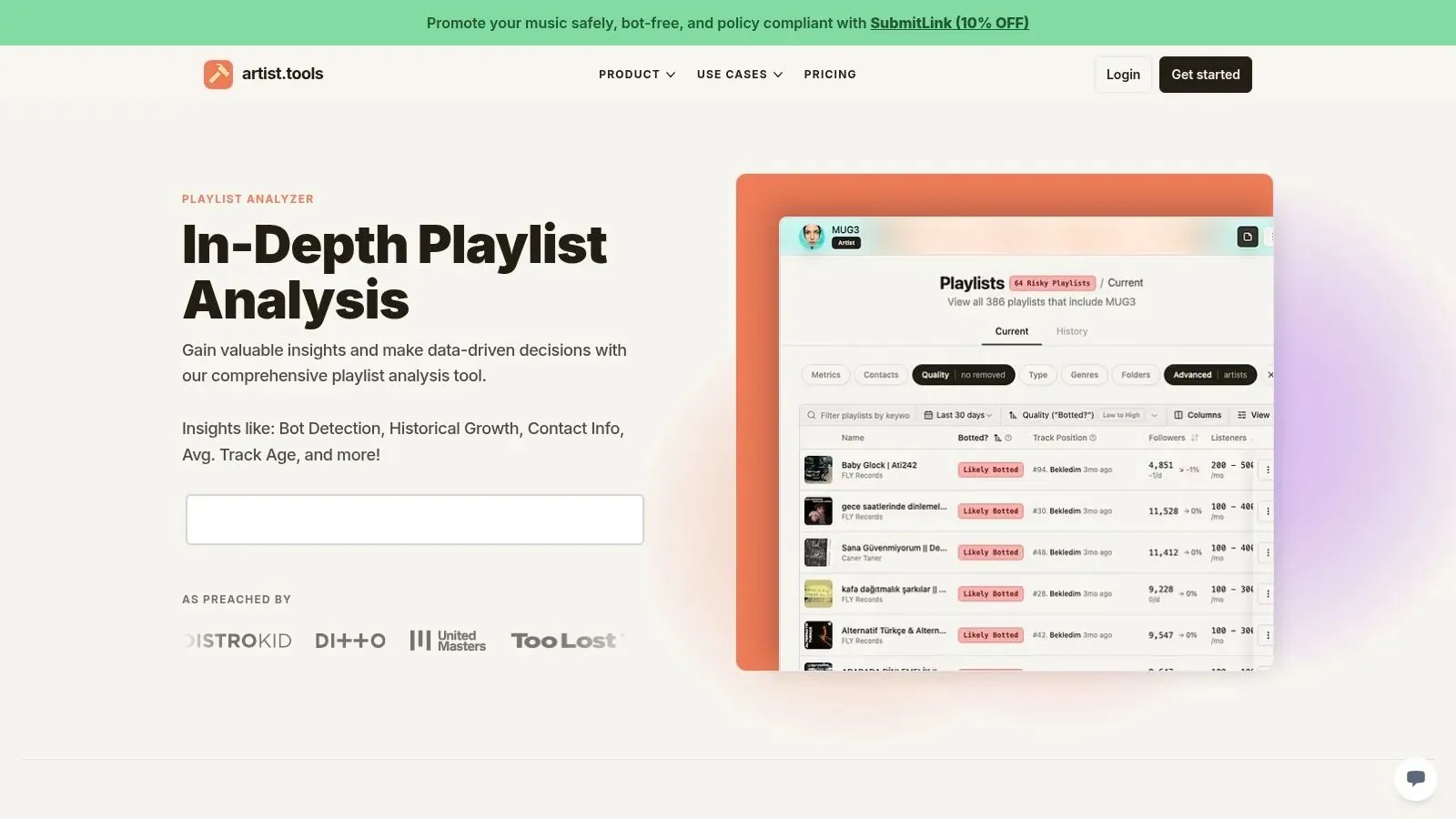
Independent marketing coverage has pointed out that this is a real gap. Spotify for Artists gives placement data and listener demographics, but it doesn’t provide the deeper historical growth and bot-risk checks artists need when evaluating playlists found through forums and third-party discovery channels, as noted in this overview of music marketing tools from Not Noise.
Follower count is the wrong first filter
The easiest mistake is treating playlist follower count as proof of value. It isn’t. A playlist can look impressive and still deliver weak engagement, unstable activity, or the wrong audience.
That’s why the better screening questions are operational:
- Does the playlist update consistently?
- Do the tracks on it make stylistic sense together?
- Is there any sign of suspicious growth behavior over time?
- Do the songs added to it appear to come from real artist ecosystems, or does the tracklist feel stuffed with random submissions?
- Does the curator have any visible identity, taste, or submission pattern?
If all you know is the follower count, you don’t know enough.
What to check before you send your track
Before pitching, inspect the playlist like a buyer doing due diligence. You’re not just asking whether it exists. You’re asking whether placement on it would be useful and safe.
Use a checklist like this:
- Historical behavior Look for a stable pattern of updates and audience development rather than abrupt, hard-to-explain changes.
- Track turnover If tracks appear and disappear constantly with no curation logic, treat that as a warning sign.
- Fit between your song and the existing catalog A legitimate placement still fails if the playlist’s listeners don’t want your sound.
- Signals beyond the Spotify app Curator activity on Reddit, social profiles, or submission pages can help you judge whether a real human is behind the list.
When you want deeper playlist due diligence, use a tool that analyzes historical follower behavior, track changes, and audience quality signals. One option is artist.tools bot-check workflow for Spotify playlists, which is built for pre-pitch vetting rather than just discovery.
A practical red flag is mismatch. If a curator talks like a niche tastemaker on Reddit but the playlist behavior looks erratic or disconnected from the music on it, stop there. Good playlist strategy is partly about outreach. It’s also about saying no quickly.
Measuring the Real Impact of a Playlist Placement
A playlist add feels like a win. Sometimes it is. Sometimes it’s just an event. If you don’t review what happened after the placement, you can’t tell the difference.
Spotify’s playlist system is explicitly algotorial, blending editorial choice with machine learning that personalizes track order and listening experience. That matters because the same placement can perform differently across listener cohorts, which is why Spotify’s own engineering explanation makes post-placement analysis more important than relying on raw stream totals alone in its piece on how algotorial playlists work.
A placement is not a result
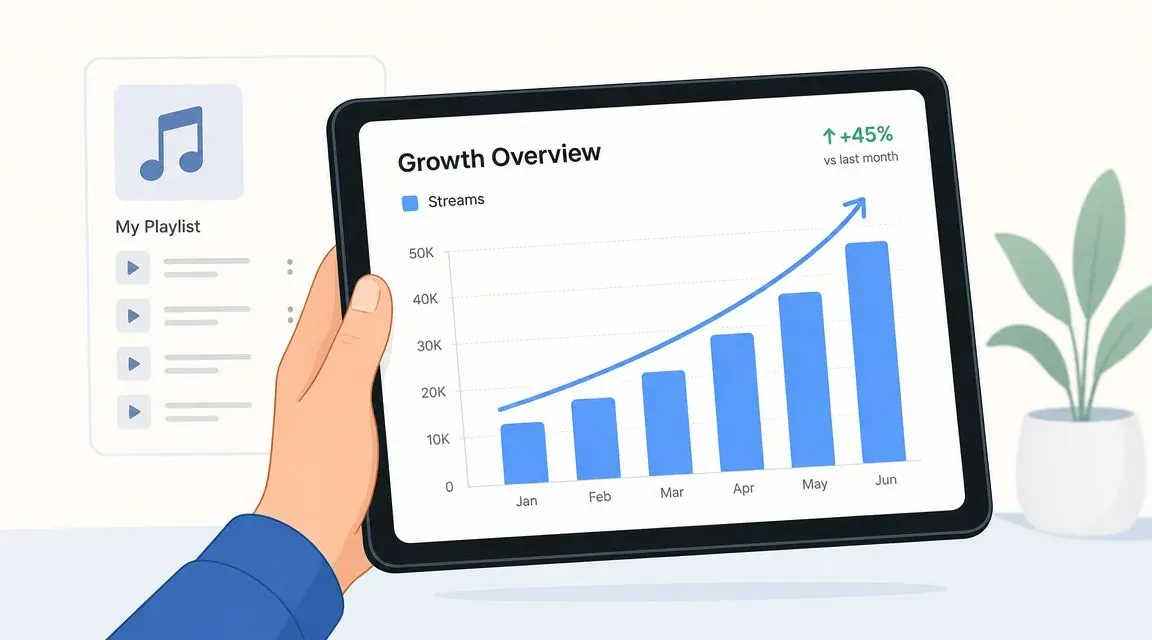
The wrong way to measure a Reddit-sourced playlist placement is to ask one question: did streams go up? Streams matter, but they don’t tell you whether the audience was engaged, whether the fit was good, or whether the placement had any downstream value.
The better review looks at multiple signals together. The playlist research context above matters here because engagement indicators such as listener count, save rate, skip rate, and completion rate are more useful than follower count alone when judging playlist quality. In practice, that means your analysis after the add should focus on listener behavior, not just the existence of a traffic spike.
A strong placement doesn’t just create plays. It creates signs that listeners wanted the song after hearing it.
What to review after the add goes live
Review the placement in a short window while the signal is still fresh. Compare the track’s movement before, during, and after the add.
Focus on questions like these:
- Did saves move with streams? If plays rise but saves stay flat, the playlist may have delivered low-intent listening.
- Did listeners complete the track or bounce quickly? Poor fit often shows up here before anything else.
- Did the song start appearing in other playlists afterward? That can indicate the placement reached real listeners and curators rather than dead inventory.
- Did artist-profile activity change? New followers or broader catalog listening usually mean the track introduced people to the artist, not just the single.
For ongoing review, use whatever reporting stack you already trust, then compare playlist adds against daily stream movement and listener quality signals. The key is consistency. If one Reddit-discovered playlist repeatedly drives saves and useful audience behavior while another only creates shallow plays, you’ve learned which curator profile to prioritize next release.
That’s the core loop. Reddit helps you discover. Vetting protects you before outreach. Measurement tells you whether the effort should be repeated.
If you’re using Reddit to find Spotify playlist opportunities, artist.tools is useful for the part most artists skip: checking playlist integrity before outreach and reviewing playlist-driven performance after placement so you can separate real opportunities from wasted effort.