What Is an EPK in the Music Industry and Why Artists Need It
Updated: Sep 8
An EPK—short for Electronic Press Kit—is like your music career’s CV. It pulls together your bio, song snippets, press quotes, eye-catching photos, and contact info into one neat, shareable package. Think of it as a ready-made snapshot that helps industry pros get to know you in seconds.
Understanding What An EPK Is
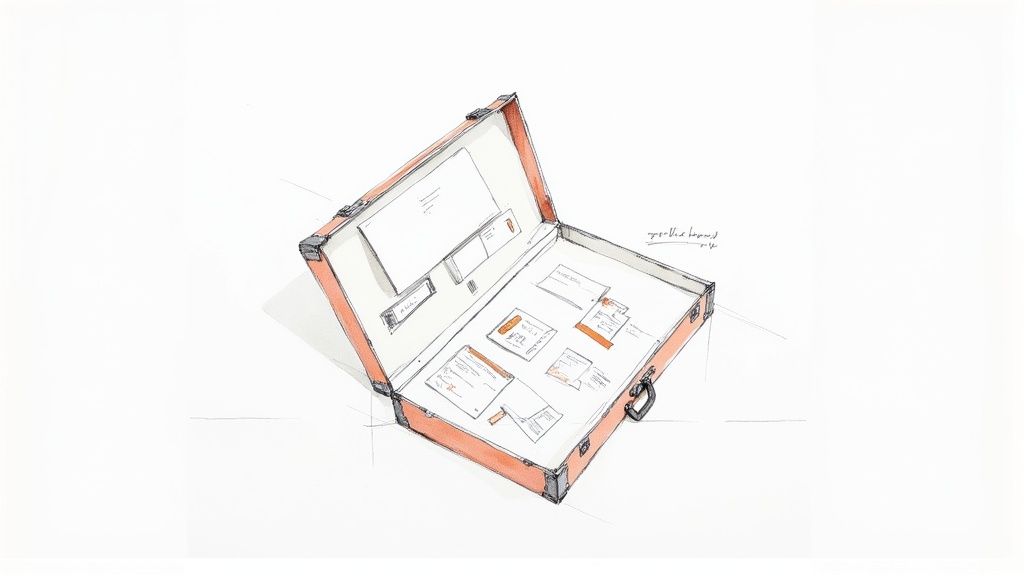
Instant Access gives promoters and journalists everything they need without hunting through emails.
Professional Presentation wraps up your story, sound, and visuals in a polished format.
Easy Sharing means you can drop a link in an email, embed it on your website, or send a PDF.
Credibility Boost comes from showcasing real press praise and audience figures.
Here’s a quick rundown of each core ingredient:
Key EPK Elements at a Glance
Component | Purpose |
|---|---|
Bio | Introduces artist background and style |
Press | Showcases media coverage and reviews |
Music | Provides streaming samples or downloads |
Images | Displays high-resolution photos and artwork |
Credits | Lists collaborators, producers, and songwriters |
Contact | Offers booking, PR, and management details |
Treat this table as your blueprint—make sure none of these pieces are missing or out of date.
When To Send Your EPK
Timing matters. Slide your kit into emails when you have a new single dropping or a tour announcement on the horizon.
Around release days or big milestones, your message lands with more impact. A well-timed EPK cuts through the noise and gets you on someone’s radar.
Keep it fresh: update stats, swap in new quotes, and rotate images so your profile never goes stale.
History Of Electronic Press Kits
Back in the day, musicians would stuff vinyl samples and glossy photos into hefty binders and mail them off to labels and magazines. It wasn’t just time-consuming; it was expensive. Often, promoters waited weeks—sometimes months—for a reply.
Early Physical Press Kits
These all-in-one packages typically included:
Vinyl or cassette samples for direct audio previews.
Press clippings and a handwritten cover letter.
Studio photos printed on high-gloss paper.
Those bulky shipments invited lost packages and extra postage.
By the late 1990s, the idea of a digital press kit began to take shape. That shift brought the Electronic Press Kit (EPK) to life—an online portfolio that bundled your bio, music samples, gallery, and contact details into one shareable link. By 2010, over 80% of major label artists were sending EPKs instead of postal mail. You can dive deeper into what makes a killer EPK on ReelCrafter's Blog on EPK Essentials.
Physical Vs Digital Press Kits Comparison
The move to digital meant ditching heavy envelopes in favor of a click. Here’s how they stack up:
Feature | Physical Kit | EPK |
|---|---|---|
Access | Delayed by shipping | Instant, shareable link |
Updates | Fixed once printed | Editable in real time |
File Size | Bulky envelopes, vinyl | Compact digital files |
Switching to an EPK didn’t just slash costs. It handed artists full control—revise your bio, swap photos, and update tracks in minutes.
Late 1990s: Internet growth sparks digital adoption.
2005: Platforms like Sonicbids launch early EPK services.
2010: Mainstream labels adopt EPKs across the board.
“Digital kits let artists tell their story in real time and reach global audiences instantly.”
Today, nothing moves faster than an EPK. Booking agents, media outlets, and collaborators expect a quick-click portfolio. That means anyone serious about their music career needs a polished, up-to-date EPK—and to refresh it regularly.
Essential Components And Hosting Your EPK
A standout EPK rests on six essential components plus a thoughtful hosting strategy. When these elements come together, you offer industry pros a clear roadmap instead of a maze of scattered files.
Start with an engaging artist bio that reveals your roots and unique voice. Then, layer in press quotes to boost your credibility at a glance. Next, embed music samples so listeners can press play immediately. Don’t forget high-res visuals—photos and clippings—to bring your story to life. Technical details like riders and stage plots keep live shows running smoothly. Finally, make sure promoters can reach you with crystal-clear contact info.
Key EPK Components
Break your EPK into these must-have sections:
Bio: Your origin story, influences, and career highlights.
Press: Quotes or reviews from reputable outlets.
Music: Stream links or audio embeds of your latest tracks.
Images: 3–5 high-resolution photos for media use.
Technical: Riders and stage plots for live bookings.
Contact: Booking, PR, and management details.
This layered approach turns your EPK into a self-contained, shareable dossier that flows naturally.
Crafting Your Artist Bio
Your bio sets the stage for everything that follows. Think of it as a mini narrative—concise but vivid. Highlight one breakthrough moment or a signature aspect of your sound to hook readers.
For more tips on structure, tone, and length, seeCheck out our guide on writing an artist bio that truly connects
Showcasing Press Coverage
Press quotes are like little endorsements that light a spark under your work. A single line from a respected publication can open doors.
Include the outlet name, date, and a brief excerpt.For example:
“A raw sound that captures emotional depth” – Music Weekly
Good press snippets give context and proof of your reach.
Infographic On EPK Evolution
Here’s a visual that maps out how EPKs have transformed over time:
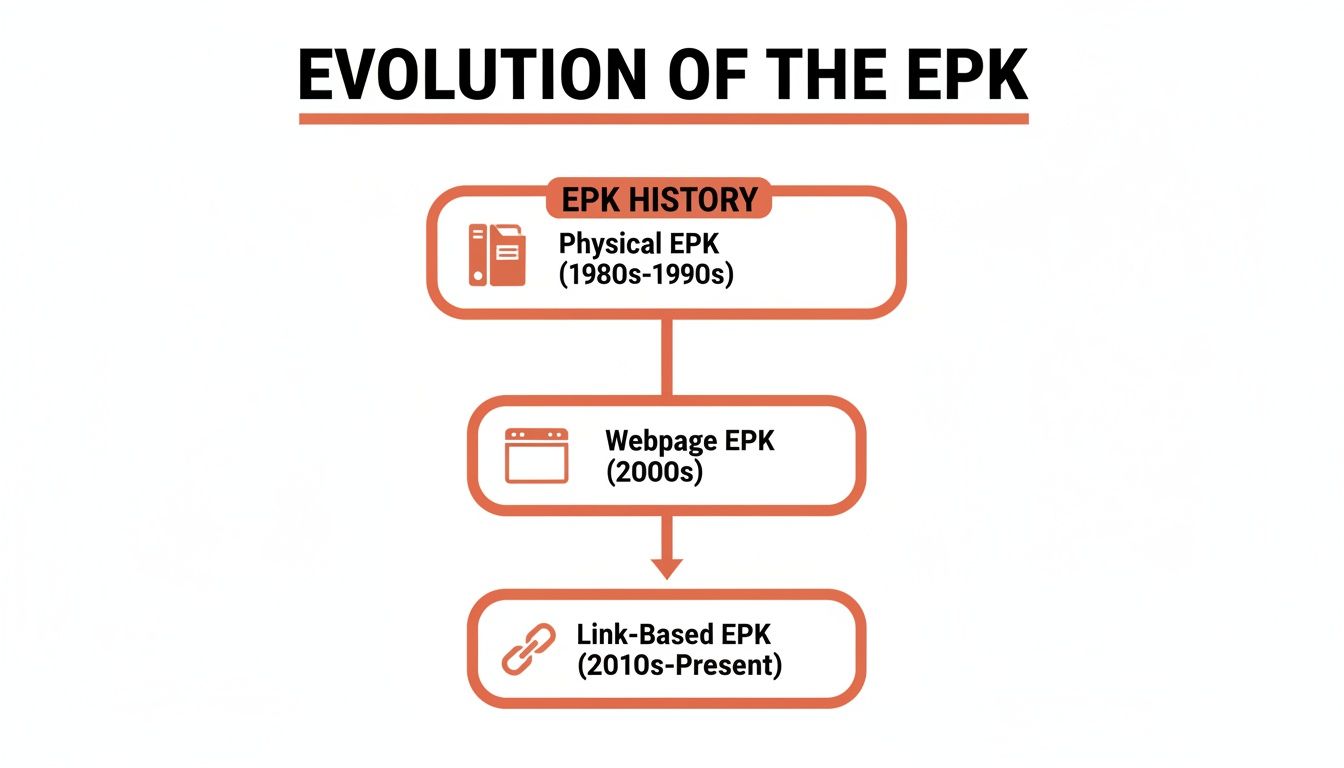
The diagram traces the journey from bulky Physical kits to sleek Webpages and finally shareable Links, emphasizing simplicity and instant access.
Embedding Music Samples
Nothing hooks faster than a play button. Choose embeds or MP3 downloads that load in under two seconds and work everywhere, especially on mobile.
Showcase 30–60 second previews to respect attention spans.
Note audio formats and quality in your technical rider.
Selecting High-Impact Visuals
In an inbox jammed with emails, images speak volumes. Aim for 3–5 high-res photos that match your genre and brand.
Mix live performance shots with promo portraits.
Compress files under 2MB to keep loading times quick.
Technical Riders And Stage Plots
Your rider is the backstage blueprint. It outlines exactly what you need—and where—to sound your best on stage.
Backline requirements (instruments, amps).
Input lists (mic placement, DI channels).
Stage dimensions (width, depth, power specs).
Contact Information
Make it effortless for bookers and press to find the right person. List each contact clearly:
Booking agent email and phone.
Press or PR rep with direct email.
Management or agency name plus website.
Official social handles for verification.
Host Comparison
Option | Pros | Cons |
|---|---|---|
Self-Hosted Site | Full branding control | Requires web dev |
PDF Link | Easy to update | Limited interactivity |
PressKitHero | Quick setup, analytics | Monthly fee |
Hosting Options And Best Practices
Picking the right home for your EPK makes all the difference. Here are three solid choices:
Self-hosted pages on your website for ultimate control.
Embeddable PDFs linked from landing pages.
Dedicated platforms like Sonicbids or PressKitHero.
Keep these in mind:
Fast load times under 3 seconds.
Mobile-first design so it looks great on phones.
Short, memorable URLs that echo your brand.
Basic analytics to track views and downloads.
Consistent updates and clear version labels keep your kit fresh and accurate.
Best Hosting Practices
Test your EPK link on desktop and mobile at least once a week. Enforce HTTPS for secure access and trust.
Set email alerts for new views.
Use UTM parameters or simple analytics to measure click rates.
Label each version by date and note major updates.
A reliable hosting setup can boost pitch success rates by 45%.
With these components in place and a robust hosting plan, your EPK becomes a powerful tool that captures attention and drives results. Keep it updated, keep it sharp, and watch doors open.
Pitching Your EPK Effectively
Before a promoter even opens your EPK, they see your subject line. Think of it as your first handshake—friendly, confident, and impossible to ignore.
Crafting Subject Lines
A subject line should fit on a phone screen—so aim for under 50 characters. Short, human, and relevant.
Open with a nod to the venue or city
Drop in a local connection or shout-out to a past show
Plug in a stat like 32% listener growth
Using Data To Show Your Reach
Numbers tell a story faster than words. When you mention 5,000 monthly listeners on a local radio station, you’re proving you draw a crowd.
65% of artist revenue comes from live bookings and approval rates jump from 20% to 75% when a kit includes tour history and press clips. Learn more about electronic press kit findings
Planning Your Follow-Ups
Silence isn’t rejection. It’s a reminder to follow up—gently.
Give it 3–5 days, then send a quick note. Use tools like Mailtrack or HubSpot to see if they opened or clicked.
First email: concise hook + link to EPK
Second email: fresh stat or new press mention
Third email: polite check-in and thank you
Customizing Your Pitch For Venues And Press
Promoters want crowd numbers and technical riders. Journalists want vibrant photos and quick streaming links.
Venues: average attendance, stage plots, gear list
Press: high-res images, direct streaming URLs, recent quotes
Tracking Your Outreach
A bit.ly link can tell you who clicked. Google Analytics or your CRM shows you where traffic comes from.
Tag URLs with UTM parameters
Review open and click rates weekly
Adjust subject lines or send times based on those trends
Highlighting Streaming Analytics
Pull stats from Spotify or Apple Music to back up your draw.
Note 15% month-over-month growth in listeners
Show top playlist adds to reveal audience size
Break down listener regions to tailor your pitch geographically
A Real-World Success Story
When indie band Ember Nights sent an EPK, they mentioned 20% attendance growth and shared three press quotes. Their subject line nodded to a sold-out hometown gig.
They landed a 3-night booking instead of a single support slot
A follow-up video link lifted replies by 40%
Bringing It All Together
Combine a crisp subject line, a clear value proposition, and real data points.
Keep your message under 150 words
Refresh your stats and press once or twice a year
Always test your EPK link before hitting send
This approach doesn’t just book shows—it forges partnerships that last. Stay consistent, track your results, and keep refining your pitch.
Using EPKs For PR Success
An EPK does more than land gigs—it fuels your entire PR engine. When you hand over a polished press kit, you’re offering journalists everything they need right away.
A well-organized folder means no endless searches for assets. Reporters can download high-res photos, verify streaming stats, grab press quotes, and click straight into playlists within seconds.
For example, a clear directory with updated metrics becomes a storyteller’s dream. Those numbers aren’t just sheets of data—they’re narrative hooks waiting to be woven into articles.
High-Resolution Photos for print and web
Verified Streaming Figures from Spotify or Apple Music
Quotes From Reputable Outlets such as Music Weekly
Direct Links to Playlists and Music Embeds
Embedding Newsroom Ready Assets
Visuals and data should arrive publication-ready. A brief caption under each image sets context and fits magazine layouts seamlessly.
Playlist URLs tagged with listener counts instantly reveal your reach. Editors love numbers that tell a quick story—no guesswork required.
“Journalists cover artists whose facts and images are at their fingertips.”
By packing these ready-to-go assets, you turn casual interest into published features. Every additional component you include reinforces your professionalism and builds trust.
Artists who submit fully equipped EPKs see 85% PR success, compared to just 25% for bare-bones pitches. For more on these findings, check out Soundcharts PR Success Findings.
Read also our guide on mastering public relations for music artists to discover more advanced tactics.
Tracking PR Performance
Measuring your EPK’s impact lets you hone your approach. Start by watching downloads and clicks with simple analytics tools.
Follow up with journalists to learn which assets sparked their interest. Their feedback is gold—use it to fine-tune what you include next time.
Metric | What It Reveals |
|---|---|
Downloads | Level of content engagement |
Click-Throughs | Most compelling links |
Mentions | Number of published articles |
Set up Google Analytics or PDF trackers
Tag playlist links with UTM parameters
Note which files are requested most
Regularly refresh stale stats, swap in new quotes, and sharpen your narrative. This iterative process turns raw data into actionable insights—and keeps your EPK from going stale.
Keeping a clear outreach audit trail helps you plan timely follow-ups around album drops or tour announcements. Treat your EPK as a living document that grows with every milestone.
By combining compelling assets with diligent tracking, you’ll raise your PR game and land more targeted coverage. For deeper analytics on your streaming impact and playlist performance, explore artist.tools’s Spotify data tools to elevate your PR strategy.
Common Mistakes To Avoid With EPKs
When an EPK lands in a booker’s inbox, that first glance can make or break your chance. Even if you’ve spent hours polishing your package, a few oversights can give off the wrong impression.
A bio stuck in the past and a dead link are like stepping on a banana peel—you had momentum, then you slip.
Here are the pitfalls I see most often:
Outdated Bio: If your bio still brags about a tour from two years ago, it’s time for an update. Aim to revise milestones and stats every quarter.
Broken Links: Before hitting send, click through every URL. Swap out dead links with live embeds to keep content seamless.
Oversized Files: Large images and audio slow down load times. Keep photos under 2MB and compress audio clips for a quick preview.
Generic Pitches: One-size-fits-all intros rarely land. Tailor your opening lines to each venue, editor, or curator you’re approaching.
Missing Contact Details: Make it effortless to reach you. List a primary email, phone number, and social handles right at the top.
Quick Steps To Fix Errors
A quick audit can seriously lift your EPK’s game—no gimmicks, just good habits.
Compress images and audio files so they load instantly.
Refresh key metrics every three months to keep stats honest.
Craft a unique opener for each recipient to show you did your homework.
A well-maintained EPK can increase booking approvals by 45% annually.
To stay ahead, schedule regular check-ins on your content and assets.
Set calendar reminders for quarterly link tests and bio updates.
Host media via cloud embeds to dodge file-size roadblocks.
Write fresh intros tailored to each contact group.
FAQ
Q1: What File Formats Should An EPK Use?
Keep things simple. Most industry pros appreciate a sleek PDF that they can download on the spot, plus an interactive web page for quick online access. Offering both ensures you’re ready for any pitch scenario.
Q2: How Often Should I Update My EPK?
Aim to refresh your EPK every three months or right after a new release. Swap in fresh photos, updated tour dates, and new quotes each quarter so your kit never feels stale.
Pro Tip: Archive each version with a date stamp. You’ll build a timeline of your progress and see how your story evolves.
Q3: Can I Include Unreleased Music in My EPK?
Absolutely. Use private streaming links or password-protected embeds so you can showcase exclusives without worrying about leaks or public access.
Q4: How Do I Customize An EPK For Different Audiences?
Tailor your highlights to who’s reading:
Promoters: Focus on tour metrics (attendance, sell-outs).
Journalists: Lead with standout press quotes and feature mentions.
Labels: Spotlight your streaming numbers, playlist adds, and growth trends.
Get started with artist.tools by visiting artist.tools and boost your Spotify marketing with actionable insights today.
.png)
.png)
Comments