7 Sources for Finding Good Spotify Playlists Rap Artists Need in 2026
- Cem C. Moreno
- 1 day ago
- 17 min read
For independent rap artists, getting your music heard on Spotify is a critical, yet often confusing, part of building a career. A single placement on the right playlist can catapult your track to a new audience, but a misguided choice can lead to botted streams, wasted resources, and minimal real-world impact. The challenge isn't just finding playlists; it’s about identifying the truly valuable ones and understanding how to connect with their curators effectively.
This guide moves beyond surface-level advice and provides a strategic roadmap for your playlisting campaigns. We will dissect the most powerful platforms and tools available, offering a data-backed approach to discovering, vetting, and pitching the good Spotify playlists rap artists need for sustainable growth. You will learn how to differentiate genuine listener engagement from fraudulent activity, uncover niche playlists with dedicated audiences, and use powerful analytics to inform your submission strategy.
Instead of relying on guesswork, this article will equip you with a precise, actionable framework. We will explore seven essential resources, from Spotify's own editorial ecosystem to third-party data platforms like artist.tools and Chartmetric, and submission services like SubmitHub. Each entry includes direct links and detailed insights on how to leverage its features to secure placements that translate into real, measurable results. It's time to stop chasing vanity metrics and start building a playlisting strategy that genuinely grows your fanbase.
1. Spotify: The Official Source and Your Primary Benchmark
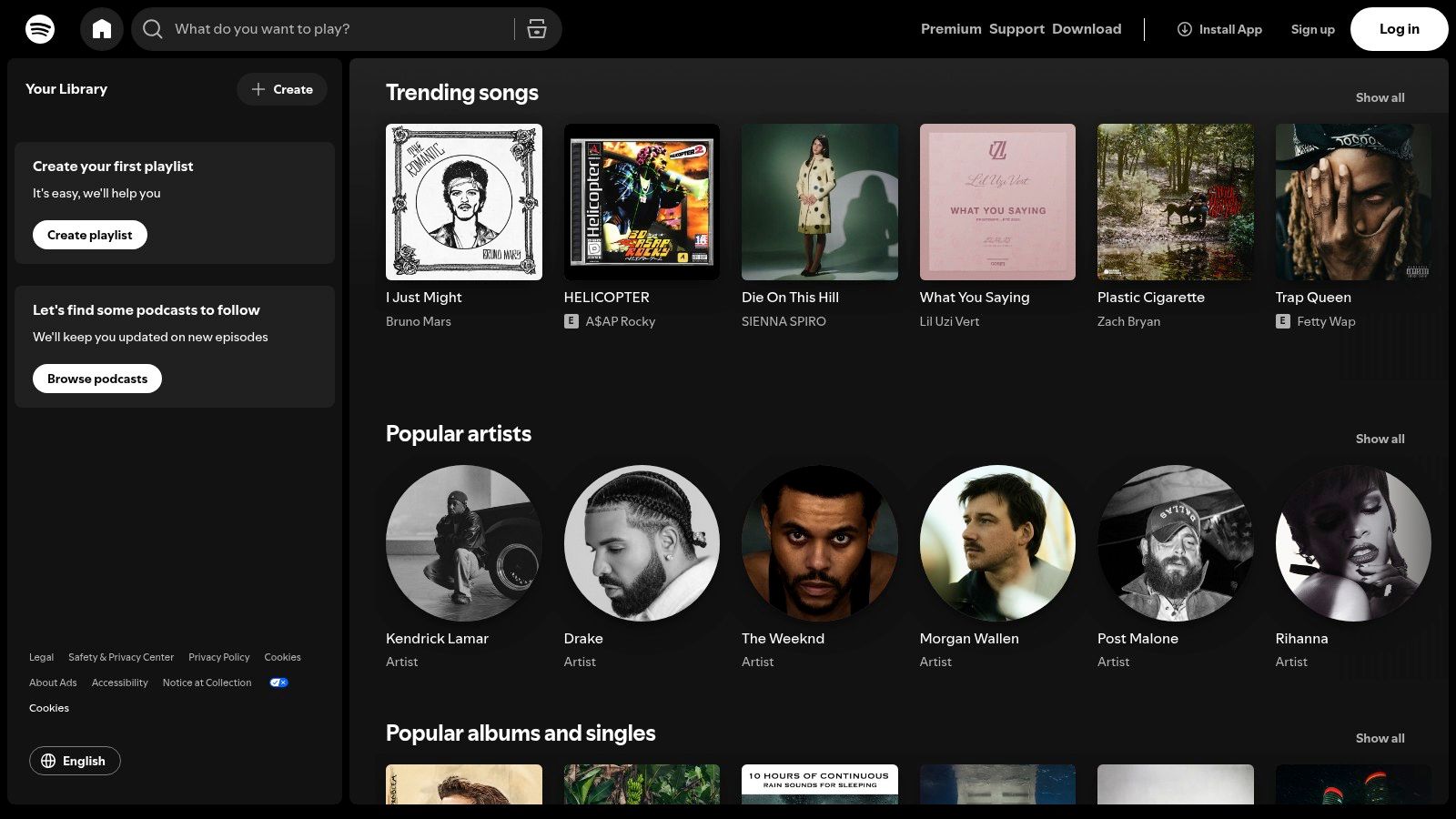
Before diving into third-party tools and independent curators, it's critical to master the Spotify platform itself. It is the definitive source of truth for discovering flagship editorial lists like RapCaviar, niche subgenre playlists, and influential regional hip-hop collections. For any artist, analyzing these official playlists is the first step in benchmarking trends, understanding sonic branding, and informing a powerful Spotify for Artists pitch.
By studying the tracklists, cover art, and descriptive language of successful playlists in your niche, you gain invaluable market research into what Spotify's editors and algorithms are currently rewarding. Think of Spotify not just as a distribution platform, but as your primary competitive analysis tool for finding good Spotify playlists rap listeners flock to.
Why It's Your Starting Point
Spotify's own editorial ecosystem sets the standard for the entire music industry. Placement on a playlist like Most Necessary or Get Turnt can be a career-defining moment, but even without a placement, these lists offer a blueprint for success. They reveal the production quality, lyrical themes, and overall vibe that are currently resonating with mass audiences and, more importantly, with Spotify's own curation team.
The platform’s user interface is designed for discovery, making it straightforward to search for playlists using keywords like "Lyrical Rap," "UK Drill," or "Trap Anthems." This allows you to identify the key players in your specific subgenre directly within the app.
Key Features and Strategic Use
Powerful In-App Search: Use the search bar to find playlists by keyword, genre, mood, or region. This is your most direct method for identifying the official and user-generated playlists that match your sound.
High-Signal Editorial Playlists: Lists like RapCaviar, No Cap, and Westside Story are curated by Spotify's internal team. Following them provides a real-time pulse on what's trending at the highest level.
Spotify for Artists Pitching: The only way to formally submit your unreleased music to Spotify's editorial team is through your Spotify for Artists dashboard. The research you do on the platform directly informs the tags, genre classifications, and written pitch you'll use for this crucial step. For a deeper dive, you can explore detailed strategies for getting on Spotify editorial playlists.
Feature Comparison | Spotify | Third-Party Tools |
|---|---|---|
Access | Free with ads or via Premium subscription | Varies (Free to paid subscriptions) |
Credibility | The official source; editorial placements are highly valued | Varies; requires vetting for bots/authenticity |
Submission Process | Formal channel via Spotify for Artists only | Direct contact with curators (email, social media) |
Data Analytics | Limited to your own track performance | Deep analytics on playlists (growth, listeners, etc.) |
Pros:
It's free to access and research playlists.
Editorial credibility is the highest in the industry.
Directly integrated with the pitching tool you need to use (Spotify for Artists).
Cons:
No direct submission or contact channel for editorial playlists outside of the official pitch tool.
Discovery and placement are extremely competitive.
Lacks the in-depth analytics on third-party playlists that specialized tools provide.
Website: https://open.spotify.com
2. artist.tools: Data-Driven Playlist Vetting and Outreach
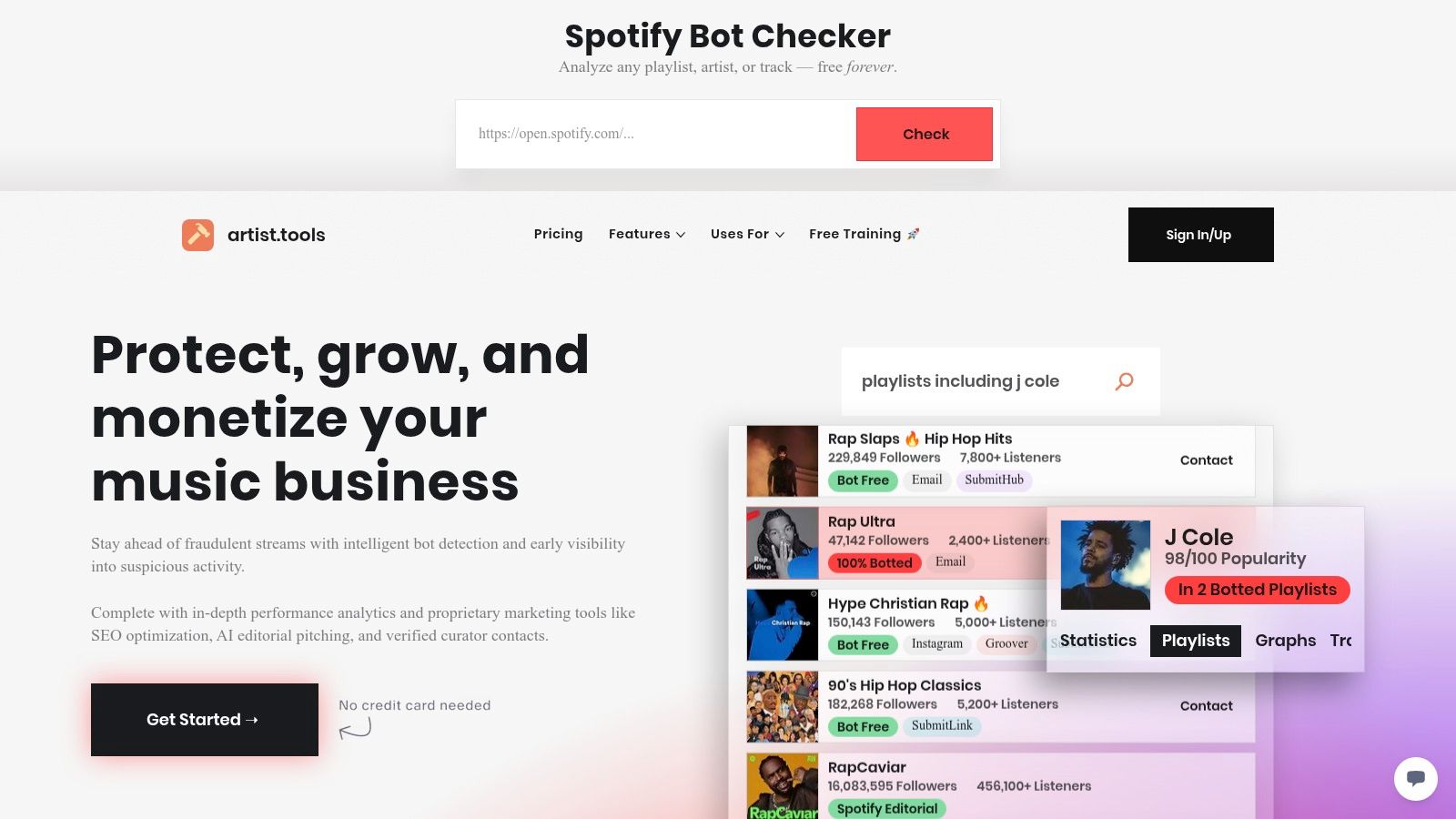
While Spotify is your source of truth, is your intelligence agency. It’s a specialized data platform designed to help artists and their teams look behind the curtain of any playlist. This tool shifts your strategy from guessing which playlists are legitimate to making data-backed decisions, ensuring your music reaches real listeners and your marketing efforts aren't wasted on bot-filled lists.
Instead of just finding playlists, allows you to deeply analyze them for authenticity, growth patterns, and listener quality. For artists seeking good Spotify playlists rap curators will actually listen to, this platform provides the verification and contact details necessary for effective, professional outreach, saving you countless hours of manual research and reducing the risk of artificial streams.
Why It's Your Next Step
After identifying potential playlists on Spotify, is where you qualify them. The platform's core strength is its powerful bot detection and playlist analyzer, which flags suspicious activity that could harm your artist profile. It provides the critical data Spotify doesn't show you, such as historical follower growth, track addition frequency, and listener-to-follower ratios.
This level of insight is crucial in the rap genre, where playlisting can be saturated and rife with low-quality or fraudulent lists. By using this tool, you can confidently identify healthy, growing playlists run by active curators and find their preferred submission methods, turning a cold search into a warm pitch.
Key Features and Strategic Use
Playlist Analyzer & Bot Detection: Paste any Spotify playlist URL to receive an in-depth report on its health. Look for steady, organic growth and a low bot-risk score before considering a pitch.
Verified Curator Contacts: The platform includes a searchable database of playlists with verified curator contact information and submission links, eliminating the frustrating search for an email or submission form.
Playlist Search & Discovery: Go beyond Spotify's search by filtering playlists by genre, contact availability, and authenticity metrics. This helps you build a highly targeted list for your next release campaign.
Feature Comparison | artist.tools | Manual Spotify Search |
|---|---|---|
Access | Free tier available; paid subscriptions for full access | Free |
Credibility | Provides data to verify playlist authenticity | Requires manual vetting and guesswork |
Submission Process | Provides direct curator contacts and submission links | No direct contact info provided |
Data Analytics | Deep analytics on any playlist's growth and health | Limited to your own track performance |
Pros:
Purpose-built to mitigate artificial streaming and identify real listeners.
Significantly streamlines the process of finding curator contacts.
A free tier allows you to test core features before committing.
Cons:
Advanced capabilities, like data exports, require paid subscription levels.
The sheer amount of data can have a learning curve for new users.
Relies on available data; some niche curators may not be listed.
Website: https://www.artist.tools
3. Chartmetric: Professional Analytics for Playlist Vetting
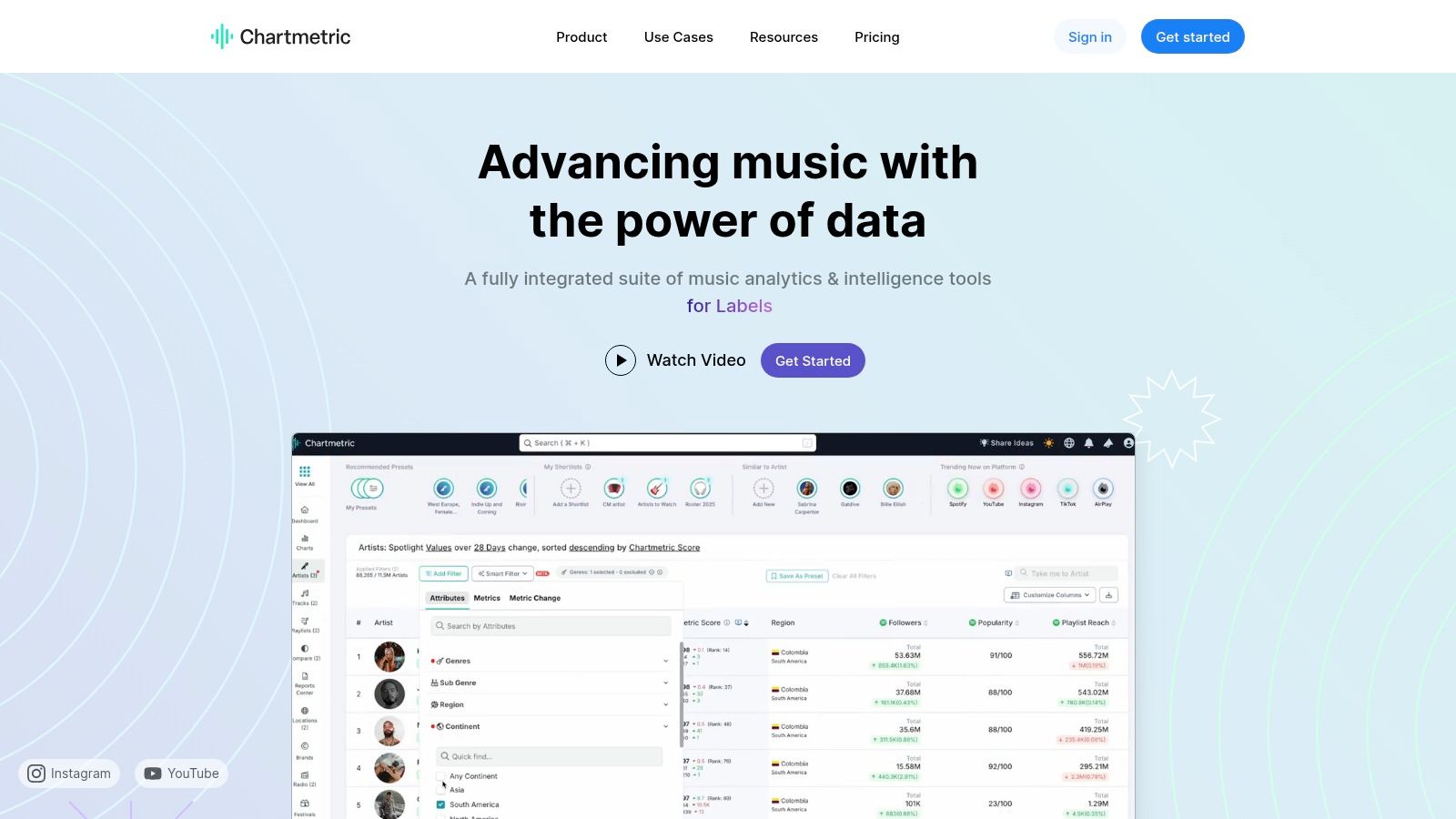
Once you've identified potential playlists directly on Spotify, the next crucial step is validation. Chartmetric is the industry-standard data analytics platform that allows you to look under the hood of any playlist, providing the deep insights necessary to separate high-quality placements from low-impact or fraudulent ones. It’s an essential tool for artists and managers who want to make data-driven decisions before investing time and resources into pitching.
This platform transforms your search for good Spotify playlists rap from a guessing game into a strategic analysis. By examining a playlist's historical growth, listener demographics, and cross-platform influence, you can accurately gauge its true value and ensure its audience aligns perfectly with your target market.
Why It's Your Go-To for Research
Chartmetric provides a 360-degree view of an artist's or playlist's performance across the digital landscape, not just Spotify. This macro-level perspective is invaluable for competitive research, helping you understand where your peers are gaining traction and which playlists are driving their growth. Its comprehensive dataset allows you to verify a curator's claims and spot red flags, such as sudden, unnatural follower spikes that may indicate bot activity.
The platform's user interface is dense with data, which can present a learning curve. However, mastering its core features will give you an undeniable competitive edge in your playlisting strategy.
Key Features and Strategic Use
Playlist Data and Insights: Analyze any Spotify playlist for follower growth over time, track additions and removals, and see which other artists are featured. This helps you determine if a playlist is actively managed and growing organically.
Audience Geography and Demographics: Validate a playlist's listener base to see if it matches your ideal fan. Pitching a Bay Area hyphy track to a playlist with a predominantly European audience is an inefficient use of your time.
Cross-Platform Tracking: Connect the dots between Spotify playlist adds, social media mentions, and radio airplay. This helps you understand the real-world impact of a potential placement beyond just stream counts. For more on this, check out our guide to an ultimate Spotify playlist analysis.
Feature Comparison | Chartmetric | Indie-First Tools |
|---|---|---|
Data Scope | Comprehensive (Spotify, Apple, TikTok, Radio, etc.) | Often Spotify-centric |
Primary Use | Deep research, A&R, and competitive analysis | Playlist discovery and direct outreach |
Audience | Labels, managers, established artists, data analysts | Independent artists, DIY musicians |
Pricing | Multiple tiers, including a free and an Artist Plan | Often lower-cost monthly subscriptions |
Pros:
In-depth, credible dataset trusted by major labels and industry professionals.
Excellent for verifying the legitimacy and audience of third-party playlists.
Multiple subscription tiers, including a more affordable Artist Plan for emerging acts.
Cons:
The sheer amount of data can be overwhelming for new users.
Premium features needed for the deepest insights are more expensive than indie-focused tools.
Not a direct submission platform; it is purely for research and analysis.
Website: https://chartmetric.com
4. Soundplate
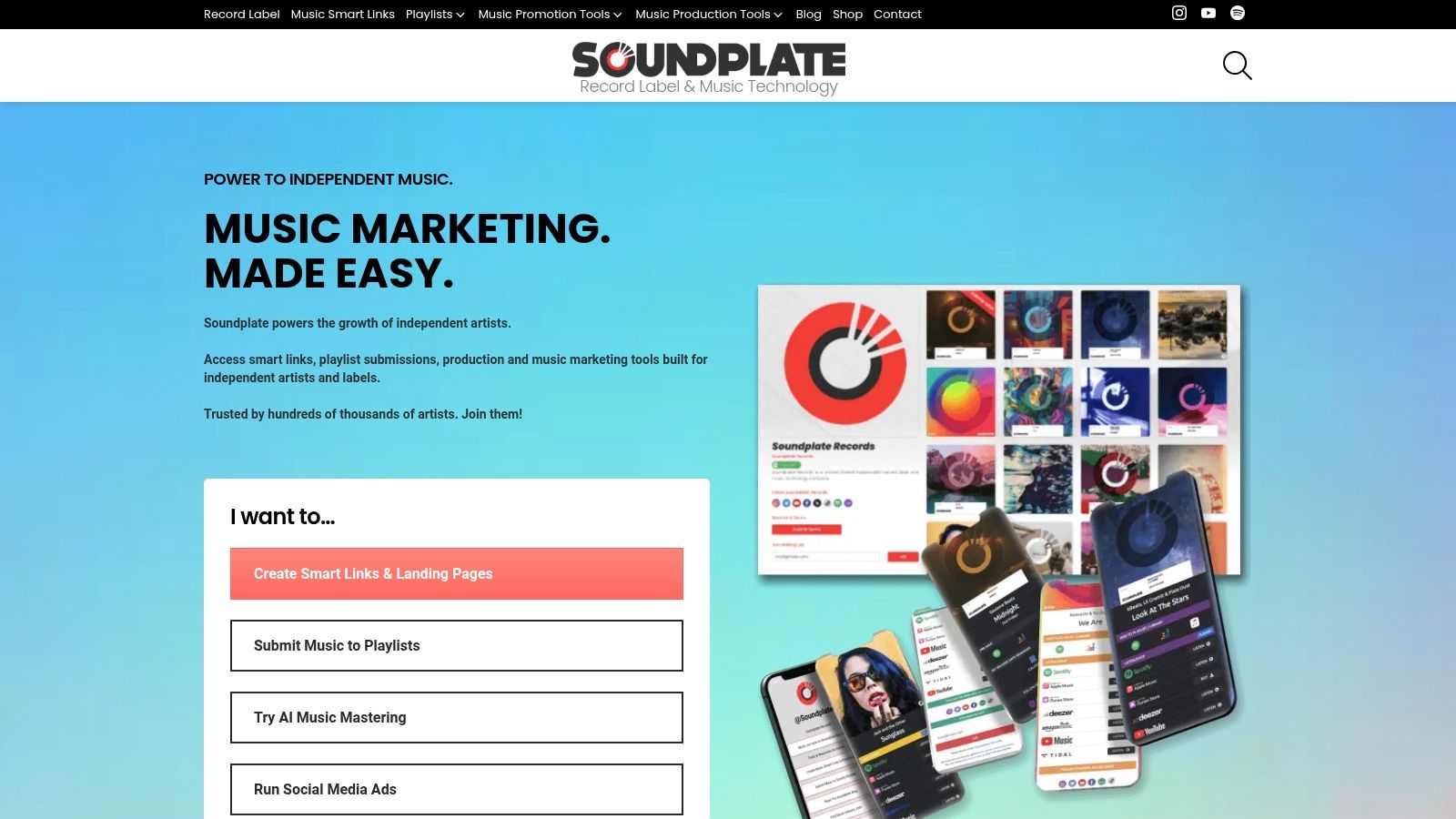
While large-scale platforms offer powerful analytics, the independent curator ecosystem is the lifeblood of music discovery for countless emerging artists. Soundplate serves as a vital bridge to this world, acting as a curated directory where artists can find and submit their music directly to independently-managed playlists. It specializes in connecting musicians with curators looking for new tracks, making it a key resource for finding good Spotify playlists rap that are actively open for submissions.
For artists on a budget or those just starting their promotional journey, Soundplate provides a free and accessible entry point into the world of playlist pitching. It strips away the complexity of cold outreach and offers a standardized submission process, allowing you to focus on finding the right sonic fit for your music across a diverse range of rap and hip-hop subgenres.
Why It's Your Go-To for Independent Curators
Soundplate excels by providing a straightforward, no-frills platform for discovering niche playlists. Unlike algorithm-heavy tools, its value lies in the human element. Each playlist is managed by an individual with a specific taste, whether it's for lo-fi hip-hop, conscious rap, or regional trap. This direct-to-curator model is perfect for artists whose music fits a specific vibe that might be overlooked by larger editorial lists.
The platform's user-friendly interface allows you to quickly filter by genre, check a playlist's follower count, and access its public submission page. This transparency demystifies the submission process, which can often be a major hurdle for independent artists trying to get their music heard by the right people.
Key Features and Strategic Use
Public Submission Pages: Most playlists listed have a dedicated submission link. This standardized process ensures your music gets to the curator without you having to hunt for contact information.
Direct Spotify Playlist Links: Before submitting, you can click through to the actual Spotify playlist to analyze its current tracklist, vibe, and overall quality. This is crucial for ensuring your track is a good fit.
Multi-Platform Support: While focused on Spotify, many curators also manage playlists on other platforms like Apple Music or Deezer, offering potential for broader exposure.
Feature Comparison | Soundplate | Direct Outreach |
|---|---|---|
Access | Free to browse and submit | Requires manual research for contact info |
Credibility | Varies; requires artist vetting of each playlist | Varies; depends entirely on the curator |
Submission Process | Standardized forms via Soundplate links | Varies wildly (email, social DMs, forms) |
Data Analytics | Basic playlist info (followers, track count) | None, unless you use a third-party tool |
Pros:
Free to browse and submit to a wide variety of playlists.
Provides clear, at-a-glance information like follower counts and genre tags.
Simplifies the submission process by centralizing links.
Cons:
Playlist quality and authenticity can vary significantly; vetting is essential.
Placement is never guaranteed, and feedback is rare.
Many playlists are smaller and offer limited reach compared to editorial or major label lists.
Website: https://soundplate.com
5. SubmitHub
SubmitHub operates as a credit-based marketplace connecting artists directly with a wide array of independent Spotify playlist curators, music bloggers, and social media influencers. For rappers aiming to find placements beyond the major editorial lists, it provides a structured system to pitch music and guarantee that it gets heard, albeit for a small fee. It’s a tool designed for volume, feedback, and controlled campaign testing.
By using credits, you can send your track to highly specific curators who fit your subgenre. This controlled approach allows you to methodically test your music against different audiences and find those niche, yet dedicated, good spotify playlists rap fans frequent. It streamlines the often-chaotic process of cold outreach into a manageable, data-driven workflow.

Why It's A Valuable Pitching Tool
SubmitHub’s primary value lies in its accountability system. Unlike sending countless cold emails that may never be opened, using Premium credits mandates that a curator must listen to a portion of your song and provide a response within a set timeframe. This guaranteed feedback loop, whether it's an approval or a rejection with a reason, is invaluable for refining your track and your pitch strategy.
The platform's strength is its large network of independent curators, many of whom manage highly engaged, genre-specific playlists. For a rap artist specializing in lo-fi hip-hop, conscious rap, or a regional sound, finding these targeted curators is often more effective than aiming for a massive, multi-genre list.
Key Features and Strategic Use
Credit-Based Submissions: Artists purchase credits to send their songs to curators. Premium credits (typically $1-$3 each) guarantee a response within 48-96 hours and often require written feedback upon rejection.
Advanced Curator Filtering: You can filter curators by genre, playlist size, approval rating, and other metrics. This allows you to build a highly targeted list of curators most likely to appreciate your specific style of rap.
Curator Accountability: Curators are rated by the community, and their approval rates are public. This transparency helps artists identify high-quality, responsive curators and avoid those who may be less engaged.
Feature Comparison | SubmitHub | Direct Outreach (Email/Socials) |
|---|---|---|
Access | Free to join; pay-per-submission via credits | Free, but requires time and research |
Credibility | Varies by curator; requires vetting using platform data | Varies highly; requires significant vetting |
Submission Process | Centralized platform with clear submission forms | Unstructured; methods vary by curator |
Response Guarantee | Yes, with Premium credits (listen & feedback) | No; responses are rare |
Pros:
Guaranteed listening and feedback with Premium credits.
Pay-as-you-go model is flexible for different budgets and A/B testing.
Extensive filtering tools to find niche rap curators.
Cons:
Results are highly variable; success depends on curator selection and music quality.
Can become costly if not used strategically.
Many playlists are smaller and won't drive massive stream numbers.
Website: https://www.submithub.com
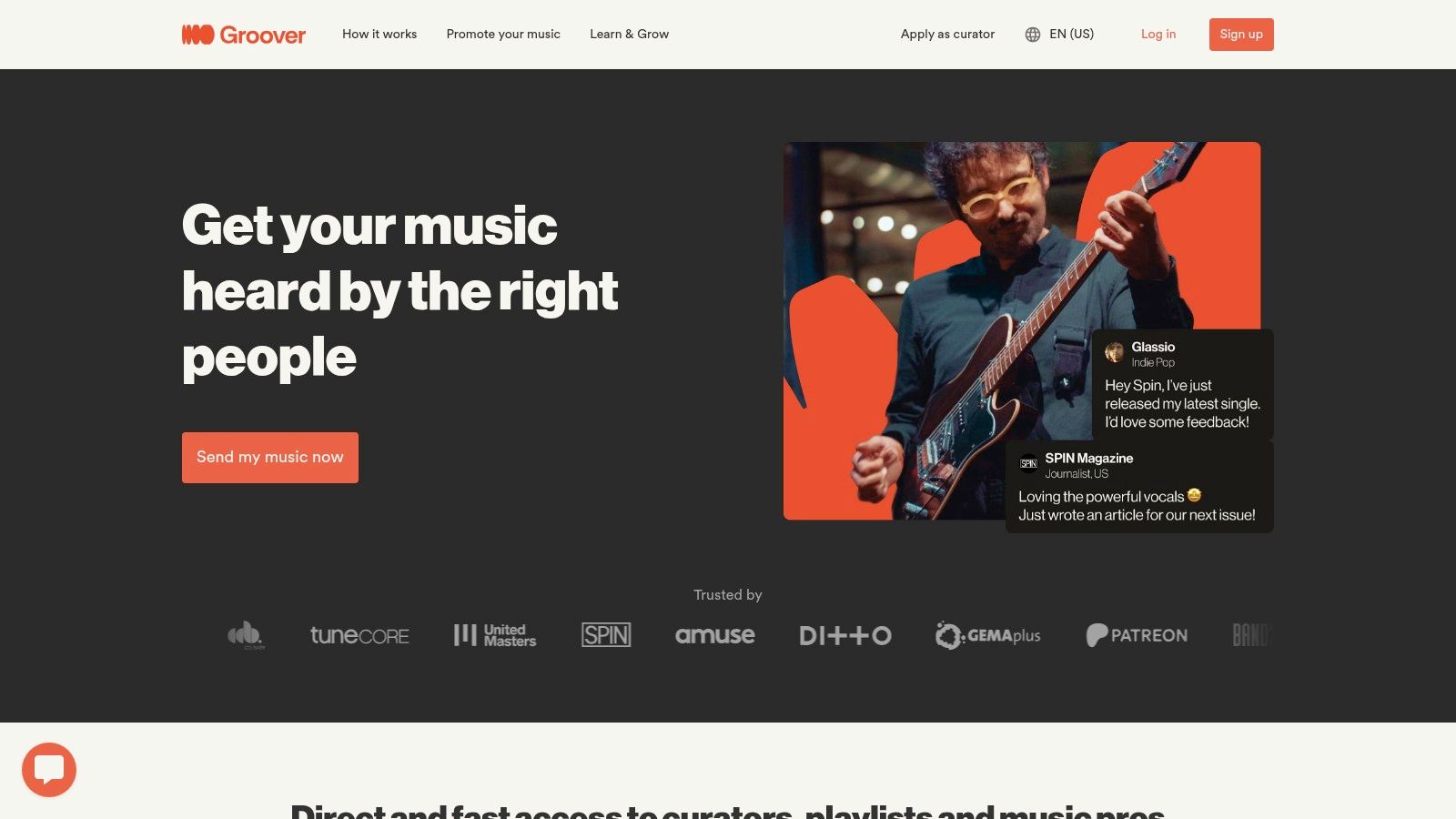
6. Groover: Guaranteed Feedback for Targeted Playlist Pitching
Groover is a music promotion platform that streamlines the often-unpredictable process of reaching out to curators. It connects artists directly with a network of vetted bloggers, radio hosts, and playlist curators, offering a unique value proposition: a guaranteed response. For rap artists navigating the competitive landscape, this removes the uncertainty of cold emailing and provides a structured way to get their music heard and receive valuable feedback.
The platform is designed for artists who want to build a targeted campaign and ensure their pitches don't disappear into an unread inbox. By paying a small fee per submission, you are purchasing a curator's time and attention, making it a powerful tool for finding good Spotify playlists rap curators who are actively looking for new music.
Why It's A Reliable Outreach Tool
Groover's core strength is its guaranteed feedback model. Curators have seven days to listen and respond to your submission; if they don't, you receive your credits back to pitch to someone else. This system creates accountability and provides artists with a clear return on their investment, whether it's a playlist placement, a blog feature, or constructive criticism to improve their next release.
This model is particularly effective for rap artists in specific subgenres. The platform's filtering capabilities allow you to pinpoint curators who specialize in everything from Lo-fi Hip Hop to Conscious Rap or Drill, ensuring your music lands in front of the most relevant ears. It acts as a bridge, solving one of the biggest challenges in playlisting: how to find Spotify playlist curators and actually get a response.
Key Features and Strategic Use
Guaranteed Reply System: Your primary reason for using Groover. Pay per contact ("Grooviz") and receive a guaranteed listen and feedback within seven days, or your credits are refunded.
Targeted Curator Filtering: Use the platform's filters to sort curators by genre, country, and type (playlist, blog, radio, label). This allows you to build a highly specific outreach list tailored to your sound.
Transparent Pricing: Groover operates on a credit-based system, typically costing around €2 per contact. You buy credit packs ("Grooviz"), which means there's no monthly subscription, and you can scale your campaigns up or down based on your budget.
Feature Comparison | Groover | Direct Email Outreach |
|---|---|---|
Response Guarantee | Yes, feedback within 7 days or credit is refunded | No, response rates are often very low |
Cost | Pay-per-submission (credit-based system) | Free, but requires significant time for research |
Curator Vetting | Curators are vetted by the Groover team | Requires individual research to verify legitimacy |
Campaign Management | Centralized dashboard to track all submissions | Manual tracking required (spreadsheets, etc.) |
Pros:
Guaranteed feedback system eliminates the uncertainty of cold outreach.
Pay-as-you-go model is flexible and scalable for any budget.
Vetted curator list helps avoid bots and low-quality playlists.
Cons:
Costs can accumulate quickly if you're running a large-scale campaign.
A "rejection" with feedback still costs credits; payment doesn't guarantee a placement.
Some of the most influential, high-tier playlist curators may not be on the platform.
Website: https://groover.co
7. PlaylistPush
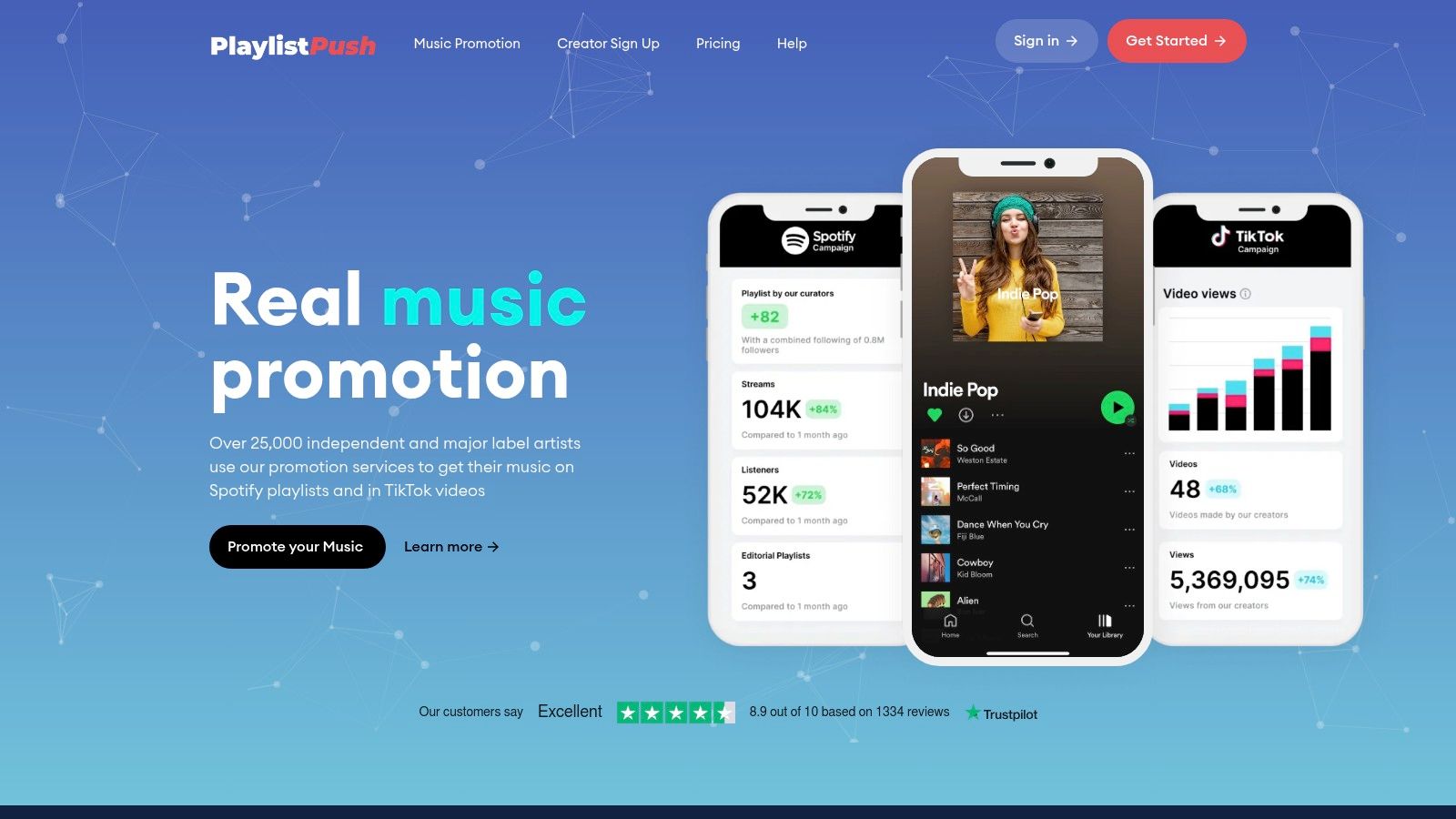
PlaylistPush offers a managed outreach service designed for artists who want a more hands-off approach to playlist pitching. Instead of you finding and vetting individual curators, PlaylistPush runs a campaign that sends your single directly to their pre-vetted network of independent playlist curators. This model is ideal for artists who want to test market reception for a new track or scale their outreach efforts without dedicating hours to manual pitching.
By handling the distribution and communication, the platform allows you to focus on the music while still gaining exposure on some good Spotify playlists rap fans follow. The service provides detailed reporting on which curators received your song, who listened, and who ultimately added it to their playlist, giving you valuable feedback on your campaign's performance.
Why It's A Key Campaign Tool
PlaylistPush stands out by systemizing the often chaotic process of independent playlist pitching. For many emerging rap artists, the biggest challenge is simply getting a curator to listen. This service guarantees your track lands in the inboxes of relevant curators within their network who specialize in your specific subgenre of rap, whether it's lo-fi, trap, or conscious hip-hop.
The platform provides a structured campaign with a clear budget and reporting, which transforms playlisting from a guessing game into a measurable marketing activity. This makes it a valuable tool for testing a single's potential before investing in a larger promotional budget.
Key Features and Strategic Use
Genre and Mood Targeting: Campaigns are specifically targeted to curators based on the genre, subgenre, and mood of your song, increasing the likelihood of reaching the right audience.
Transparent Campaign Pricing: PlaylistPush provides clear minimum budgets and cost estimates upfront based on the number of curators available in your niche, helping you plan your promotional spend effectively.
Detailed Campaign Reporting: After a campaign, you receive a report detailing outreach numbers, curator feedback, and any playlist adds. This data is crucial for understanding how your track is perceived and refining your future release strategy.
Feature Comparison | PlaylistPush | DIY Pitching |
|---|---|---|
Access | Paid campaigns with set budgets | Free (time and effort are the cost) |
Credibility | Curators are vetted by the platform | Requires individual research and vetting |
Submission Process | Automated submission to a network of curators | Manual outreach via email or social media |
Data Analytics | Campaign-specific reporting on adds and feedback | No centralized data; must track manually |
Pros:
Saves significant time and effort compared to manual DIY pitching.
Hands-off execution is perfect for artists scaling their promotion or testing new tracks.
Published pricing ranges and clear campaign structures make budgeting straightforward.
Cons:
The cost is significantly higher than manual outreach, and placements are never guaranteed.
Campaign outcomes can vary widely depending on the song's quality and genre.
Focuses exclusively on user-generated playlists, not official Spotify editorial lists.
Website: https://playlistpush.com
Top 7 Rap Playlist Promotion Platforms Comparison
Service | Implementation complexity 🔄 | Resource requirements ⚡ | Expected outcomes 📊⭐ | Ideal use cases 💡 | Key advantages |
|---|---|---|---|---|---|
Spotify (official) | Low for discovery; moderate for editorial pitching via Spotify for Artists 🔄 | Low for browsing; requires Artist account/time to pitch ⚡ | High-quality trend signals; editorial placement rarely guaranteed 📊⭐ | Benchmarking trends, finding flagship playlists | Authoritative editorial lists, broad reach |
artist.tools | Medium — signup and analytics use; outreach tools integrated 🔄 | Low–medium; free tier available, paid for advanced features ⚡ | Better playlist qualification and safer pitching; reduces fake streams 📊⭐ | Qualify playlists, find verified curator contacts | Bot detection, verified contacts, SEO snapshots |
Chartmetric | Medium–high learning curve; powerful interfaces 🔄 | Medium–high subscription cost for deep features ⚡ | Deep cross-platform analytics and audience validation 📊⭐ | Professional research, A&R, market strategy | Large dataset, audience geography & demographics |
Soundplate | Low — browse and submit directly to playlists 🔄 | Low (many free listings); paid options limited ⚡ | Variable; good for discovering niche curators but reach varies 📊 | DIY submissions to niche rap subgenres | Clear playlist metadata and direct submit pages |
SubmitHub | Low — credit-based submissions with curator filters 🔄 | Pay-per-submission credits; good for small budgets ⚡ | Mixed outcomes; faster turnaround and testable results 📊 | A/B testing pitches and finding niche curators | Guaranteed listen/response windows for Premium credits |
Groover | Low–medium — straightforward credit submissions with SLA 🔄 | Paid credits; scalable via bundles (no subscription) ⚡ | Predictable feedback and response rates; useful for campaign planning 📊⭐ | Release campaigns needing structured feedback | Guaranteed replies or credit refund; transparent pricing |
PlaylistPush | Medium — managed campaign setup and oversight 🔄 | High — minimum budgets and campaign fees ⚡ | Hands-off outreach with reporting; placements not guaranteed 📊 | Scaling exposure via managed campaigns | Full-service campaign management and outreach reporting |
From Data to Dominance: Building Your Sustainable Playlist Strategy
The landscape of music promotion has fundamentally shifted. Gone are the days of blind pitching and hoping for a lucky break. Today, navigating the world of good Spotify playlists rap requires a strategic, data-driven mindset. As we've explored, the journey from an unknown track to a streaming success is not about landing one massive playlist; it's about building a sustainable ecosystem of placements that create momentum and trigger Spotify's powerful algorithms.
This article has laid out a comprehensive toolkit, moving from broad discovery to granular analysis and targeted outreach. We've seen how official Spotify editorials represent the peak of the mountain, while a vast network of user-generated playlists forms the crucial paths leading to the summit. Your success hinges on understanding how to leverage each tool in a coordinated, multi-layered approach rather than using them in isolation.
The Modern Playlist Pitching Workflow
Think of your strategy as a funnel. At the top, you have broad discovery tools like Spotify's own search functions and platforms like Soundplate. This is where you cast a wide net to identify potential targets. The middle of the funnel is where the real work begins. This is the vetting stage, powered by the deep analytics of artist.tools and Chartmetric. Here, you separate the high-impact, legitimate playlists from the low-quality or bot-ridden ones.
Finally, the bottom of the funnel is your targeted execution. Armed with verified data, you can confidently use submission platforms like SubmitHub, Groover, or PlaylistPush for direct outreach. This systematic process transforms playlisting from a gamble into a calculated marketing initiative, where each placement serves a specific purpose in your larger growth strategy.
Key Takeaway: A successful playlist strategy isn't about finding a single "hit" playlist. It's about building a portfolio of placements across different tiers that collectively boost your track's performance, engage new listeners, and signal positive activity to Spotify's algorithm.
Actionable Steps to Implement Today
To bridge the gap between reading and doing, here are the essential next steps to put this knowledge into practice and start securing placements on good Spotify playlists rap fans actually listen to:
Build Your Master List: Start by using Spotify's native search and platforms like Soundplate to compile a list of 50-100 potential rap playlists that fit your specific subgenre, mood, and target audience. Don't vet them yet; just gather the raw prospects.
Conduct a Data Deep Dive: Import your master list into artist.tools. Methodically analyze each playlist's credibility metrics. Scrutinize the Listener Authenticity Score, check for follower spikes that indicate bot activity, and review the estimated monthly listeners to gauge real-world impact. Discard any playlists that show red flags. This is the most critical step for protecting your music and your budget.
Segment and Prioritize: Categorize your vetted list into tiers. Tier A might be your "dream" placements with high engagement and a perfect audience fit. Tier B could be smaller, niche playlists with highly dedicated listeners, and Tier C might be newer playlists with strong growth potential. This segmentation allows you to tailor your pitching efforts effectively.
Execute Your Outreach: For curators with accessible contact information, craft a personalized pitch. For the others, allocate a small, strategic budget to a submission platform like SubmitHub or Groover. Use these platforms not just for placements but for valuable A/B testing and feedback on your track from industry gatekeepers.
By following this workflow, you move beyond simple submissions and begin architecting a genuine growth campaign. Each placement becomes a stepping stone, creating a positive feedback loop where third-party playlist adds lead to algorithmic support (like Discover Weekly and Radio), which in turn strengthens your profile and makes you a more attractive candidate for those coveted official editorial spots. Your data-backed persistence will ultimately build a real, engaged fanbase, one strategic placement at a time.
Ready to stop guessing and start targeting the right playlists? artist.tools is the all-in-one platform designed to help you find, vet, and contact the curators behind the most impactful good Spotify playlists rap has to offer. Transform your release strategy with powerful data and build the momentum your music deserves by visiting artist.tools to get started.
Comments