
Genres on Spotify: The Ultimate Artist Guide for 2026
Understand how genres on Spotify work, from 6,000+ micro-genres to algorithms. Learn actionable strategies for artists to boost discovery and streams with data.
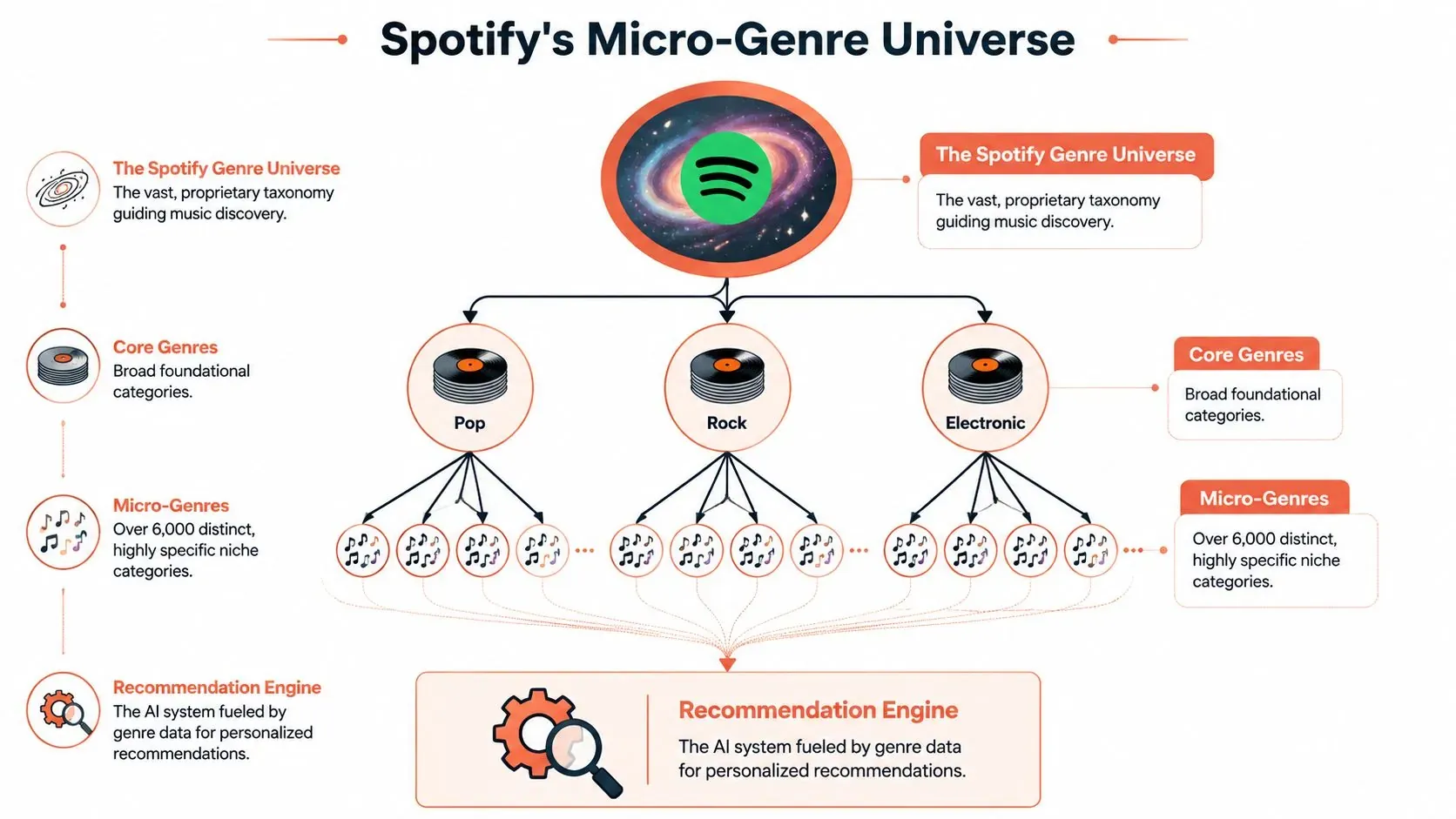
Spotify doesn’t run on broad genres. It runs on a genre graph. Spotify assigns genres at the artist level, not the song level, and that system now spans more than 6,000 micro-genres such as bedroom pop, dark ambient, stomp and holler, and permanent wave, according to Rigtch.fm’s analysis of Spotify genre stats. If you’re treating genres on spotify like a cosmetic label, you’re missing the mechanism that decides who gets recommended to whom.
That distinction matters because genre identity affects discovery, playlist targeting, and how Spotify interprets audience overlap. The artists who grow consistently usually stop asking, “What genre am I?” and start asking, “What genre pathways is Spotify placing me inside?”
Decoding the Spotify Genre Universe
Spotify’s genre system works like routing infrastructure for discovery. Broad labels such as pop, rap, indie, or electronic help humans describe music. Spotify’s internal genre structure does a different job. It groups artists into narrow clusters that influence who gets recommended to whom, which adjacent acts you get associated with, and where your catalog has a realistic shot at surfacing.
Artist genres are not song genres
Spotify attaches genre identity to the artist profile, then uses that identity across recommendation systems. That changes the strategic question. The goal is not just to release a strong song. The goal is to make sure Spotify places your artist in the right neighborhood of listeners, playlists, and comparable acts.
A bad fit creates drag fast.
If your profile gets grouped too broadly, you compete in overcrowded pools. If it gets grouped under the wrong niche, Spotify can send your music to listeners who skip quickly, which weakens future recommendation potential. In practice, genre tags function more like routing metadata than display labels.
Genre is different from mood and use case
Genre, mood, and listening context solve different classification problems. Artists blur these signals all the time in pitches and release plans, then wonder why playlist targeting underperforms. Spotify does not treat “bedroom pop,” “chill,” and “study” as interchangeable.
| Signal type | What it describes | Example |
|---|---|---|
| Genre | Musical lineage and adjacency | bedroom pop |
| Micro-genre | Narrow niche position inside a broader cluster | permanent wave |
| Mood or activity | Listening context | chill, workout, focus |
This distinction affects execution. Mood playlists can drive short-term streams. Genre alignment does more to shape how Spotify categorizes your audience and connects you to adjacent artists over time.
Messy taxonomy creates opportunity
The complexity of Spotify’s genre ecosystem gives prepared artists an edge. Clean branding language is useful for fans, press, and bios. Discovery systems respond better to specificity.
That is why artists should audit the signals around each release, especially their music metadata across DSPs, credits, and release assets. The closer your release package matches the audience and artist cluster you want, the easier it is to pitch the right curators, choose realistic comps, and avoid sending mixed signals into Spotify’s classification systems.
At artist.tools, we treat genre research as an engineering problem. The useful question is not “what should I call this song?” It is “which genre cluster gives this release the highest probability of reaching the right listeners?” Artists who answer that question well usually make better playlist choices, tighter comp selections, and stronger release plans.
How Spotify Assigns Your Genre
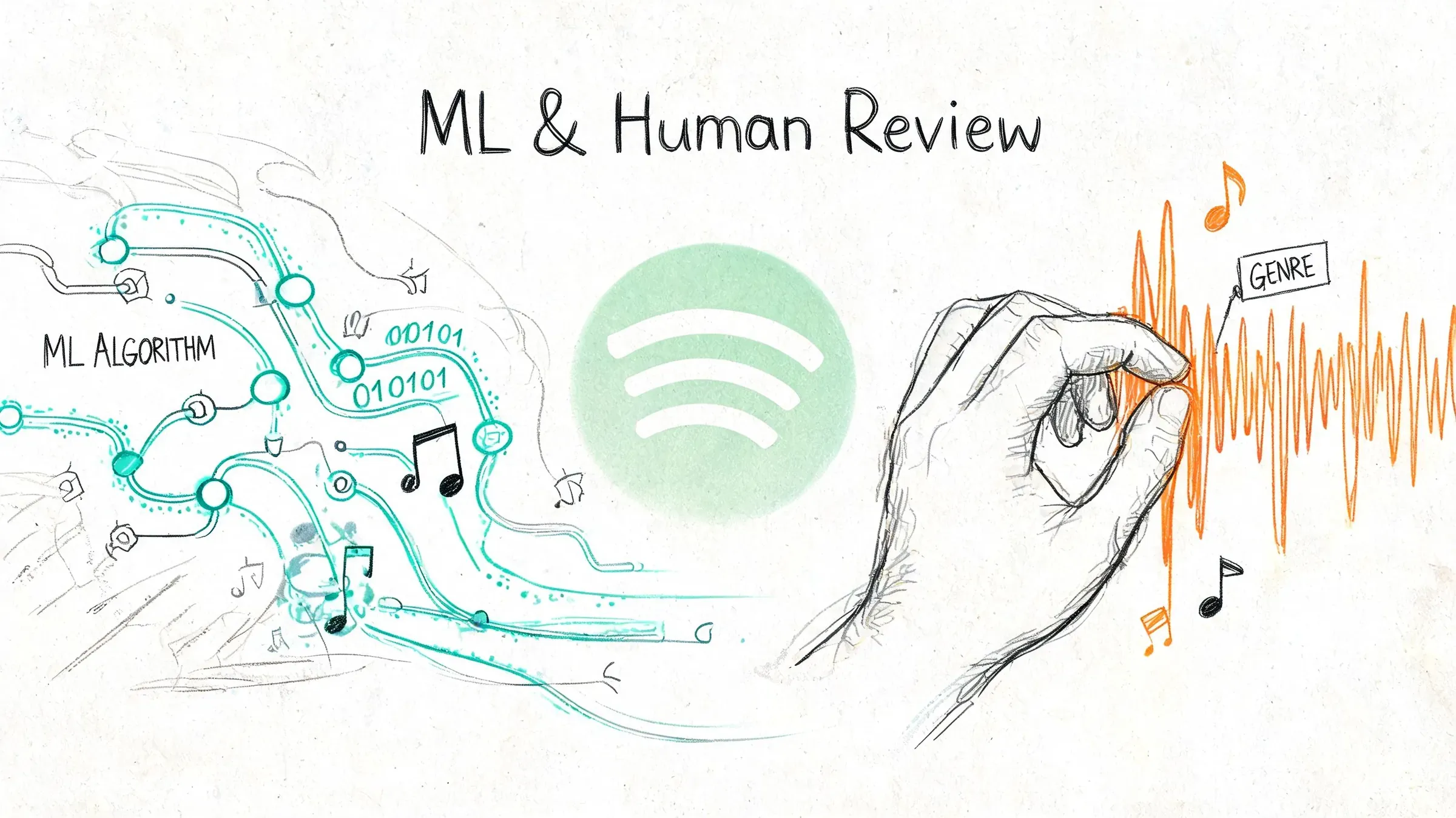
Spotify assigns genre by pattern matching across signals. Artists can influence those signals, but no one selects a genre from a dropdown and locks it in. The platform classifies releases from the materials surrounding the music and the behavior that music tends to attract.
The system reads more than the song title
Genre assignment usually starts with the release package, not your self-description. Audio matters first. The track exposes tempo, timbre, vocal density, rhythmic profile, and other measurable traits. Lyrics, artwork, artist framing, collaborator history, and release metadata add context around that core signal.
This is why genre mistakes often start upstream. An artist may describe a song one way in a pitch, package it another way in metadata, and deliver production choices that point somewhere else entirely. Classification systems handle that conflict by weighting the evidence they can measure.
The practical takeaway is simple. Spotify is not reading one field and trusting your label.
The features that matter are measurable
The strongest genre clues are often audible and machine-readable. Energy, danceability, speechiness, acoustic character, and related features give classification systems a clean way to separate one cluster from another. If a track is speech-forward, high-energy, and built around rhythmic patterns common in rap-adjacent releases, the platform has stronger evidence from the audio than from a vague artist bio.
That creates a real trade-off for artists experimenting across scenes. Creative range is fine. Mixed signals inside a single release campaign usually hurt more than they help.
At artist.tools, we see this in genre research all the time. The artists who earn cleaner classification usually present a tighter combination of sound, visuals, comps, and metadata than artists chasing a broader identity on release day.
What you can control before release
You cannot force a genre tag, but you can improve the odds of accurate placement. Start with consistency across the assets Spotify and its surrounding systems can evaluate:
- Audio coherence: Make sure the production matches the audience you want to reach.
- Comparable artists: Use comps based on shared listeners and playlist adjacency, not personal inspiration alone.
- Metadata discipline: Keep your release description, artist bio, credits, and pitch language aligned with the actual record.
- Visual framing: Artwork and promo assets should support the same scene and listener expectation as the music.
Artists who skip this work usually create classification drag. The song may still connect, but Spotify gets a weaker read on where to test it.
If your release stack is messy, fix that before you worry about playlist pitching. This music metadata guide for artists and labels covers the release fields and asset choices that shape how platforms interpret your catalog.
Clean metadata does not guarantee the genre you want. It does make it easier for Spotify to build the right profile around your music.
The Algorithmic Impact of Genre Tags
Genre tags shape distribution inside Spotify’s recommendation surfaces. Once an artist is classified, that genre identity becomes part of the logic Spotify uses to connect artists, playlists, and listeners with adjacent taste patterns.
The practical effect is easiest to understand through listener profiles. When someone listens to your catalog, Spotify doesn’t just record a stream. It updates that listener’s genre distribution based on the artists they engage with. That profile then influences what appears in Daily Mixes, Radio, and other recommendation environments.
Discovery happens through adjacency
Spotify grows audiences by moving listeners through neighboring genre clusters. If a listener engages heavily with one micro-genre, the platform can introduce nearby categories that fit the same taste neighborhood. That’s why a correct genre identity increases discoverability and a muddy one often stalls it.
This is also why many artists misdiagnose weak algorithmic reach. They assume the song didn’t connect. Sometimes the bigger issue is that Spotify doesn’t know which audience cluster should receive it next.
A useful mental model is a bridge, not a shelf. Your genre tags don’t just describe where you belong. They determine which adjacent audiences Spotify can test you against.
Algorithmic playlists reward fit, not aspiration
Spotify’s recommendation system responds better to alignment than ambition. Artists often try to position themselves toward a larger genre because the audience is bigger. That can backfire if the actual track sits in a narrower lane.
For example, calling a niche rap release “pop” for reach doesn’t help if the underlying signals point elsewhere. A cleaner strategy is to build from the nearest real audience and let adjacency expand outward. That approach tends to produce better curator matching and better algorithmic continuity.
Your best growth path usually starts with the smallest audience that instantly understands the record.
If you need a working breakdown of where algorithmic exposure meets playlist placement, this overview of Spotify playlist recommendations is a useful complement to genre research.
A Strategic Workflow for Leveraging Genres
Genre strategy works when it becomes an operating system for release planning. Artists who treat genres on Spotify as static branding usually miss better playlist targets, weaker-fit keywords, and adjacent scenes that could convert faster. The practical approach is to review genre fit before each release, then adjust based on where the track gains traction.
Start with an audit, not a story
Begin with the language the market already uses for your sound. Check your Spotify profile, close comps, playlist titles, playlist descriptions, and artist bios inside the same audience cluster. The goal is not to defend your preferred label. The goal is to find the terms that repeatedly appear around artists who pull the same listeners.
Market evidence beats internal positioning.
Build a comparison set and look for:
- Repeated genre labels across similar artists
- Playlist clustering around the same niche terms
- Search language fans and curators use consistently
- Genre conflicts where your branding points one way and the surrounding ecosystem points another
A short list is enough if the patterns are clear. Five strong comps usually tell you more than a broad list of aspirational peers.
Research demand and competition together
A genre is useful only if it connects to listener intent and playlist supply. Spotify may recognize a huge range of niche categories, but that does not mean each one creates a real discovery path, as noted in PopMatters’ discussion of Spotify’s music map and fragmented genre field.
Artists waste time finding a micro-genre that feels accurate, then discover that listeners rarely search it or that the playlist pool is too thin to matter. The opposite problem also shows up often. A genre can have heavy search interest but such intense curator competition that a small artist gets buried.
Research both sides at once:
- Demand: Are people searching the term or close variants?
- Supply: Are there enough active playlists and curators in that lane?
- Quality: Are those playlists healthy, relevant, and worth pitching?
- Fit: Does your track sound native in that category?
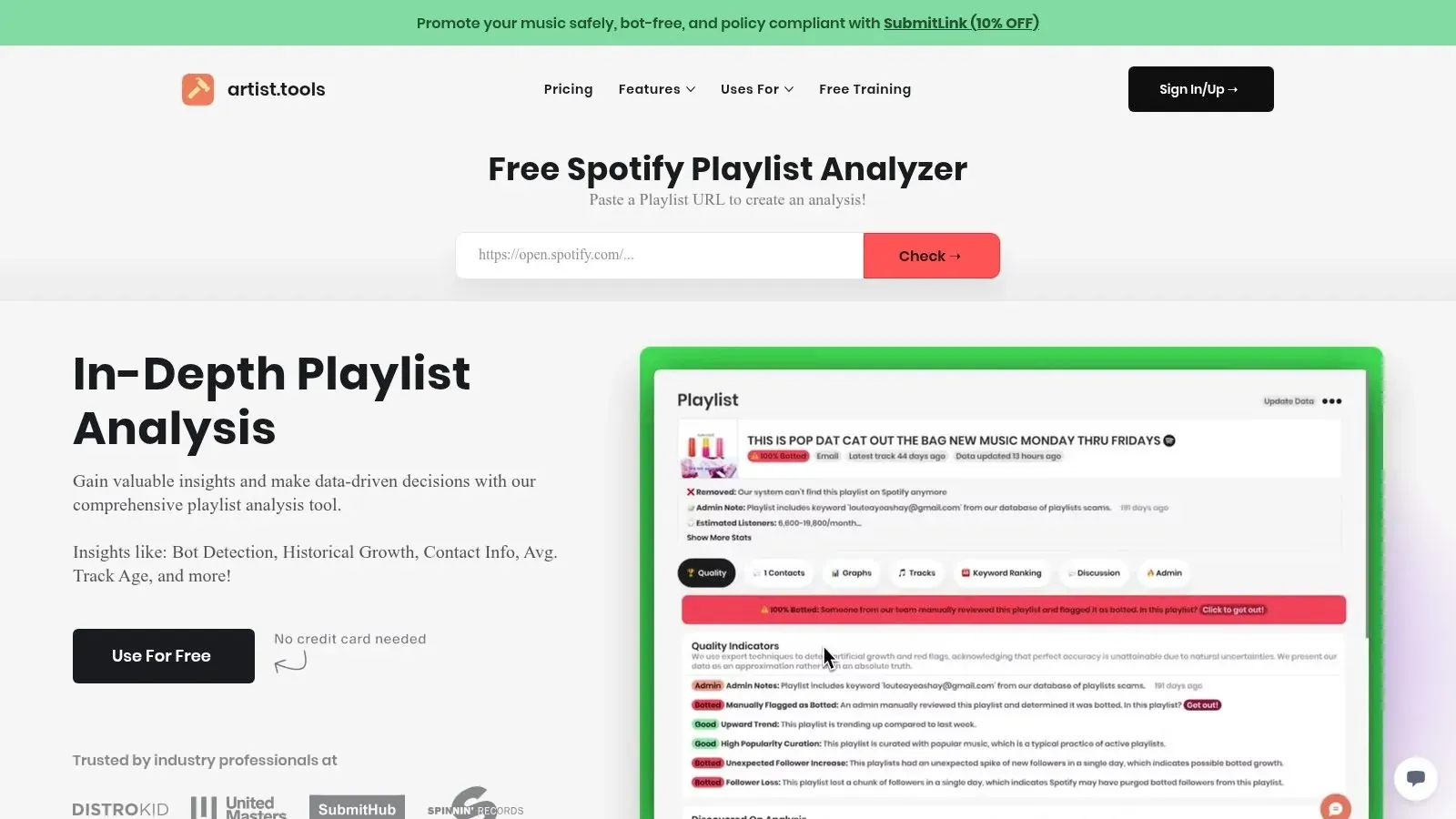
At this stage, tooling matters. artist.tools’ guide to Spotify promotion for artists pairs well with workflow features like Playlist Search, Keyword Search, Autocomplete, Playlist Analyzer, and Bot Detection, which help surface search behavior, curator competition, and playlist quality inside specific genre pockets.
Build a target list by micro-genre role
Each playlist should have a job. Some playlists help define the lane. Some are pitch targets. Some are better used as research inputs because their track history shows what belongs in that niche and what does not.
A working target list should separate playlists into roles:
| Playlist role | What you use it for | What to check |
|---|---|---|
| Benchmark playlists | Define the lane | Repeated artist and genre patterns |
| Outreach playlists | Direct pitching | Curator contact path and fit |
| Search leaders | Keyword strategy | Which playlists rank for genre terms |
| Algorithmic clues | Similarity mapping | Which adjacent sounds show up repeatedly |
This keeps your campaign focused. A smaller playlist with clean fit and believable listener behavior can outperform a larger one that sends weak signals or attracts the wrong audience.
Vet integrity before you pitch
Micro-genre playlists need tighter screening. Niche scenes often have less curator transparency, more inconsistent quality, and a higher chance of inflated numbers. That is especially true in fast-forming subcultures where playlist creation moves faster than oversight.
Before outreach, check whether a playlist is worth touching at all:
- Follower pattern: Sudden jumps or odd growth curves deserve scrutiny.
- Listener plausibility: Big follower counts with little evidence of real engagement can be misleading.
- Track history: Constant churn may signal weak retention or low curator discipline.
- Curator credibility: Anonymous or unreachable curators raise the risk.
A playlist can look attractive in a search result and still hurt a campaign if the audience is artificial or the curator network is low trust.
Reassess after release
Release week is the midpoint, not the finish line. Watch which playlists respond, which search terms line up with activity, and which adjacent artists begin appearing around your profile and listener pathways.
Then adjust.
If the release starts clustering in a neighboring micro-genre, update your targeting, your pitch language, and your comp set. Artists who grow through Spotify’s genre system do not stay loyal to an outdated label. They use the feedback loop, tighten the category, and keep building from the lanes that produce real discovery.
Genre Strategy in Action A Case Study
The clearest current example is hip-hop and phonk. In 2025, those two genres accounted for approximately 30% of all global Spotify streams, and Google Trends data from March 2025 to February 2026 showed hip-hop maintaining the highest normalized search interest through the period, according to Accio’s report on the most popular music genres on Spotify in 2025.
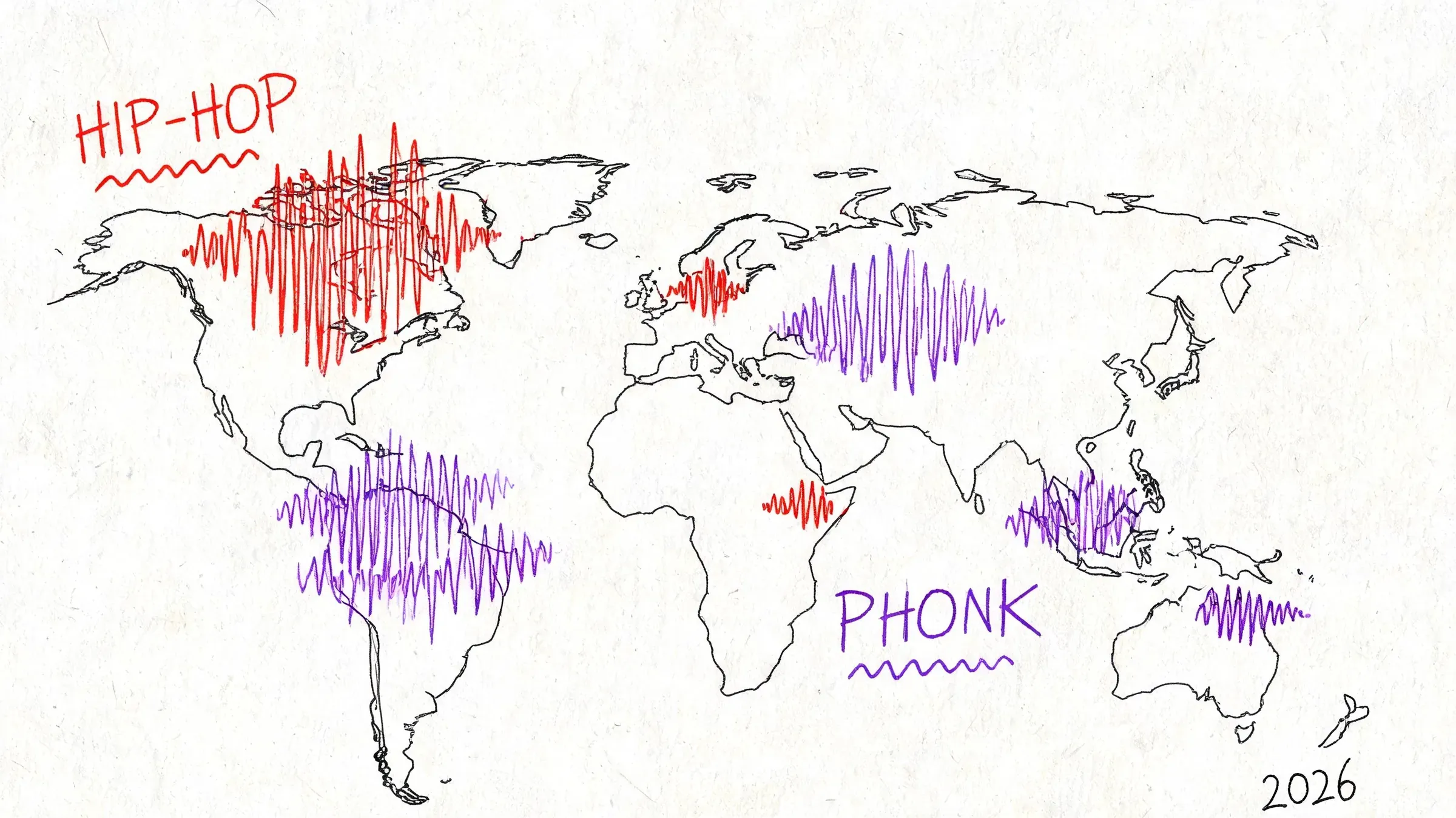
That kind of dominance changes strategy. In a high-attention lane, the question isn’t whether demand exists. It’s how narrowly you need to define your lane to avoid disappearing inside a crowded category.
Emerging phonk artist
A phonk artist shouldn’t market into “hip-hop” as a default if the actual opportunity sits one layer down. The better move is to map the active vocabulary around the release. Which sub-niche terms recur in playlists, playlist titles, artist bios, and search suggestions? Which comparable artists are clustered together repeatedly?
In a crowded ecosystem, broad language usually creates broad competition. A more precise micro-genre position gives you a sharper set of playlists, a tighter comparable-artist list, and clearer curator targeting. That also makes editorial pitching cleaner because your story becomes easier to place.
The workflow tends to look like this:
- Audit peer artists inside phonk-adjacent lanes.
- Isolate the recurring niche descriptors attached to those artists and playlists.
- Identify playlists that rank around those descriptors.
- Filter out playlists with weak integrity signals.
- Pitch the lane, not the broad category.
In a large genre, precision is your defense against invisibility.
A quick visual example of how genre narratives spread across listener culture is worth watching below.
Smaller niche artist
A smaller niche artist faces the opposite problem. Demand is narrower, but competition can also be lighter and the audience fit can be stronger. In that environment, success doesn’t require breaking into the biggest possible category. It requires owning a clearly defined lane and repeatedly showing up where that audience already listens.
The practical trade-off looks like this:
| Artist type | Main opportunity | Main risk |
|---|---|---|
| Phonk or hip-hop adjacent | Large listener demand | Intense competition and noisy playlist landscape |
| Deep niche micro-genre | High fit and clearer identity | Smaller search universe and fewer curators |
That’s why one genre strategy never fits all artists. A release in a dominant market should narrow aggressively. A release in a small niche should maximize relevance and consistency.
The useful common thread is this. Both artists win by matching real listener behavior, not by choosing the most flattering genre label.
Take Control of Your Genre Identity
Genres on spotify shape distribution. They influence which playlists review your track, which listeners the recommendation system tests first, and which artists Spotify treats as your peers. Artists who manage that identity with intent usually get cleaner signals and better discovery opportunities.
Treat genre as a system you can configure. Start with how Spotify currently groups your catalog and which adjacent artists keep appearing around your tracks. Then compare that picture to the market you actually want to win. The gap between those two views is where strategy lives.
A useful genre position does three things at once. It gives listeners a clear expectation, gives curators an obvious programming fit, and gives Spotify enough context to route your music into the right recommendation pools.
That requires trade-offs. Broad genres offer larger audience pools but heavier competition. Narrow genres can improve fit and conversion, but they often come with fewer credible playlists and less room for error if you target the wrong lane. Strong teams account for both sides before a release goes live.
Integrity matters here too. As noted earlier, some niche playlist clusters are more exposed to manipulation and low-quality curator behavior. A playlist that matches your genre on paper can still damage your campaign if its audience is inflated or inactive. Check follower patterns, audience quality, and curator history before you pitch or accept placement.
Don’t ask whether Spotify assigned the perfect genre. Ask whether your current genre position gives the algorithm, curators, and listeners a clear reason to connect your music to the right audience.
The artists who grow treat genre as operating infrastructure. If you want to turn genre research into a repeatable release process, artist.tools gives you a practical way to inspect playlist integrity, research search-driven genre terms, study curator competition, and track how your Spotify ecosystem changes over time.