
7 Spotify Pitch Example Templates That Actually Work
Steal our 7 Spotify pitch example templates. Learn to write compelling pitches with data, unique hooks, and promo plans to get on editorial playlists.
9
- 1. The Artist Story + Data-Driven Pitch Template
- 2. The SEO + Keyword-Optimized Pitch Template
- 3. The Collaborative Pitch + Curator Network Template
- 4. The Bot-Free Authenticity + Trust-Building Pitch Template
- 5. The AI-Generated + Data-Backed Editorial Pitch Template
- 6. The Geographic + Market-Specific Pitch Template
- 7. The Micro-Moment + Trend-Riding Pitch Template
- Spotify Pitch Templates, 7-Point Comparison
- Your Next Spotify Pitch. A Winning Checklist
More than wording is at stake here. Spotify only runs the full editorial review process for unreleased tracks pitched through Spotify for Artists at least 7 days before release, and the written pitch is capped at 500 characters. That constraint and that deadline demand a different writing style.
A strong spotify pitch example reads like a tight market signal. Editors scan fast, so the pitch needs to tell them what the song sounds like, where it fits, and why it has a real audience case behind it.
Generic descriptors waste space. A line like “blends intimate acoustic storytelling with soft alt-pop” does more work than vague praise because it gives an editor immediate playlist context. The best pitches go one step further and support that context with evidence. Search terms, clean audience growth, geo traction, collaborator overlap, and timing all help explain why a track belongs in a specific listening environment.
That is where artist.tools becomes useful in practice. It helps artists verify playlist fit, check whether growth patterns look credible, spot market signals, and write pitches around actual listener behavior instead of guesswork.
The examples in this guide are built around that standard. Each one is a practical framework tied to how Spotify’s editorial and algorithmic systems sort for relevance, trust, and listener match.
1. The Artist Story + Data-Driven Pitch Template
The strongest artist-story pitch doesn’t tell your whole history. It connects one memorable personal angle to evidence that listeners are already responding. Inside Spotify’s small pitch field, that combination works better than a dramatic origin story with no proof attached.
Jesse Cannon’s breakdown of the format is useful here. He recommends leading with the strongest “what makes you exciting” statement first, then adding short proof points and a concrete promotion plan, all within Spotify’s tight pitch field, while using micro-genre language that improves fit signaling to editors in a limited space, as explained in his editorial pitching walkthrough on YouTube.
Lead with the angle, not the autobiography
A practical version sounds like this:
Indie-folk artist from Manchester. This single was written after a stretch of overnight care work and lands between intimate acoustic storytelling and soft alt-pop. Recent listener growth has been strongest in the UK and Germany, and our pre-release plan includes short-form performance clips, email, and fan-save push around release week.
That works because it gives an editor four things fast. Who you are. What the song feels like. Where traction is forming. How you’ll support the release.
Use tools to make that proof specific before you write:
- Check historical momentum: Use artist.tools Monthly Listeners Tracker to see whether your audience is rising steadily or just spiking around isolated events.
- Research adjacent playlist fit: Use Playlist Analyzer and Playlist Search to see which editorial playlists already support artists with a similar sound profile.
- Screen for clean engagement: If your profile has suspicious growth patterns, run artist.tools Bot Detection first so you don’t pitch a story that collapses under scrutiny.
A common mistake is leading with credentials that don’t change playlist fit. “I’ve been making music since childhood” tells an editor almost nothing. “This track is landing first with late-night acoustic listeners in two markets where similar artists are already overperforming” is much more useful.
2. The SEO + Keyword-Optimized Pitch Template
Editors sort songs into specific listening contexts fast. If your wording does not match the way Spotify playlists are titled, searched, and programmed, a strong record can still get passed over.
That is the job of SEO inside a Spotify pitch. It is not about stuffing keywords into a form. It is about describing the track with the same terms an editor already uses to map mood, activity, instrumentation, and audience intent.
Use playlist language people actually search
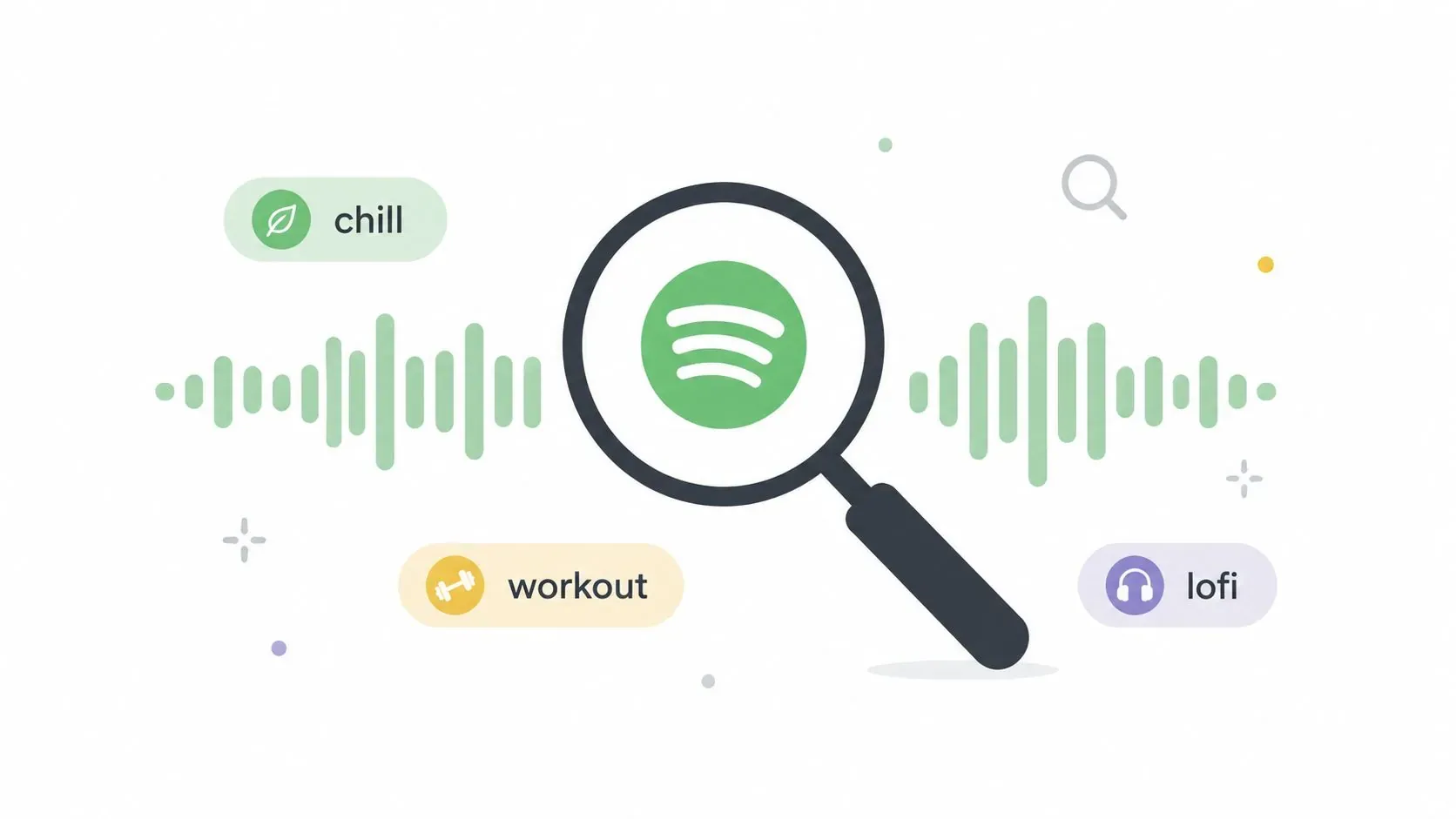
Vague wording kills precision. “Chill and emotional” could describe ambient, indie pop, piano ballads, or lo-fi. An editor cannot route that efficiently. “Melancholic piano ambient for sleep and deep focus playlists” gives a clearer programming lane, and that usually improves fit.
The strongest keyword pitches are built from actual playlist naming patterns, not artist self-description. I check Spotify search suggestions, current playlist titles, and adjacent artist placements before writing a single sentence. artist.tools supports that process with its guide on how to rank on Spotify, plus Keyword Search, Autocomplete, and Playlist Search Rankings. If you are validating whether your language matches real curator behavior, the platform’s research on Spotify playlist curators and how they categorize tracks is also useful.
A practical template looks like this:
- Primary fit: “Minimal ambient with soft piano and slow-build texture for sleep, deep focus, and calm night listening.”
- Context cue: “Produced as part of a no-drums music series built for low-distraction listening.”
- Promotion note: “Our release plan centers on creator content and playlist outreach tied to study and wind-down listening contexts.”
That kind of phrasing does two jobs at once. It helps an editor picture placement. It also signals that the campaign support matches the song’s likely use case.
One caution. Over-optimizing can make a pitch read like metadata instead of music. Keep the keywords, but make sure the emotional picture still comes through. Precision gets attention. Human clarity closes the gap.
3. The Collaborative Pitch + Curator Network Template
Collaboration only helps if it changes the audience logic of the release. A feature, producer credit, or cross-scene pairing should answer one question for the editor. Why does this track belong to more than one listening community without sounding forced?
Many managers grow complacent at this stage. They mention a featured artist as if the name alone should carry the pitch. Editors care more about what that collaboration creates sonically and which playlist ecosystems it can reasonably bridge.
Frame the collaboration as audience logic
A useful pitch can sound like this:
Alt-R&B single built around a UK garage drum feel, featuring a vocalist whose audience already responds to darker, late-night pop records. The track sits between moody electronic and vocal-forward R&B, which makes it a fit for crossover playlists rather than a single-genre lane. Both teams are coordinating short-form content and artist-to-artist audience handoff on release week.
That works because it frames the feature as a programming advantage, not a vanity mention.
When I build these pitches, I want answers to three research questions:
- Which curators already support both lanes: artist.tools Playlist Search can surface playlists that sit between adjacent genres instead of living in one strict bucket.
- What have those curators added recently: historical playlist changes matter because they show whether the curator is leaning more vocal, more electronic, more regional, or more emerging.
- Does the collaboration widen the release narrative: if the answer is no, leave it out.
For direct playlist ecosystem research, artist.tools also has a useful resource on Spotify playlist curators.
Don’t pitch “a collab.” Pitch the overlap between two listener habits.
A bad version says, “This track features Artist X, who has a strong following.” A better version says, “This record connects two adjacent audiences that already share late-night, groove-first listening behavior.” One is name-dropping. The other is programming logic.
4. The Bot-Free Authenticity + Trust-Building Pitch Template
A trust-building pitch is especially useful for emerging artists whose numbers are either modest or hard to interpret. If your profile shows clean growth, stable engagement, and no obvious artificial inflation, that can become part of the confidence signal even when you’re still early.
Curators, managers, and label teams all now view suspicious patterns differently. A weird spike without context can make a promising record look risky, even if the song itself is strong.

Trust signals matter when your numbers are small
A trust-first Spotify pitch example could read like this:
Dream-pop single with soft vocal stacks and a slow-burn chorus, built for intimate indie and nighttime mood playlists. Audience growth around recent releases has come from organic saves, creator use, and repeat listening rather than paid traffic spikes. We’re supporting this release with performance clips, community content, and direct fan channels.
Notice what it does. It doesn’t overclaim. It reassures.
If you’re using artist.tools, this is the point where Bot Detection is practical, not promotional. Run the profile. If there are anomalies, understand them before you pitch. If your growth came from a real viral clip, a press moment, or a support slot, explain that context in plain language.
Useful trust cues to include:
- Organic growth pattern: Mention sustained audience movement, not one unexplained burst.
- Transparent promotion: State real actions such as creator content, fan pre-saves, email, or live support.
- Resolved issues: If you had past playlist problems or suspicious sources, address the cleanup briefly and move on.
Editors aren’t asking for a forensic report. They want to know the track is safe to support and the audience behind it is real.
5. The AI-Generated + Data-Backed Editorial Pitch Template
AI is good at compression. That makes it useful for Spotify pitching, because the format rewards concise structure more than literary style. But AI becomes a liability the second it starts inventing context, overstating momentum, or flattening your track into generic playlist language.
Cyanite describes the Spotify pitch as functioning more like a structured A&R memo than a press release, with attention on playlist fit and song-emotion alignment rather than broad storytelling, in its Spotify playlist pitching guide. That’s the right lens for AI too. Use it to organize information, not to replace judgment.
Use AI for compression, not fiction
Here’s a smart workflow. Start with real inputs only: genre, mood, lyrical theme, release context, promotion plan, and comparable artists. Then ask the tool for multiple versions with different emphasis, such as one that leads with mood, one that leads with scene context, and one that leads with listener use case.
artist.tools can fit naturally. Its Spotify editorial playlist submission guide supports the wider workflow, and the AI Editorial Pitch Generator can turn accurate track inputs into tighter draft language built around plausible editorial fit.
A simple before-and-after scenario shows the difference.
Before:
This is a unique song that blends multiple genres and tells my story in a powerful way.
After:
Melodic alt-pop with a restrained electronic build and reflective lyrics about emotional distance. Best fit is introspective pop and soft electronic playlists. Release support includes short-form acoustic clips, fan messaging, and content tied to the song’s lyric theme.
Here’s a quick demo format for this approach:

The trade-off is speed versus sameness. AI can help you generate drafts quickly, but every final pitch still needs a human pass. If it sounds like it could describe anyone, it won’t help you.
6. The Geographic + Market-Specific Pitch Template
Regional framing changes playlist fit fast. A track that reads as indie pop in one market can read as soft urbano, alt-R&B, or local crossover in another, depending on language, references, and listener behavior.
That matters because Spotify editorial teams are organized by market, and market teams often care about local context more than broad genre labels. Public pitching advice still skews Anglo-American, which leaves artists underprepared for Brazil, India, Nigeria, Mexico, Germany, and other markets where audience cues, scene references, and playlist naming conventions differ. The practical takeaway is simple. If a song is already getting traction in a specific territory, the pitch should reflect how listeners in that territory describe it.
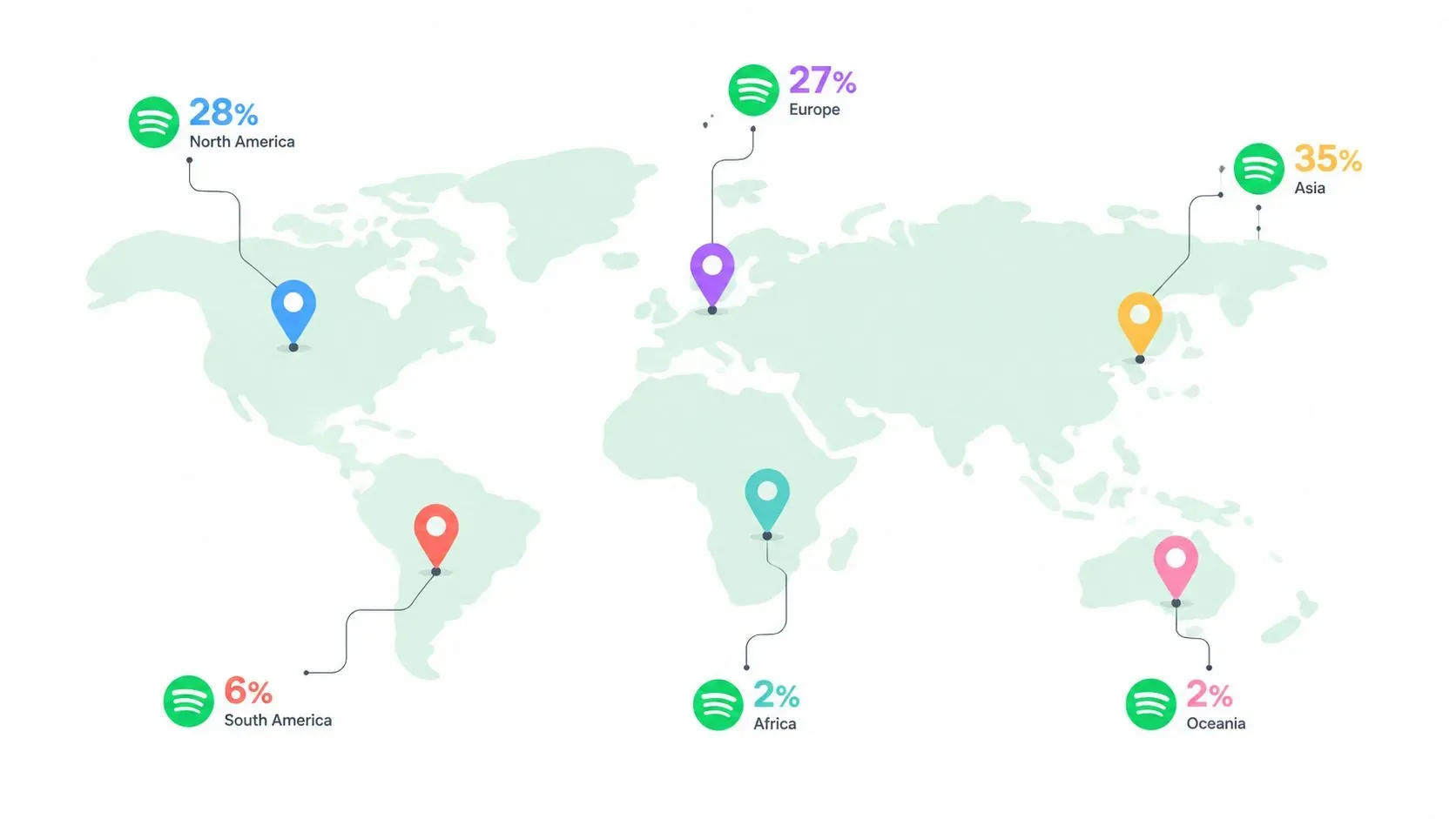
Local fit beats generic global wording
Strong geographic pitches keep the song consistent and change the framing. The core identity stays intact. The references, language, and market proof shift.
For a Spanish artist releasing an atmospheric pop record, a Latin market pitch might highlight lyrical phrasing, regional playlist terms, and early response from Spanish-speaking audiences. A broader European pitch for the same track could focus on mood, production detail, and crossover potential. Same song. Different editorial logic.
Use this framework:
- Regional signal: State where early listener response, saves, or follower growth is showing up first.
- Local language: Use genre terms, mood tags, and cultural references that match that market.
- Market activity: Mention region-specific promotion such as local creators, press support, live dates, or short-form content targeted to that audience.
A practical version sounds like this:
Dreamy Spanish-language pop with muted electronic production and intimate vocal phrasing. Early engagement is strongest in Mexico City, Bogotá, and Madrid, and the release campaign includes Spanish-language creator content and regional press outreach. Best fit is Latin alt-pop and mood-based editorial programming rather than broad global pop playlists.
That level of specificity helps an editor place the song faster.
artist.tools supports this workflow in a useful way. Monthly Listeners Tracker shows where attention is clustering by market. Keyword Search and Playlist Search Rankings help compare how playlist language changes across regions, so the pitch reflects actual listener and curator terminology instead of assumptions.
One trade-off is scale. Customizing market-by-market takes more time than sending one generic version, but generic wording usually strips out the exact context that makes a regional editor care.
7. The Micro-Moment + Trend-Riding Pitch Template
Trend riding only works when the song already fits the moment. You can’t force a cultural angle onto a track that has no natural connection to it. But when the match is real, timing and framing can make an editor pay attention faster.
This approach is especially strong for seasonal moods, return-to-routine listening, regional event windows, and sudden bursts in a search phrase or sonic aesthetic. The pitch should explain why the track belongs in that moment now, not eventually.
Move when the context is fresh
A practical example:
Warm lo-fi instrumental built for back-to-focus listening and low-intensity work sessions. The release lands as study and productivity listening picks up, and the visual rollout is built around desk, commute, and late-night routine content. The track fits calm concentration playlists more than general chill programming.
That’s much stronger than “perfect for any mood.”
Public guidance rarely addresses the follow-up problem after an early editorial win, but the verified brief highlights a useful strategic gap. Many artists know how to write an initial submission. Far fewer know how to pivot after a placement such as Fresh Finds without sounding repetitive or entitled. The smarter move is to weave the prior win into a new story about fit, not to dump credentials.
Use this trend template when:
- The listener use case is time-sensitive: back-to-school, summer drive, holiday comedown, late-night winter listening.
- Search language is shifting: Spotify auto-complete and keyword patterns can reveal fresh phrasing before it becomes stale.
- Your content plan supports the moment: if your rollout doesn’t visually or culturally match the trend, skip it.
Mentioning a previous editorial add only helps when it clarifies why this new song fits a different playlist lane.
The trade-off is speed. A micro-moment pitch has a shorter window, and if you wait too long, the angle goes flat.
Spotify Pitch Templates, 7-Point Comparison
| Template | Implementation Complexity | Resource Requirements | Expected Outcomes | Ideal Use Cases | Key Advantages |
|---|---|---|---|---|---|
| The Artist Story + Data-Driven Pitch Template | Moderate to high, requires assembling narrative + analytics | Streaming metrics, historical listener data, playlist analysis tools, time to compile | Humanized pitch with stronger editorial credibility and higher conversion when data supports story | Artists with established or growing audiences; singer-songwriters, indie acts | Blends authentic narrative with verified metrics to demonstrate artistic and commercial fit |
| The SEO + Keyword-Optimized Pitch Template | Moderate, requires SEO knowledge and keyword mapping | Keyword research tools, Spotify search data, competitive keyword analysis | Improved discoverability and algorithmic alignment; data-backed justification for placement | Niche/emerging genres and tracks targeting search-driven playlists | Aligns pitching with Spotify search behavior and trending keyword opportunities |
| The Collaborative Pitch + Curator Network Template | High, involves relationship building and coordinated outreach | Curator contact data, playlist ecosystem research, coordination time | Strong curator buy-in, sustained playlist support, higher engagement | Labels, managers, artists pursuing collaborations or cross-promo strategies | Creates mutual value with curators and builds long-term relationships |
| The Bot-Free Authenticity + Trust-Building Pitch Template | Low to moderate, mainly verification and transparent reporting | Bot-detection scans, engagement benchmarks, historical growth charts | Increased trust and potentially higher add rates; reduced risk of removals | Artists needing to prove legitimacy; labels emphasizing catalogue integrity | Directly addresses curator concerns about artificial streaming; builds credibility |
| The AI-Generated + Data-Backed Editorial Pitch Template | Low for users but requires accurate inputs and review | AI pitch generator, playlist search, keyword and marketing input data | Rapid, scalable pitch creation with data-backed targeting; A/B testable variations | Managers/labels pitching many tracks; artists needing fast, consistent output | Fast scalability and consistent quality; reduces time and writer’s block |
| The Geographic + Market-Specific Pitch Template | High, requires per-market customization and localization | Geographic listener analytics, regional keyword research, localized marketing plans | Higher regional relevance and better placement chances in target markets | Artists expanding internationally or with market-specific listener pockets | Tailors messaging to local tastes and uncovers emerging regional opportunities |
| The Micro-Moment + Trend-Riding Pitch Template | Very high, needs real-time monitoring and rapid execution | Real-time search suggestions, trend velocity tools, rapid outreach capability | Fast editorial decisions and potential featured placements when timed correctly | Time-sensitive releases, seasonal tracks, viral/TikTok-driven promotions | Capitalizes on emergent trends for prioritized, time-sensitive editorial placement |
Your Next Spotify Pitch. A Winning Checklist
A strong Spotify pitch example does three jobs at once. It tells an editor what the track is, where it fits, and why this release deserves attention now. If one of those pieces is missing, the pitch usually reads like either a diary entry or a metadata dump.
The operational constraints should shape your writing from the start. Spotify requires the pitch to be submitted through Spotify for Artists, and the full editorial review process only opens when the unreleased track is submitted at least seven days ahead of release, with the pitch field limited to 500 characters, as noted earlier through Spotify’s official guidance. Those limits reward compression, not cleverness.
Before you submit, pressure-test the pitch against four standards:
- Specific fit: Name the mood, micro-genre, or listener use case clearly enough that an editor can picture the playlist environment.
- Credible context: Include proof that means something, whether that’s regional traction, a clean collaboration angle, or a real promotion plan.
- Authentic growth: Don’t inflate. If there’s a strange spike on your profile, understand it first and explain it if needed.
- Release alignment: Your pitch, metadata, visuals, and promo rollout should all describe the same record.
The biggest writing mistake is treating the pitch like a press release. Editors don’t need a grand statement about your artistry. They need a fast, believable reason to slot your song into a listening experience their audience already understands.
That’s why data tools matter. Not because numbers magically get you playlisted, but because they help you stop guessing. artist.tools is one option that can help with playlist research, Spotify SEO research, market analysis, historical listener tracking, bot detection, and AI-assisted pitch drafting. Used well, those tools sharpen your angle before you ever type into the Spotify for Artists box.
Write shorter than feels comfortable. Be more precise than feels poetic. And make every word earn its place.
If you want to build your next Spotify pitch with stronger research behind it, artist.tools can help you analyze playlist fit, track listener history, monitor bot risk, research Spotify search behavior, and draft tighter editorial submissions from real release data.