
10 Cumbia Music Artists to Study on Spotify
Explore 10 essential cumbia music artists, from classic pioneers to modern innovators. Get Spotify data, track analysis, and playlisting insights.
Los Ángeles Azules have 16.5 million monthly listeners and 8.9 million followers on Spotify, according to Music Metrics Vault’s cumbia rankings. That single data point kills the lazy idea that cumbia is only a heritage genre. It’s a live commercial format with artists operating at major streaming scale.
Cumbia also has unusual structural strength. Marca País Colombia identifies it as Colombia’s national dance and ties the genre to a standing circuit of recurring institutions and festivals, from the José Barros National Cumbia Festival to Barranquilla Carnival, while naming songs like “La Pollera Colorá,” “La Piragua,” and “La Cumbia Cienaguera” as core identity markers in the canon, as detailed in Colombia’s official cumbia overview. For musicians and curators, that matters because genres with durable offline rituals usually generate durable catalog behavior online.
The other reason cumbia deserves close Spotify analysis is that it doesn’t travel in one form. Mexico built its own long-running market, Argentina turned the sound into a dominant streaming format, and micro-scenes shaped by migration keep producing new local hybrids. The cumbia music artists worth studying aren’t just popular. They show distinct models for playlist fit, geographic expansion, catalog endurance, collaboration lift, and search positioning. That’s where Spotify data becomes useful as strategy rather than trivia.
1. Juan Luis Guerra
Juan Luis Guerra is worth studying because cumbia success often comes from adjacency, not purity. Even when listeners first reach an artist through merengue, bachata, or Latin pop, cumbia-compatible rhythm, instrumentation, and audience overlap can pull that artist into parallel playlist ecosystems.
That’s the first practical lesson for legacy Latin acts. Don’t force a single-genre identity if your audience discovers you through multiple listening contexts. On Spotify, cumbia isn’t isolated. It overlaps with tropical, romantic Latin, dancefloor catalog, and heritage playlists.
What to reverse-engineer
Use Guerra as a template for cross-category packaging. An artist with broad Latin recognition can map songs into different playlist buckets, then compare how each bucket affects saves, stream durability, and repeat discovery.
- Audit playlist spread: Check whether tracks land in cumbia-facing playlists, broader tropical playlists, or nostalgia playlists. Different buckets often produce different retention patterns.
- Track seasonal peaks: Legacy artists often spike around holidays, family gatherings, and year-end listening windows. Monthly Listeners Tracker is useful here because it shows whether growth comes from one-off press moments or recurring seasonal behavior.
- Study catalog framing: Song positioning matters. Catalog tracks presented as classics behave differently from tracks pushed as rediscoveries.
A curator can use the same logic in reverse. If a Guerra-adjacent track performs well in mixed tropical playlists, it may belong in cumbia playlists with broader emotional or regional framing, not just strict genre tagging.
For artists building this kind of bridge, artist.tools is most useful when you compare playlist categories instead of treating “cumbia” as one lane. The clearest listening primer for that broader genre context is this breakdown of cumbia’s defining songs on Spotify.
2. Grupo Mania
Grupo Mania matters because cumbia and merengue have always competed and collaborated in the same listener sessions. A club-oriented act doesn’t need to abandon traditional rhythm DNA to work on Spotify. It needs to understand where dance utility, familiarity, and catalog recognition intersect.
The strategic question isn’t whether an act is “traditional enough.” The strategic question is whether the tracks sit naturally inside playlists people use for energy, parties, and multi-generational listening. Grupo Mania represents that operating mode well.
How to study an act like this
For artists in the cumbia-merengue lane, Stream Tracker is the first place to look after a playlist add. Fast movement after placement usually signals that the track fits the playlist’s actual audience. Flat movement suggests the add may be cosmetic, or the audience may be skipping quickly.
Then move to bot risk. Legacy tropical artists often get added to low-quality playlists because their names are familiar and their catalogs are broad. That’s exactly why artist.tools’ Bot Detection and Playlist Analyzer matter. Growth only helps if the streams are organic enough to support long-term algorithmic trust.
A useful workflow looks like this:
- Watch track movement after each add: Don’t just collect placements. Measure whether the placement changes stream velocity.
- Separate cumbia playlists from Latin urban playlists: If a song performs better in one than the other, your metadata and outreach should reflect that distinction.
- Compare seasonal windows: Dance-driven tropical music often follows social-calendar behavior more than editorial-calendar behavior.
An artist manager can turn that into a release map. Run one campaign around party playlists, another around catalog nostalgia, and compare which lane drives sustained listening rather than a short burst.
3. Selena Quintanilla-Pérez
Selena remains one of the clearest models for cumbia crossover because she proves cultural identity can widen discovery instead of narrowing it. Her catalog sits at the intersection of Tejano, pop, regional Latin memory, and cumbia rhythm language. That combination gives curators more ways to place her and gives Spotify more contexts in which to recommend her.
Before the analysis, here’s the visual shorthand for that crossover legacy:
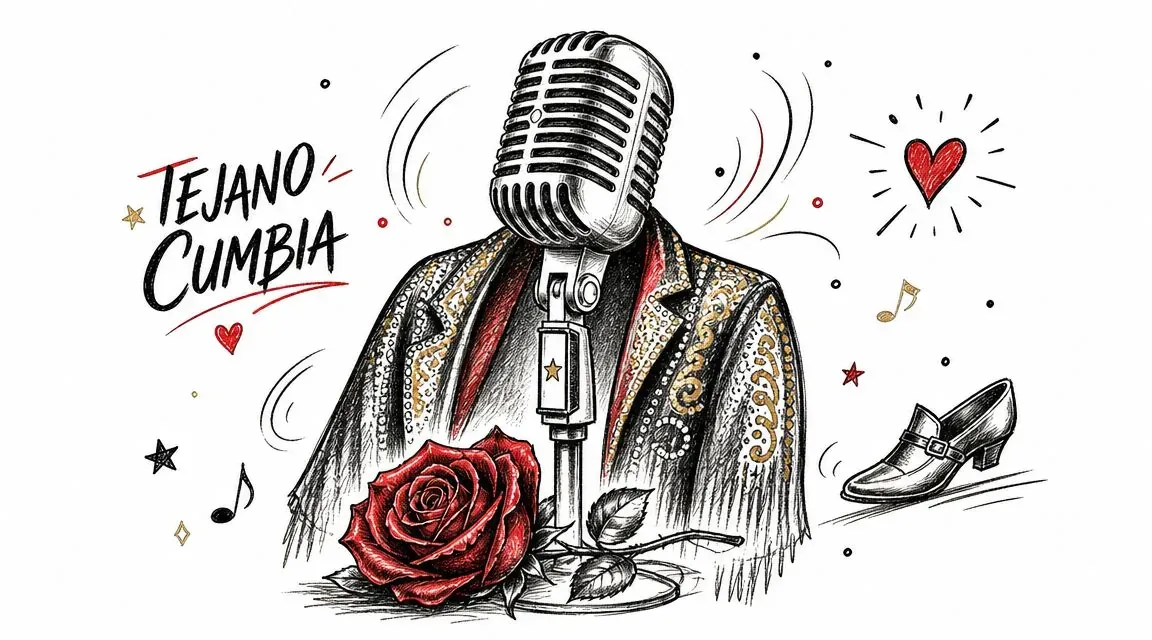
Legacy artists like Selena also teach a modern lesson about keyword discovery. Fans don’t always search by strict genre. They search by era, mood, identity, region, language, and adjacent forms. That means cumbia music artists with crossover catalogs should track where they surface for genre-adjacent terms, not only for “cumbia.”
Discovery is wider than genre tags
A catalog with this kind of reach should be monitored across editorial, mood, and cultural playlists. Historical Data and Press Coverage are useful because they help explain why a known catalog rises at specific moments, especially around anniversaries and renewed media attention.
That’s where artist.tools becomes more than a playlist database. Its keyword and historical layers help artists see whether discovery comes from “cumbia,” “Tejano,” “Latin classics,” or audience behavior that sits between all three. For a practical framework on Spotify’s genre architecture, this guide to how genres work on Spotify is the right companion.
Selena’s long-term streaming relevance comes from category overlap. The catalog can live in heritage, dance, nostalgia, and identity-based listening at the same time.
For curators, the implication is straightforward. If you build a cumbia playlist with no crossover literacy, you’ll miss some of the genre’s most durable engagement engines.
4. Willie Colón
Willie Colón is useful because he shows how instrumentation can carry cumbia influence even when the marketing label points elsewhere. His value as a study subject isn’t that he fits neatly into one genre box. It’s that his catalog demonstrates how salsa, jazz, and cumbia vocabularies share audiences.
That matters on Spotify because sonic texture often drives playlist fit as much as vocal branding does. Horns, percussion patterns, and arrangement style can pull a track into listening contexts where genre names become secondary.
What curators should examine
Start with playlist language. Search terms like “Latin jazz,” “salsa clásica,” and cumbia-adjacent regional tags often reveal where hybrid catalogs are active. Keyword Search is useful here because hybrid acts are usually misread when researchers only inspect one genre term.
Then study stream tails. Tracks with intricate musical elements often don’t explode fast, but they can hold attention longer in lean-back environments like dinner, classic Latin, or musicianship-focused playlists. Stream Tracker helps distinguish between short playlist spikes and slower, steadier accumulation.
A practical test for an artist working in this lane:
- Compare pop-forward tracks against arrangement-forward tracks.
- Check whether editorial jazz-Latin playlists outperform strict cumbia playlists.
- Look for long engagement tails instead of immediate release-week jumps.
That approach is especially important for curators building educational or heritage playlists. Colón-style crossover material can increase both depth and replay value if the sequencing respects rhythm flow rather than genre purity.
5. Tania Libertad
Tania Libertad shows why regional authenticity still matters in streaming. Cumbia’s digital life is transnational, but listening demand often remains locally coded. Accent, repertoire choice, phrasing, and song selection can determine whether a vocalist feels native to a regional scene or merely adjacent to it.
For a singer in the traditional lane, that means broad Latin branding isn’t enough. You need geographic clarity. If a track resonates most strongly in Peru, Colombia, or Venezuela, release assets and playlist targeting should reflect that reality instead of flattening the artist into generic “Latin.”
Regional specificity beats generic reach
artist.tools becomes valuable here through geography and search. Monthly Listeners Tracker can expose where an artist already has traction, while Playlist Search helps separate “cumbia peruana” opportunities from broader cumbia placements that may be less responsive.
This distinction matters because cumbia isn’t one market. Mexico News Daily describes the genre as an Afro-Colombian form that spread across Latin America into hundreds of local varieties and became the continent’s “musical backbone,” while also tying Monterrey’s cumbia rebajada directly to Colombian immigration and Colonia Independencia, as explained in its feature on cumbia rebajada. For musicians, the takeaway is commercial, not academic. Migration creates micro-scenes, and micro-scenes often create search terms, playlist clusters, and export pathways.
A vocalist like Libertad is the right case study for that dynamic. Study where traditional interpretation still converts into streaming demand, then build from those markets outward instead of chasing broad but weak visibility.
6. Ozomatli
Ozomatli belongs on this list because fusion acts often understand Spotify better than genre purists do. They have to. A band blending cumbia with hip-hop, funk, and alternative Latin scenes can’t rely on one playlist ecosystem to carry the campaign.
That makes Ozomatli a model for multi-lane pitching. If one track can credibly fit Latin alternative, world music, funk-forward, and cumbia-adjacent contexts, the release strategy should test all of them instead of assuming one identity wins.
Here’s a visual shorthand for that multi-scene energy:

Fusion artists need diversified playlist math
The right workflow starts before release. Use the AI Editorial Pitch Generator to test how the same song can be framed for different editorial categories. Then use Playlist Analyzer after release to see which categories drive stream movement.
Many fusion artists waste momentum by pitching the identity they prefer instead of the identity listeners recognize first.
Keyword strategy matters too. Search terms like “Latin hip-hop,” “Latin funk,” and “world music” can reveal discovery pathways that a cumbia-only campaign would miss. Ozomatli’s lesson is simple. The broader the sonic mix, the more disciplined the metadata and playlist testing need to be.
7. Grupo Aeromusica
Grupo Aeromusica is useful as a contemporary case because digital-first cumbia campaigns live or die on positioning, not just repertoire. Newer acts don’t have the advantage of legacy memory. They need to manufacture recognition through playlist fit, release framing, and repeatable search behavior.
That changes how an emerging artist should use Spotify data. Instead of asking whether the song is “good enough,” ask whether listeners know where to place it. If the answer is unclear, playlist conversion will be inconsistent.
What emerging artists should monitor first
Start with Monthly Listeners Tracker and Stream Tracker together. One shows the audience baseline. The other shows whether a specific song is changing it. A release that lifts streams without affecting the broader listener base may be too dependent on temporary placement.
Then model the economics. The Spotify Royalties Calculator won’t tell you what to make artistically, but it helps set realistic goals for traction, especially when an artist is deciding whether to prioritize broad low-intent streams or smaller but more responsive niche audiences.
Three smart uses of artist.tools for a modern cumbia-pop act:
- Use Playlist Analyzer to inspect contemporary cumbia playlists: follower count alone won’t tell you whether a placement is worth chasing.
- Use Spotify SEO Research to test keyword combinations: emerging demand often appears in hybrid phrases before it appears in obvious genre terms.
- Compare listener growth around content pushes: if audience movement follows social activity, tighten the release-content timeline.
Aeromusica-style artists should think like category builders. Spotify rewards clarity. If you can define your lane before the audience does, discovery gets easier.
8. Celia Cruz
Celia Cruz demonstrates catalog longevity better than almost anyone in Latin music. For cumbia-adjacent analysis, her importance isn’t limited to whether every listener files her under cumbia first. It’s that her catalog shows how pre-streaming legends remain competitive through cultural permanence, playlist reframing, and constant rediscovery.
That’s exactly why curators should study her. Heritage doesn’t automatically stream. It has to be organized, surfaced, and connected to current listening rituals.
Here’s the visual shorthand for that catalog durability:

Catalog strategy matters more than nostalgia
For legendary artists, Historical Data is often more useful than release-week metrics. It helps answer a better question: which playlists, search terms, and cultural moments keep pulling older recordings back into circulation?
Press Coverage matters too. Media references, tribute cycles, and cultural event coverage can trigger meaningful stream movement for legacy catalogs. Curators and managers should correlate those moments with playlist adds and follower behavior rather than treating every catalog bump as random.
A useful operating principle:
- Track when catalog songs resurface.
- Check which playlist categories caused the return.
- Use that information to sequence reissues, remasters, or anniversary campaigns.
Cruz’s lesson is sharp. Catalog doesn’t age out on Spotify if listeners still have a ritual use for it. The job is to identify that use and support it with better packaging.
9. Grupo Sombras
Traditional Colombian cumbia still has export relevance because the genre’s center of gravity hasn’t disappeared. It has multiplied. Grupo Sombras is a useful study subject for artists who want to preserve core instrumentation and regional identity without vanishing inside broader tropical playlists.
The key strategic point is this. Traditionalism works better when it’s precise. “Authentic” is too vague for Spotify. Geographic naming, subgenre labeling, and curator targeting are what make authenticity discoverable.
Use data to sharpen tradition
A Colombian-rooted act should separate “cumbia colombiana” research from mainstream cumbia research. Those are related but not identical ecosystems. Playlist Analyzer and Spotify SEO Research can show where regional curators outperform larger generic playlists in both fit and consistency.
Monthly listeners need context. A raw audience number says little unless you know whether it comes from local concentration, catalog longevity, or one temporary algorithmic lift. artist.tools’ explainer on what monthly listeners mean on Spotify is useful because it frames the metric as a signal, not a verdict.
Don’t chase scale before you understand concentration. A traditional act with strong regional density often has a better foundation than a broader act with weak listener commitment.
For Grupo Sombras-type artists, the smart move is to map regional playlist ecosystems first, then test expansion into broader Latin playlists once the home-market response is clear.
10. Grupo Gale
Grupo Gale closes the list because modern tropical cumbia lives or dies by regional routing. An act can feel big in one corridor of Latin America and still be underdeveloped elsewhere. That’s why geographic distribution matters as much as total demand.
The strongest evidence for that comes from Argentina. Spotify reports that cumbia has become the country’s most-streamed genre, with local cumbia streams up 237% since 2020, another 73% year over year in 2023, and an additional 15% in 2024. Spotify also says 7 out of 10 users in Buenos Aires listen to cumbia, and listening peaks at midday and again in December, according to Spotify’s Argentina cumbia report. For any tropical ensemble, those numbers point to a concrete playbook. Argentina isn’t just a cultural market. It’s a streaming priority market.
Regional routing should shape release planning
A band in Grupo Gale’s lane should inspect geographic monthly listeners first, then align playlist outreach and content timing to the strongest territories. If Buenos Aires is a likely demand center, lunch-hour playlist behavior and December campaign timing become practical considerations rather than generic scheduling ideas.
The same principle applies to keyword segmentation. “Cumbia tropical,” “cumbia mexicana,” and general “tropical hits” likely serve different listener intents. Researching them separately produces better curator targeting and cleaner metadata decisions.
One more thing stands out here. If a genre peaks in specific cities and time windows, curators can build more responsive playlists by sequencing around actual use cases instead of genre labels alone. That’s how tropical playlists move from broad category pages to high-retention listening products.
Top 10 Cumbia Artists Comparison
A curator comparing cumbia artists on Spotify needs more than genre labels. The practical variables are catalog age, crossover potential, release cadence, arrangement density, and how easily each act fits playlist contexts beyond core cumbia.
| Artist / Group | Implementation Complexity 🔄 | Resource Requirements ⚡ | Expected Outcomes 📊 | Ideal Use Cases 💡 | Key Advantages ⭐ |
|---|---|---|---|---|---|
| Juan Luis Guerra - Dominican Cumbia Pioneer | Moderate (layered arrangements and strong songwriting) 🔄 | High (large ensembles, premium production, international campaign support) ⚡ | High (broad reach across Latin pop, tropical, and catalog playlists) 📊 | Legacy playlist targeting, crossover campaigns, catalog reactivation 💡 | Layered arrangements, distinctive lyrics, durable multi-market appeal ⭐ |
| Grupo Mania - Modern Cumbia-Merengue Innovators | Moderate (dance-oriented production and tight live translation) 🔄 | Medium (studio production, club promotion, regional radio support) ⚡ | Good (strong fit for party, dance, and tropical playlists) 📊 | Dance playlist pitching, single-led campaigns, nightlife programming 💡 | High-energy recordings, strong rhythm identity, radio-friendly format ⭐ |
| Selena Quintanilla-Pérez - Cumbia-Tejano Crossover Queen | Moderate (genre blending anchored by vocal clarity) 🔄 | Medium (catalog packaging, anniversary marketing, editorial outreach) ⚡ | Very high (evergreen streams, repeat discovery, cross-generational reach) 📊⭐ | Cultural moment campaigns, catalog playlisting, crossover placement 💡 | Recognizable voice, strong emotional recall, proven crossover pull ⭐ |
| Willie Colón - Salsa-Cumbia Fusion Pioneer | High (fusion-led writing and complex arrangements) 🔄 | Medium (specialist players, niche audience targeting, heritage positioning) ⚡ | Solid (steady performance in salsa, jazz, and Latin history playlists) 📊 | Historical curation, fusion-focused playlists, musician-led discovery 💡 | Strong arranging identity, genre credibility, deep catalog value ⭐ |
| Tania Libertad - Cumbia Vocalist Extraordinaire | Moderate (voice-first interpretations with consistent stylistic framing) 🔄 | Medium (regional campaign support and steady catalog maintenance) ⚡ | Steady (reliable regional listening and long-tail engagement) 📊 | Regional playlist curation, audience retention campaigns, heritage programming 💡 | Vocal precision, strong regional resonance, long career span ⭐ |
| Ozomatli - Modern Cumbia-Latin Hip-Hop Fusion | High (multi-genre coordination and arrangement-heavy production) 🔄 | Medium-High (larger creative teams, cross-genre marketing, live content support) ⚡ | High (wide demographic reach and playlist access across adjacent genres) 📊 | Alternative Latin campaigns, cross-genre playlist pitching, festival-related pushes 💡 | Stylistic range, live reputation, strong crossover utility ⭐ |
| Grupo Aeromusica - Contemporary Cumbia-Pop Innovators | Low (streaming-oriented production and fast digital packaging) 🔄 | Medium (social content, release planning, collaboration outreach) ⚡ | Good (algorithmic pickup and playlist compatibility) 📊 | Digital-first release schedules, social amplification, collaboration campaigns 💡 | Streaming-friendly production, modern positioning, efficient release model ⭐ |
| Celia Cruz - Salsa-Cumbia Legend with Streaming Longevity | Moderate (catalog organization and remaster planning) 🔄 | High (catalog management, heritage PR, audio restoration work) ⚡ | High (consistent catalog discovery and event-driven listening spikes) 📊⭐ | Heritage playlist curation, remaster campaigns, cultural calendar programming 💡 | Iconic brand recognition, deep catalog, reliable discovery appeal ⭐ |
| Grupo Sombras - Colombian Cumbia Traditionalists | Low (traditional arrangements with clear stylistic boundaries) 🔄 | Medium (regional promotion and authenticity-focused packaging) ⚡ | Steady (reliable regional playlist performance and strong niche retention) 📊 | Traditional cumbia playlists, cultural programming, purist audience targeting 💡 | Strong stylistic identity, regional trust, traditional music-led appeal ⭐ |
| Grupo Gale - Modern Tropical Cumbia Innovators | Moderate (current tropical production with consistent format discipline) 🔄 | Medium (regional promotion, regular releases, audience maintenance) ⚡ | Good (regional growth across tropical and cumbia playlist lanes) 📊 | Tropical playlist pitching, regional market campaigns, festival support 💡 | Consistent output, strong rhythmic profile, regional playlist fit ⭐ |
The comparison becomes more useful when you read it as a Spotify operations matrix, not a taste ranking. Selena, Celia Cruz, and Juan Luis Guerra are strongest for catalog-led discovery and cross-generational playlisting. Grupo Aeromusica and Grupo Gale fit a more repeatable release model, where steady output and digital packaging matter as much as brand legacy. Willie Colón and Ozomatli offer narrower but valuable upside. They travel well into adjacent listening environments, which helps curators who want cumbia connected to salsa, jazz, alternative Latin, or hip-hop rather than isolated inside one genre shelf.
For emerging musicians, the pattern is clear. Artists with broad Spotify potential usually win through one of three routes: catalog durability, crossover adjacency, or release consistency. If your project does not have a legacy catalog, the more practical path is to build for playlist compatibility and repeat release behavior. If you are curating, separate artists by listening function first, then by subgenre. That usually produces better retention than grouping every act under a single cumbia label.
Your Cumbia Strategy on Spotify
The biggest mistake artists make with cumbia is treating it as one market. The data says the opposite. Colombia remains the symbolic center, with institutional depth, canonical songs, and a standing festival ecosystem. Mexico developed a powerful transnational lane, and Los Ángeles Azules show that this lane can still reach top-tier streaming scale. Argentina has turned cumbia into a mass-market streaming behavior, not just a cultural legacy. If you market cumbia as one undifferentiated genre, you erase the exact differences that create opportunity.
The second mistake is confusing visibility with traction. Chartmetric identifies Los Ángeles Azules as the top cumbia artist globally and classifies them as an Established Superstar with 15.8 million Spotify monthly listeners, while the same analysis notes that Ke Personajes accelerated after a 2022 collaboration and then broke out harder in 2023 with “Un Finde,” which has nearly 340 million Spotify streams and over 700k TikTok posts, according to Chartmetric’s cumbia analysis. That combination matters because it links three things artists often measure separately: collaboration, social amplification, and listener-baseline growth. If those metrics move together, the song is crossing markets. If they don’t, the campaign may be visible without becoming durable.
The third mistake is overvaluing genre purity. Cumbia spreads through adjacency. Tejano crossover, salsa-cumbia fusion, cumbia-pop, cumbia-hip-hop, and regional traditionalism all work, but they work for different reasons. Some artists win through identity density. Others win through playlist versatility. Others win through catalog permanence. Spotify doesn’t reward one “correct” cumbia model. It rewards clear listener fit.
A useful release blueprint is straightforward. First, identify your strongest geography with Monthly Listeners Tracker. Second, use Playlist Search and Playlist Analyzer to split true-fit playlists from vanity placements. Third, test keyword demand with Spotify SEO Research, especially if your music sits between cumbia and another lane. Fourth, watch Stream Tracker immediately after playlist adds or content pushes so you can tell whether audience response is real. Fifth, keep Bot Detection on, because low-quality playlist activity can ruin otherwise strong campaigns.
Curators should use the same framework from the other side. Don’t build cumbia playlists as museum pieces. Build them around behavior. Some listeners want traditional Colombian roots. Some want Mexican electronic uplift. Some want nostalgic crossover. Some want lunchtime listening in Buenos Aires. The better your playlist reflects an actual use case, the better it will perform.
artist.tools is strongest when you use it to answer one hard question: where does this artist fit on Spotify, and what evidence proves it?
artist.tools gives musicians, managers, and curators the data layer this genre demands. Use artist.tools to track monthly listeners over time, inspect playlist quality, monitor stream movement, research Spotify keywords, catch botted activity, estimate royalties, and build sharper editorial pitches. If you’re serious about growing cumbia music artists on Spotify, don’t guess your lane. Measure it.