How does spotify make money: A clear breakdown of revenue streams
- Jan 25
- 16 min read
Spotify's whole financial engine really boils down to two things: Premium Subscriptions and the Ad-Supported Free Tier. The best way to think about it is like a massive club. The free tier is the giant, bustling lobby where anyone can hang out, discover new things, and get a feel for the place. The premium section? That’s the exclusive, members-only lounge.
The subscriptions are the steady, reliable money-maker, while the free tier acts as a massive funnel, pulling in millions of listeners who might one day decide to pay for the full experience.
Unpacking Spotify's Dual Revenue Model
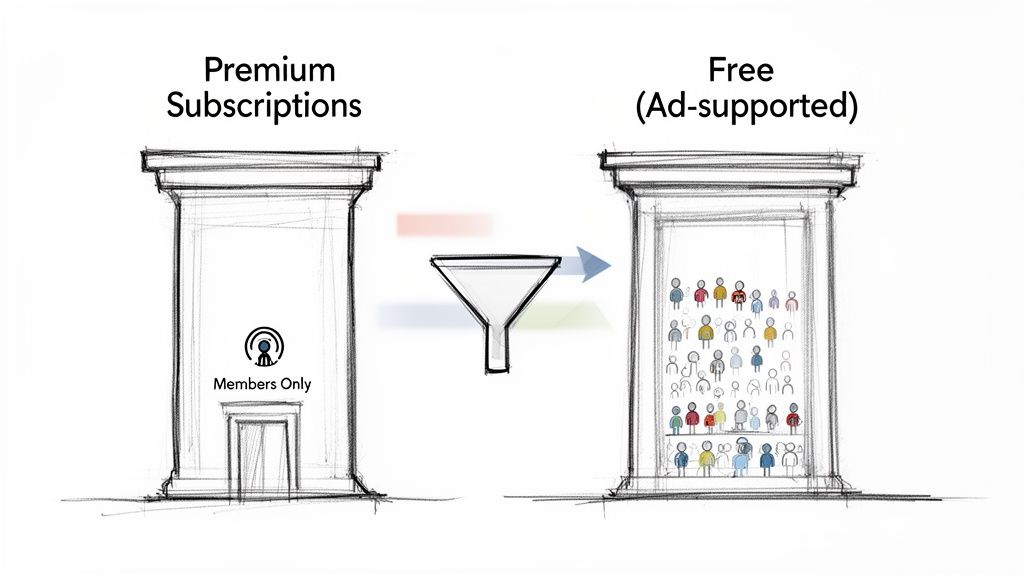
At its heart, Spotify runs on a clever dual-revenue model. It’s not just an app; it’s an economic machine built to turn casual listeners into paying subscribers, all while making money from both groups along the way.
This setup is what lets Spotify dominate the market. They offer an easy way in (the free version) that gets people hooked on the platform's discovery features and massive music library. But that free experience is intentionally limited—think shuffle-only play on your phone and ads popping up between songs. These aren't just annoyances; they're gentle nudges designed to push you toward a paid plan.
The Power of Premium Subscriptions
By far, the biggest driver of Spotify's income is its premium user base. These are the folks paying a monthly fee for that sweet, ad-free, on-demand listening experience. This consistent, predictable cash flow is the financial backbone of the entire company.
Just look at the numbers. The company's recent push for profitability has been fueled by a steady climb in subscribers, hitting 281 million by Q3 2025 and driving revenue to €4.3 billion. This subscription engine doesn't just keep Spotify's lights on; it's directly responsible for the billions paid out to artists every year. You can dig into the details yourself by checking out Spotify's financial performance in their official earnings reports.
For artists, this is the most important part to understand. A stream from a premium subscriber is worth way more than a stream from a free user. Why? Because it contributes a bigger piece to the total revenue pie that gets divvied up as royalties.
This is why converting your followers into paying subscribers is a key, if indirect, goal for any musician trying to build a career. Each one of those premium users represents a higher, more reliable contribution to your bottom line.
How the Two Tiers Work Together
The free and premium tiers aren’t separate businesses; they're two sides of the same coin, working together as a single monetization funnel. The free tier is the wide opening at the top, catching a massive audience that might otherwise be listening somewhere else. From there, Spotify uses its data to spot highly engaged free users and hit them with targeted promotions to upgrade.
To make it even clearer, here's a quick summary of Spotify's main income sources and what they really mean for artists on the platform.
Spotify's Core Revenue Streams at a Glance
Revenue Stream | Primary Function | What It Means for Artists |
|---|---|---|
Premium Subscriptions | Generates stable, high-value recurring revenue from monthly fees. | This is where the bulk of your royalty payments come from. Streams from these users are worth more money. |
Ad-Supported Tier | Attracts a massive user base and generates secondary income through ads. | Acts as a discovery tool to build your fanbase and eventually funnel listeners toward a premium subscription. |
Ultimately, both tiers are designed to get more people listening to your music. One does it by casting a wide net for discovery, while the other provides the direct financial fuel that funds artist royalties.
Premium Subscriptions: The Engine Room of Spotify's Payouts
Sure, the free, ad-supported tier gets a lot of people in the door, but let's be clear: premium subscribers are the absolute engine of Spotify's entire financial model. This is the heart of the business—a predictable, recurring flow of cash that keeps the lights on, funds new tech, locks in those massive content deals, and, most importantly, pays you.
This subscription model is what gives Spotify its stability. Ad revenue can swing wildly, but those monthly and annual fees from over 280 million paying users create a reliable financial bedrock. It’s what allows the platform to operate at such an insane scale, supporting a library of millions of songs for a global audience.
For any artist, the difference between a free listener and a premium subscriber is huge. A stream from someone paying for Spotify contributes a much bigger piece to the royalty pool that gets divided up each month. This is exactly why the premium tier is so critical to your bottom line.
Breaking Down the Subscription Tiers
Spotify knows that one price doesn't fit all. That's why they've built a tiered system to hook everyone from solo listeners to entire families. It's a smart strategy designed to get as many people as possible to upgrade, no matter their budget or living situation.
Every plan delivers the core premium experience—no ads, unlimited skips, and offline downloads—but they're packaged for different lifestyles:
Individual Plan: The classic, one-person subscription. This is the bread and butter of their user base.
Duo Plan: A slick deal for two people under the same roof, offering a nice discount compared to buying two separate plans.
Family Plan: The big one. Up to six accounts in one household, which makes it a no-brainer for families and helps cut down on password sharing.
Student Plan: A heavily discounted plan for university students. It's a clever way to build loyalty with the next generation of listeners who will hopefully become full-price subscribers down the line.
This flexible pricing isn't just about options; it's a strategic way to make premium feel more accessible. Plans like Duo and Family drop the per-person cost, making the upgrade from free to paid a much easier decision. More paying listeners means a bigger royalty pool for everyone.
Why Premium Streams Are So Valuable for Artists
The link between premium subscriptions and what you earn is direct and powerful. Because subscribers pay a set fee every month, their streams are simply worth more money than ad-supported streams. We're not talking about a small difference, either—it's the core mechanic that makes a paying fanbase so incredibly valuable.
The whole system is designed to reward engagement from paying listeners. Every time a premium user plays your song, a piece of their subscription fee gets dropped directly into the royalty pool. This gives your music a higher monetary value inside the Spotify ecosystem.
This is why one of your biggest (though indirect) goals should be converting casual listeners into subscribers. Every fan who makes that jump from the free tier to a paid one instantly becomes a more significant source of your income.
You can even see this play out using tools built to forecast potential revenue. A good Spotify royalties calculator will show you exactly how your earnings scale with streams, and it becomes crystal clear that plays from premium listeners have a much greater financial impact. Understanding this shifts your focus from just chasing raw stream counts to building a dedicated, paying audience that truly supports your career.
At the end of the day, the health of Spotify's premium business is directly tied to the financial health of the artists on its platform.
Of course, premium subscriptions are Spotify's financial engine, but the free, ad-supported tier might just be its most powerful strategic weapon. It’s so much more than a free music service. Think of it as the world's biggest, self-funding machine for finding new customers—a massive "try before you buy" demo that makes money every step of the way.
This freemium approach lets Spotify pull in a colossal audience that might otherwise be listening somewhere else. By putting its entire library on the table for free, it gets listeners hooked on the magic of on-demand audio. The catch? Those audio, video, and display ads that pop up every so often. Those interruptions generate direct revenue, turning free listeners into a monetized audience.
The Give-and-Take of Free vs. Premium
The free tier isn't just about cashing in on ad space; it's a masterclass in showing people why they should upgrade. All those limitations are actually the sales pitch. Free users have to deal with shuffle-only playback on mobile, a cap on how many songs they can skip, and, of course, the ads.
These aren’t mistakes in the design—they’re deliberate points of friction. Every ad break is a quiet little nudge, a reminder that a seamless, uninterrupted experience is just one subscription away. It creates a perfect loop:
New Users: The free tier is a huge funnel, pulling in hundreds of millions of people who are curious but not yet ready to commit.
Ad Money: Advertising brings in cash from everyone who’s happy to stick with the free plan for now.
The Upgrade Push: The built-in limits gently push the most active free listeners toward a paid plan.
This two-pronged strategy is incredibly powerful. It lets Spotify grow its user base and its revenue at the same time. In fact, advertising has become a serious contributor to the company’s bottom line. When monthly active users shot up to 713 million in Q3 2025, a huge chunk of that growth came from the free tier, which directly pumped up ad revenue and helped Spotify hit a record operating income. You can dig into the numbers yourself in their Q3 2025 earnings report.
The genius of the free tier is that it monetizes both user indecision and user conversion. Whether a listener stays free or pays up, Spotify wins.
Why Real Listeners Matter More Than Ever
For artists, this is ground zero. The free tier is where your future paying fans will discover you for the first time. Sure, the per-stream payout is smaller here, but the sheer volume is what counts. This is your main discovery zone, where new listeners stumble upon your music through Spotify’s algorithms and playlists curated by other users.
But the quality of that listening is what really moves the needle. You want to attract real, engaged fans who might eventually decide to subscribe. This is exactly why it’s so critical to make sure your streams are coming from actual people on legit, bot-free playlists. Fake streams don't just put you at risk of getting your music taken down; they bring you zero potential super-fans.
This is where you need to get smart with your tools. For instance, the Playlist Analyzer from artist.tools lets you screen any playlist for bot activity before you even think about sending a pitch to the curator.
This analysis gives you the inside scoop, showing you a playlist's follower growth patterns and its bot risk score. It's the kind of data you need to target authentic audiences. By focusing your energy on real playlists, you ensure your music reaches people who will actually follow you, save your tracks, and maybe one day become premium subscribers—which is what really grows your income over the long haul.
Tracing the Money: How Spotify Pays Artist Royalties
Okay, let's get to the question every artist asks: once Spotify collects all that cash from subscriptions and ads, how does it actually get into your pocket? The whole process can feel like a black box, full of middlemen and confusing payout models. But if you want to understand how you make money on Spotify, you need to see how the money flows.
The simplest way to picture Spotify's payout system is to think of it as one giant swimming pool of money. Every month, Spotify takes a huge chunk of its net revenue—from both Premium subscribers and ads—and pours it into this pool. The size of that pool changes every single month, depending on how much money Spotify brought in.
Your slice of the pie is determined by your share of the total streams. If your songs made up 0.01% of all streams across the entire platform in a given month, you get 0.01% of the money in that pool. This is what the industry calls the pro-rata system.
The Journey from Pool to Pocket
Of course, that money doesn't just teleport into your bank account. It has to pass through a few hands first, and each one takes a cut. This is where things get complicated and why the number on your statement often looks different than you expect.
Here are the main players involved in getting you paid:
Rights Holders: This is a catch-all term for everyone who owns a piece of the music. Think record labels, distributors (like TuneCore or DistroKid), publishers, and the songwriters themselves.
Distributors: These are the folks who get your music onto Spotify in the first place. They collect the master recording royalties for you.
Publishers and Performing Rights Organizations (PROs): Groups like ASCAP and BMI are responsible for collecting the royalties for the songwriters and publishers—the people who own the actual song composition.
This diagram shows how even free users are part of this ecosystem. Their engagement fuels the ad revenue and premium upgrades that fill up the royalty pool.
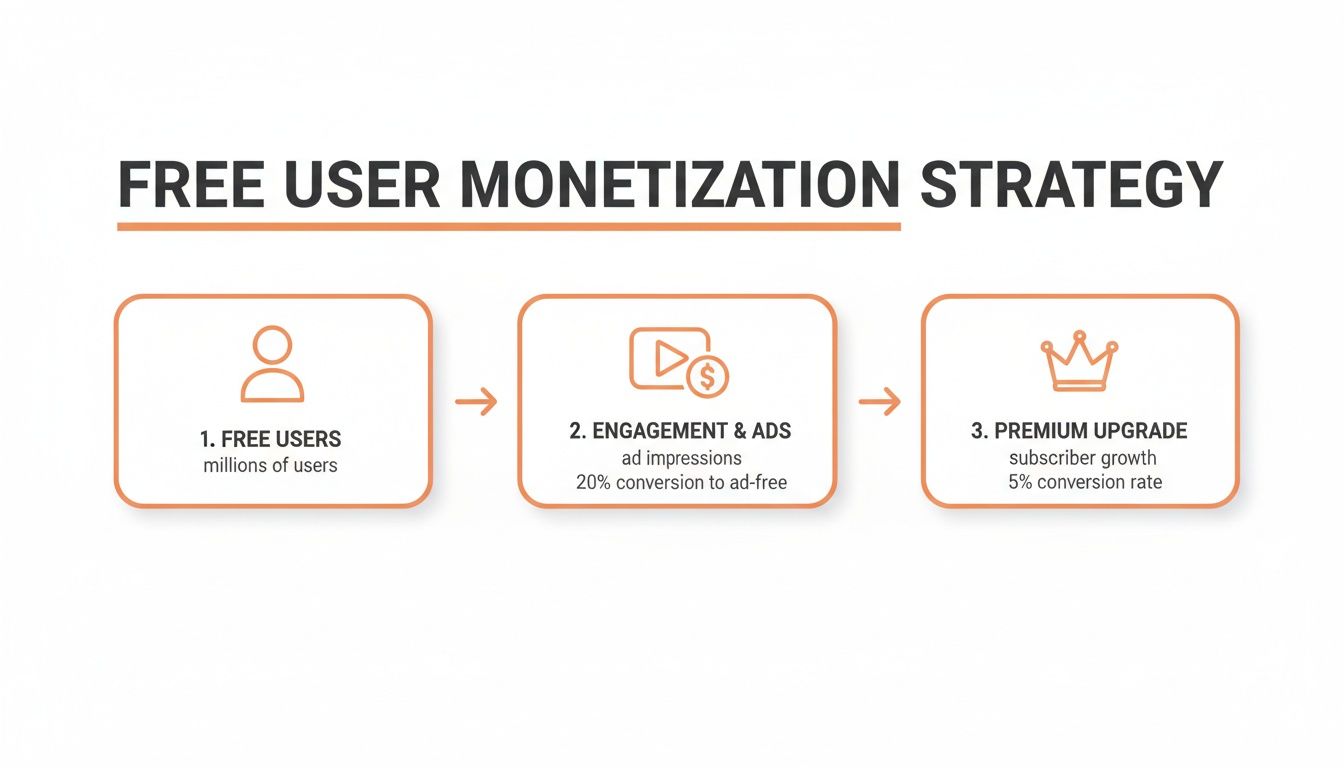
It’s a powerful funnel. The ad-supported tier brings people in, monetizes them with ads, and ultimately pushes them toward becoming high-value premium subscribers.
Why There Is No Fixed Per-Stream Rate
This pro-rata system is exactly why you can't nail down a fixed "per-stream" rate. The value of one stream is constantly changing. It's not a set price.
The per-stream payout is a moving target. It’s calculated by dividing the total money in the royalty pool by the total number of streams on the platform that month. Your earnings are tied directly to the listening habits of millions of other people.
The final payout you see is influenced by a few key things:
Listener's Subscription Type: Streams from Premium subscribers are worth more because they contribute more money to the monthly pool than streams from free, ad-supported listeners.
Listener's Geographic Location: A stream from someone in the U.S. is generally worth more than a stream from a country where subscription fees and ad rates are much lower.
Your Agreements with Rights Holders: Your specific deal with your label, distributor, and publisher determines what percentage of the royalties you actually get to keep.
Even with all these variables, the scale is massive. Spotify paid out a staggering $9 billion in royalties in 2023 alone. You can dig into how these payouts are fueling the music industry's comeback directly on Spotify's Loud & Clear site.
The Threat of Fraudulent Streams
There's a critical, often-ignored factor that messes with every artist's income: stream fraud. When bots and click farms rack up fake plays, they're not just breaking the rules—they're stealing from you.
Think back to our big pool of money. Fake streams artificially inflate the total stream count. It's like adding millions of extra straws into the same drink. Everyone's sip gets smaller. This dilutes the royalty pool and takes money directly from the pockets of real, hardworking artists.
This is why bot detection is no longer a "nice-to-have." It’s essential. Tools like artist.tools help you monitor your profile for signs of fake streams and identify botted playlists. This protects your royalties, keeps you in Spotify's good graces, and ensures you're building a real audience that will actually grow your career.
Exploring Revenue Streams Beyond Music
While music is still Spotify's bread and butter, their real game plan is much bigger. They're on a mission to become the go-to platform for all things audio.
This isn't just about adding more content; it's a strategic move to build a complete "audio-first" world designed to keep you listening for hours. The longer you spend in their app, the more chances they have to make money from your attention.
Nowhere is this strategy clearer than in their massive, multi-billion dollar bet on podcasting. Spotify didn't just dip its toes in the water. It dove in headfirst, snapping up production studios and tech companies to control the entire process—from creation and distribution all the way to monetization. This move carved out a powerful new revenue stream.
By locking down exclusive deals for huge shows like The Joe Rogan Experience, Spotify created "can't-get-it-anywhere-else" content. This is a magnet for new sign-ups and a great reason for existing subscribers, who might have come for the music, to stick around for the podcasts.
Monetizing the Spoken Word
Beyond just grabbing exclusives, Spotify has built a seriously smart advertising machine just for podcasts. A key feature is dynamic ad insertion, which lets advertisers target listeners with specific ads based on their demographics and listening habits. This is a world away from the old-school, static ads you'd typically hear baked into a podcast, and it's far more profitable.
For creators, this opens up a whole new way to earn. For Spotify, it establishes a high-margin advertising business that perfectly complements its music service. The goal is simple: make Spotify the only app you need for audio and the premier platform for audio advertisers.
Expanding the Audio Universe
But Spotify's ambition doesn't stop with podcasts. They're constantly experimenting with other audio formats to capture more of your time—and your wallet.
Live Audio: Spotify's moves into live audio create real-time, interactive events. Think of it like a modern take on live radio or social audio apps, which opens up new opportunities for advertising and virtual ticket sales.
Audiobooks: Adding audiobooks to their library was another huge step. It puts Spotify in direct competition with established players in a market that's growing like crazy.
This whole expansion is a classic "stickiness" strategy. By giving you more reasons to open the app—whether it's for a new album, a favorite podcast, or a live show—Spotify ramps up your engagement and loyalty. The goal is to make their platform an essential part of your daily routine.
All of this is about future-proofing the business. While music royalties require enormous payouts to rights holders, the money from original podcasts and targeted ads comes with much healthier profit margins.
For artists, this evolution is a big deal. As Spotify integrates things like merchandise sales and concert ticketing, it creates new ways for you to connect directly with your fans and make money—all on the same platform where they're already listening. Getting familiar with these channels is crucial. To help, we've put together a broader guide on how musicians can build their income today. You can learn more about modern revenue streams for artists in our detailed article. This push transforms Spotify from just a music streamer into a central hub for an artist's entire career.
Actionable Strategies to Maximize Your Spotify Earnings
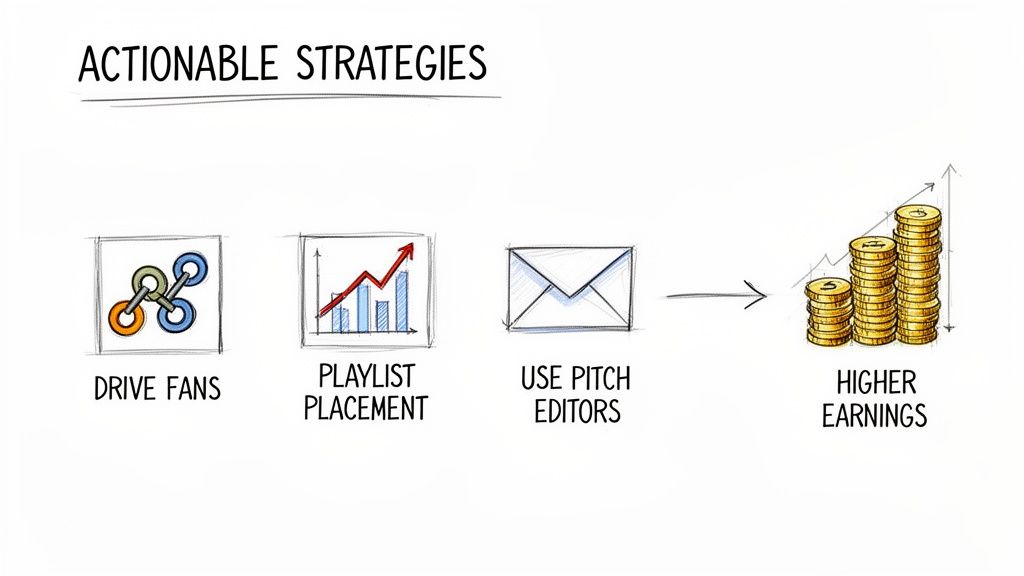
Knowing how Spotify's money machine works is one thing. Actually using that knowledge to grow your own income? That's the real game.
The secret is to stop seeing Spotify as a passive music host and start treating it like a dynamic platform where your moves directly affect your paycheck. If you learn to work with the system, you can pull a much bigger slice of the royalty pie your way.
This isn't just about chasing bigger stream counts; it's about improving the quality of those streams. It’s about building a real, engaged audience whose listening habits send all the right signals to Spotify's algorithms and prove your value to human curators.
Drive Your Fanbase Directly to Spotify
Your existing fans are your most powerful asset. The trick is to funnel all that excitement and support directly onto the platform where it actually counts toward your earnings.
When you drop new music, don't just announce it. Give your followers a clear, direct call to action.
Urge them to pre-save your track, follow your artist profile, and smash that "add to playlist" button for their own collections. Every one of these actions is a massive signal to Spotify's algorithm that your music is catching fire. Each follow and playlist add is a vote of confidence, telling the system your song is worth showing to more people.
Think of it this way: a thousand streams from random listeners are good, but a thousand streams from followers who have actively saved your track are pure gold. That level of engagement screams "dedicated fanbase," which is exactly what both algorithmic and editorial playlists are designed to find.
Master the Art of Playlist Placement
Getting your music onto playlists is, without a doubt, the single most effective way to reach new listeners on Spotify. It might seem like a black box, but it's a skill you can absolutely build by focusing on two key playlist types.
Algorithmic Playlists: These are the ones like Discover Weekly and Release Radar, personalized for every single user. You can't pitch to them directly. Instead, you influence them by first landing on smaller, user-curated playlists. The algorithm notices these placements, recognizes your track has potential, and starts testing it with a wider audience.
Editorial Playlists: These are the big leagues—playlists put together by Spotify's internal team of music experts. Getting on one can be a career-making moment. The only way in is to pitch your unreleased track through your Spotify for Artists account at least seven days before it comes out.
A solid pitch requires more than just good music; it needs research and a story that connects. This is where the right tools become non-negotiable. Using a platform like artist.tools, you can find legitimate curators, check their playlists for bots, and write a pitch that actually gets read.
For a deeper dive into the mechanics of getting paid, check out our musician's guide to Spotify payments for more advanced tips.
Use Data to Make Smarter Decisions
Your Spotify for Artists dashboard is way more than just a stream counter; it's a goldmine of data. You need to be paying close attention to your audience demographics, where your listeners are, and which playlists are driving the most traffic. This info tells you exactly who your fans are and how they found you.
You can get an even sharper picture by using specialized tools. For example, understanding Spotify SEO can help you position your own playlists to get discovered, which indirectly sends more listeners back to your music.
By digging into the data, you can see what listeners are actively searching for. This lets you tailor your own playlist titles and descriptions to meet that demand. It’s how you turn raw numbers into a smart, actionable strategy that grows your audience and, ultimately, your income.
Burning Questions About Spotify Revenue
Let's cut through the noise. Here are the most common questions we get from artists and curators about how money actually moves through the Spotify ecosystem. We'll give you quick, clear answers to help you get a handle on your career.
How Much Does Spotify Pay Per Stream?
This is the big one, and the answer is… it’s complicated. There is no fixed per-stream rate.
Spotify uses what’s called a pro-rata system. Think of it like a giant pool of money collected each month from all the subscription fees and ad revenue. Your payout is simply your percentage share of that pool, based on how many streams you got compared to every other song on the platform.
Because of this, the value of a single stream is constantly shifting. It all depends on:
How much total money Spotify brought in that month.
The total number of streams across the entire platform.
Where your listeners are and what plan they have (a premium stream from someone in the US adds more to the pool than a free one from a country with lower subscription fees).
Why Do My Payouts Fluctuate So Much?
That pro-rata model is exactly why your earnings can feel like a rollercoaster from month to month. If the total number of streams on Spotify skyrockets one month but their revenue doesn't keep pace, the value of each stream goes down for everyone.
On top of that, your own slice of the pie changes. Things like seasonal listening habits (think holiday music), a massive album drop from a superstar, or your own promo campaigns can all shift your stream share up or down, directly hitting your bottom line.
Your monthly payout isn't just about your streams; it's about your streams relative to every other stream on Spotify. This is why building consistent growth is way more powerful than a single viral spike.
How Long Does It Take To Get Paid?
Don't expect the money to hit your account right away. Spotify pays out royalties to rights holders—that’s your distributor, label, or publisher—about 30 days after the end of the month when the streams happened.
From there, your distributor or PRO has its own payment schedule, which is often quarterly. So, in reality, you might not see cash in your bank account for a good two to three months after your song was streamed.
Ready to stop guessing and start protecting your royalties? artist.tools gives you the data you need to see what's really happening. From bot detection that safeguards your income to advanced playlist analysis that finds real listeners, we help you build a sustainable career on Spotify. Get started at https://artist.tools.
.png)
.png)
Comments