

How to Land Playlist Push Jobs and Build a Curator Career
Discover how to land legitimate playlist push jobs. This guide offers proven strategies for becoming a music curator and growing a successful career.
Playlist push jobs are a pretty incredible way to turn your passion for finding new music into an actual career. Imagine getting paid to build killer playlists and review tracks from up-and-coming artists. Think of it as the new A&R, connecting indie musicians with audiences who are genuinely hungry for fresh sounds. To really succeed, you need a sharp ear, a solid grasp of streaming trends, and the skill to build a real following.
The New Career Path of Music Curation

The music industry has been completely flipped on its head. The days when radio DJs and label execs were the only gatekeepers are long gone. Streaming has blown the doors wide open, creating a massive need for skilled people who can dig through millions of tracks to find the real gems. That’s exactly where playlist push jobs come in.
And let’s be clear, this is way more than just a hobby. Professional curators are on the hook for building and maintaining top-tier playlists that pull in loyal listeners and keep them coming back. It’s a dynamic gig that’s one part creative taste and one part data-driven strategy.
What the Role Really Involves
Being a successful curator isn’t just about throwing songs you like onto a list. It’s a professional role with real responsibilities. You’re basically the brand manager for your playlists, tasked with growing an audience and delivering value to both listeners and the artists you feature.
Here’s what you’ll actually be doing:
- Active Curation: Constantly refreshing your playlists with new tracks to keep them from getting stale. Nobody likes a dusty playlist.
- Audience Growth: Hustling on social media and other channels to promote your playlists, pull in new followers, and drive up engagement.
- Artist Feedback: Giving artists short, constructive feedback on their submissions. This helps them understand why their track was—or wasn’t—a fit.
- Maintaining Playlist Health: Keeping a close eye on listener data and engagement to make sure your playlists are legit and performing well.
An Expanding and Viable Ecosystem
The demand for talented curators is blowing up, creating a real, viable ecosystem for anyone looking to build a career in this space. Companies like Playlist Push have built a whole marketplace around this, connecting artists directly with curators.
The proof is in the numbers. Playlist Push is generating an estimated $1.7 million in annual revenue with a team of 84 employees, which points to some serious stability in this niche. You can dig into more stats on their growth to see just how much potential is there.
This isn’t just about getting paid to listen to music. It’s about becoming an influential voice in the industry. Your playlists can literally change an artist’s trajectory, helping them find their first real fanbase and get the momentum they need to land on Spotify’s algorithmic playlists.
Building Your Curator Brand from the Ground Up
Before you can start landing paid playlist push jobs, you need something to sell—your playlists. A powerful curator brand is built on a solid foundation of well-defined, engaging, and consistently updated playlists. And the good news? You can start laying that foundation today, even with zero experience.
The key is to start small and lock in on a specific niche you’re genuinely passionate about.
Forget generic labels like “Chill Vibes” or “Workout Mix.” Instead, carve out a unique identity that tells listeners exactly what they’re getting. A hyper-specific playlist like “Late Night Coding Lo-Fi” or “Indie Rock for Road Trips” instantly grabs the attention of a dedicated audience searching for that exact mood.
This focused approach is what makes your brand memorable and way easier to market. It’s a clear signal to both listeners and artists that you have a distinct taste and a real vision.
Crafting a Memorable Playlist Identity
Your playlist’s name, cover art, and description are the first things anyone sees. Think of it as your digital storefront—it needs to look professional and compelling enough to stop someone from scrolling past the millions of other playlists out there.
Here are a few pointers to nail your playlist’s identity:
- Create a Catchy Name: Make it unique, descriptive, and easy to remember. A great name can be the difference between getting a click and getting ignored.
- Design Eye-Catching Cover Art: Use high-quality images and clear text. You don’t need to be a graphic designer; tools like Canva have tons of free templates you can customize to match your playlist’s vibe.
- Write a Compelling Description: Pack it with keywords that describe your genre, mood, and ideal listener. This is huge for helping your playlist show up in Spotify search results. For a deeper dive, check out our guide on making Spotify playlists that get noticed.
When these three elements work together, you create a cohesive brand that builds trust and looks professional. That’s absolutely essential when you start pitching for paid gigs. It shows you take this seriously.
Growing Your Audience Organically
With your playlists branded and ready to go, the next step is getting people to actually listen. Organic growth isn’t fast, but it builds a loyal following that platforms and artists value more than anything. You can’t just build it and hope they come; you have to actively get it out there.
Start by sharing your playlists with your own network. Post them on your social media and get your friends to listen and follow. That initial push can give you some much-needed early traction.
The most valuable playlists aren’t always the ones with the most followers, but the ones with the most engaged listeners. A playlist with 1,000 active fans is far more valuable to an artist than one with 10,000 passive followers who never actually stream the music.
Once you’ve tapped your inner circle, dive into the online music communities where your target audience lives. Get involved in discussions on Reddit, in Facebook groups, or on Discord servers dedicated to your genre. When it feels natural and relevant, share your playlist—just don’t spam. The goal is to become a trusted voice in that scene.
Another killer strategy is to team up with other up-and-coming curators. Find people with a similar follower count and niche, and pitch a cross-promotion. It’s a win-win that exposes both of your playlists to new, highly relevant audiences and helps you both grow faster.
How to Find and Secure Paid Curation Gigs
Alright, so you’ve put in the work. You’ve built a solid portfolio of playlists and cultivated a real, engaged audience. Now it’s time to get paid for your taste and effort.
When it comes to securing paid playlist push jobs, you’ve generally got two roads you can travel. You can join an established platform where they bring the artists to you, or you can forge your own path as an independent, freelance curator.
Each route has its own grind and its own glory. Platforms can offer a steady stream of work and a predictable payment structure, which is perfect when you’re starting out. But going independent? That gives you total control over your brand, your rates, and the music you champion—and honestly, the long-term earning potential is much higher.
Applying to Curation Platforms
Jumping on a platform like Playlist Push is often the most direct way to start monetizing your curation skills. These companies have already done the heavy lifting of building the infrastructure to connect artists with curators. That means you don’t have to hunt for clients. The catch? Getting accepted means meeting some pretty strict criteria.
These platforms need curators who have genuine influence, not just a bunch of numbers on a screen. They’ll be looking at things like:
- Real Listeners & Follower Counts: You’ll typically need a minimum number of real, active followers for each playlist—often 400 or more.
- Playlist Authenticity: They will comb through your playlists looking for any red flags of fake followers or bot activity. A clean, organic growth history isn’t just a suggestion; it’s a requirement.
- Genuine Engagement: Your playlists need to show that people are actually listening. Consistent streams and listener interaction are key.
The application process is usually straightforward: you submit your best playlists for review. They’ll dig into your niche, your branding, and the overall quality to see if you’re a good fit for their network of artists.
Success here is a numbers game, but it’s really about the quality behind those numbers. Playlist Push has worked with over 25,000 artists, and that scale is only possible because they rely on curators who deliver real, engaged listeners. As the streaming world keeps expanding, the demand for authentic curation is only going to get hotter. You can learn more about this in guides covering the booming music promotion landscape.
Forging Your Own Path as an Independent Curator
If you’re the type who wants more control, then finding your own clients as a freelancer is the move. This path definitely requires more hustle, but the trade-off is greater freedom and, potentially, a much bigger paycheck. You’re the CEO of your own small operation—responsible for marketing, negotiating, and keeping clients happy.
Your very first step is to build a professional media kit. Think of it as your business card, resume, and sales pitch all rolled into one slick package. It absolutely needs to include:
- A quick intro to your brand and what makes your curation style unique.
- Direct links to your top-performing playlists.
- Your key stats: follower counts, monthly listeners, and engagement rates.
- A clear breakdown of your pricing and service packages.
Once your media kit is ready, it’s time to start connecting with artists and labels. Get active on social media, join music industry forums, and don’t be afraid to reach out directly to artists whose sound is a perfect match for your playlists. A personalized, professional pitch that proves you’ve actually listened to their music will land you a client. A generic, copy-paste email will land you in the trash folder.
Still on the fence about which path is right for you? This table breaks down the key differences to help you decide.
Platform Curator vs. Independent Curator Career Paths
Choosing between working for a platform or going it alone is a major decision that shapes your day-to-day work and long-term career. One offers structure and a safety net, while the other offers limitless potential—if you’re willing to build it yourself. Let’s compare them side-by-side.
| Aspect | Platform Curator (e.g., Playlist Push) | Independent Curator |
|---|---|---|
| Income Stream | Consistent, but often a lower payment per song. | Less predictable, especially at first, but with much higher potential earnings per client. |
| Client Acquisition | The platform brings the work to you; no client hunting required. | You are 100% responsible for all your own marketing, networking, and sales. |
| Flexibility | You have to play by the platform’s rules and guidelines. | Complete creative and operational freedom over your rates, clients, and schedule. |
| Barrier to Entry | High. You must meet very strict playlist criteria to be accepted. | Lower to start, but requires strong business and marketing skills to actually succeed. |
Ultimately, there’s no single “right” answer. Many successful curators start on platforms to build experience and a reputation before eventually transitioning to their own independent business. Think about your current goals, your appetite for risk, and where you want to be in a few years.
Using Professional Tools to Vet Playlists and Artists
In the world of playlist push jobs, your reputation is everything. Artists and labels aren’t just paying you for a placement; they’re trusting your credibility to connect them with real, engaged listeners. This means every single playlist you touch and every artist you work with needs to be thoroughly vetted.
Just glancing at follower counts is a rookie mistake that can absolutely tank your career. The modern curator has to think more like a data analyst, using professional tools to dig beneath the surface and see what’s really going on. This is where a platform like artist.tools becomes your secret weapon, turning gut feelings into hard, data-backed decisions.
Spotting Red Flags with Playlist Analysis
Your first line of defense is a deep dive into any playlist you’re thinking about acquiring or collaborating with. A powerful Playlist Analyzer tool lets you peek behind the curtain, way beyond the vanity metrics everyone else sees.
Instead of just seeing a total follower count, you can track its historical growth. See a playlist that magically jumped from 1,000 to 50,000 followers overnight? That’s a massive red flag. Legitimate, organic growth is almost always a slow, steady climb.
The biggest threat to a curator’s career isn’t a bad song—it’s a botted playlist. Getting your name mixed up with fake streams will get you blacklisted by artists and platforms alike, and it permanently shatters the trust you worked so hard to build.
Here are the key metrics you need to be scrutinizing:
- Follower Growth Over Time: Look for that organic, steady curve. Be extremely skeptical of any sudden, unnatural spikes.
- Listener Engagement: A playlist with tons of followers but suspiciously low streams or saves is a dead giveaway for a passive or fake audience.
- Bot Detection: Specialized tools can run diagnostics to flag playlists pumped up with fake accounts, protecting both you and the artists who trust you.
This level of analysis is what separates the amateurs from the pros. It proves you’re committed to delivering real results and shielding your clients from the rampant fraud in the streaming world. If you want to find curators, it’s also worth checking out the top tools for finding Spotify curator contacts, as the pros all use similar vetting methods.
Evaluating Artist Potential and Digital Footprint
Vetting isn’t a one-way street. When artists hit you up for freelance placements, you also need to size up their potential and professionalism. This makes sure you’re partnering with musicians who are actually serious about their careers, which makes your job a whole lot easier and more effective.
The flowchart below breaks down the two main paths your curation career can take, and both demand strong vetting skills to succeed.
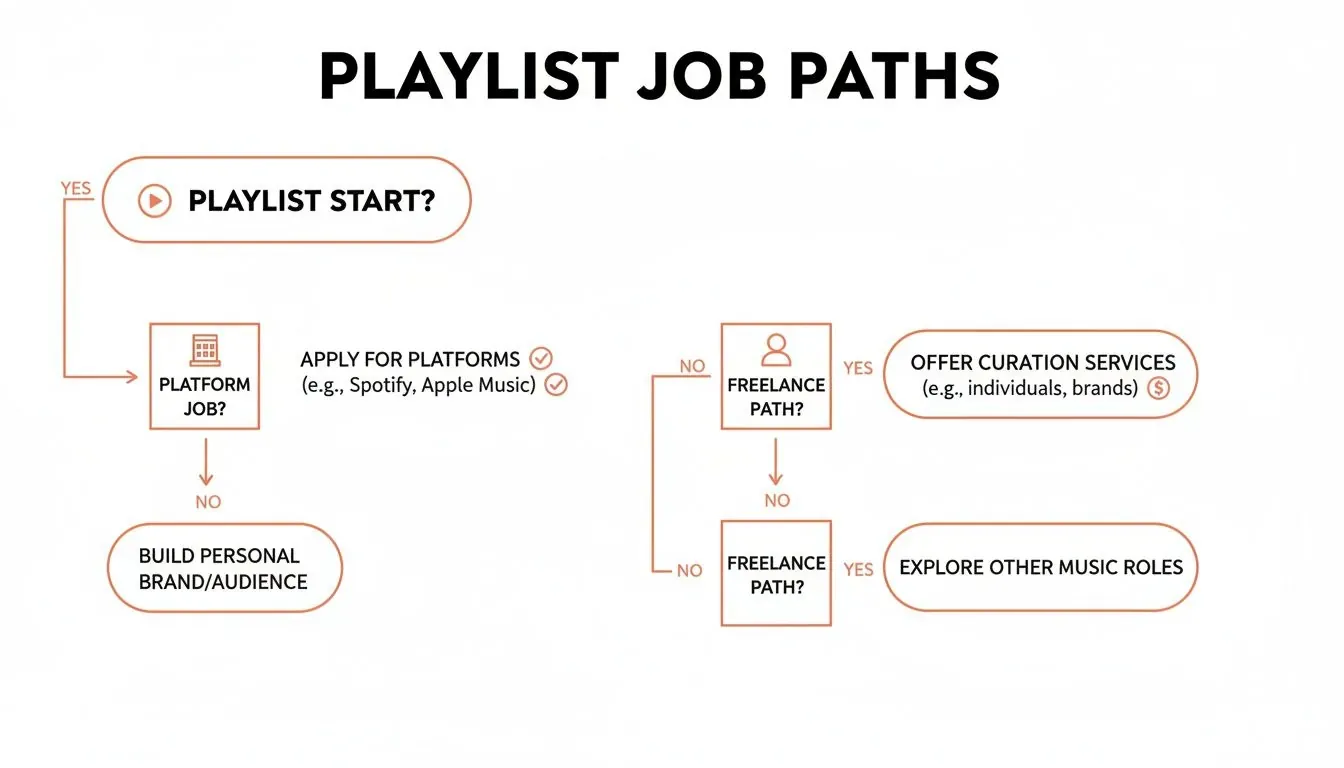
Whether you join a platform or go freelance, a professional, data-driven approach is non-negotiable.
Using a tool’s Keyword Search, you can get a quick snapshot of an artist’s digital presence. See what terms they actually rank for on Spotify and get a feel for their core audience. An artist with a clear brand and an engaged, growing fanbase is always a much safer—and more rewarding—partner to work with.
This technical expertise cements your status as a trustworthy professional who delivers genuine value. It’s a powerful selling point that shows you’re not just a tastemaker, but a strategic partner who knows their stuff. This level of diligence is what drives tangible results. For instance, well-vetted campaigns can bring in 21 playlist additions and 30,000 new streams from a modest investment. By mastering these tools, you build a reputation that attracts high-quality clients and carves out your place in the industry.
Nailing Your Rates and Managing Client Relationships
Alright, let’s talk business. Moving from simply curating playlists to running a legit operation means getting comfortable with pricing, negotiation, and managing the people who pay you. This is the stuff that separates the hobbyists from the pros making a real living from playlist push jobs. It’s how you make sure you’re getting paid what you’re worth for your influence and all the hard work you put in.
Figuring out what to charge can feel like a shot in the dark, but it doesn’t have to be. Your rates should directly reflect the value you bring to the table. Don’t just pick a number that sounds good; base your pricing on real data that you can show to an artist or manager to justify the cost.
Building Your Pricing Framework
You need a pricing model that’s solid but not rigid. You want to be consistent, but also have the flexibility to handle different kinds of campaigns. Think about these factors when you’re putting your rates together:
- Follower Count and Engagement: This is your bread and butter. A playlist with 10,000 genuinely engaged followers is way more powerful than a dead list with 50,000. Use tools to back up your claims about listener activity.
- Genre Specificity: Niche is king. A super-specific playlist like “Dark Academia Classical” offers a laser-focused audience that’s tough to find elsewhere. That makes it more valuable than a generic “Pop Hits” list anyone can land on.
- Campaign Scope: Are you just adding a song for two weeks, or is this a two-month placement? Will you be shouting it out on your socials? Every extra bit of work or exposure needs to be built into the final price.
A great starting point for most independent curators is a simple flat-fee model. You charge a set price for a guaranteed amount of time on the playlist. For example, you could charge something like $75 for a four-week spot in a playlist with 5,000 active followers. Once you’re more established, you can play around with performance-based models, but for now, keep it simple.
Professionalizing Your Client Interactions
Once you’ve agreed on a price, the work isn’t over—it’s just beginning. How you communicate and manage expectations is what builds a reputation that gets you repeat clients and referrals. This is where a simple service agreement becomes your best friend.
A handshake deal is not enough. A short, clear contract protects you and the artist. It lays out what you’re delivering, payment terms, and how you’ll report back. This simple step prevents headaches and shows you’re a serious professional.
Your agreement doesn’t need to be some 20-page legal document written in Latin. Just make sure it clearly states the song, the exact playlist(s) it’s going on, how long it will stay there, the fee you agreed on, and when you expect to get paid.
Finally, wrap things up by promising a simple performance report at the end of the campaign. Show them any data you have on listener engagement or follower growth. This small gesture proves your impact and gives artists every reason to come back for their next release.
Common Questions About Playlist Push Jobs
Diving into the world of playlist push jobs is going to stir up a lot of questions. That’s natural. Getting solid, no-fluff answers is the key to moving forward with confidence and actually building a career as a curator.
Let’s break down some of the most common things aspiring curators ask.
How Much Can You Realistically Earn?
Honestly, curator earnings are all over the map.
If you’re working with a platform like Playlist Push, you can expect to make anywhere from $1 to $15 per song review. This can add up to a nice side hustle, especially if you’re managing a few popular playlists. It’s a great way to monetize your taste without having to chase down artists yourself.
But for independent curators, the ceiling is much, much higher. If you build influential playlists on your own, you could be charging from $50 to well over $500 for a single placement. What you can command really comes down to your playlist’s follower count, how engaged your listeners are, and the demand within your specific genre. To make a full-time living, you’ll need to either manage a whole portfolio of killer playlists or lock in consistent, high-paying clients.
What Are the Biggest Mistakes New Curators Make?
The number one mistake I see new curators make is chasing follower counts instead of real, genuine engagement. A huge playlist with hardly any active listeners is worthless to an artist, and it will kill your reputation before it even starts. Real influence comes from an audience that actually listens.
Another classic pitfall is just saying yes to every song that comes your way. This waters down your playlist’s brand and the specific sound your followers came for, which is a surefire way to alienate them.
Finally, terrible communication with artists—especially about what they can expect from a campaign—will burn bridges fast. Setting clear expectations is everything.
The entire foundation of a successful curation career is trust. Artists trust you to connect them with real listeners, and listeners trust you to deliver great music. If you break that trust with bots or bad tracks, your career is over.
How Can I Avoid Scams and Fake Streams?
You have to be vigilant. It’s not optional in this game. Your job is to protect your reputation and your clients from all the fraud out there. Be immediately skeptical of anyone promising a guaranteed number of streams for a low price—that’s the oldest red flag in the book for bot activity.
The best way to protect yourself is to be proactive. Before you ever work with another curator or take over a new playlist, you have to do your homework. Run any playlist through the free Spotify playlist bot checker first.
And when you’re working independently, always use simple service agreements or contracts. Get the terms and what you’re delivering in writing. It protects everyone involved.
Ready to turn your data-driven insights into a professional advantage? artist.tools provides the Playlist Analyzer, Bot Detection, and Keyword Search features you need to vet playlists, evaluate artists, and build a trusted reputation in the music industry. Start making smarter curation decisions today at https://artist.tools.