The 7 Best Platforms for Indie Music Playlists in 2026
For independent artists, getting your music heard is the biggest challenge. While talent is crucial, strategy is what separates a bedroom project from a breakout success. The right indie music playlists act as career accelerators, connecting your sound with passionate listeners actively seeking new music. But the landscape is saturated with platforms, curators, and potential pitfalls like botted streams that can jeopardize your royalties and reputation.
This guide cuts through the noise. We provide a data-driven breakdown of the seven essential platforms and tools you need to not only discover powerful indie playlists but also to vet their quality, find curator contacts, and pitch your music effectively. Forget generic advice; this is a comprehensive resource built for action.
You will learn how to:
Identify high-impact playlists across Spotify, Apple Music, and beyond.
Use platforms like artist.tools to analyze playlist health and avoid fake streams.
Find legitimate curator contact information for direct and effective pitching.
Develop a targeted strategy tailored to your specific genre and career goals.
Each entry in this roundup includes detailed descriptions, screenshots, direct links, and practical submission tips to help you build a sustainable audience. We'll explore the unique advantages of major streaming services like Spotify and YouTube Music alongside community-driven platforms like SoundCloud and Bandcamp. This is your roadmap to navigating the world of playlisting and turning streams into dedicated fans.
1. artist.tools
For independent artists navigating the complex world of Spotify promotion, artist.tools is an indispensable analytics and growth platform. It moves beyond simple playlist directories by offering a sophisticated, data-driven toolkit designed to protect artists from fraud while uncovering legitimate opportunities. Its core function is to empower musicians and managers to make informed decisions, ensuring their promotional efforts for indie music playlists are both safe and effective.
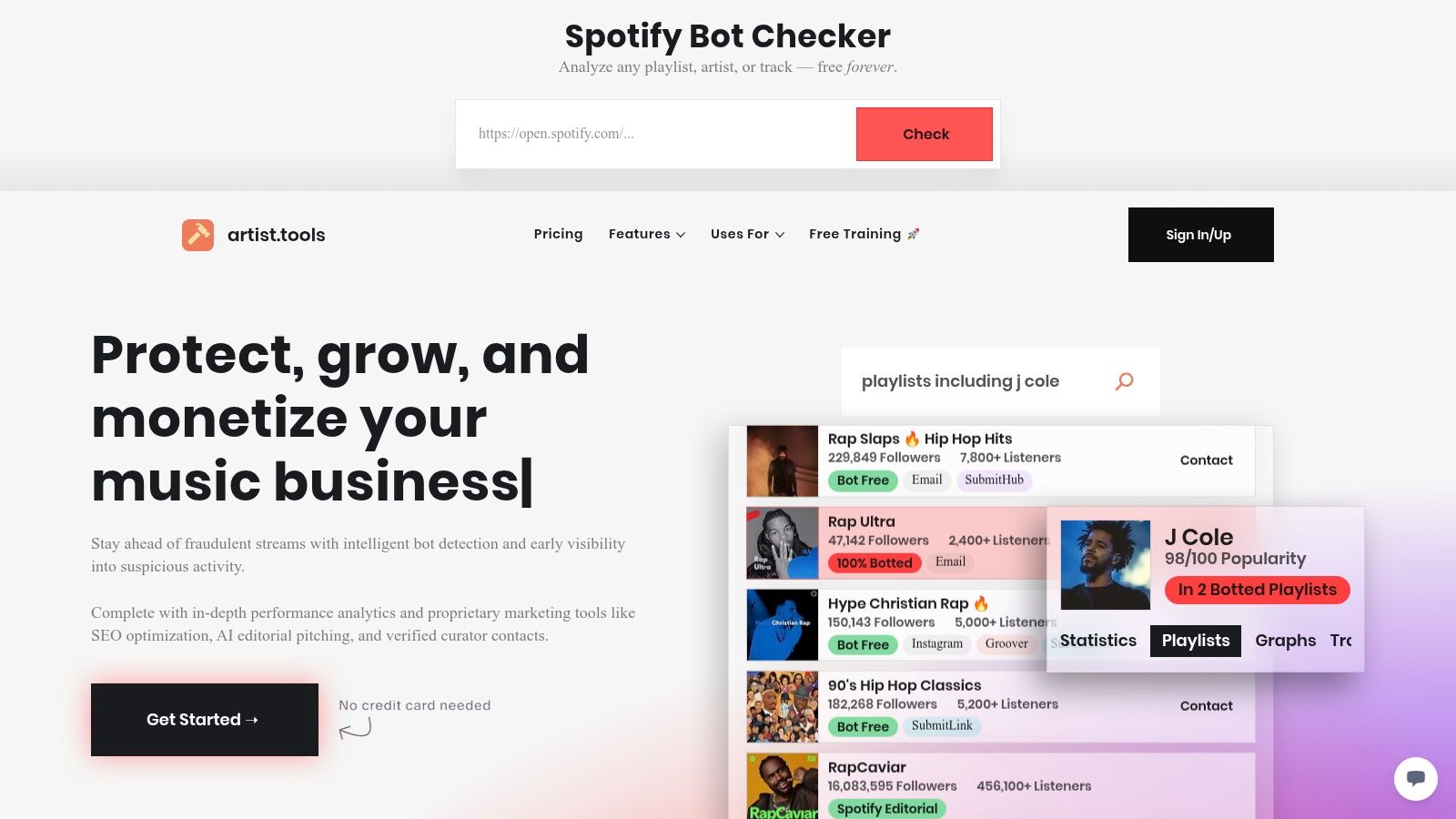
Unlike generic marketing tools, artist.tools is built with a singular focus on the Spotify ecosystem. This specialization allows it to provide deeply integrated features that address the specific challenges indie artists face, from identifying bot-driven playlists to crafting the perfect pitch for editorial consideration. It's a comprehensive solution for anyone serious about building a sustainable career on the world's largest streaming platform.
Key Strengths and Features
artist.tools distinguishes itself with a powerful combination of protective analytics and proactive growth tools. It provides the clarity needed to not only find playlists but to understand their true value and integrity.
Advanced Bot Detection: The platform's proprietary bot-detection algorithm is a standout feature. It provides real-time alerts on suspicious activity, allowing you to identify and remove your music from fraudulent playlists before it leads to royalty seizures or takedowns from Spotify. This proactive defense is critical for protecting your revenue and reputation.
Massive Curator Database: With contact information for over 118,000 curators managing millions of playlists, artist.tools offers one of the largest searchable databases available. Powerful filters allow you to pinpoint relevant indie music playlists based on genre, listener location, playlist growth, and more. For a deeper dive into its capabilities, you can explore exactly how the playlist search works on their blog.
Deep Historical Analytics: The platform provides daily historical data for artists, tracks, and playlists. This allows you to track performance trends over time, attribute stream growth to specific campaigns, and verify the authenticity of a playlist’s followers with Chartmetric-style insights.
Integrated Growth Suite: Beyond playlisting, artist.tools includes a suite of tools designed for organic growth. This includes a Spotify SEO keyword explorer, playlist ranking trackers, and a unique AI-powered Editorial Pitch Generator. The generator is trained on successful pitches, helping you craft compelling narratives that align with Spotify editors' expectations.
Expert Insight: The true power of artist.tools lies in its ability to connect defensive and offensive strategies. You can vet a playlist for bots and then immediately access the curator’s contact information to submit your track, all within a single, streamlined workflow.
Practical Application for Indie Artists
An independent artist can use artist.tools to build a complete promotional campaign. Start by using the Playlist Search to discover indie music playlists that match your genre and have high listener engagement scores. Next, use the Playlist Analyzer to vet your top choices, checking their historical growth and bot-risk score.
Once you have a list of legitimate targets, leverage the curator database to find direct contact information. Finally, use the AI Pitch Generator to craft a personalized and effective outreach message, increasing your chances of a successful placement.
Feature Comparison | artist.tools | General Music Tools |
|---|---|---|
Platform Focus | Spotify-only, deep integration | Multi-platform (Spotify, Apple, etc.) |
Bot Detection | Real-time alerts & removal guidance | Limited or no bot analytics |
Curator Contacts | 118,000+ verified contacts | Often smaller, unverified lists |
Historical Data | Daily snapshots for deep analysis | Weekly or monthly data, less granular |
Pricing Model | Free tier & affordable full access (~$15/mo) | Often higher-priced enterprise plans |
Pros and Cons
Pros: * Early bot detection saves artists from potential royalty loss and penalties. * Extensive, filterable curator database streamlines the outreach process. * Integrated SEO and AI pitching tools provide a comprehensive growth solution. * Affordable pricing makes professional-grade data accessible to indie artists.
Cons: * The platform's focus is exclusively on Spotify, offering no analytics for other DSPs. * The most powerful features and extended historical data require a paid subscription. * Bot-detection and royalty estimates are data-driven signals, not absolute guarantees.
Website: https://artist.tools
2. Spotify
Spotify is the undisputed titan of on-demand music streaming, making it an essential platform for any discussion about indie music playlists. Its sheer scale, with over 600 million users, means that both its official editorial playlists and the vast ecosystem of user-generated playlists hold immense power for music discovery. For indie artists, getting a track placed on the right Spotify playlist can be a career-defining moment, driving streams, new followers, and algorithmic momentum.
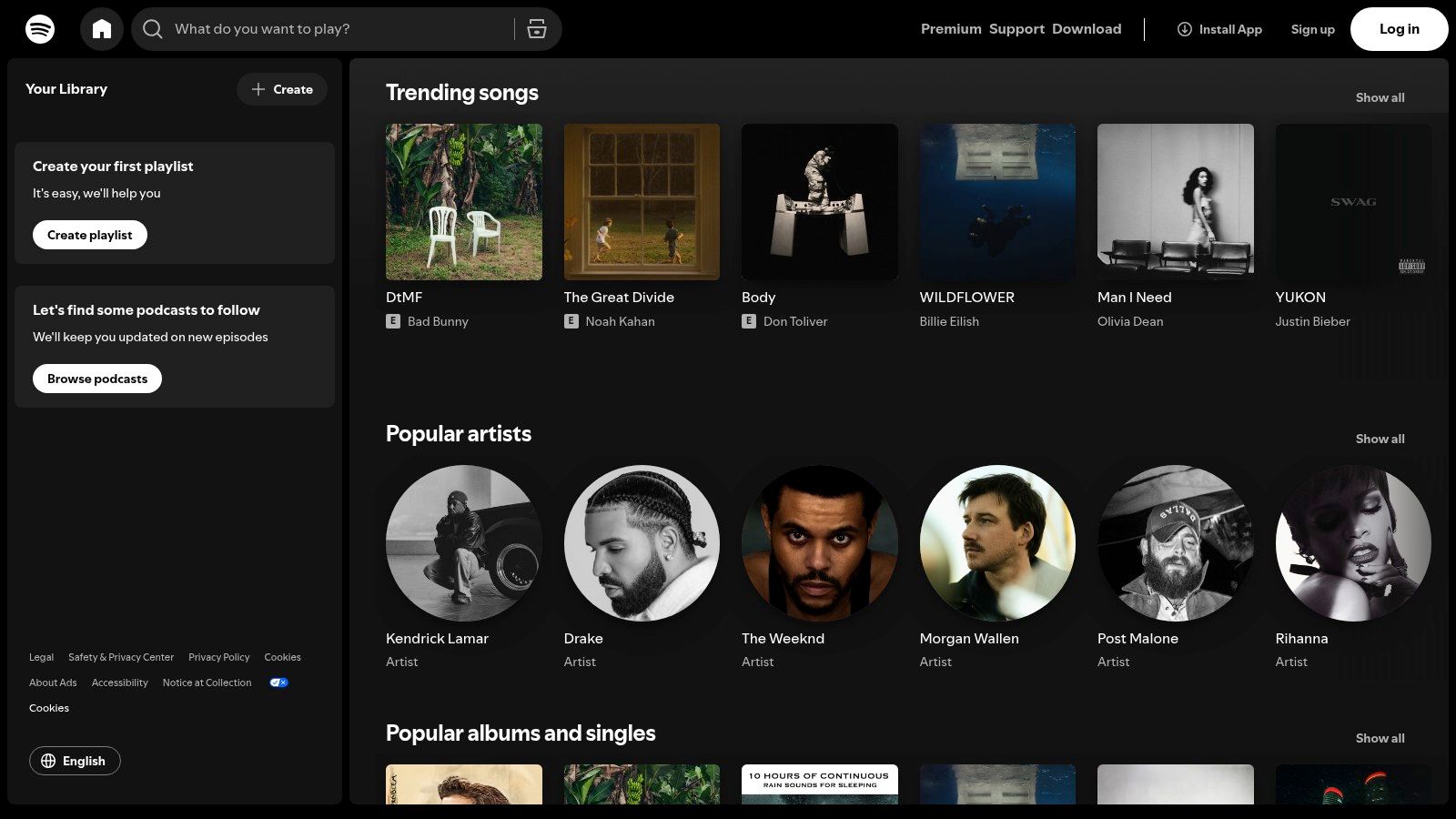
The platform's strength lies in its multi-layered approach to discovery. Beyond major editorial hubs like Lorem Ipsum and Ultimate Indie, Spotify’s algorithm curates personalized playlists such as Discover Weekly and Release Radar for each user. These algorithmic playlists often pull from smaller, independent playlists, creating a ripple effect where a placement on a well-curated user list can lead to much broader exposure.
Key Features for Indie Artists
Spotify’s ecosystem is built for both passive listening and active discovery, offering several avenues for artists to gain traction.
Official Editorial Playlists: These are curated by Spotify's internal teams and represent the pinnacle of playlist placements. They are often genre-specific (Indie Rock, Chill Vibes) or mood-based (Sad Indie, Feel-Good Indie).
Algorithmic Playlists: Playlists like Discover Weekly, Release Radar, and Daily Mix are tailored to individual listener tastes. Getting on these is often a byproduct of initial traction from other playlists and direct fan engagement.
User-Generated Playlists: This is the largest and most accessible tier, comprising millions of playlists created by fans, influencers, and independent curators. These are the lifeblood of the indie music playlists scene and the primary target for most artists' outreach campaigns.
Practical Tips for Submission and Growth
Successfully navigating Spotify requires a strategic approach. The official submission tool within Spotify for Artists is the only way to pitch to editorial curators, but your efforts shouldn't stop there. Independent curators are a crucial part of the puzzle. Using a platform like artist.tools can help you identify high-quality, non-botted playlists and find contact information for the curators behind them.
Pro Tip: When pitching to independent curators, personalize your message. Mention a specific track on their playlist that you enjoy and explain why your song would be a good fit. Generic, mass emails are almost always ignored.
For artists looking to maximize their visibility, understanding the submission process is key. For a comprehensive breakdown of pitching strategies, you can learn more about how to submit music effectively to Spotify playlists.
Platform Breakdown
Feature | Details |
|---|---|
Pricing | Free ad-supported tier. Premium plans include Individual, Duo, Family, and Student. Note: A U.S. price increase is expected in early 2026. |
Unique Offering | The most powerful music discovery algorithm and the largest collection of user-generated playlists, creating unparalleled opportunities for viral discovery. |
Pros | Massive global audience, robust Spotify for Artists analytics, official editorial submission portal, and a deep, interconnected playlist ecosystem that rewards grassroots promotion. |
Cons | Highly competitive landscape, making it difficult to stand out. The impending price hike may affect some users' subscription decisions. |
Website |
3. Apple Music
While Spotify often dominates the conversation, Apple Music has carved out a significant space as a premium destination for high-fidelity audio and expertly guided discovery, making it a crucial platform for indie music playlists. Its focus on human curation, rather than purely algorithmic suggestions, offers a different kind of validation and exposure. For listeners who prioritize audio quality and a more editorial-driven experience, Apple Music is a top-tier choice.
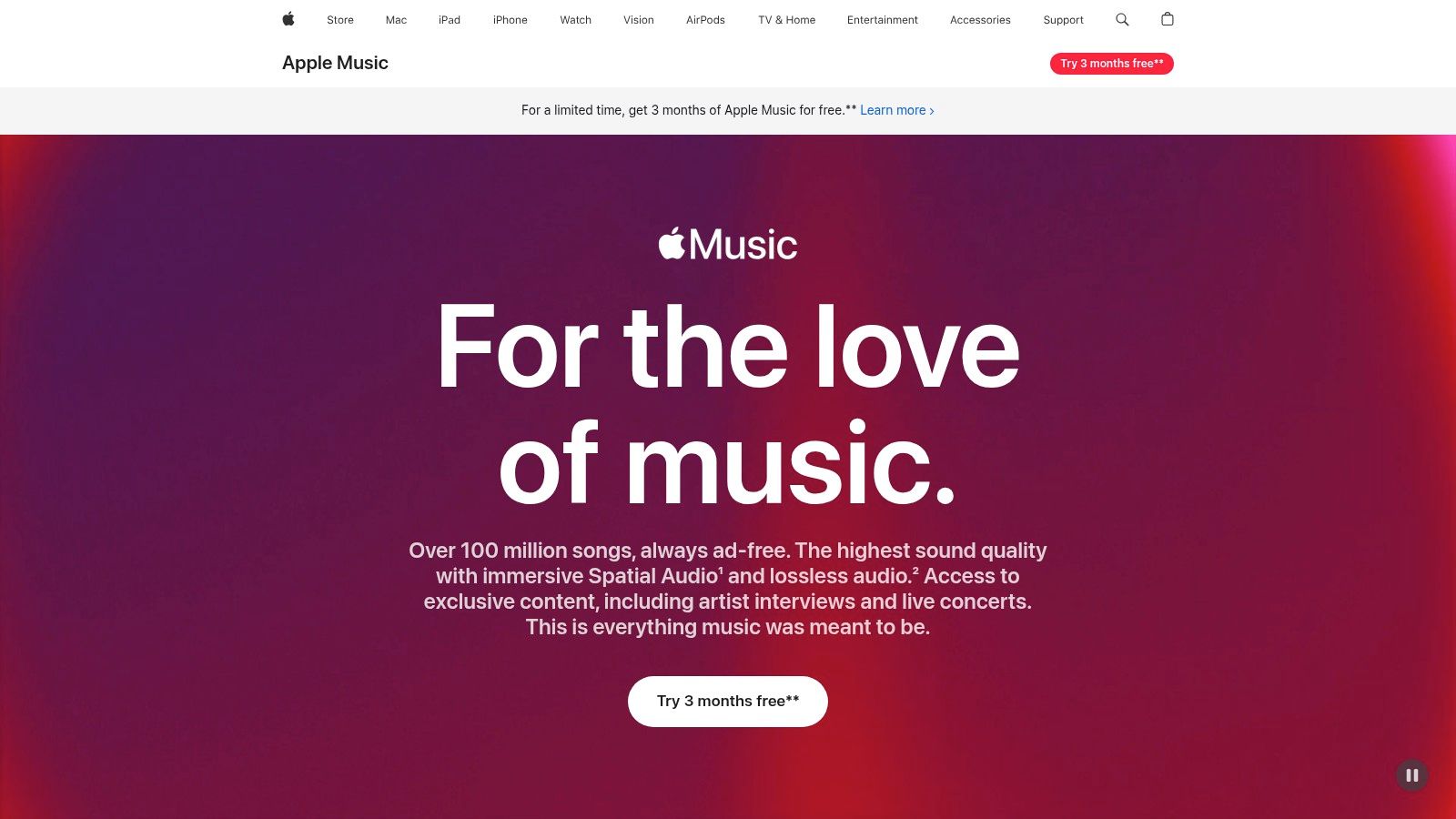
The platform’s strength is its curated ecosystem. Unlike the vast, user-generated landscape of its main competitor, Apple Music's most prominent playlists are managed by its internal editorial team. Playlists like Peak Indie, Indie Anthems, and Today's Indie Rock are highly influential and serve as tastemaking hubs. Securing a spot on one of these lists places an indie artist alongside established acts, signaling a high level of quality and credibility to a discerning audience.
Key Features for Indie Artists
Apple Music’s value proposition for artists is built on quality, curation, and integration within the expansive Apple ecosystem.
Prominent Editorial Playlists: The platform's flagship indie playlists are meticulously curated and frequently updated, providing a reliable stream of high-quality new music to subscribers. Key playlists include Peak Indie, Indie Anthems, ALT CTRL, and Today’s Indie Rock.
High-Fidelity Audio: Apple Music includes Lossless Audio and Spatial Audio with Dolby Atmos at no extra cost. This allows artists to present their music in the highest possible quality, a significant selling point for audiophiles and dedicated fans.
Cross-Platform Availability: While deeply integrated with iOS and macOS, Apple Music is also widely available on Android, web browsers, smart TVs, and smart speakers, ensuring broad accessibility.
Practical Tips for Submission and Growth
Getting noticed on Apple Music requires a focus on its editorial process. There isn’t a direct, public-facing submission tool like Spotify's, so pitching is often done through a distributor, label, or by building industry relationships. However, artists can still take proactive steps. Ensuring your metadata is clean and your music is delivered to Apple Music well in advance of its release date via your distributor is a critical first step.
Pro Tip: Leverage Apple Music for Artists to gain insights into your audience. Understanding which cities and countries are streaming your music most can help you target future marketing efforts and even tour routing. Use the "Shazams" data to see where your music is being discovered organically.
While user-generated playlists are less of a focus, they do exist. Building relationships with influencers and curators who are active on the platform can still provide a valuable initial boost and signal listener interest to the platform's algorithms and editorial teams.
Platform Breakdown
Feature | Details |
|---|---|
Pricing | Tiered plans include Voice, Student, Individual, and Family. Apple often provides generous free-trial offers (up to 3 months) for new users, creating a low-risk entry point for listeners. |
Unique Offering | A strong emphasis on human-led editorial curation combined with high-resolution Lossless and Spatial Audio as a standard feature, offering a premium listening experience. |
Pros | Strong editorial taste with a consistent curation cadence for indie genres. Competitive pricing and long free trials attract new subscribers. High-fidelity audio showcases music at its best. |
Cons | The platform is less focused on social and collaborative features, making playlist sharing less viral. The lack of a direct editorial submission portal can be a hurdle for independent artists. |
Website |
4. YouTube Music
YouTube Music leverages the world's largest video platform to create a unique hybrid music streaming service. It combines official audio tracks with a vast catalog of music videos, live performances, and user-generated content, making it a dynamic space for indie music playlists. For indie artists, its integration with the main YouTube ecosystem means that a popular fan-made lyric video or a live session can drive as much discovery as a placement on an official playlist, offering multiple avenues for listener engagement.
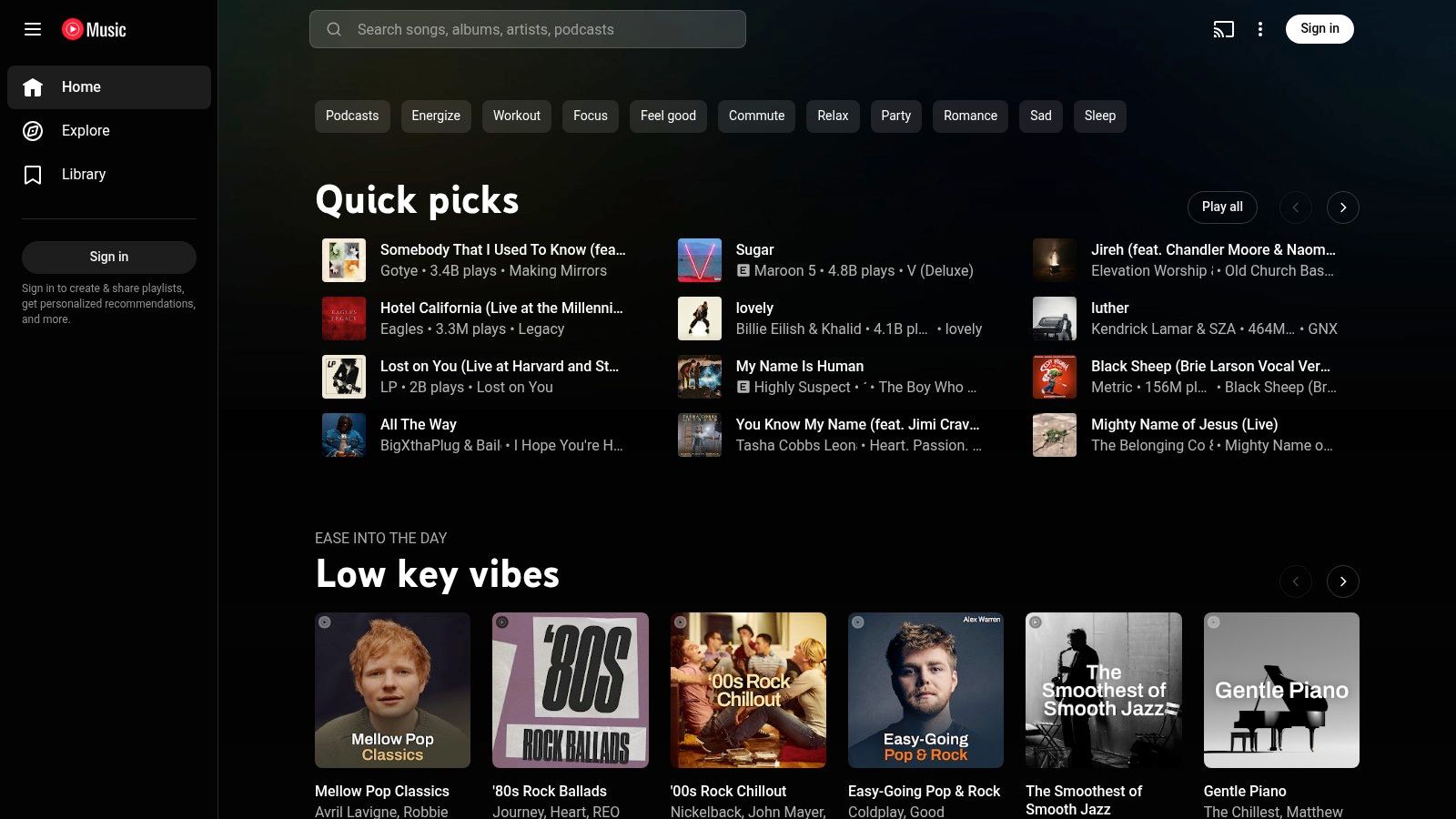
The platform’s strength is its ability to serve fans who consume music both audibly and visually. The Explore tab actively surfaces new and trending music based on genres and moods, providing a dedicated space for indie discovery. This visual-first approach can be a significant advantage for artists with compelling music videos or live performance content, allowing them to connect with fans on a deeper level than audio alone.
Key Features for Indie Artists
YouTube Music's ecosystem is built around the intersection of audio and video, providing unique promotional opportunities.
Official and Curated Playlists: The platform features editorially curated playlists like Indie Undercurrents and The New Alternative, alongside algorithmically generated mixes like My Supermix and Your Mix.
Video Integration: An official music video, a live performance, or even a high-quality visualizer can be added to playlists, creating a richer user experience and driving traffic to an artist's YouTube channel.
Explore Tab Discovery: This feature is a key discovery hub, highlighting new releases, genres, and moods. Getting featured here can expose an artist's music to a broad audience actively looking for new sounds.
YouTube Creator Ecosystem: Independent music channels and vlogs often create their own widely followed indie music playlists, serving as influential, third-party curators within the platform.
Practical Tips for Submission and Growth
Success on YouTube Music is intrinsically linked to a strong presence on YouTube itself. Engaging with the creator community is crucial. Identify music channels and influencers who feature music similar to yours and build relationships. Since there is no direct "pitch tool" like on Spotify, cultivating a strong YouTube channel with high-quality video content is your primary submission asset.
Pro Tip: Optimize your video titles, descriptions, and tags with relevant keywords (e.g., "chill indie pop," "alt-rock 2024"). This improves discoverability within YouTube's search and recommendation algorithms, increasing the chances of your music being added to user-generated playlists.
For artists building their presence, this platform is a core component of a holistic promotional plan. To understand how it fits into a larger campaign, you can explore some essential indie music promotion strategies for 2025.
Platform Breakdown
Feature | Details |
|---|---|
Pricing | Free ad-supported tier. YouTube Music Premium is available standalone or bundled with YouTube Premium (which removes ads across all of YouTube). |
Unique Offering | Seamless integration of an official music catalog with the endless video content of YouTube, including live sessions, covers, and fan videos. |
Pros | Massive built-in audience through YouTube, strong discovery features via the Explore tab, and unique opportunities for visual artists to connect with fans through music videos and live content. |
Cons | The line between YouTube Music and the main YouTube platform can be confusing. Pricing for the YouTube Premium bundle is higher than most music-only services. |
Website |
5. Amazon Music
While often associated with its e-commerce empire, Amazon Music has carved out a significant space in the streaming world, making it a valuable platform for artists exploring indie music playlists. Its integration into the vast Amazon ecosystem, particularly for Prime members, gives it a unique user base that might not be as deeply entrenched in other streaming services. For indie artists, this presents an opportunity to reach a different, potentially less saturated audience.
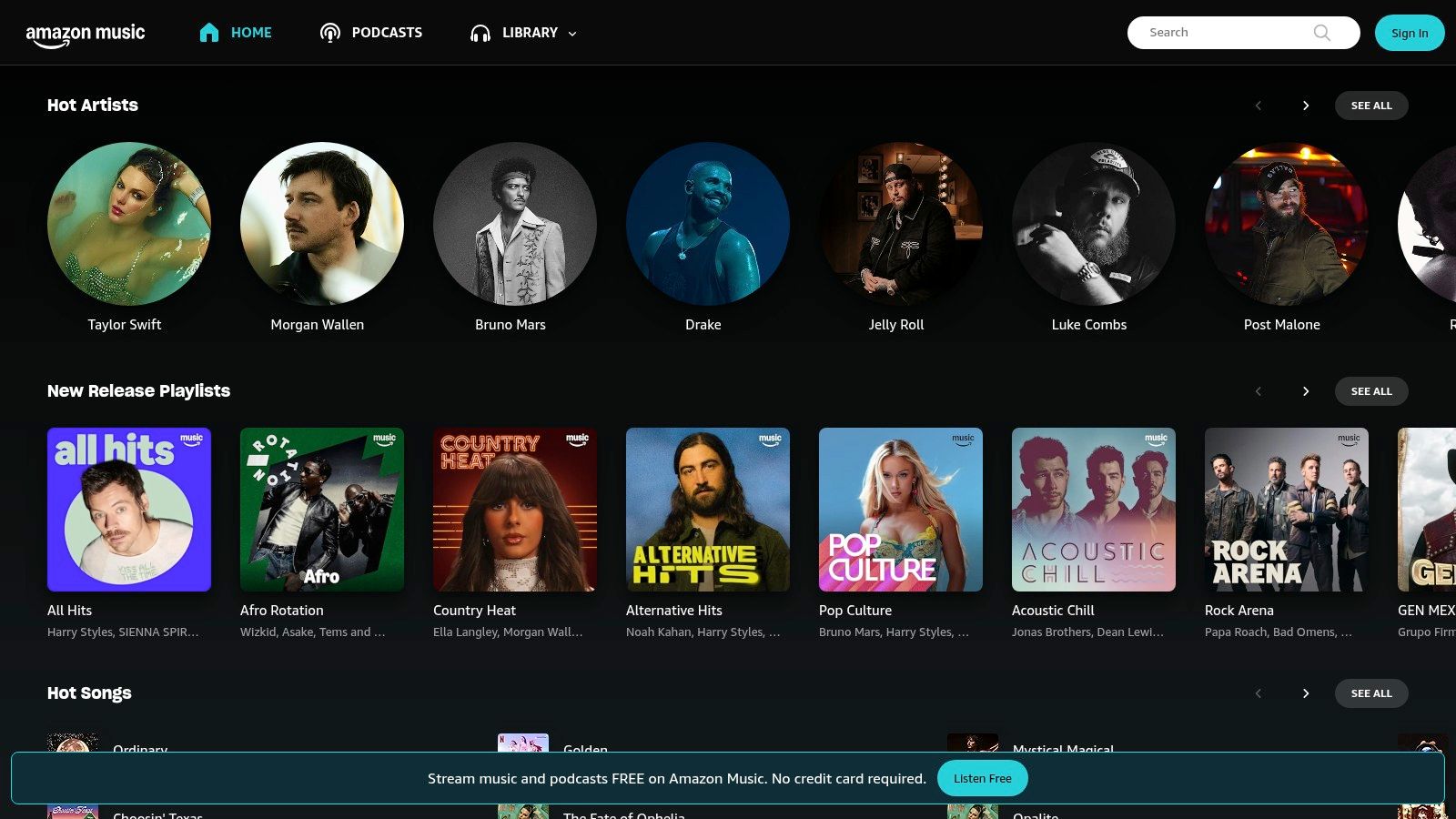
The platform’s value proposition is strengthened by its various tiers, including a robust offering for existing Amazon Prime subscribers and the high-fidelity audio options on its Unlimited plan. Editorial playlists like Fresh Indie and Indie-Folk provide curated discovery hubs, while deep integration with Alexa and Echo devices makes it a go-to for voice-activated listening in millions of homes.
Key Features for Indie Artists
Amazon Music's ecosystem offers distinct advantages tied to its parent company's hardware and subscription services.
Official Editorial Playlists: Curated by Amazon's music team, these playlists like Acoustic Chill and Programmed: Chill cover a wide range of indie subgenres. A placement here can introduce an artist's music to a broad, engaged audience.
Alexa Integration: The prevalence of Echo devices means listeners often discover music through voice commands. Getting your music properly tagged and distributed to Amazon Music ensures it is discoverable via simple vocal requests, a unique and growing consumption method.
High-Fidelity Audio: With Amazon Music Unlimited, artists can offer their music in HD and Ultra HD formats. This appeals to audiophiles and can be a key differentiator for genres where production quality is a major selling point.
Practical Tips for Submission and Growth
Getting your music noticed on Amazon Music involves leveraging its official channels and understanding its user base. The primary method for pitching is through the Amazon Music for Artists portal, where you can submit one track per release directly to their editorial team. This process is similar to other major platforms and should be completed well in advance of your release date.
Pro Tip: Ensure your music is distributed to Amazon Music with comprehensive metadata. Accurate genre, mood, and sub-genre tags can help Amazon’s curators and algorithms correctly categorize your track, increasing its chances of being placed on relevant indie music playlists.
Beyond direct pitching, encourage your fans who are Prime members or Alexa users to listen to your music on the platform. Increased play counts and voice requests can signal popularity to Amazon's systems, potentially leading to algorithmic and editorial support.
Platform Breakdown
Feature | Details |
|---|---|
Pricing | Multiple tiers: Free with ads, Prime Music (included with Prime), and Amazon Music Unlimited (Individual, Family, and Student plans with discounts for Prime members). Price increases in 2025 for non-Prime users. |
Unique Offering | Deep integration with the Alexa/Echo ecosystem for voice-controlled music discovery and high-value bundle for existing Amazon Prime subscribers. |
Pros | Good value for Prime members, official playlists covering multiple indie niches for targeted discovery, and access to a massive built-in audience through Amazon’s ecosystem. |
Cons | Tiered access limits some features/formats to Unlimited subscribers. The 2025 price increases for non-Prime users may impact its competitiveness for some listeners. |
Website |
6. SoundCloud
SoundCloud is the raw, unfiltered heart of the online music world, making it a foundational platform for discovering grassroots indie music playlists. It’s where many emerging artists and DIY scenes first surface, offering a direct line to demos, edits, and creator-curated sets before they hit major streaming services. For indie artists, SoundCloud represents the ground floor of community-building and the initial spark of discovery.
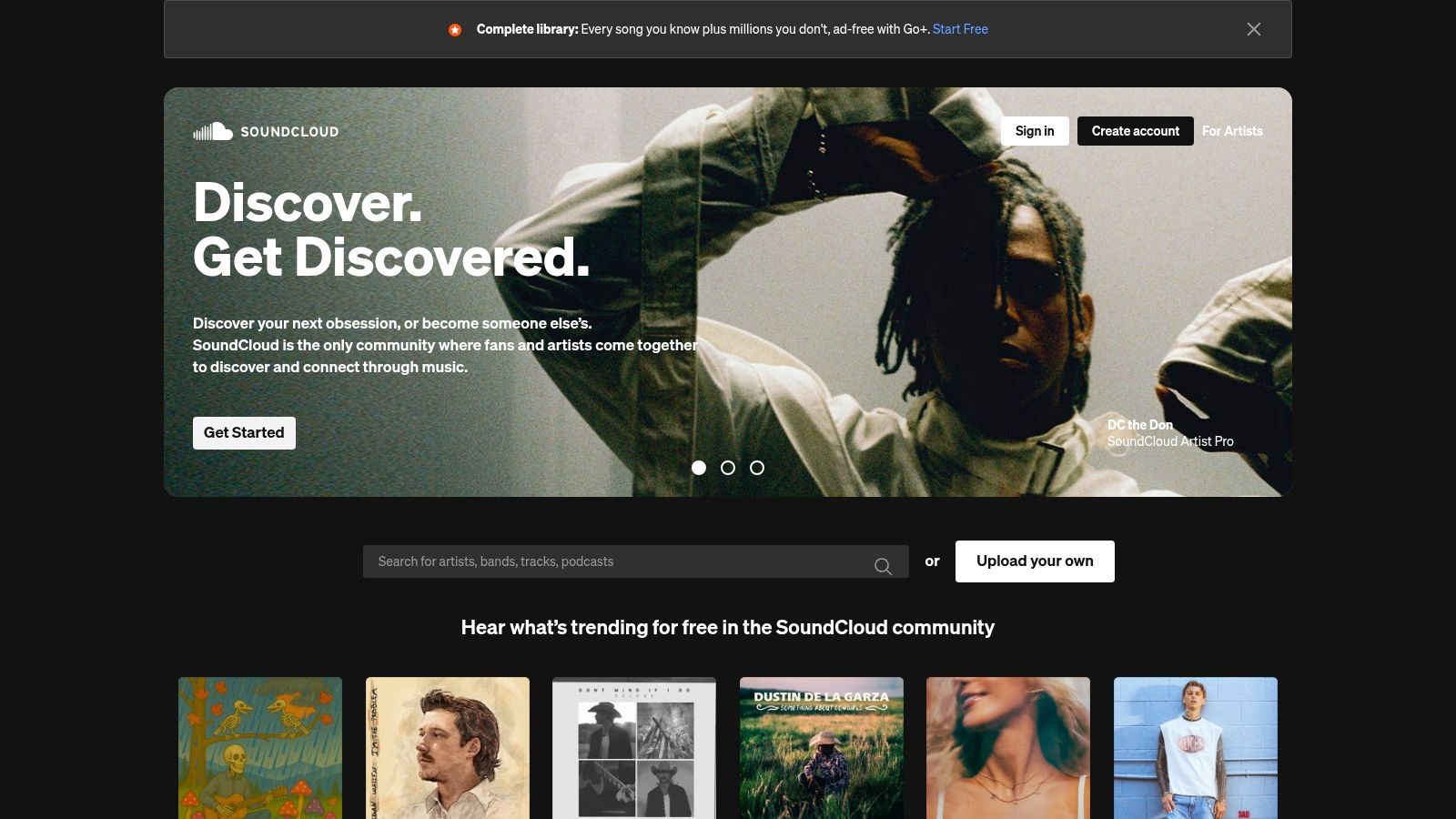
The platform’s strength lies in its community-driven curation and its function as a proving ground for new sounds. Its creator-centric tools and direct artist-to-fan interaction foster a unique ecosystem where emerging indie movements can be identified in real-time. This makes its playlists, both official and user-generated, a vital resource for A&Rs, curators, and fans seeking the absolute newest trends.
Key Features for Indie Artists
SoundCloud’s environment is built for early-stage discovery and direct engagement, offering unique pathways for artists to find their first audience.
Official 'Trending: Indie' Playlists: These are curated by SoundCloud's team and are often region-specific (e.g., U.S., Germany), reflecting what's currently gaining traction on the platform within the indie genre.
Creator and Curator Playlists: This is the core of SoundCloud's discovery engine. Playlists are created by a diverse mix of artists, labels, blogs, and dedicated fans, often surfacing tracks long before they appear elsewhere.
Strong Community Tools: Features like comments directly on the track timeline, reposts, and easy sharing create a feedback loop that helps artists connect with their listeners and build an organic following.
Viral Integrations: With tools that allow users to easily bring viral finds from platforms like TikTok directly into their SoundCloud libraries, the platform remains deeply integrated with modern music discovery trends.
Practical Tips for Submission and Growth
Success on SoundCloud is about community engagement, not just pitching. Actively participating in the platform is key. Follow other artists in your scene, comment thoughtfully on their tracks, and engage with the curators who are championing the music you love. This builds genuine relationships that are more valuable than a cold submission.
Pro Tip: Use SoundCloud as a space to test new material. Uploading demos, acoustic versions, or remixes can build buzz and give your most dedicated fans exclusive content, making them feel like part of your creative journey.
When reaching out to independent curators on the platform, your pitch should reflect an understanding of their taste. Reference other artists they have featured and explain the specific sonic or thematic connection to your music.
Platform Breakdown
Feature | Details |
|---|---|
Pricing | Free tier for listeners and artists (with upload limits). Subscription tiers like SoundCloud Go and Go+ offer ad-free and offline listening. |
Unique Offering | The fastest place to discover emerging indie scenes, demos, and creator-curated sets. Unparalleled for tracking the birth of new micro-genres and online music movements. |
Pros | Unbeatable for early-stage discovery, strong community features for direct fan engagement, and an excellent platform for testing new music and sharing unreleased tracks. |
Cons | Catalog completeness for major label back-catalogs can be limited. The audio quality and metadata consistency can vary significantly across user uploads. |
Website |
7. Bandcamp
Bandcamp operates on a fundamentally different model from streaming giants, positioning itself as the premier platform for directly purchasing music and supporting artists. While not a traditional streaming service, it plays a vital role in the indie music playlists ecosystem through its community-driven features and editorial curation. Fans purchase music directly from artists and can then use those purchased tracks to build and share their own Bandcamp Playlists, creating a unique, ownership-based approach to curation.
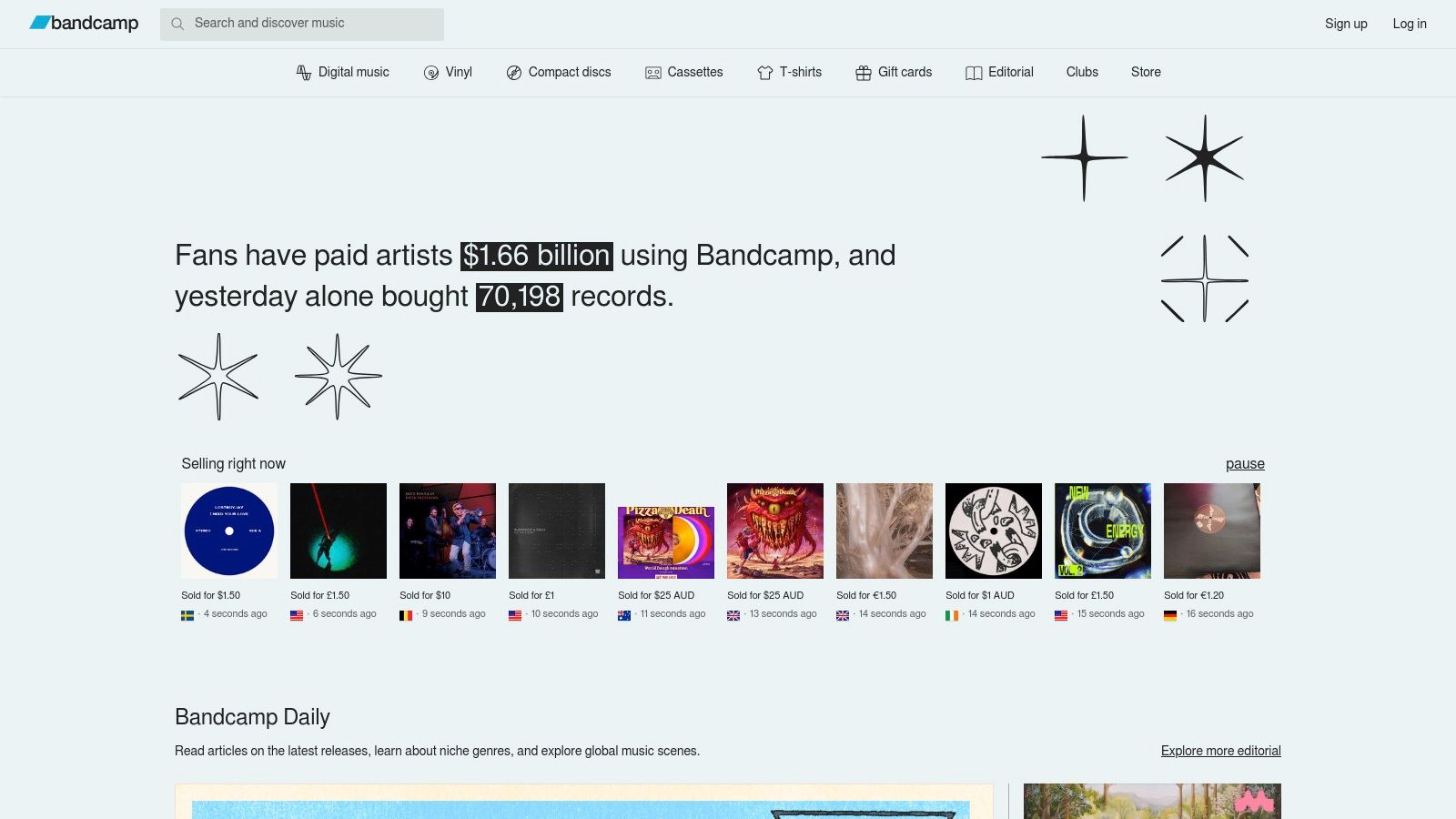
The platform's strength is its direct-to-fan economy, where a significant majority of revenue goes straight to the artist. This has cultivated a dedicated community of music lovers who prioritize artist support. For indie artists, Bandcamp is not just a storefront; it's a hub for community building and discovery through its powerful tag system and acclaimed editorial arm, Bandcamp Daily, which often spotlights emerging talent.
Key Features for Indie Artists
Bandcamp's features are designed to foster a direct connection between artists and their most dedicated supporters, providing a powerful alternative to the streaming model.
Direct Artist Support: Artists receive an average of 82% of revenue from digital and physical sales. Special promotions like Bandcamp Friday waive the platform's revenue share entirely.
Bandcamp Daily & Discover: The editorial arm, Bandcamp Daily, provides high-quality journalism that surfaces new and noteworthy indie releases. The Discover feature allows users to explore music through a vast network of specific genre and location tags.
High-Quality Formats: Fans can download their purchases in multiple high-quality formats, including MP3, FLAC, and WAV, catering to audiophiles and serious collectors.
Bandcamp Playlists: Users can create and share playlists composed of tracks they have purchased. While not a tool for broad exposure like Spotify playlists, they represent highly curated selections from dedicated fans.
Practical Tips for Submission and Growth
Success on Bandcamp is about community engagement, not just playlist pitching. The platform doesn't have a formal submission system for its editorial features, so visibility relies on building a strong presence. Make sure your releases are tagged meticulously with relevant genres, sub-genres, moods, and locations to appear in Discover searches.
Pro Tip: Engage with the community. Follow other artists and fans, leave comments, and explore Bandcamp Daily to understand the types of stories and artists that get featured. Building relationships organically is more effective here than cold pitching.
For artists, treating your Bandcamp page as your primary hub for releases, merch, and fan interaction can build a sustainable career. Highlighting exclusive content or physical goods can convert casual listeners into loyal patrons.
Platform Breakdown
Feature | Details |
|---|---|
Pricing | Free for artists to sign up. Bandcamp takes a 10-15% revenue share on digital items and 10% on physical merchandise. Free for fans to browse, but listening requires purchasing music. |
Unique Offering | An artist-first, direct-to-fan marketplace that prioritizes music ownership and high-quality audio, supplemented by strong editorial curation. |
Pros | Highest artist payout percentage, strong community of dedicated music buyers, high-quality audio formats, and excellent editorial features for discovery via Bandcamp Daily. |
Cons | Playlist functionality is limited to purchased music, making it a poor tool for broad, passive discovery. It is not a streaming service, which limits its reach compared to Spotify. |
Website |
Top 7 Indie Playlist Platforms Comparison
Service | Implementation Complexity 🔄 | Resource Requirements ⚡ | Expected Outcomes 📊 | Ideal Use Cases 💡 | Key Advantages ⭐ |
|---|---|---|---|---|---|
artist.tools | 🔄 Moderate — web dashboard; quick onboarding, some feature learning | ⚡ Low cost — free tier; Full Access ≈ $15/mo; needs Spotify data/access | 📊 Spotify-specific fraud detection, playlist vetting, measurable growth signals | 💡 Independent artists/managers focused on Spotify analytics, playlist outreach, fraud protection | ⭐ Spotify-first analytics, large curator DB, bot-detection, SEO + AI pitch tools |
Spotify | 🔄 Low for listeners; moderate for artist analytics (Spotify for Artists) | ⚡ Low barrier — free or Premium subscriptions; wide device support | 📊 High discovery potential and playlist reach across large user base | 💡 Artists seeking mass discovery; listeners wanting personalized recommendations | ⭐ Best-in-class discovery UX and massive playlist ecosystem |
Apple Music | 🔄 Low — consumer app; editorial placement requires relationships | ⚡ Paid subscription; lossless & Spatial Audio included; cross-platform apps | 📊 Strong editorial placements and high-quality listening experience | 💡 Audiophiles and artists targeting curated editorial playlists | ⭐ Human curation consistency; lossless & Spatial Audio by default |
YouTube Music | 🔄 Low — integrated with YouTube channels and video workflows | ⚡ Free with ads or Premium bundle; benefits from video assets | 📊 Video+audio discovery and viral potential via creator ecosystem | 💡 Artists with visual content or fans wanting video-integrated discovery | ⭐ Deep video integration and broad content coverage |
Amazon Music | 🔄 Low — consumer streaming; artist access via distributor | ⚡ Subscription tiers; Prime member discounts; Unlimited for HD/Ultra HD | 📊 Good exposure to Prime users and strong smart-speaker reach | 💡 Artists targeting Prime/Alexa audiences and listeners using Echo devices | ⭐ Alexa/Echo integration and value for Prime members |
SoundCloud | 🔄 Low — simple upload/playlist tools; community-driven workflows | ⚡ Low-cost tiers; creator-focused tools and social integrations | 📊 Fast surfacing of emerging scenes and community engagement | 💡 Emerging DIY artists, remix culture, and trend-spotters | ⭐ Early discovery hub with strong creator-to-fan interaction |
Bandcamp | 🔄 Low — store setup required for artists; fans create owned playlists | ⚡ Direct-sales model — purchases/fees; no all-you-can-stream catalog | 📊 Direct revenue for artists, high-quality downloads, niche discoverability | 💡 Artists prioritizing direct support and collectors wanting ownership | ⭐ Transparent fees, direct artist revenue, high-quality formats |
Building Your Playlist Strategy: From Discovery to Data-Driven Growth
Navigating the vast ocean of indie music playlists can feel overwhelming, but as we've explored, the right strategy transforms this challenge into a powerful opportunity. The journey from your studio to a listener's ears is no longer a game of chance. It's a calculated process of discovery, targeting, and strategic outreach, powered by data and a deep understanding of the digital ecosystem.
This article has armed you with a detailed map of the most influential playlists across Spotify and beyond. We've demystified the curators behind them, analyzed their audience metrics, and provided a framework for pitching your music effectively. The core takeaway is clear: success in playlisting isn't about sending a thousand generic emails. It's about sending ten highly-targeted, well-researched, and personalized pitches to the right curators.
Key Takeaways for Your Playlist Pitching Campaign
Let's distill the most critical lessons from our deep dive into the world of indie music playlists:
Data Over Guesswork: Your gut feeling about a playlist is a good starting point, but data is your most reliable guide. Metrics like Follower Growth, Monthly Listeners, and especially Bot Risk are non-negotiable checks before you invest your time in a pitch. A playlist with 100,000 followers is worthless if 90% are bots.
Curator Connection is King: Behind every great playlist is a person with a passion for music. Researching the curator, understanding their taste, and personalizing your outreach can dramatically increase your chances of being heard. Generic, copy-paste emails are the fastest way to the trash folder.
A Multi-Platform Mindset: While Spotify is the giant, a holistic strategy is more resilient. Use SoundCloud for raw feedback, Bandcamp to nurture your core fanbase, and YouTube Music to build a visual brand. Success on these platforms creates a story and social proof that makes your Spotify pitches more compelling.
Integrity is Your Foundation: Building a career on fraudulent streams from bot-ridden playlists is a house of cards. It damages your reputation, pollutes your listener data, and puts your accounts at risk. Prioritize legitimate, engaged playlists, even if their follower counts are smaller. Authentic growth is sustainable growth.
Implementing Your Data-Driven Strategy
So, what are your immediate next steps? Don't just close this tab and hope for the best. It's time to put these insights into action.
Audit Your Targets: Re-evaluate your current list of target playlists. Run each one through a tool like artist.tools to vet its health and authenticity. Be ruthless and cut any playlist that shows signs of suspicious activity or has a disengaged audience.
Segment Your Outreach: Group your vetted playlists into tiers. Tier A might be your perfect-fit, "dream placement" playlists that require a highly personalized pitch. Tier B could be broader genre playlists where a slightly more standardized (but still customized) approach works.
Refine Your Pitch: Craft a concise, compelling pitch template. Include a brief bio, a direct link to your track, and one or two sentences explaining why your song is a perfect fit for that specific playlist. Mention a track you love from their list to show you’ve done your homework.
Track Everything: Create a simple spreadsheet to track who you've pitched, when you pitched them, and the outcome. This data will become invaluable over time, helping you identify which curators are receptive to your sound and refining your approach for future releases.
Ultimately, mastering the art of playlisting is about shifting your perspective. Stop seeing it as a lottery and start treating it like a core marketing discipline. It requires research, strategy, and the right tools to execute effectively. By combining the broad reach of major platforms with the precision of data-driven tools, you can systematically build momentum, find your audience, and turn listeners into lifelong fans. The power to grow your career through indie music playlists is not in the hands of gatekeepers; it's in your ability to leverage information and connect authentically.
Ready to stop guessing and start targeting the right indie music playlists with confidence? artist.tools provides the industry's most trusted data, including bot detection and curator contacts, to ensure your music reaches real listeners. Sign up for free today and take control of your Spotify playlisting strategy at artist.tools.
.png)
.png)
Comments