How to Get in the Music Business: A Proven Guide to Success
- BRANLAND
- 1 day ago
- 17 min read

Let's be real: getting into the music business today isn't about some lucky break or getting discovered in a smoky club. That’s the old way. The new way is a strategic game, and you have to know the rules to win. It all boils down to building a professional music product, a brand people actually care about, and then executing a smart, data-driven release plan.
You have to treat your passion like a business from day one. That's the secret sauce.
Your Blueprint for the Modern Music Business
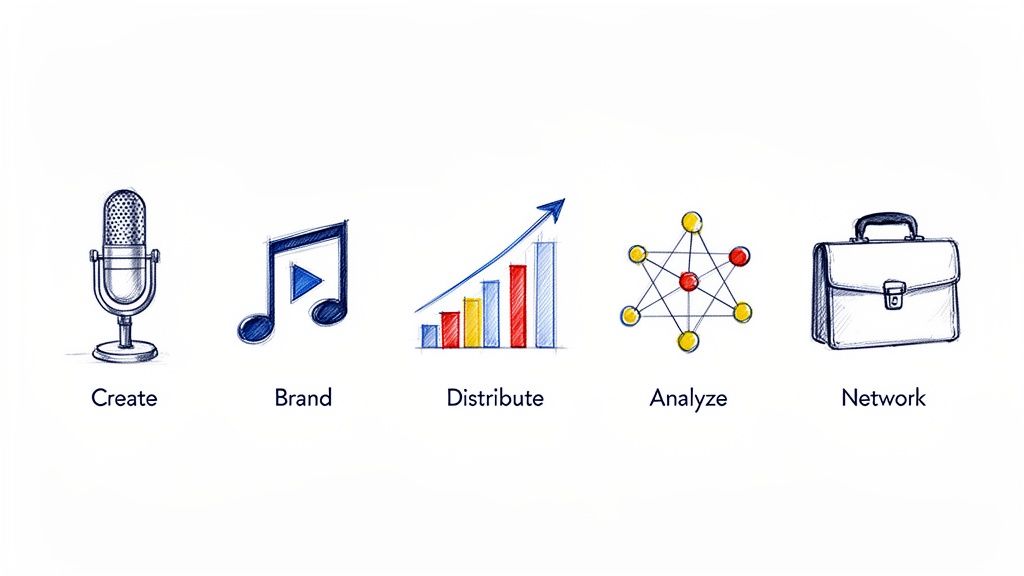
Forget everything you think you know about "making it." The modern music career is built from the ground up, with streaming platforms like Spotify at the very center of your universe. This isn't just about writing a great song; it's about making smart decisions in a world that revolves around streams, algorithms, and data. Success now comes from deliberate, informed actions—not from hoping for the best.
The numbers don't lie. The streaming revolution has completely changed the game. Global streaming revenues just hit $20.4 billion, making up a massive 69% of all recorded music income. This explosion is fueled by over 752 million paid subscribers around the world. Your audience is online, and you need to meet them where they are. You can dig deeper into the industry's growth over at artists.badenstock.com.
The Core Pillars of a Modern Music Career
Building a sustainable career in music is like constructing a house. You can't just focus on the paint job and ignore the foundation. Each piece is essential for stability and long-term success. If you only focus on one area—like just making music—the whole thing will eventually fall apart.
To help you get it right, we've broken down the essential pillars you absolutely must master. Think of this as your roadmap.
This guide provides the blueprint for building that solid foundation. We'll walk through the essential pillars you need to master.
Pillar | Core Focus | Key Action |
|---|---|---|
Product | High-Quality Music | Professional production, mixing, and mastering to stand out. |
Brand | Compelling Identity | Crafting a unique story, visual style, and message that resonates. |
Distribution | Strategic Release Plan | Choosing the right partners and timing for maximum launch impact. |
Promotion | Data-Driven Marketing | Using analytics to find your audience and measure campaign success. |
Business | Solid Foundations | Handling royalties, registrations, and professional networking. |
Each pillar supports the others, creating a structure that can actually support a long-term career.
The single biggest mental shift you can make is treating your music career like a startup. You are the CEO. This perspective alone will change how you make decisions and turn your passion into something that can actually pay the bills.
Throughout this guide, we’ll show you exactly how to execute this blueprint using practical tools. We'll be referencing features from artist.tools, a platform built to give independent artists the data they need to compete. Whether you're using the Playlist Analyzer to vet potential playlists or the Bot Detection tool to keep your profile safe, you'll see how to navigate the modern music business with confidence.
Crafting Your Sound and Artist Brand
Let's get one thing straight: your journey in the music business begins and ends with your product. Before you even think about playlists, tours, or royalty checks, you need music that isn't just good—it has to be professionally polished and undeniably you.
The barrier to entry for making music has never been lower, which is both a blessing and a curse. It means the market is flooded, and the standard for what's considered "professional" is incredibly high. A bedroom demo just won't fly anymore.
This all starts with a real commitment to professional production, mixing, and mastering. These aren't fancy extras; they're the absolute baseline for your music to even have a fighting chance. A great mix makes every element in your track pop, while mastering gives it that final sheen, loudness, and clarity to stand shoulder-to-shoulder with major label hits. Skipping this is like writing a brilliant novel but publishing it with typos on every page—the genius gets lost in a sloppy presentation.
Defining Your Unique Artistic Identity
Okay, so your music sounds incredible. That's just the first piece of the puzzle. To really make a dent in the music business, you have to build a compelling brand around that sound. Your artist brand is the story, the visuals, and the entire vibe you wrap around your music. It’s what turns someone who stumbles upon your song into a die-hard fan who feels like they know you.
This isn’t about inventing some fake persona, either. Authenticity is your most valuable currency. Your brand should feel like a natural extension of who you are and what your music is trying to say.
Get started by asking yourself a few tough questions:
What’s my core message? What am I really trying to communicate with my art?
Who am I talking to? Picture your ideal listener. What do they care about? Where do they hang out online? Who else is in their rotation?
What's my unique story? Everyone has one. What’s yours? A great story is often the hook that pulls people in. If you're struggling with this, we've got a guide on how to write an artist bio that truly connects that can help you nail it down.
Your brand is the reason someone chooses to listen to your sad song over the thousand other sad songs released this week. It’s the emotional and visual context that makes your music memorable and meaningful.
Answering these questions is the foundation for building a consistent, recognizable identity that cuts through the noise.
Building Your Professional Toolkit
With your killer sound and clear brand identity, it's time to gather the assets that scream "I'm a professional." Think of this as your digital storefront—it needs to be clean, sharp, and ready for business the moment an opportunity comes knocking. These are non-negotiable.
First up, your visual identity needs to be consistent everywhere. This means:
High-Quality Photos: Please, invest in a professional photoshoot. You need a mix of shots for press, social media profiles, your Spotify for Artists banner, and more.
Compelling Cover Art: Your cover art is your music's first impression. Make sure it's high-resolution and perfectly captures the aesthetic of your brand.
A Cohesive Social Media Presence: Your profiles on Instagram, TikTok, X, or wherever you live online should all have the same profile picture, a consistent visual theme, and a bio that gets straight to the point about who you are.
Finally, pull all of this together into an Electronic Press Kit (EPK). Your EPK is your digital resume, plain and simple. It’s a single destination for promoters, bloggers, and playlist curators to find your bio, photos, music links, and biggest wins. Having a slick EPK ready to fire off at a moment's notice shows you're organized, serious, and easy to work with—three traits that will put you miles ahead of the competition.
Your Spotify Strategy from Release to Royalties
Once you’ve nailed down your sound and your brand, it's time to pour all that energy into the single biggest engine in music today: Spotify. Getting a handle on this platform isn't just a side quest; it's the core of building a real, sustainable career. The moves you make here will directly impact your visibility, your audience growth, and ultimately, your bank account.
It all kicks off with one key decision.
Getting Your Music on the Platform
Before anyone can stream your masterpiece, you need a way to get it onto Spotify. That's where a digital distributor comes in. Think of them as the bridge between your final audio file and every major streaming platform. Companies like DistroKid, TuneCore, and CD Baby are the ones who handle the nitty-gritty of delivery and—most importantly—collecting and paying out your royalties.
So, which one is right for you? It really depends. Some charge a flat annual fee for unlimited uploads, which is great if you're prolific. Others take a percentage of what you earn. Do your homework. Look into their fee structures, what people say about their customer support, and any extra perks they offer. This decision affects how you get paid, so it’s worth the time to get it right.
Getting your music on Spotify is easy. Getting it heard is the real game. Your distributor is just the first step in a much bigger plan that needs to start weeks before your track ever goes live.
After you've picked a partner, you’ll upload your track along with all its metadata. This is the behind-the-scenes DNA of your song: artist name, track title, genre, songwriter credits, all of it. Don't rush this part. Getting the metadata right is non-negotiable. It’s how you get paid correctly, and it’s how Spotify’s algorithm starts to figure out who you are and which listeners to send your way.
The Art of the Spotify for Artists Pitch
Now for the real work. You need your music delivered to Spotify at least four weeks before your release date. This gives you enough time to access the single most powerful promotional tool you have: the editorial playlist pitch through your Spotify for Artists dashboard.
This pitch is your one shot to get your music directly in front of Spotify's own editors. These are the people curating massive playlists like Today's Top Hits or Lorem. A single placement on a list like that can literally change an artist's life overnight.
Your pitch needs to be a story, not just a spec sheet. Make it compelling.
The Song's Story: What’s this track about? What sparked the idea? Give them a real narrative to latch onto.
Your Marketing Plan: Show them you mean business. Mention the music video you’ve shot, the social media campaign you've got scheduled, or any press you’ve lined up.
Your Artist Journey: Who are you? Give them a quick snapshot of your story and any momentum you've been building.
Trying to cram all of that into a tight, professional pitch can feel overwhelming. That's where a tool like the AI Pitch Generator from artist.tools can be a lifesaver. You feed it your song details and marketing plan, and it helps you structure a pitch that’s modeled on submissions that have actually worked. It’s all about putting your best foot forward.
This whole process is a funnel. Your music is the product, your brand provides the context, and a solid EPK (and pitch) packages it all up for the industry.
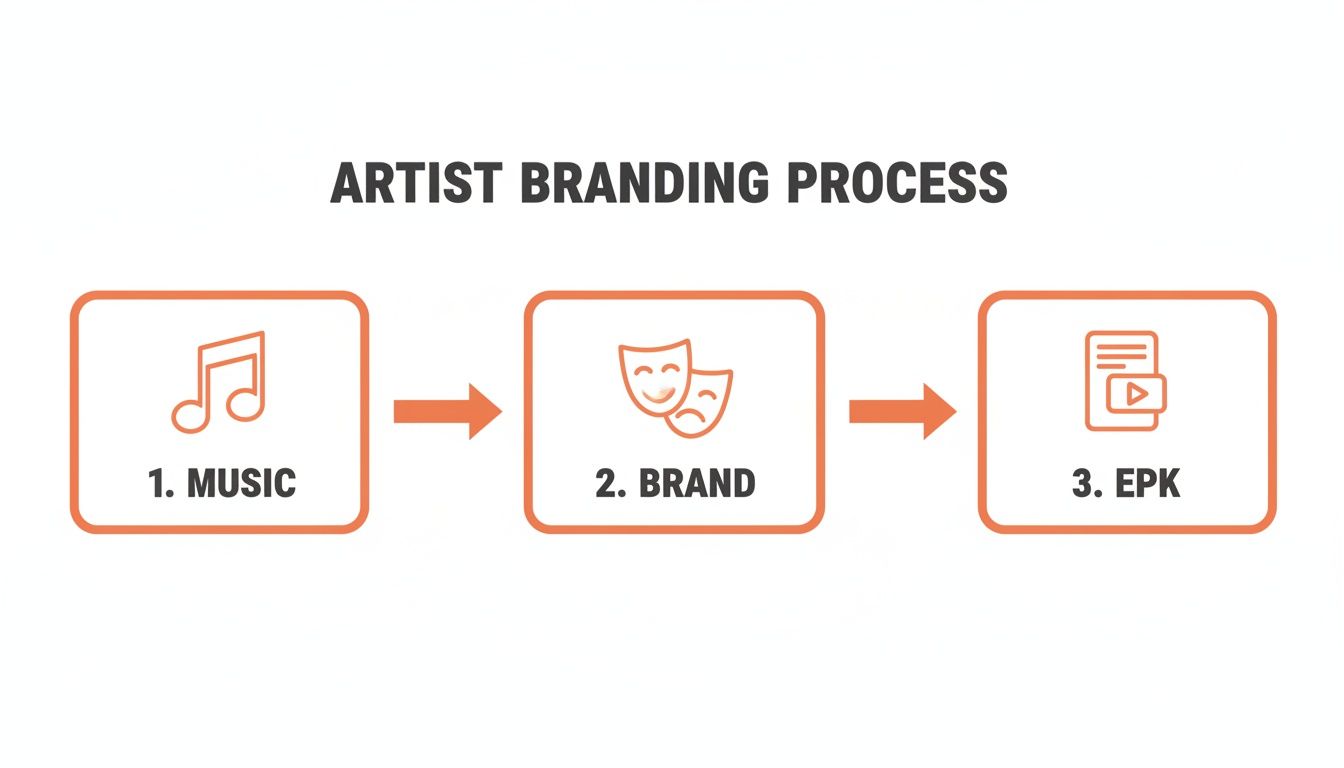
This just goes to show that a strong brand and professional presentation are every bit as crucial as the music itself if you want to get noticed.
Mastering Post-Release Promotion
So, what if you don't land that life-changing editorial placement? Your work is far from over. In fact, it’s just beginning. The world of independent playlists holds a ton of opportunity. These are lists curated by regular people, blogs, and brands, and they can be a massive source of streams.
Finding the right ones takes some digging. Using artist.tools' Playlist Search, you can slice and dice by genre, mood, and size to find curators who are a good fit for your music. But please, don't just spam them. Use the Playlist Analyzer to check them out first. Look for genuine follower growth and, critically, check for any red flags of bot activity that could get your profile in trouble with Spotify.
Unlocking Spotify SEO
Beyond actively pitching, you need to make your music easy to find. Spotify isn't just a streaming service; it's a search engine. Listeners are constantly searching for music based on moods ("late night driving beats"), activities ("workout hype music"), and niche genres. This is where Spotify SEO becomes your secret weapon.
By using the Keyword Explorer in artist.tools, you can discover the exact terms people are typing into that search bar. Once you know what they’re looking for, you can start using those keywords to title your own artist playlists and weave them into your bio. It’s a simple trick that dramatically increases your chances of being discovered organically.
Making Sense of Your Royalties
As the streams start to roll in, so do the royalties. But how much money are we really talking about? The per-stream payout on Spotify is notoriously tricky. It changes based on the listener's country, their subscription plan, and the cut your distributor takes. On average, you can expect it to be somewhere between $0.003 and $0.005 per stream.
To get a better handle on your potential earnings, a Spotify Royalties Calculator is an indispensable tool for financial planning. It lets you set realistic goals by showing you how many streams you need to hit a certain income level. This helps you measure the real-world success of your campaigns. To dive deeper, check out our complete guide to royalties from Spotify.
The end goal is to build a predictable, sustainable career in a world where breaking through is harder than ever. A solid, data-backed strategy isn't just nice to have—it's absolutely essential for survival.
Protecting Your Music from Bots and Bad Data
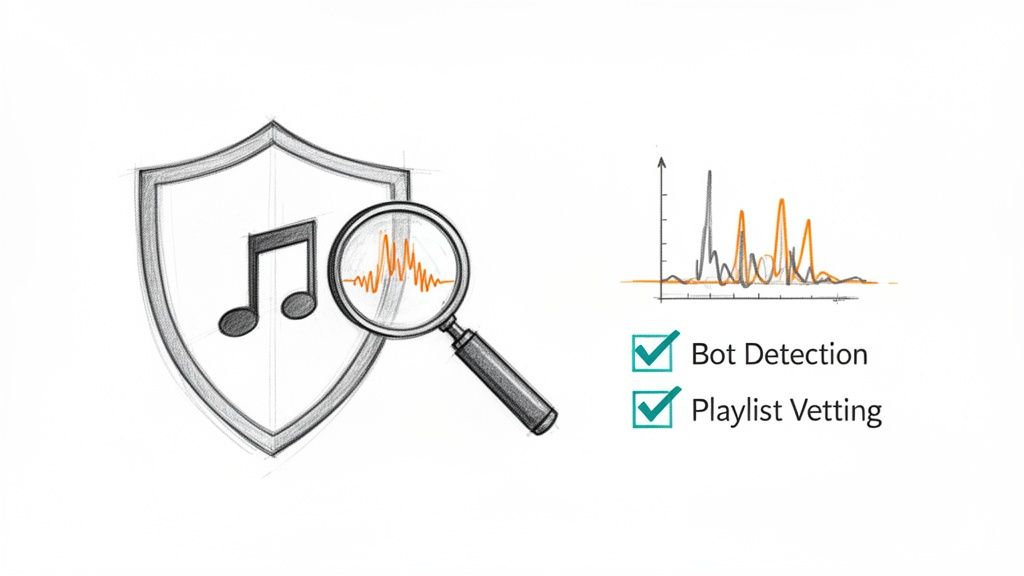
As you start to gain traction in the music business, your stream count becomes one of the most visible signs of your success. It’s tempting to do whatever it takes to push that number higher, but there’s a dark side to the streaming world that can completely derail your career if you're not paying attention.
I'm talking about bot activity and fraudulent streams.
This isn't just some minor technical issue; it's a critical threat to your longevity as an artist. Fake streams from bots can lead to some seriously harsh penalties from Spotify, including having your music pulled down, your royalties frozen, or your entire artist profile flagged for removal. It’s the kind of setback that can stop a promising career dead in its tracks.
Understanding this threat is the first step toward building a resilient, long-term career. It’s all about protecting the blood, sweat, and tears you’ve poured into your music and ensuring your growth is real, sustainable, and built on a foundation of genuine fans.
The Real Damage of Fake Streams
Fake streams do more than just inflate your numbers—they poison your data. They make it impossible to know who your real fans are, where they live, or which of your marketing efforts are actually connecting with people. Imagine spending your hard-earned marketing budget only to discover the streams you paid for are worthless bots. You haven't just wasted money; you've lost a crucial opportunity to find a real audience.
The damage goes way beyond bad data and wasted ad spend. Spotify has gotten incredibly good at detecting artificial streaming, and when they find it, they don't just shrug it off. They take action.
Here’s exactly what’s at stake:
Track Takedowns: Spotify can and will remove songs from its platform if they're tainted by significant fraudulent activity.
Frozen Royalties: Any money earned from those fake streams will be clawed back, and future payments can be put on hold while they investigate.
Profile Penalties: Your artist profile itself can be penalized, making it harder for your music to get picked up by the algorithm or even be considered for editorial playlists.
Think of your Spotify profile as your business's storefront. Bot activity is like having a crowd of mannequins pack your store, scaring away real customers and giving the landlord (Spotify) a reason to evict you. Protecting your profile's integrity is completely non-negotiable.
This is why proactively defending your music from bots isn't just a good idea; it's a survival tactic in the modern music business.
Vetting Playlists Before You Pitch
So, how do artists get mixed up in this mess? One of the most common ways, often by accident, is through illegitimate playlists. A "curator" promises you thousands of streams for a fee, but those streams are generated by bot farms. To avoid this trap, you have to vet every single playlist before you even think about submitting your music.
This is where a tool like the Playlist Analyzer from artist.tools becomes an absolute game-changer. Instead of pitching blindly and hoping for the best, you can dig into a playlist's health and legitimacy. You can see its historical follower growth—any sudden, unnatural spikes are a massive red flag.
The analyzer helps you spot the warning signs of bot activity, giving you the confidence that you're pitching to real curators with engaged, human listeners. This simple due diligence step is one of the most powerful actions you can take to safeguard your career.
From Protection to Proactive Strategy
Once your data is clean, you can shift from a defensive mindset to an offensive one. Accurate data is your most powerful strategic asset. When you know your streams are legitimate, you stop guessing and start making informed decisions. This is the moment you transition from being just an artist to a data-driven music entrepreneur.
Using a Stream Tracker lets you monitor your track performance in near real-time. Did that new playlist placement actually move the needle? How did last week's social media campaign impact listener numbers? Tracking these metrics reveals the direct cause-and-effect between your promotional efforts and your audience growth.
At the same time, the artist.tools’ Bot Detection feature acts like a 24/7 security system for your music. It actively monitors your profile for suspicious activity and alerts you to potential threats, allowing you to handle them before they blow up into a major problem with Spotify.
By combining defensive tools with analytical insights, you create a powerful feedback loop. You protect your assets, measure your results, and reinvest your time and money into the strategies you know are connecting you with real fans.
Building Your Team and Business Foundation
As your music career starts picking up speed, you'll hit a wall. You simply can't do it all yourself. Juggling creating music with booking shows, running socials, and handling emails just isn't sustainable. This is the moment when getting your foot in the door of the music business evolves from a solo mission to building a real team.
Think of your music career as a startup. You're the CEO, and every good CEO knows when it's time to delegate.
Assembling Your Core Team
Most artists think they need a manager and a booking agent right away. But honestly, one of the biggest mistakes you can make is trying to hire them too early. These pros aren't interested in potential; they're drawn to momentum. Your job is to create that heat first.
An artist manager is your main business partner. They help you map out your career, keep your team in sync, and handle the big-picture negotiations. So when's the right time to get one? When you're so swamped with gigs, fan messages, and recording that you're starting to let real business opportunities fall through the cracks. For a deeper look, you can explore our guide on what an artist manager actually does.
A booking agent, on the other hand, does one thing: they get you paid live shows. They don’t care about your SoundCloud plays. They care about how many tickets you've sold. You're ready for an agent when you've already built up a consistent draw and are booking your own successful gigs.
Setting Up Your Business Infrastructure
While your team will handle the external opportunities, you need to build a solid business foundation internally to support that growth. This isn't the glamorous part of music, but it’s absolutely essential for getting paid and protecting your work. It's what turns a hobby into a career.
Your first stop should be registering with a Performing Rights Organization (PRO).
In the US: That means signing up with ASCAP, BMI, or SESAC.
What they do: PROs track when your music is played in public—on the radio, in a coffee shop, at a venue—and they collect performance royalties for you.
Why it's critical: If you're not registered, you're literally leaving money on the table. Money that you've earned.
This is the bare minimum for making sure you get paid as a songwriter.
Thinking like a business owner from day one is the ultimate long-term strategy. Handling your registrations and legal structure early prevents massive headaches and financial losses down the line, ensuring your career is built to last.
This proactive mindset is more important than ever. The global music production and distribution industry has ballooned to an estimated $38.2 billion. That's a huge pie, and prepared independent artists have a real shot at grabbing a slice. Having your business in order is what allows you to capitalize on that growth.
Solidifying Your Legal and Financial Structure
Beyond just collecting royalties, you need to think about a formal business entity. Setting up a Limited Liability Company (LLC) is a smart move for any serious artist.
An LLC creates a legal wall between your personal assets and your music business. If your music career ever faces a lawsuit, your personal savings, car, and house are protected. It also makes you look more professional and simplifies everything from opening a business bank account to managing expenses and filing taxes.
It’s all about building a durable container for your career—one that can handle success, absorb challenges, and establish you as the legitimate business you are. Taking these steps early creates a professional foundation that will support you for years.
Common Questions About Starting in the Music Industry
Jumping into the music business can feel like you've been given a puzzle, but no one gave you the picture on the box. As you transition from just making music to actually building a career, a whole slew of questions starts popping up. Getting solid, straight-up answers is the key to making smart moves and dodging those early-career mistakes we all want to avoid.
This section is all about tackling those big, frequent questions that every emerging artist bumps into. The idea is to give you direct, usable advice that reinforces the business mindset you need to survive and thrive. Think of it as your field guide for the road ahead.
Do I Need a Record Label to Succeed Anymore?
Let's cut right to the chase: no. Absolutely not. The old-school model of grinding it out in hopes of getting "discovered" by a label scout is officially a thing of the past. Today's music world is built for independent artists to create real, sustainable careers entirely on their own terms.
Digital distributors like DistroKid and TuneCore hand you the keys to the kingdom, placing your music on Spotify, Apple Music, and every other platform where people listen. When you pair that global access with powerful data platforms like artist.tools, you can find your audience, track your growth, and make strategic moves without needing anyone's permission.
This is the new reality:
You keep 100% of your creative control. No A&R rep is going to tell you to change a lyric or tweak your sound.
You keep way more of your money. Without a label taking a massive slice of the pie, your earnings per stream are significantly higher.
You're building your own business. The smart play now is to build your career independently. If a label comes knocking later, you'll be negotiating from a position of serious strength, not desperation.
A record deal is no longer the definition of success. Success is building a direct line to your fans and running your career like the CEO you are. A label is now a potential business partner, not a gatekeeper.
How Much Money Can I Realistically Make from Spotify?
This is the million-dollar question, isn't it? But the answer is a lot more complex than a simple number. How much you earn from Spotify streams can swing wildly based on a few big factors, like where your listeners are, if they're on a Premium or ad-supported plan, and the deal you have with your distributor.
As a rough average, you can expect the payout per stream to land somewhere between $0.003 and $0.005. To put that in perspective, a million streams would net you roughly $3,000 to $5,000—and that's before you split it with any collaborators, producers, or your distributor.
It's crucial to stop thinking of streaming royalties as your main salary. Instead, look at Spotify as the most powerful marketing and audience-building machine you have. Your streaming numbers are the engine that powers your more profitable income sources, like merch, touring, and sync licensing.
What Is the Single Most Common Mistake New Artists Make?
Hands down, the biggest and most costly mistake is releasing music without a real plan. I see it all the time: an artist spends months perfecting a song, uploads it, makes one social media post, and then just hopes people find it. This "release and pray" method is a surefire way to end up disappointed.
A successful release is a campaign, not a single event. The real work has to start at least 4-6 weeks before your track even hits Spotify. That pre-release window is your golden opportunity to build the momentum that will give your song a fighting chance once it's out.
A solid release plan absolutely must include:
Getting Your Assets in Order: This means having your final master, high-res cover art, promo photos, and a bank of social media content ready to go.
Pitching to Spotify's Editors: You have to submit your track through your Spotify for Artists dashboard at least a week before release day. The earlier, the better.
Pitching to Independent Curators: This is where you do your homework. Research legitimate independent playlist curators and start reaching out to them to line up placements for your release week.
Mapping Out Your Content: Plan your social media posts, email newsletters, and any other outreach to build hype and get people excited to press play on day one.
Success in this game is about manufacturing momentum. It takes proactive, strategic work, not just wishful thinking.
How Important Is Networking in the Digital Age?
Networking is just as important as it ever was—the venues have just changed. Sure, meeting people face-to-face at shows or conferences still has its place, but most of the real relationship-building now happens online. It’s all about creating genuine, two-way connections with other people in the industry.
This means actually engaging with other artists, producers, and curators on social media, not just spamming them with your link. It means jumping on collaborations, participating in livestreams, and showing genuine support for what others are doing. When you do reach out—say, using contact info you found through the artist.tools Playlist Search—make it personal. Send a professional email that proves you’ve actually listened to their playlist and know what they're about.
The goal isn't to collect favors; it's to build a real community and support system. A strong network is what leads to collaborations, opening slots on tours, and priceless advice you just can't get anywhere else.
Ready to stop guessing and start making data-driven moves on Spotify? artist.tools gives you the insights to vet playlists, protect your music from bots, and build a smarter career. Start analyzing your music's performance today at artist.tools.
Comments