Public Relations Music The Modern Artist's Spotify Playbook
- Jan 22
- 15 min read
Forget what you think you know about music promotion. In the world of streaming, public relations for music isn't about schmoozing traditional press anymore. It's a data game, and on this field, Spotify playlists are the new radio stations and their curators are the kingmakers.
This is your road map for cutting through the noise in the crowded Spotify ecosystem and building real, lasting momentum.
The New Era of Music PR on Spotify
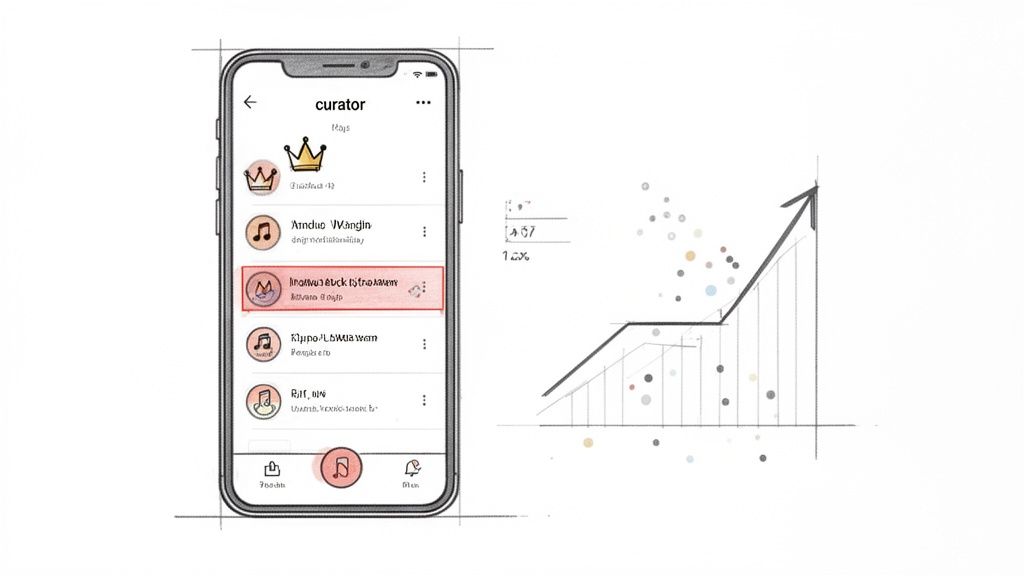
The pivot from physical sales and radio spins to streams has completely flipped the script for artists. Success is no longer guaranteed by a major label's backing or a five-figure ad spend. It’s all about getting strategic visibility where it actually counts: on the playlists that millions of listeners rely on to discover their next favorite song.
This guide is a battle-tested playbook for artists ready to take control. We're going to move past the generic advice and get into the specific, actionable strategies that actually turn streams into a sustainable career. You'll learn how to build an undeniable digital footprint, sniff out genuine playlist opportunities, and craft pitches that curators actually want to read.
A Modern Approach to Music Promotion
To really get anywhere, you need a solid foundation built on a few core pillars. These are the elements that directly impact your performance on platforms like Spotify. Mastering them is non-negotiable for any independent artist looking to compete.
At its core, a modern music PR strategy is about mastering four key areas. Think of these as the legs of the table—if one is weak, the whole thing wobbles.
PR Pillar | Primary Goal | Key Action/Tool |
|---|---|---|
Digital Press Kit (EPK) | Provide a seamless, one-stop hub for media, curators, and industry contacts. | Create a clean EPK with a compelling bio, high-res photos, and direct stream links. |
Targeted Curator List | Connect with people who genuinely care about your genre, not just anyone with a playlist. | Use tools like artist.tools to find authentic bloggers, influencers, and curators. |
Data-Informed Pitching | Make your pitch a relevant suggestion, not just another piece of spam in their inbox. | Analyze a playlist's data before pitching to ensure your sound is a perfect fit. |
Meaningful Campaign Measurement | Understand what's working so you can double down on it for the next release. | Track monthly listeners, stream sources, and playlist adds to see the real impact of your efforts. |
Nailing these four areas turns your PR from a shot in the dark into a calculated, repeatable process for growth.
The goal is simple: use data and smart outreach to get your music in front of the right ears. Every playlist add, blog feature, and listener save is a building block for long-term growth. This approach transforms PR from a guessing game into a measurable science.
Building a Press Kit That Opens Doors
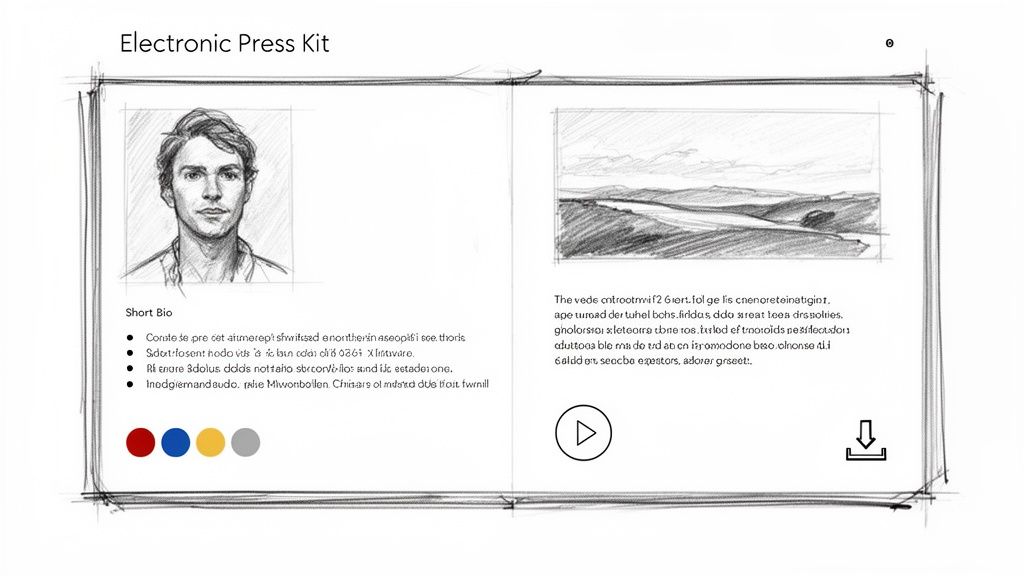
Think of your Electronic Press Kit (EPK) as your digital handshake. For a busy curator or blogger wading through hundreds of submissions a day, it's often the only impression you get to make.
A sloppy, incomplete EPK is a one-way ticket to the trash folder. But a sharp, professional one? That gets you a listen. It's the difference between being ignored and getting discovered.
This isn't just a folder of files; it's a strategic tool in your public relations music arsenal. Its only job is to make it ridiculously easy for someone to understand who you are, what your music sounds like, and why they should give a damn. A great EPK shows you respect their time and take your career seriously.
The Anatomy of an Irresistible EPK
Let's get past the idea of a simple checklist. A powerful press kit isn't just about having the right parts; it’s about how you present them to tell a story. You want to give a professional everything they could possibly need without making them feel overwhelmed.
Your EPK should live on a clean, easy-to-navigate webpage or be a slick one-sheet PDF. Whatever you do, don't just send a messy list of download links in an email.
Your Artist Bio: This is your story, not your life history. Have a short, medium, and long version ready. Focus on what makes your music and your journey unique.
High-Resolution Photos: You need options. Provide both portrait and landscape shots, in color and black & white. Media outlets have different layouts, and giving them choices makes their job a hell of a lot easier.
Your Best Music: Don't bury the lede. Feature your top 2-3 tracks right at the top with direct streaming links (Spotify is the standard) and embeddable players. Make it effortless to press play.
Key Career Highlights: Got any press coverage, cool collaborations, or big achievements? Link to them. This is your social proof, and it adds instant credibility.
Writing a Bio That Tells a Story
Your artist bio is the absolute heart of your press kit. So many artists make the mistake of just listing their influences or accomplishments. That’s boring. You need to craft a narrative that pulls the reader in before they even hear a single note.
For instance, instead of saying, "I'm an indie rock artist influenced by The Killers," try something with more flavor: "My music captures the feeling of a late-night drive through a sleeping city, blending stadium-sized synth hooks with gritty, heartfelt storytelling." See the difference? One is a fact, the other is a vibe.
A great bio doesn't just describe your music; it sells the experience of listening to it. It answers the "Why should I listen?" question by creating an emotional hook that makes them curious.
Visual Branding and Professionalism
Don't sleep on the visuals. Your photos, logo, and overall design communicate your brand identity in a split second. This is one area where you absolutely cannot cut corners.
Invest in a professional photoshoot. Seriously. Smartphone pics from your living room aren’t going to fly. Your visual identity should feel connected to the sound and mood of your music. If you make dark, industrial music, a bright and sunny aesthetic will just feel weird. Consistency is everything.
For a deeper dive, check out our complete guide to a standout artist press kit. We break down every single element you need to build a truly professional presentation that will supercharge your public relations music efforts. Your EPK is your frontline representative—make sure it’s dressed to impress.
Finding and Vetting Legitimate Playlists
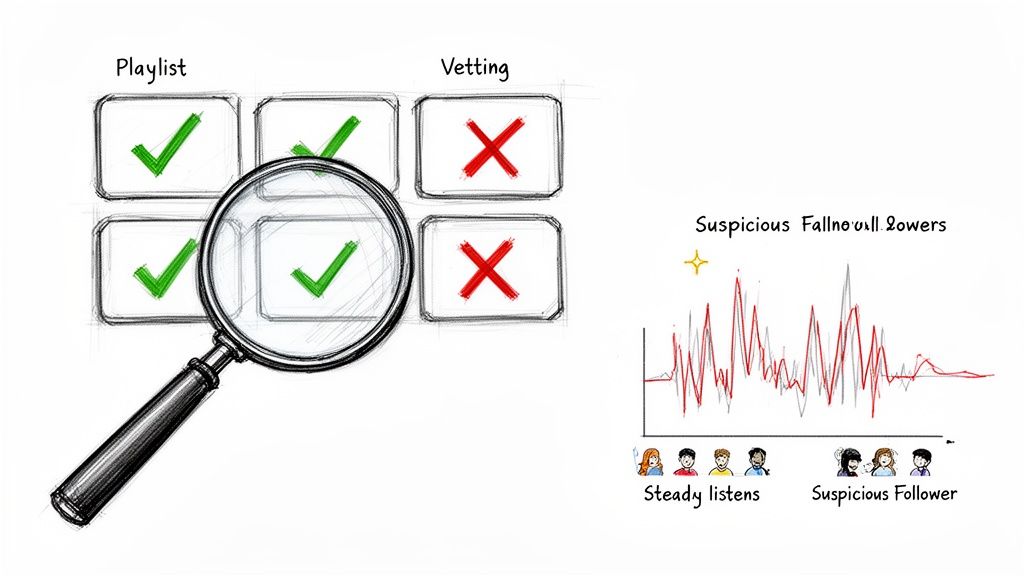
Pitching your music is a game of precision, not volume. You could send your track to a thousand random playlists and get nowhere, or send it to ten perfectly matched ones and completely change your career's trajectory. That's the core of a modern public relations music strategy.
The real work isn't just finding playlists; it's finding the right ones. This means getting scientific about building a high-impact curator list that lines up perfectly with your genre, mood, and the audience you want to reach. The goal is to connect with real people who have real, engaged listeners—people who are already primed to love what you do.
Moving Beyond Basic Search
Just typing "indie pop" into Spotify and grabbing the top results is a rookie move. It barely scratches the surface and usually points you toward playlists that are either totally saturated or, worse, completely fake. To do this right, you need a much more sophisticated approach.
This is where advanced search tools become essential. They let you slice and dice the data, filtering playlists by criteria that a standard search just can't see. It's a massive advantage.
Here are the key metrics you should be zeroing in on:
Genre & Mood Alignment: Is this playlist a genuine fit for your sound? Don't try to cram your acoustic ballad onto a high-energy workout mix. Be honest with yourself.
Audience Demographics: If the data is available, look for playlists whose listeners match your target audience in age, location, and listening habits.
Curator Activity: Is the curator actually adding new music and keeping the list fresh? A stale playlist is a dead end.
Contact Accessibility: Can you actually find a way to get in touch with the curator? If their contact info is buried or nonexistent, that's often a red flag.
Using the Playlist Search feature on artist.tools, you can apply these kinds of filters to uncover hidden gems your competitors are completely missing. This kind of granular data helps you move past guesswork and build a hyper-targeted list of curators who are actually likely to listen to your pitch.
Spotting Red Flags and Fake Playlists
Now for the dark side: botted playlists. These are fraudulent lists pumped up with fake accounts to trick artists into paying for worthless placements. Landing on one of these can seriously damage your Spotify account's standing and even get your music pulled.
Learning to vet these opportunities is non-negotiable. You have to become a detective, piecing together clues that separate the legit curators from the scammers. Historical data from artist.tools, which tracks daily snapshots of millions of playlists, shows that playlists ranking high in Spotify search for genre keywords drive 70% more streams than unoptimized ones. The good ones are worth finding.
Guarding your music against fraudulent streams is just as important as securing new placements. One botted playlist can undo months of hard work and jeopardize your relationship with Spotify. Always prioritize authenticity over vanity metrics like follower counts.
Your Vetting Checklist
Before you even think about hitting "send" on a pitch, run every single potential playlist through this checklist. You're looking for tell-tale signs of bot activity.
Examine Follower Growth History: A real playlist grows organically over time—a slow, steady climb is what you want to see. A massive, sudden spike in followers overnight is the #1 sign of botting. It's just not natural.
Check for Curator Transparency: Real curators are usually proud of what they've built. They'll often link to their social media or have a clear submission process. Scammers, on the other hand, tend to hide in the shadows.
Analyze Playlist Content: Do the songs on the playlist actually make sense together? A chaotic jumble of genres with no clear theme is suspicious. Also, watch out for a high turnover of unknown artists, which can be a sign of a "pay-for-play" scheme.
Going through this manually is a grind, which is why data platforms are so crucial. For a complete breakdown of what to look for, check out our guide on how to check Spotify playlists for bots. This is all about working smarter to find the placements that truly move the needle and protecting your music in the process.
Crafting Pitches That Curators Actually Read
You’ve got a killer press kit and a hand-picked list of high-potential playlists. Now for the moment of truth: the pitch. A curator's inbox is a warzone, absolutely flooded with hundreds of generic, copy-pasted emails every single day. Sending one of those is the fastest way to get your music completely ignored.
The real goal here isn't just to snag a placement; it's to start a professional relationship. Your pitch is your first handshake. It needs to prove you've done your homework, that you respect the curator's time, and that your music is a genuinely great fit for their audience. This is where strategic public relations music outreach stops being spam and starts being a valuable recommendation.
The Anatomy of an Unignorable Pitch
A successful pitch is built on two things: personalization and respect. Every single part of it, from the subject line down to your signature, should be designed to cut through the noise and connect on a human level. It’s all about making it incredibly easy for them to say "yes" by showing you get what they're all about.
The structure is simple, but how you execute it is everything.
A Compelling Subject Line: Be clear, concise, and personal. Something like, "For your 'Late Night Drive' playlist: [Your Artist Name] - [Your Song Title]" works wonders. It gives them instant context and proves you know their specific work.
A Personal Introduction: Start with their name. Seriously. Then, mention a specific song you genuinely like on their playlist. This tiny detail shows you're not just blasting a generic email to a massive list.
The Story of Your Song: Briefly explain what your track is about or the vibe it captures. Most importantly, connect it directly to their playlist. For example, "My new single, 'City Lights,' has a similar dreamy synth vibe to 'Midnight Run' by LANY, which you recently added."
A Clear Call-to-Action: Make your request simple and direct. Give them a private streaming link (SoundCloud or a private Spotify link is perfect) and a link to your EPK. Don't make them dig around for anything.
The Power of Personalization
Let's be crystal clear: personalization is not optional. It is the single biggest factor that separates a successful pitch from one that gets instantly deleted. Curators are passionate about music; they want to hear from artists who are just as passionate and who value the community and vibe they've worked so hard to build.
For instance, instead of the generic "I think my song would be a great fit," try this:
"I've been a longtime follower of your 'Chillwave Dreams' playlist, and I was especially struck by your recent addition of Tycho's 'Awake.' The way it builds atmosphere is incredible. My new track, 'Horizon Line,' was written with that same sense of expansive, instrumental storytelling in mind, and I thought it might resonate with your listeners."
This approach does three things instantly: it proves you listen, it shows you understand their taste, and it frames your song as a valuable contribution, not just another ask. For a deeper dive into building these crucial connections, our guide on how to contact Spotify curators effectively lays out even more detailed strategies.
Leveraging AI for a Smarter Pitch
Look, crafting dozens of unique, personalized pitches can be a massive time sink. This is where technology can give you a serious leg up. Modern tools can help you generate a powerful, data-informed foundation for your outreach, making sure every pitch is tailored and relevant from the get-go.
Take the artist.tools AI Editorial Pitch Generator. It analyzes your track's details, your marketing plan, and similar artists to create a pitch that’s been trained on hundreds of successful submissions.
This screenshot shows how the tool breaks down your song's core elements—like genre, mood, and instrumentation—to suggest the most relevant editorial playlists. By using this as your starting point, you can save hours of grunt work and focus your energy on adding that final, personal touch that makes a pitch truly stand out.
This level of data-informed strategy is what separates the pros from the amateurs. For both curators and artists, artist.tools' Historical Data rivals Chartmetric, tracking follower growth and track changes over years to expose bot activity. This is critical, since industry estimates suggest botted playlists make up as much as 20% of submissions, leading to painful takedowns. Just look at the success of artists like Kendrick Lamar (who hit #6 in Spotify's 2025 rankings); it shows that targeted, genre-specific pitches—often refined by tools like an AI Pitch Generator—are what land the key placements that boost an artist's popularity score. You can discover more insights about 2025's top-charting artists on routenote.com.
Ultimately, a great pitch is a blend of smart research, genuine appreciation, and a clear, compelling story. It's your opportunity to show a curator not just what your music sounds like, but who you are as an artist.
Timing Your Release and Measuring Real Growth
You can have the best song in the world, but if you drop it without a plan, it's probably going to land with a quiet thud instead of a massive splash. In music PR, timing isn’t just a nice-to-have; it's the engine that powers your entire campaign. A release needs to be treated like an event, and that means the real work starts long before anyone clicks "play."
Think of your release day as the summit of a mountain. Getting there requires a lot of climbing. That climb is all about prepping your assets, figuring out who to pitch to, and building genuine anticipation.
The Strategic Release Timeline
The single biggest mistake I see artists make? Starting their PR way too late. Sending out your track the week it comes out is like showing up to a party after the lights are on and everyone's gone home. Bloggers, journalists, and playlist curators plan their content weeks, sometimes even months, out.
If you want to get on their schedule, you have to respect their workflow. A solid timeline doesn't just boost your odds of getting featured—it saves you from the chaos of a last-minute scramble.
Here’s a simple framework that works:
4-6 Weeks Before Release: This is your prime outreach window. Start hitting up independent playlist curators and music bloggers. Giving them this much lead time allows them to actually listen, figure out where you fit, and maybe even build a cool story around your release.
2-3 Weeks Before Release: Time to pitch directly to Spotify's editorial team. Use your Spotify for Artists dashboard to submit your track. The official guideline is a minimum of seven days, but trust me, giving their editors more time makes a huge difference in getting noticed.
Release Week: Go time. Now it's all about making noise. Blast your new music across all your social channels, personally thank any curators or bloggers who featured you, and get in the comments with fans who are sharing your track.
A successful pitch is a journey, not a single email blast. It’s a process of finding the right people, reaching out, and building real connections.
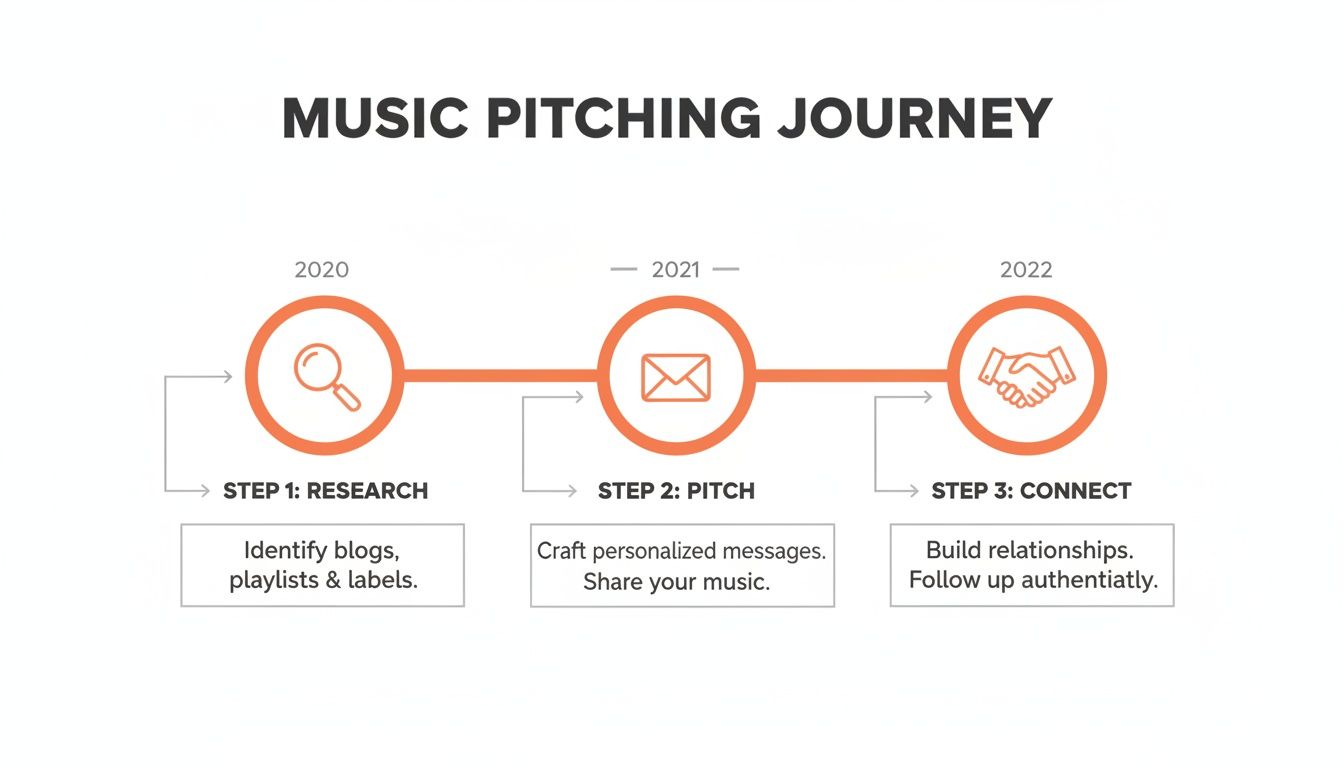
This timeline really drives home that outreach is a marathon, not a sprint. It takes dedicated phases for discovery, pitching, and follow-up to see real results.
Measuring What Truly Matters
Once your song is live, your job switches from pitching to analyzing. Watching your stream count tick up is a great feeling, but it's just a vanity metric without context. Real growth is understanding why the numbers are moving. Where are people finding your song? Are they actually saving it?
Your Spotify for Artists dashboard is your new best friend. It’s packed with the data that tells the real story behind your release. Modern music PR is all about data-driven playlisting on Spotify, where giants like Bruno Mars can pull in over 128 million monthly listeners. Just look at Bad Bunny, who hit an insane 19.8 billion streams in one year, thanks in part to Spotify amplifying his reach—a masterclass in modern PR. You can dig into the stats of top artists leading the Spotify charts on huangdarren1106.github.io.
This data isn't just for show; it's a feedback loop telling you what’s hitting and what's missing.
Forget the initial stream spike for a second. Focus on the metrics that show a real connection. A listener hitting "save" is infinitely more valuable than a passive stream because it means they want to come back for more.
Key Performance Indicators for Artists
Jumping into your analytics can feel like drinking from a firehose. The key is to focus on a few specific indicators that cut through the noise and give you a clear picture of your campaign's impact.
Here are the numbers you should be obsessed with after every release:
Sources of Streams: This is your bread and butter. It tells you exactly where people are discovering you—is it their own library, a big editorial playlist, or a list some indie curator put together? If a small playlist is sending you a ton of listeners, that’s a relationship you need to invest in.
Listener Saves: Look at your save rate (saves divided by listeners). A high save rate is a massive signal to Spotify's algorithm that your music connects with people. This is what gets you onto powerful algorithmic playlists like Discover Weekly.
Playlist Adds: Keep an eye on how many user-created playlists your song lands on. This is a raw, organic measure of appeal. It means your track is becoming part of someone's daily life.
Audience Demographics: Get to know your listeners. Understanding their age, gender, and location helps you sharpen your marketing and make your next PR push even more targeted.
When you track these specific metrics, you stop just hoping for success and start actually engineering it. This data-driven approach is what builds a sustainable career in music today.
Your Top Music PR Questions, Answered
Diving into music PR can feel like navigating a maze. A lot of questions pop up, and getting good answers is the only way to move forward with a solid plan.
Let's clear the air. This section will tackle the most common questions and roadblocks artists run into, giving you straightforward advice you can use on your next release.
How Far in Advance Should I Start My PR Campaign?
Timing is everything in a release campaign. You can't just drop a song and hope for the best. For real results, you need to start your outreach to independent curators, bloggers, and influencers 4-6 weeks before your release date.
This gives them a comfortable window to actually listen, decide if it's a fit, and schedule their content without you breathing down their neck. For your official Spotify editorial pitch (through Spotify for Artists), you need to submit it at least seven days out, but honestly, give them 2-3 weeks. Don't shortchange your track's potential by waiting until the last minute.
What Is the Biggest Mistake to Avoid in Outreach?
The absolute fastest way to get your email deleted is sending a generic, impersonal, mass message. Curators and bloggers see hundreds of these a day, and they can spot a lazy copy-paste job from a mile away.
If you don't even bother to use their name, mention the specific playlist or blog you're pitching, or give a real reason why your song belongs there, you're just spamming. Personalization isn't a bonus—it's the bare minimum for getting noticed.
Your outreach is the start of a potential professional relationship. Treating it like a transactional numbers game by sending spammy, impersonal messages is the fastest way to get blacklisted by the very people you need to reach.
How Can I Tell if a Playlist Is Using Bots?
Trust the data, not the follower count. The most reliable way to spot a fake playlist is by using a playlist analysis tool to look at its growth history.
Real, organic playlists grow gradually over time. If you see a massive, overnight spike in followers—especially if there's no matching jump in saves or listener activity—that’s a huge red flag. It almost always means bots are involved. Real curators are also typically easy to find online; bot farms prefer to stay anonymous for obvious reasons.
Is It Worth Paying for Playlist Placements?
Let's make this simple: no. Never. Paying for a guaranteed spot on a playlist is a direct violation of Spotify's terms of service.
This "pay-for-play" model is how botted playlists make their money. They offer zero real engagement, can get your music completely removed from Spotify, and may even get you fined by your distributor.
Instead, put your budget toward legitimate PR experts or tools that connect you with authentic curators. You want placements based on the quality of your music, not because you paid a fee. That's how you build a real career.
Ready to take the guesswork out of your music PR? artist.tools provides the data and insights you need to find legitimate playlists, vet curators, and track your growth with precision. Stop guessing and start strategizing. Explore the platform at https://artist.tools.
.png)
.png)
Comments