
Artist Management Services for Modern Musicians in the Streaming Era
Learn how artist management services support modern musicians in the streaming era, with Spotify growth, data-driven strategy, and sustainable career planning.
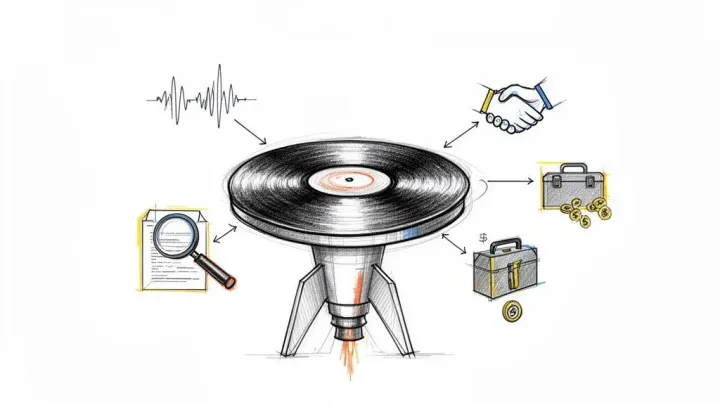
Music artist management is so much more than just landing a few gigs. It’s the strategic mind behind an artist’s entire career. Think of an artist as a high-growth startup and the manager as the CEO—the one guiding the vision, building the team, and making sure the business is built to last.
TL;DR
Artist management services for modern musicians in the streaming era combine strategic career planning, financial and legal oversight, brand building, and data-driven Spotify growth into one coordinated role.
- An artist manager is the strategic partner who turns creative talent into a sustainable business, coordinating lawyers, publicists, booking agents, and brand partners.
- Successful management rests on four pillars: career planning, financial and legal oversight, marketing and brand development, and team building.
- Spotify growth in the streaming era is engineered through pre-release research, precise playlist targeting, personalized pitching, and post-release tracking.
- Data literacy — reading KPIs like monthly listeners, follower growth, save rate, and stream velocity — is the defining skill of a modern manager.
- Management agreements typically run a 15–20% commission on gross earnings and should include a sunset clause to fairly wind down the relationship.
- A structured first 90 days (discovery, strategy, execution) helps new artist-manager relationships build momentum quickly.
What Modern Music Artist Management Really Means
If you’re picturing some slick negotiator in a corner office, it’s time for an update. Today’s artist management services for modern musicians in the streaming era are hands-on and data-driven, focused on building a real, sustainable business around an artist’s talent. The manager is the central hub, connecting the artist to everyone they need—from lawyers and publicists to booking agents and brand partners.
So what is an artist manager, in practical terms? A music manager is the artist’s day-to-day strategic partner and business lead — the person who translates creative vision into release plans, deals, marketing campaigns, and financial decisions. Artist management in the music industry is different from artist development: development focuses on shaping the craft, sound, and identity of a still-emerging artist, while management focuses on running the career and business built around that identity. In practice, a strong manager often supports both.
This role has become absolutely critical in a market that’s beyond saturated. The sheer volume of new music is mind-boggling; with over 11.3 million artist profiles being tracked and around 99,000 new tracks dropping every single day, just being talented isn’t nearly enough to get noticed. This content explosion has turned the manager’s job from basic coordination into full-blown strategic brand-building — and it has made streaming-era management services a distinct discipline, not just a title.
The Manager as a Strategic Partner
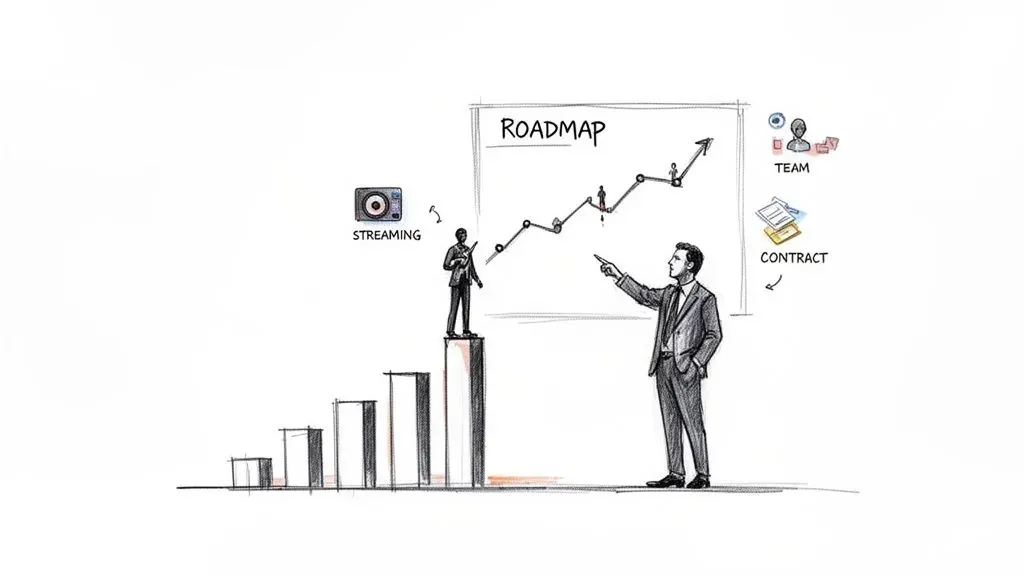
A great modern manager doesn’t just wait for opportunities to fall into their lap—they go out and create them. Their main job is to develop a long-term career roadmap that lines up with the artist’s creative vision and financial goals. They’re the chief strategist, filtering out all the noise and distractions so the artist can focus on what really matters: making incredible music.
This partnership means handling a ton of different responsibilities that go way beyond sending emails and making calls. A manager’s day-to-day can include a mix of everything. Here’s a quick look at the core responsibilities a manager juggles in today’s music business.
Core Responsibilities of a Modern Artist Manager
| Responsibility Area | Key Objective | Example Task |
|---|---|---|
| Career Development | Create a long-term vision and step-by-step growth plan. | Mapping out a 12-month release schedule with touring and press goals. |
| Business Operations | Handle all financial and legal aspects of the artist’s career. | Negotiating a record deal or a brand partnership agreement. |
| Team Building | Assemble and lead a dedicated team of industry professionals. | Hiring a publicist for a new album campaign or a tour manager for a run of shows. |
| Brand Cultivation | Define and strengthen the artist’s public image and story. | Overseeing social media strategy and approving all visual content. |
As you can see, it’s a multi-faceted role that demands a wide range of skills, from financial acumen to creative marketing.
Navigating the Digital Frontier
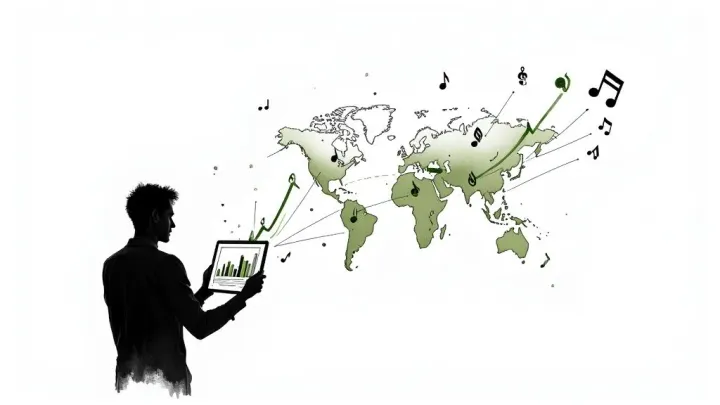
In the streaming era, a manager needs to be just as comfortable digging into Spotify data as they are negotiating a festival slot — and increasingly comfortable with adjacent platforms like Apple Music, Amazon Music, YouTube Music, and social-audio surfaces on TikTok and Instagram. They use analytics to figure out who the audience is, find the right playlist opportunities, and see if marketing campaigns are actually working. This data-first approach lets them make smart decisions that drive real growth instead of just guessing.
The ultimate goal of managing a music artist is to transform raw talent and creative output into a durable, profitable, and culturally relevant career. It’s about building a legacy, not just chasing a hit.
At the end of the day, a manager is the artist’s most trusted advisor and biggest champion. They provide the structure, guidance, and industry know-how needed to turn a passion for music into a real profession. To get a closer look at the day-to-day grind, check out our deep dive into what a music artist manager does. This foundation is everything for an artist who wants to stick around for the long haul.
The Four Pillars of Successful Artist Management
Think of a successful artist’s career like a well-built house. It doesn’t just spring up overnight; it’s built on a solid foundation. In artist management, that foundation rests on four crucial pillars. A great manager knows how to build and maintain each one, ensuring the artist’s career can handle the industry’s pressures and reach new heights.
These pillars break down a massively complex job into a clear framework of interconnected responsibilities. Mastering them is the secret to turning raw talent into a lasting career.
Let’s dig into what each pillar actually looks like in practice.
Strategic Career Planning
This first pillar is all about having a vision. You can’t start a journey without knowing where you’re going. Strategic planning is about defining the artist’s unique story, setting real milestones, and drawing a detailed map to get there. It’s the difference between wandering and moving with purpose.
A manager sits down with their artist and asks the tough questions. What does success look like in one, five, or even ten years? What’s the core message we want to send with the music? This back-and-forth ensures the artist’s creative vision is always the engine driving the business decisions.
Key moves under this pillar include:
- Defining the Artist’s Brand: This isn’t just a logo. It’s about crafting a compelling narrative and visual identity that connects with a specific audience.
- Setting SMART Goals: Establishing Specific, Measurable, Achievable, Relevant, and Time-bound goals for releases, touring, and fan growth.
- Release Strategy: Meticulously planning album cycles, single rollouts, and promo timelines to create maximum impact and keep the momentum going.
Financial and Legal Oversight
Music is art, but a music career is a business. Full stop. This pillar makes sure that business runs like a well-oiled machine, protecting the artist and maximizing how much they earn. The manager acts as the artist’s financial guardian and the first point of contact for anything legal.
They don’t have to be a lawyer or an accountant, but they absolutely must know enough to build the right team and ask the right questions. This means breaking down intimidating contracts, managing money from a dozen different places, and keeping everything financially transparent. From chasing down publishing royalties to negotiating a brand deal, the manager has eyes on the entire financial ecosystem.
A manager’s fiduciary duty is to act in the artist’s best financial interest. This means every decision, from tour budgets to contract negotiations, must be made with the goal of building the artist’s long-term wealth and stability.
This oversight is non-negotiable. One badly negotiated contract can create financial headaches that linger for years.
Marketing and Brand Development
With nearly 100,000 new tracks hitting streaming services every single day, just having great music isn’t enough to get heard. This is where the third pillar—marketing and brand development—comes in. The manager is the chief marketing officer, tasked with building a strategy that creates a loyal, engaged fanbase.
This means creating a consistent and compelling artist identity everywhere, from social media to the stage. It’s about telling the artist’s story in a way that makes people feel something. Effective management turns casual listeners into true fans—the kind who buy tickets, wear the merch, and shout about the music from the rooftops.
This pillar covers a ton of ground:
- Developing and managing social media content calendars.
- Coordinating press releases and media outreach with a publicist.
- Overseeing the creation of music videos, photoshoots, and other visual assets.
- Building and engaging with the artist’s email list and fan community.
Team Building and Networking
No artist gets to the top alone. The final pillar is all about putting together and leading the “A-team” that supports every part of the artist’s career. The manager is the central hub, responsible for finding, hiring, and coordinating a whole network of pros.
Think of the manager as a general contractor. They find the best plumber, electrician, and carpenter—or in this case, the best booking agent, publicist, lawyer, and business manager. They make sure everyone is pulling in the same direction and executing the artist’s vision perfectly.
This pillar also extends to networking within the industry, building real relationships with label execs, publishers, promoters, and other key players. These connections open doors and create the kinds of opportunities that can define a career. In artist management, a strong network isn’t just a nice-to-have; it’s a powerful asset.
Your Playbook for Driving Growth on Spotify
Spotify remains the anchor platform for most streaming-era campaigns, but the same principles below — targeted playlist research, tight pitching, and post-release tracking — carry over to Apple Music, Amazon Music, YouTube Music, and Deezer. In the world of artist management today, if you’re just treating Spotify like a digital shelf for your music, you’re leaving a massive opportunity on the table. It’s so much more than that. Think of it as a living, breathing ecosystem—a place to build a real audience, test out new material, and generate tangible career momentum. Getting ahead on Spotify isn’t about getting lucky; it’s about executing a smart, data-backed campaign for every single you drop.
This playbook isn’t about just uploading a track and hoping for the best. It’s an active process for engineering growth, step-by-step, turning people who just happen to hear your song into dedicated fans by putting it in front of them at exactly the right time.
Pre-Release: The Foundational Research
The real work starts long before a track ever goes live. The entire goal during this phase is to build a hyper-targeted list of playlists where your new song would feel right at home. This isn’t a numbers game. You’re not just spamming every curator you can find. It’s all about precision and genuine fit.
Let’s say you’re managing an indie pop artist whose sound is in the same ballpark as The 1975 or LANY. Your first move is to pinpoint playlists that already feature those artists and others in that specific niche. This means doing some deep digging to find curators who have a track record of actually supporting that sound.
This process breaks down into a few key parts:
- Genre and Mood Analysis: You have to break down the song’s DNA. Is it upbeat? Melancholic? Perfect for a study session or a workout? Get specific.
- Artist Benchmarking: Find artists with a similar sonic vibe and reverse-engineer their success. Which playlists gave them their first big breaks?
- Curator Vetting: Look past the big follower counts. Does a playlist have real, engaged listeners? Do they have a history of adding up-and-coming artists, or is it just the same big names on repeat?
This strategic groundwork is the foundation for everything else. It informs your branding, your finances, and how you build your team.
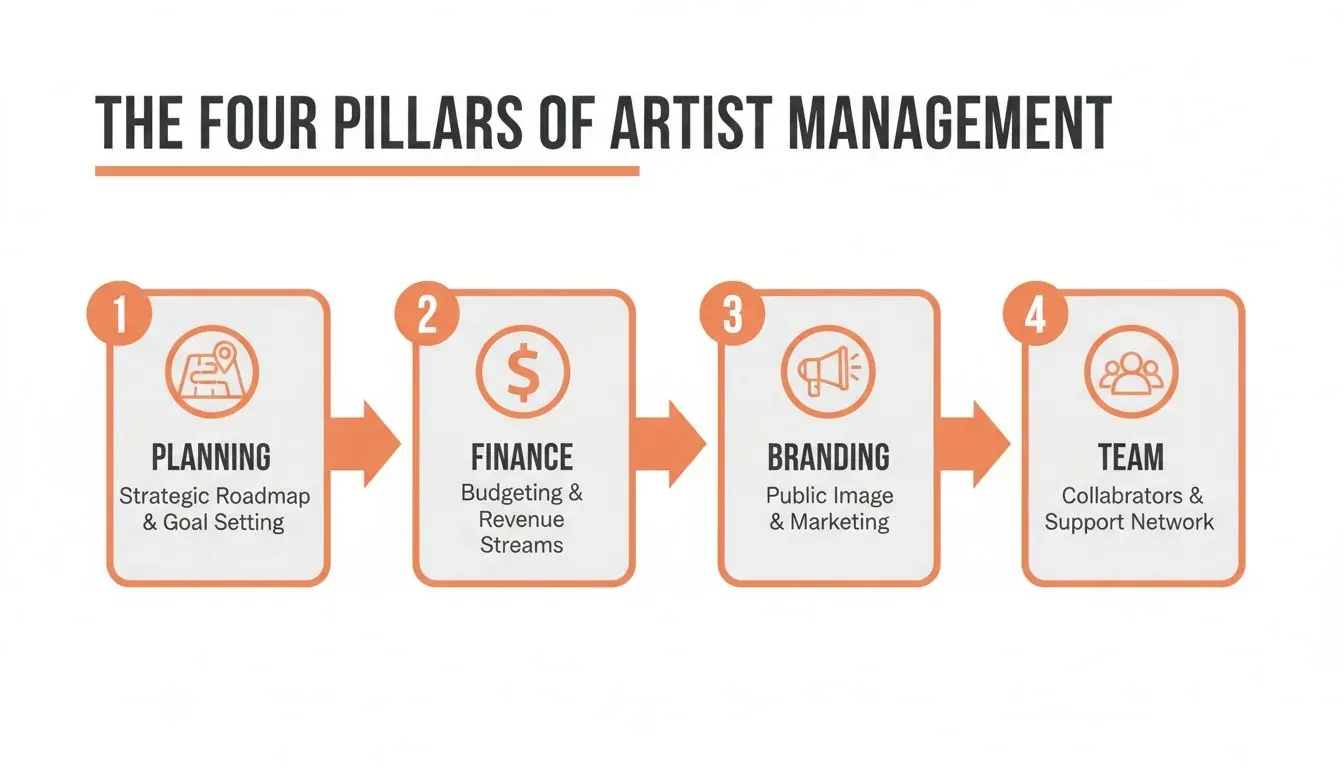
As you can see, planning is the starting point. A killer Spotify strategy is a non-negotiable part of modern branding and planning for any serious artist.
Finding Your Targets with Precision
Let’s be honest, trying to manually search Spotify for the right playlists is a soul-crushing time sink that rarely gets you the best results. To build a high-quality list of contacts, managers need tools that go deeper. This is where a dedicated platform becomes an essential part of effective career artist management.
Using a feature like the Playlist Search on artist.tools lets you slice and dice millions of playlists by genre, keywords, follower count, and a bunch of other useful metrics. What used to take hours of frustrating manual work now takes a few minutes of targeted searching, instantly giving you a list of real, viable playlists and the contact info for the people who run them.
Crafting the Perfect Pitch
Once your target list is locked in, it’s time to pitch. This means reaching out to independent curators and—critically—pitching directly to Spotify’s own editorial team through the Spotify for Artists platform. Your pitch is your one shot to convince someone your song is worth their time.
A great pitch is concise, personal, and tells a story. It should explain not just what the song sounds like, but why this specific song is a perfect fit for that specific playlist right now. Generic, copy-paste emails get deleted on sight.
To make your pitch actually stand out, you need to include:
- Key details about the track (genre, mood, instrumentation).
- A quick mention of your marketing plans (e.g., “We’re backing this with a social media ad campaign and a music video premiere on Tuesday”).
- A clear, direct connection to the playlist you’re pitching to show you’ve actually listened to it.
For managers juggling multiple releases, tools like the AI Editorial Pitch Generator can be a lifesaver. You feed it the details about your song and marketing plan, and it spits out a well-structured, professional pitch modeled on submissions that have actually landed major editorial playlists. It saves a ton of time and seriously bumps up your chances of getting noticed by Spotify’s editors. For a deeper dive, check out our guide on mastering the Spotify algorithm for artists.
Post-Release: Tracking and Analysis
The job isn’t done when the song goes live. Far from it. Smart artist management services keep a close eye on your campaign’s performance in real time to see what’s actually working. This feedback loop is what makes your next release strategy even stronger.
Using a Stream Tracker gives you daily updates on a track’s performance, so you can see the direct impact of a playlist add. Did getting on “Indie Chill Vibes” cause a huge spike in daily streams? That data is gold. It’s concrete proof your campaign is working and helps you see which curators are truly moving the needle for your artist. This data-first approach turns Spotify from a place you just put music into a measurable engine for building an artist’s career.
Making Data-Driven Decisions with Confidence
In music management, your gut is a great starting point, but it can’t be your entire playbook. These days, data is what separates a lucky break from a long-term, sustainable career. The modern manager has to think like a market analyst for their artist, learning to read the digital tea leaves to prove their strategies are working and spot opportunities that intuition alone would miss.
This changes the job entirely. You’re no longer just a coordinator; you’re a data-savvy strategist. It’s all about asking the tough questions and finding concrete answers. Why did the monthly listeners spike last Tuesday? Is that hot new playlist actually driving real streams, or is it just a puff of smoke from bot activity? Answering these questions with confidence is how you build real momentum.
Key Metrics for Artist Growth on Spotify
Navigating the ocean of data available today means knowing which numbers actually matter. Instead of getting lost in vanity metrics, effective managers zero in on a few Key Performance Indicators (KPIs) that truly reflect an artist’s health and trajectory. The table below breaks down the essential metrics you should be tracking on Spotify.
| Metric | What It Tells You | Relevant artist.tools Feature |
|---|---|---|
| Monthly Listeners | Your artist’s overall reach and audience size. A primary indicator of brand awareness. | Monthly Listeners Tracker |
| Follower Growth | How many casual listeners are converting into dedicated fans who want to hear more. | Artist Profile Analytics |
| Stream Velocity | The rate at which a track is accumulating streams. Indicates current momentum and virality. | Stream Counter |
| Save Rate | The percentage of listeners who save a track to their library. A strong signal to Spotify’s algorithm. | Artist Profile Analytics |
| Playlist Adds | Tracks organic and third-party playlist placements, a key driver of discovery. | Playlist Search |
| Bot Activity | Identifies fake streams that can harm your artist’s profile and algorithmic standing. | Bot Detection |
Focusing on these KPIs helps you build a career on a solid foundation of genuine fan support, ensuring every move you make is an informed one.
Separating Signal from Noise
The amount of data thrown at you can feel overwhelming. The real skill is knowing what to pay attention to and what to ignore. This means focusing on KPIs that show authentic audience growth, not just flashy numbers. Guesswork gets replaced by a sharp, analytical approach.
This is more important than ever. The explosion in paid subscriptions recently pushed US recorded music revenues to a record $17.7 billion, with streaming subscriptions crossing the 100 million mark for the first time. You can dig into the specifics in the full RIAA report. For managers, this means the game has shifted from chasing album sales to building communities of superfans.
Vetting Opportunities with Precision
Let’s be clear: not all exposure is good exposure. A playlist with a million followers might look like the jackpot, but if those “followers” are bots, it can torpedo an artist’s career. Fake streams can get a track taken down and poison your relationship with Spotify’s algorithm. This is why vetting every single opportunity is non-negotiable.
The most valuable opportunities connect an artist with real, engaged listeners who might just become lifelong fans. A data-driven manager knows the difference between a playlist that looks good on paper and one that will actually move the needle.
This is exactly where a tool like the Playlist Analyzer from artist.tools comes in. It lets you pop the hood on any playlist and check its engine. You can see two years of follower growth, spot sketchy activity with the built-in Bot Detection, and get a real feel for its actual listener count. It turns a risky gamble into a calculated move.
Tracking Long-Term Career Trajectory
Daily stream counts are nice, but great management is about playing the long game. What you’re really looking for is a steady, upward trend in your core growth metrics over months and even years. That’s how you measure the true health of an artist’s career.
Keeping a close eye on these numbers helps you see the big picture:
- Monthly Listeners: Is your audience size growing steadily on its own, or is it just lurching from one playlist spike to the next?
- Follower Growth: This is your conversion rate. How many of those listeners are hitting “follow” and sticking around for the long haul?
- Popularity Score: This is Spotify’s internal grade for an artist’s momentum. A rising score means the algorithm is more likely to push their music.
The Monthly Listeners Tracker gives you the historical data to see these trends in plain sight. It lets you connect the dots between a marketing campaign you ran and a tangible jump in the artist’s audience. This long-term view is what allows you to build a lasting legacy, not just a series of short-term wins. If you want to dive deeper, check out our complete guide on mastering music data analytics for artists.
Alright, let’s get into the nitty-gritty: the contracts and the cash. This side of the business can feel a little stiff, but it’s honestly where a manager proves their worth, turning a creative partnership into a sustainable career.
Think of the management agreement as the foundation of your business relationship. It’s not about locking someone down with rigid rules; it’s about making sure everyone is on the same page from day one. Getting the legal and financial stuff right protects both you and the artist, and prevents a world of headaches down the road. You don’t need a law degree, but you do need to understand the core pieces of the puzzle so you can lead the conversation and know exactly when to call in an attorney.
Decoding the Management Agreement
The management agreement is the single most important document you’ll sign. It lays out the entire partnership. While every deal is a little different, there are a few key clauses that show up in almost every contract. You need to know these inside and out.
A standard agreement will always cover:
- The Term: How long are you in this together? Usually, this starts with an initial period, maybe a year, with options to extend if you hit certain milestones together.
- Commission Rate: This is how you get paid. The industry standard for artist management in the music industry is a 15-20% commission on the artist’s gross earnings.
- Scope of Authority: This part spells out what decisions you can make for the artist. It gives you the power to sign certain deals, approve expenses, and act as their official representative.
- Exclusivity: This just means the artist agrees to work only with you as their manager for the length of the contract.
One of the most critical parts of any agreement—and one that’s easy to overlook—is how you’ll part ways if things don’t work out.
A “sunset clause” is your safety net. It’s a provision that defines how you’ll get paid after your contract ends. It lets you keep earning a declining commission on deals you put in place, making sure you’re compensated for the long-term value you built.
This clause is essential for a fair breakup. It protects the time, energy, and connections you poured into the artist’s career.
Managing the Money
Beyond the initial contract, your job is to be the CFO of the artist’s career. You’re tracking every dollar coming in and every dollar going out. This demands serious attention to detail and total transparency. Your duties will range from managing budgets for tours and album releases to overseeing all the different income streams and navigating the maze of royalty collection.
This is where planning gets real. Forecasting potential earnings helps turn big dreams into actual financial targets. For example, a tool like the Spotify Royalties Calculator from artist.tools can help you estimate streaming income. You can plug in some realistic stream counts and show an artist what a successful release could actually look like in their bank account.
Suddenly, the conversation shifts from a vague “we need more streams” to a concrete goal: “if we hit one million streams, that could translate to roughly $X in revenue.” This simple step makes financial goals tangible and way more motivating. It gives you and your artist a clear, financially sound game plan for what’s next, proving you’re not just a manager, but a strategic partner.
Your First 90 Days as an Artist Manager
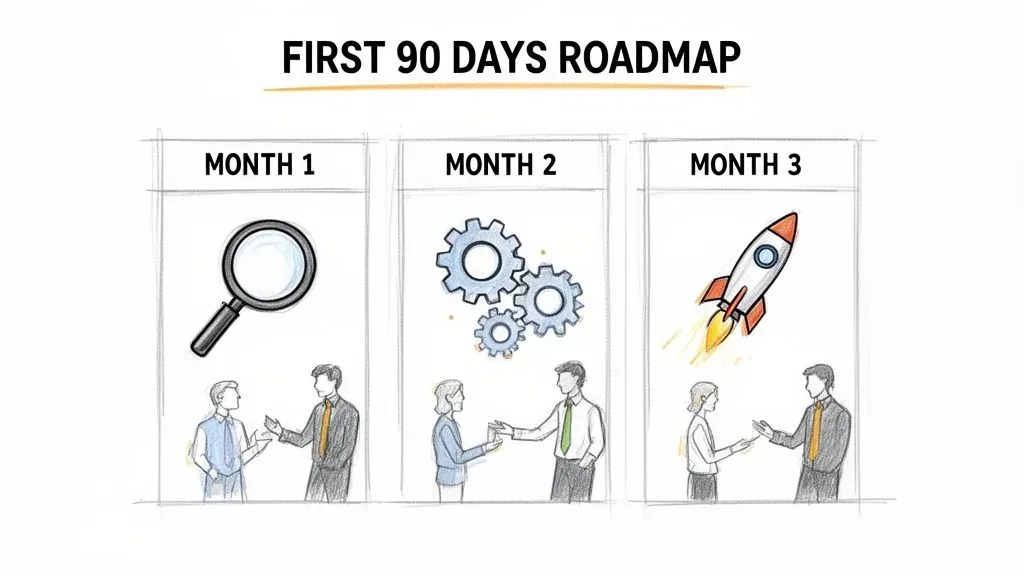
Jumping into a new artist-manager relationship is a lot like setting a course for a ship. Those first few moves you make will determine the direction of the entire journey. A structured 90-day plan is one useful way to turn big ideas into a tangible roadmap and build momentum right out of the gate.
This framework isn’t about doing everything at once. It’s about breaking down the first three months into clear, manageable phases: discovery, strategy, and execution. Think of it as a series of sprints, each one building on the last, designed to get you and your artist aligned and scoring some real wins early on.
Month 1: Discovery and Goal Setting
The first 30 days are all about deep immersion. Your job is to become an expert on your artist’s world—their backstory, their creative vision, and where they stand right now. This goes way beyond just listening to their music; it’s a full-blown audit of their career up to this point.
The main goal here is to gather information, ask a ton of questions, and just listen. You’re building the foundation for a shared vision of what success actually looks like.
- Week 1-2: Deep Dive: Sit down with your artist for some serious talks. You need to get inside their head to understand their long-term goals, creative inspirations, and the biggest roadblocks they’ve hit.
- Week 3: Digital Audit: Time to go under the hood of their online presence. Do a complete review of their Spotify for Artists profile, social media accounts, and website to pinpoint what’s working and what isn’t.
- Week 4: Goal Alignment: Work together to set clear, measurable SMART goals for the next 12 months. These should cover everything from new releases and streaming growth to touring ambitions.
Month 2: Strategy and Foundation Building
Okay, you’ve got the lay of the land. Month two is where you start building the strategic framework. You’re taking all the “what” and “why” from month one and figuring out the “how.” This means creating the systems, plans, and assets you’ll need to hit those goals.
Effective artist management services aren’t about being busy; they’re about being productive. This phase ensures every move you make from here on out is part of a smart, cohesive strategy built for maximum impact.
Your focus shifts from just analyzing to actively planning. You’re laying down the tracks so the train can start moving.
- Week 5-6: Release Planning: Map out a detailed release strategy for the next single or EP. This includes locking down timelines for production, marketing, and distribution.
- Week 7: Playlist Research: Fire up a tool like the Playlist Search on artist.tools. Your mission is to identify at least 50 high-potential target playlists that are a perfect fit for the artist’s genre and vibe.
- Week 8: Team Assembly: Figure out who else you need on the team. Start reaching out to potential publicists, booking agents, or graphic designers who can help make the next launch a success.
Month 3: Execution and Launch
The final stretch of your first 90 days is all about putting those plans into action. The focus is squarely on the upcoming release campaign. All the strategic groundwork you laid in month two is about to pay off, setting you up for a smooth, powerful launch.
Now’s the time for precision. Get your tracking systems in place to monitor every part of the campaign and get ready for the big push.
- Week 9-10: Content Creation: Get all your marketing assets ready to go. This means finalizing press photos, creating a bank of social media content, and making sure the track is mastered and ready.
- Week 11: Campaign Setup: Draft and submit your editorial pitch through Spotify for Artists. To keep an eye on performance from the second it drops, set up the Stream Tracker.
- Week 12: Launch and Outreach: It’s go-time. Execute your release day plan, which includes pitching to independent curators and rolling out the social media campaign you’ve prepared.
Frequently Asked Questions
When you’re navigating the music industry, questions about management pop up all the time. Whether you’re an artist wondering if it’s time to find a partner or an aspiring manager trying to figure out the rules, you’re not alone. Let’s clear up some of the most common questions.
How Much Do Music Artist Managers Typically Charge?
The industry standard commission for a manager is between 15-20% of an artist’s gross earnings. That percentage isn’t set in stone; it really depends on where the artist is in their career and exactly what the manager is doing for them.
For an artist just starting to get traction, a 20% commission might make sense in exchange for a manager who is grinding day in and day out to build their career from the ground up. On the other hand, a global superstar with a massive team and multiple income streams might negotiate a rate closer to 15%. What’s absolutely critical is that the management contract clearly spells out which revenue streams—touring, merch, publishing, you name it—are commissionable. Getting this right from the start saves a world of headaches later on.
When Is the Right Time for an Artist to Get a Manager?
The perfect time to bring a manager on board is when the business side of your career starts getting in the way of the music. A manager is there to amplify momentum, not create it out of thin air.
Here are a few signs that you’re ready:
- Real Growth: Your fanbase is growing organically, and your monthly listeners on platforms like Spotify are climbing month over month.
- The Industry is Calling: You’re getting emails from labels, publishers, or booking agents, and you’re not quite sure how to handle them.
- Playing Out: You’re booking regular gigs, and the logistics of scheduling and advancing shows are becoming a full-time job.
- Drowning in Admin: You find yourself spending more time answering emails and coordinating logistics than you do writing, producing, or rehearsing.
If this sounds like you, it’s a huge signal that bringing in a strategic partner could help you take things to the next level. As for how to get an artist manager: focus on making yourself worth managing first — consistent releases, growing streaming numbers, and an engaged fanbase. From there, warm introductions from producers, engineers, booking agents, entertainment lawyers, and other artists tend to work far better than cold DMs, because managers are effectively signing on to a multi-year business partnership.
The right manager doesn’t just take tasks off your plate; they build a strategic framework that allows your career to grow faster and more sustainably than you could achieve on your own.
What Is the Most Important Skill for a Music Manager Today?
While old-school skills like networking and cutting deals will always be important, the single most crucial skill for a modern music manager is data literacy. Gut feelings don’t cut it anymore. The industry runs on numbers.
The ability to dive into analytics, understand what your audience is doing on Spotify, and make smart decisions based on hard data is what separates the good managers from the great ones. Understanding the metrics behind a song’s performance, using data to vet opportunities, and proving the ROI on a marketing campaign are the fundamentals of management today.
What Does a Sunset Clause Mean in a Management Contract?
A “sunset clause” is a super important part of any management contract. It basically details how a manager gets paid after your contract with them ends. It’s not a lifetime commission; instead, it allows them to keep earning a commission on deals they were directly responsible for securing, but at a rate that decreases over time.
For example, a manager might continue to collect a commission on a record deal they negotiated for three years after you part ways. The percentage might drop from 15% to 10% in year two, then to 5% in year three, and then it phases out completely. This is a fair way to make sure managers are compensated for the long-term value they created for an artist’s career.
Ready to manage your artist’s career with the confidence that comes from real data? artist.tools gives you the insights to find the right playlists, track performance, and make smarter decisions on Spotify. Start your journey at artist.tools.