Making Money Music A Guide to Modern Revenue Streams
- Jan 14
- 17 min read
Forget the old dream of just getting signed.
Today, making money with your music means building a real business where you're the one in charge. This isn't about wishful thinking; it's about having a real-world framework to turn your art into a sustainable career.
Let's get into the actionable strategy.
Your Modern Playbook for a Profitable Music Career
The whole relationship between music and money has been flipped on its head. It’s no longer some mysterious path only a lucky few get to walk. Instead, it’s a tangible business opportunity, and it's powered by data and direct connections to your fans.
The modern artist wins by treating their career like a startup. You have to focus on multiple income streams and use analytics to guide every single decision you make. This isn't just a different way of thinking; it's a strategic necessity.
Success comes from understanding how all the different pieces work together. For instance, strong streaming numbers on Spotify can directly open doors to lucrative sync licensing deals for TV and film. In the same way, a highly engaged listener base is the perfect foundation for selling merch or launching direct-to-fan subscriptions.
The Financial Landscape of Modern Music
The opportunity for independent artists has never been this big. The global recorded music industry is growing year after year, creating a massive financial pool for anyone who knows how to dive in. The key is understanding where that money comes from and how to claim your piece of the pie.
Think about this: the global recorded music industry recently pulled in a massive $29.6 billion in revenue, marking its tenth straight year of growth. Streaming was the undisputed king, blowing past the $20 billion mark for the first time and making up a whopping 69% of all recorded music revenue. That's not just a statistic—it's a goldmine for artists smart enough to crack the streaming code. You can dig into the specifics in the latest RIAA revenue report.
The truth is, most musicians need to embrace self-employment as a core part of their income. Viewing your music as a business isn't selling out; it's buying in—to your own future and sustainability.
This playbook is designed to give you that business-owner mindset. We're going to break down the essential income channels available to every artist, from maximizing your Spotify streams to selling merch and building a direct line to your fans. Even better, we’ll show you exactly how to use data to inform your every move.
Data-Informed Decisions: You'll learn why tracking metrics like playlist performance, monthly listener growth, and bot activity is the key to turning abstract goals into a concrete, profitable business plan.
Diversified Income Streams: We'll explore how to combine streaming royalties, sync deals, merchandise, and direct fan monetization into a resilient financial ecosystem.
Actionable Strategies: This is about moving from theory to practice. We'll give you concrete workflows showing you how to execute and measure each tactic effectively.
By the time you're done with this guide, you'll have a clear picture of the proven strategies musicians are using to build real careers on their own terms, right now.
To get started, it helps to have a high-level view of where the money is.
Here's a quick rundown of the main monetization channels you should be thinking about. We'll dive deep into each one, but this table gives you a great snapshot of the landscape.
Key Music Monetization Channels at a Glance | ||
|---|---|---|
Revenue Channel | Primary Opportunity | Key Metric to Track |
Streaming | Unlocking algorithmic support on platforms like Spotify to generate royalties and grow an audience. | Monthly Listeners, Playlist Adds, Streams per Listener, Follower Growth. |
Sync Licensing | Placing your music in TV shows, films, commercials, and video games for upfront fees and royalties. | Playlist Performance (Music Supervisors scout here), Network Connections. |
Merchandise | Selling physical and digital products directly to your fanbase, from t-shirts to digital art. | Conversion Rate, Average Order Value, Fan Engagement. |
Live Performances | Generating income from ticket sales, merchandise at shows, and performance fees. | Ticket Sales, Audience Attendance, Per-Head Merch Sales. |
Direct-to-Fan Subscriptions | Creating recurring revenue through exclusive content and access via platforms like Patreon. | Member Growth, Churn Rate, Average Pledge Amount. |
Think of these channels as different legs of the same table. The more you build out, the more stable your career becomes. Now, let's get into the specifics of how you make each one work for you.
Turning Spotify Streams Into Reliable Income
Let's be real: Spotify is the modern-day stage for most musicians, but just tossing your music up there and hoping for the best isn't a strategy. If you want to turn those streams into a reliable income source, you have to get proactive. It’s all about a data-driven approach that prioritizes quality over sheer numbers.
That means we're moving past the old spray-and-pray method of emailing every curator you can find. That’s a fast track to burnout. Success today is about precision—finding the right playlists with real, engaged listeners who could actually become your fans. This is where the real work starts, but it’s also where smart tools give you a serious edge.
This whole process can feel complicated, but it really boils down to a clear path from creation to profit. Data is the bridge that connects your art to your business.
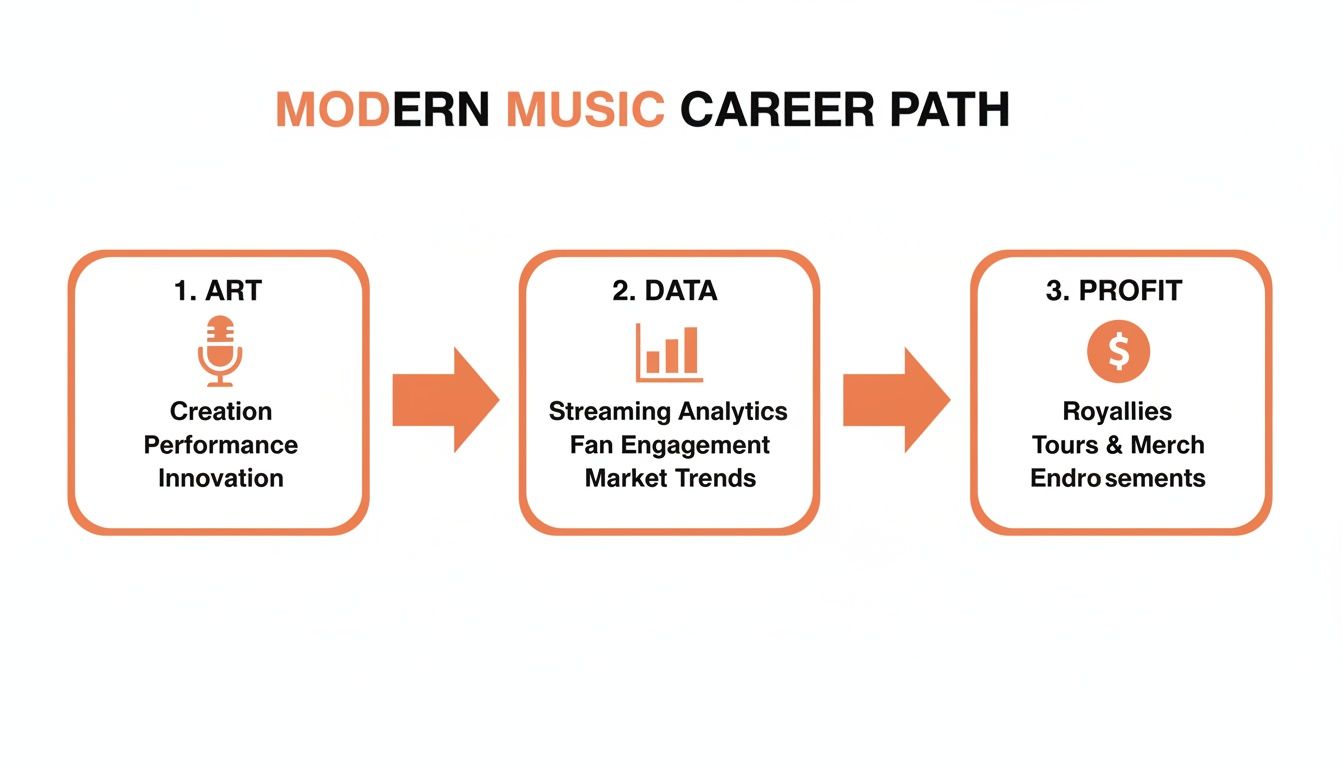
As you can see, your creative work is just step one. It's the analysis of what happens after you release that turns your music into a sustainable career.
Vetting Playlists Like a Pro
Here’s a hard truth: not all playlists are created equal. Getting placed on a huge playlist might feel like you've hit the jackpot, but if it's full of bots, it can wreck your career. Seriously. Spotify's algorithm can flag your track for suspicious activity, which could get your song pulled or your royalties withheld.
So, before you even think about pitching, you need to put on your detective hat. A powerful playlist analyzer is your best friend here, letting you peek behind the curtain at a playlist's history and overall health.
Here’s what you should be looking for:
Follower Growth Analysis: Check the playlist's follower graph. A healthy, legitimate playlist grows steadily over time. If you see a sudden, vertical spike of thousands of followers overnight, that's a massive red flag. It screams bots.
Listener Estimation: Don't get star-struck by a big follower count. A playlist with 100,000 followers might only have a handful of actual monthly listeners. You need a tool that can give you a solid estimate of a playlist's real reach.
Curator Contact Info: Once you find a playlist that checks out, you need to actually reach the person behind it. A good tool will dig up contact info for you, saving you countless hours of internet sleuthing.
The secret to effective playlisting isn't just getting placed; it's getting placed on the right playlists. A spot on a small, niche playlist with 5,000 highly engaged listeners is far more valuable than a spot on a botted list with 50,000 fake followers.
Crafting the Perfect Pitch
Okay, you've found your target playlists. Now it's time to reach out. This includes pitching directly to independent curators and—this is a big one—pitching to Spotify's own editorial team right from your Spotify for Artists dashboard.
Your pitch has to be sharp, professional, and get straight to the point. For your editorial pitch, tell the story of your song quickly. Make sure you include:
Genre and Mood: Be specific. Don't just say "Indie." Try something like "Dreamy, lo-fi indie pop with a melancholic vibe."
Instrumentation: Mention anything unique about the track, whether it's a specific synth sound, a vintage guitar, or a cool production trick.
Marketing Plan: Briefly tell them what you're doing to push the song. Are you dropping a music video? Running a social media campaign? Got some press lined up? This shows the editors you’re all-in.
From Streams to Dollars
Getting the placement is a huge win, but your job isn't over. Now you need to watch what happens next.
Use a stream tracker to see the immediate impact. Did the placement give you a noticeable lift in daily plays? Are the streams coming from the playlist's main country? This data is gold—it tells you which placements are actually moving the needle.
Finally, you can start turning those stream numbers into projected income. Spotify's per-stream payout rate can be a bit of a moving target, but a good royalties calculator helps you forecast your earnings. This takes the guesswork out of it and turns abstract stream counts into real financial data, letting you set goals and measure the true ROI of your efforts.
For a much deeper dive into how all that money gets calculated, check out our ultimate guide to Spotify royalty payments.
By putting in the research, pitching smart, and keeping a close eye on your data, you can transform Spotify from a passive lottery ticket into an active, predictable engine for your music career.
Winning the Spotify Search and Discovery Game
Landing a major editorial playlist feels like the ultimate win, but let's be real—it's often a short-term sugar rush. The kind of growth that actually builds a career and lets you make money from your music comes from a different place: organic discovery.
This is where Spotify SEO comes in. It’s a powerful, and honestly, an often-overlooked strategy for long-term, sustainable success.
It’s all about making your music pop up when listeners are actively looking for new sounds. Think of it this way: playlists are like getting a feature in a magazine, but solid SEO is like owning prime real estate in a busy city. People will find you on their own, day in and day out.
To do this right, you need to think like a fan and a curator. What specific words or phrases would someone actually type into Spotify to find a certain mood, genre, or vibe that your music delivers? The answers are your keys to unlocking a steady stream of new listeners.
Uncovering What Listeners Are Actually Searching For
Guessing which keywords might work is a fast track to frustration. You need actual data on what real people are typing into that search bar. This is where you have to move past hunches and use tools built for the job.
With a good keyword explorer, you can see the search volume for specific terms in different countries. Maybe you find out "lofi chill beats" is totally saturated in the US, but "beats para estudiar" is an untapped goldmine in Latin America. This is the kind of data that reveals opportunities you’d never find otherwise.
Another killer technique is to look at Spotify's own search suggestions. When you start typing "rainy day," Spotify’s autocomplete might offer "rainy day indie" or "rainy day coffee shop." These aren't just random phrases; they're direct clues about high-intent searches from real users.
Keyword Explorer: See the search volume and competition for terms like "workout," "focus," or "summer drive."
Search Suggestions: Uncover long-tail keywords that reveal exactly what users want, helping you nail down your niche audience.
Playlist Search Rankings: See which playlists consistently show up for your target keywords and use that info to build your own strategy.
The real goal of Spotify SEO isn’t just to get found; it’s to get found by the right people. When you target listeners who are already looking for your sound, you get higher engagement, more saves, and you send all the right signals to the Spotify algorithm.
This is exactly what a data-driven keyword research process looks like inside artist.tools, showing you the real-time search suggestions pulled directly from Spotify.
The insights here are crystal clear. You can stop guessing and see the exact phrases that connect listeners to new music, which helps you title your playlists and focus your efforts with insane precision.
Putting Your SEO Research Into Action
Once you've locked down your target keywords, it's time to weave them into your Spotify presence. This isn't about awkward keyword stuffing—it’s about being descriptive and strategic so both listeners and the algorithm get what your music is about.
A perfect place to start is with the titles and descriptions of your own playlists. If you've built a playlist with your music and similar artists, calling it "Midnight Drive Lofi Beats" instead of just "My Favorite Songs" can make a massive difference in how many people discover it.
The entire music industry is set for huge growth. Goldman Sachs projects the industry will double to $200 billion by 2035. Now is the time to use every tool you can to turn those streams into a real income. Artists who get a handle on Spotify SEO—spotting keyword trends and search suggestions—are going to have a serious edge in grabbing listener attention and riding this wave. You can dig into more on these industry-wide music revenue projections.
When you apply these techniques, you create a powerful flywheel effect. Your music gets discovered organically, which leads to more saves and playlist adds from listeners. That positive engagement signals to Spotify's algorithm that your music is hitting the mark, which in turn boosts your chances of landing on those algorithmic and editorial playlists. It’s a self-reinforcing cycle of growth.
Building Revenue Streams Beyond Spotify
Relying solely on streaming royalties is like building a house on a single pillar—it’s just too risky. A sustainable career in music isn't about one big break; it's about building a diversified business where multiple income streams support each other. This is how you go from just making music to actually making money from it for the long haul.
Think of your Spotify presence as a powerful engine for audience discovery. It's the top of your funnel, but it’s also the perfect launchpad for more lucrative ventures. The data you gather there—who's listening and where—can directly inform how you build out these other revenue streams, turning passive listeners into active, paying supporters.
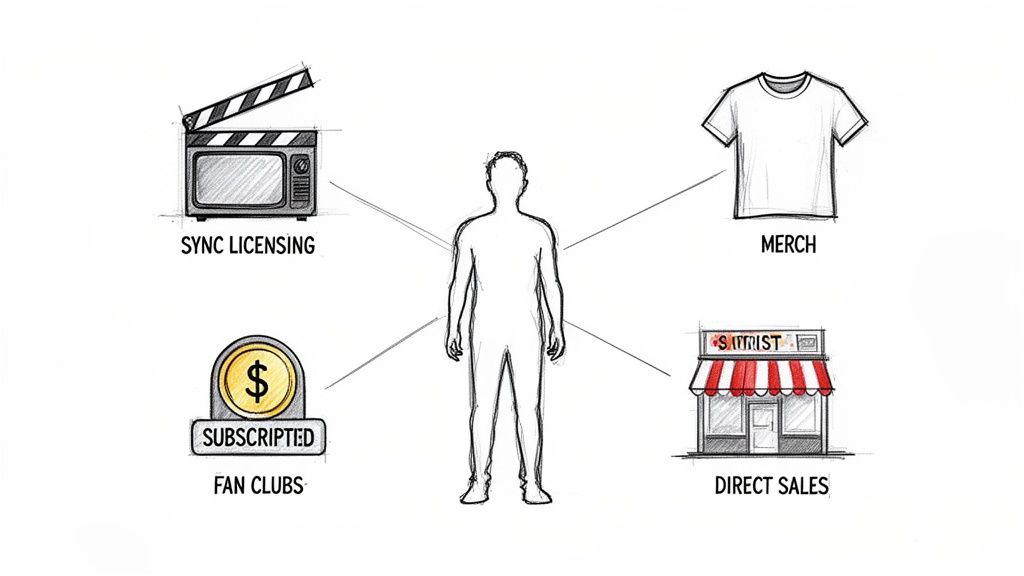
Let's break down the high-impact income sources that can complement your streaming presence and build a much more resilient financial future for your art.
Unlock a New World with Sync Licensing
Sync licensing is the art of getting your music placed in visual media—TV shows, films, commercials, or video games. This can be an absolute game-changer, often providing significant upfront payments on top of ongoing royalties. Music supervisors are constantly scouting for fresh sounds, and platforms like Spotify have become their go-to hunting grounds.
What does that mean for you? A track gaining traction on a popular editorial playlist or even a niche algorithmic one can easily catch their ear. Suddenly, your playlisting strategy isn't just about getting streams; it's a direct line to massive sync opportunities.
To give yourself the best shot, you need to have your house in order before they come knocking.
Get Your Instrumentals Ready: Always have high-quality instrumental versions of your top tracks ready to go. Music supervisors often need versions without vocals for scenes with dialogue, and having them on hand makes you look professional.
Metadata is Everything: Make sure your track metadata is complete and accurate. We're talking songwriter splits, publisher information, and contact details. A supervisor has to clear rights fast, and missing info can kill a deal instantly.
Know Your Publishing: Understanding the basics of music publishing is completely non-negotiable for sync. To get a handle on this crucial area, you can explore our complete revenue blueprint on music publishing.
Turn Listeners into Superfans with Merchandise
Merchandise is so much more than just selling t-shirts; it’s about creating a physical connection between you and your fans. It gives your most dedicated listeners a way to support you directly and wear their allegiance to your brand on their sleeve—sometimes literally. A fan who buys a hoodie isn't just buying clothing; they're investing in your story.
Your Spotify for Artists data is a goldmine for your merch strategy. Look at your top listener cities. Is there a random hotspot in a city you never expected? That might be the perfect place to run targeted ads for a new merch drop or even plan a pop-up shop down the road.
Just don't slap a logo on a shirt and call it a day. Get creative and tie the merch directly to your music.
Think limited-edition vinyl pressings for a successful EP, lyric-inspired enamel pins, or even custom guitar picks. The more unique and connected to your art the item is, the more desirable it becomes.
Revenue Stream ROI Comparison
Choosing where to focus your energy beyond streaming can be tough. The table below breaks down the typical effort, cost, and potential return for some of the most common revenue streams, helping you decide what makes sense for your career stage.
Revenue Stream | Typical Effort Level | Upfront Cost | Potential ROI |
|---|---|---|---|
Sync Licensing | Medium (networking, admin) | Low to Medium | Very High |
Merchandise | High (design, production, fulfillment) | Medium to High | High |
Direct-to-Fan Subscriptions | High (consistent content creation) | Low | Medium to High |
Touring/Live Shows | Very High (planning, travel, performance) | High | High |
Each path offers a different balance of risk and reward. Sync might offer a huge payout for a single placement, while a direct-to-fan model provides steadier, recurring income. The key is to find the mix that works for you.
Build Your Inner Circle with Direct-to-Fan Models
The ultimate goal is to build a direct relationship with your audience—one that isn't at the mercy of an algorithm. Direct-to-fan platforms like Patreon or Bandcamp Subscriptions let you create recurring revenue by offering exclusive content to your most loyal supporters.
This is where you can truly nurture your community. Give them things they can't get anywhere else.
Early access to new music and music videos.
Behind-the-scenes content, like raw studio sessions or songwriting demos.
Exclusive Q&A sessions or private livestreams.
A fan-only Discord server or community group.
By building these revenue streams, you create a powerful, self-reinforcing system. Your Spotify presence finds new fans, and your diversified income channels give those fans more ways to support the music they love. It's how you build a stable foundation for a long-term, successful career.
Protecting Your Career From Bots and Bad Actors
Let's be real: in the world of digital music, not all growth is good growth. Chasing streams is a huge part of the game, but there's a dark side—artificial streams and botted playlists. These are a direct, serious threat to your career, risking track takedowns, withheld royalties, and a permanently trashed reputation with Spotify.
This isn't just some minor annoyance; it's a massive financial and career risk. Getting tangled up with fraudulent services, even by accident, can wipe out all your hard work in an instant. The only real move you have is a proactive defense. You have to be vigilant about where your music is being played and who's playing it.
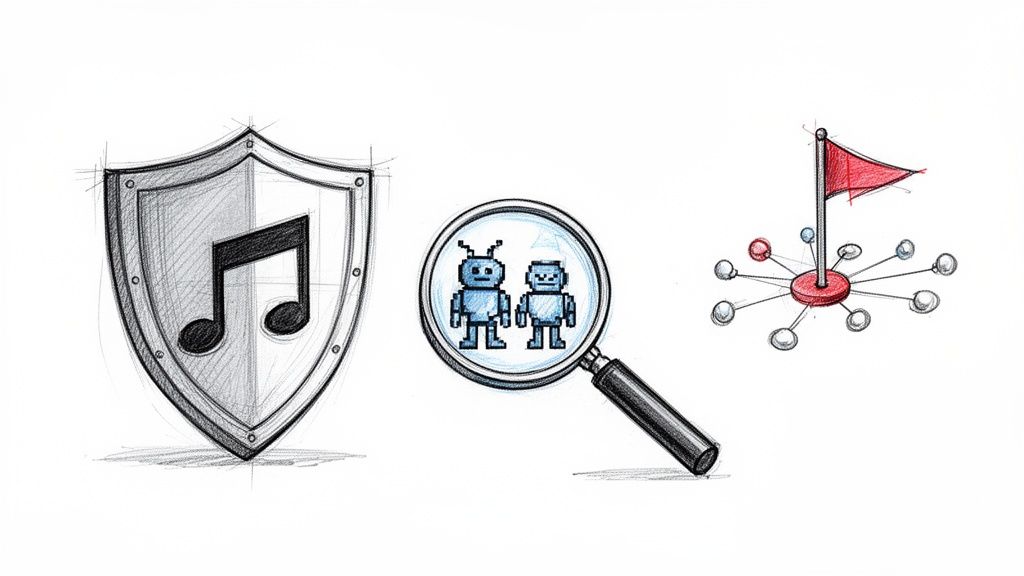
This means you need to be regularly checking your Spotify profile for anything that looks fishy. The trick is to catch these problems early, before they blow up into a major red flag that gets you dinged by your distributor or, even worse, the platform itself.
Identifying Fraudulent Playlists
Bad actors might be sneaky, but they always leave a digital trail. Learning to spot these red flags is a non-negotiable skill for any artist today. Before you even think about pitching a playlist or celebrating a new placement, you must do your homework. A dedicated playlist analyzer is your best friend in this fight.
Here are the dead giveaways of a fraudulent playlist:
Unnatural Follower Spikes: A real playlist grows organically over time, not overnight. If you see a follower graph that looks like a vertical line—gaining 20,000 followers in a single day—it's almost certainly juiced by bots.
Generic Naming and Branding: Be super wary of playlists with vague, keyword-stuffed titles. If they have no clear branding or social media presence to back them up, they're often just churn-and-burn operations designed to scam artists.
Mismatched Listener-to-Follower Ratio: A playlist might flex 50,000 followers, but how many people are actually listening? Tools like artist.tools can estimate a playlist's monthly listeners, quickly revealing if that huge follower count is just an empty shell.
Your career's integrity is worth more than a temporary stream spike. Getting your track on a playlist with 1,000 real, engaged fans is infinitely more valuable—and safer—than landing on a botted list with 100,000 fake followers.
Analyzing a playlist's history isn't optional. Think of it as the background check that protects your income and your relationship with Spotify.
Creating an Action Plan for Bot Activity
So, what happens if you find your track on a botted playlist, maybe one you never even pitched? First off, don't panic. Acting fast and smart can limit the damage and show platforms that you're on top of your game.
Your immediate response should be a simple two-step process. First, get your music off that playlist. Second, document everything and get in touch with your distributor.
Here’s your exact playbook:
Contact the Curator: Hunt down the contact info for the playlist curator. Shoot them a polite but firm email asking for the immediate removal of your track. A lot of these guys will just ignore you, but this creates a paper trail, which is a crucial first step.
Report the Playlist to Spotify: If the curator goes radio silent, report the playlist directly to Spotify for fraudulent activity. You can do this right through their official support channels.
Notify Your Distributor: This is the most important step. Get in touch with your music distributor (like DistroKid, TuneCore, etc.) right away. Give them all the evidence you’ve gathered—screenshots of the botted playlist’s weird growth, a copy of the removal request email you sent, and any other data you have.
By proactively reporting the problem to your distributor, you're making it clear that you are the victim of fraud, not a participant. That transparency is everything when it comes to protecting your account and making sure your future releases don't get unfairly flagged. This isn't about being scared; it's about being smart and making sure every stream you get is legit and every dollar you earn is secure.
Got Questions About Making Money with Your Music?
Figuring out the money side of your music career can feel like you're lost in the woods. You know where you want to go, but the path isn't exactly clear. Let's tackle some of the biggest questions artists have when they get serious about turning their art into a business.
These aren't just hypotheticals; they're the real-world hurdles that trip people up. Nailing down these details is a huge step toward building something that lasts.
How Much Can I Realistically Earn Per Stream on Spotify?
This is the big one, isn't it? The frustrating truth is, there’s no single, clean number. Spotify's per-stream payout is a moving target that usually falls somewhere between $0.003 and $0.005.
Why the range? A few key things mix it up. The listener's home country, whether they're on a Premium or ad-supported plan, and even the specific deal your distributor has with Spotify all play a part.
For actual financial planning, your best bet is a Spotify royalties calculator. You can plug in your stream counts and get a solid ballpark figure for what you might earn. This is a game-changer for setting goals and seeing if your promo efforts are actually paying off. Just remember, real money comes from a ton of legitimate streams, which is why authentic promotion is everything.
The per-stream rate is just one piece of the puzzle. The real goal is to build a high-quality, engaged audience. A smaller number of dedicated listeners who save your tracks and follow your profile will ultimately generate more long-term value than a massive number of passive, one-off streams.
Are Playlist Pitching Services Worth the Money?
Honestly? It's complicated, and you have to be super careful. The quality of these services is all over the map. A lot of them will promise you the moon but end up sticking your music on low-quality, botted playlists. That can absolutely wreck your artist profile and even get your music taken down.
A much safer—and smarter—long-term strategy is to handle the pitching yourself. When you take control, you know every single placement is a strategic move that actually builds your career, not just an empty number on a screen.
Here’s a better way to do it:
Discover the Right Playlists: Use a playlist search tool to find lists that genuinely fit your genre and vibe.
Vet Every Single One: Before you even think about pitching, run each playlist through a playlist analyzer. Look at its follower growth. Are there sketchy, overnight spikes? Get an estimate of its actual listeners.
Find the Curator: Once a playlist checks out, find the curator's contact info.
Craft a Personal Pitch: Write a real email. Show them you've actually listened to their playlist and get what they're doing.
Sure, this DIY approach takes more work upfront. But it guarantees your music gets in front of real people, which is infinitely more valuable and keeps your account safe.
How Do I Know If My Streams Are from Bots?
Learning to spot bot activity is a critical survival skill in music today. The most glaring red flag is a sudden, insane spike in streams that has nothing to do with a marketing campaign or a big playlist add you know about. If you go from 500 streams a day to 50,000 overnight for no apparent reason, something's wrong.
Another huge warning sign is a flood of streams coming from a playlist with a shady growth history—like one that magically gained tens of thousands of followers in a day. This is where dedicated bot detection tools are essential. When you look at a playlist's follower graph, if you see vertical lines instead of a gradual, organic curve, it’s almost certainly fake. Staying on top of this protects you from getting your music pulled by Spotify.
What Is More Important: Monthly Listeners or Followers?
This is a classic debate, and the answer is that they're both important, but they tell you completely different things about your audience. Think of it as the difference between reach and loyalty.
Monthly Listeners: This number shows how many unique people streamed your music in the last 28 days. It’s a great snapshot of your current buzz and reach. A high number here definitely gets the attention of editorial curators and music supervisors.
Followers: This is the number of fans who’ve actively hit that "Follow" button on your artist profile. This shows a much deeper level of commitment. These are the people who will get notified when you drop new music and are way more likely to buy merch or concert tickets down the road.
A killer strategy focuses on turning those temporary listeners into permanent followers. You can track your historical data for both metrics to see how your marketing is building not just a flash in the pan, but a real, dedicated fanbase. That conversion is how you build a career that lasts.
Ready to take control of your music career with powerful data insights? artist.tools gives you everything you need to vet playlists, detect bots, track your growth, and turn your streams into a reliable income. Start making smarter decisions today at https://artist.tools.
.png)
Comments