Money from Music: How to Earn It in the Streaming Era
- Feb 13
- 17 min read
Making a living from your music can feel like a moving target these days, but it’s more doable than you think. The old model of landing a record deal and living off album sales is history. Today, a real, sustainable career is built piece by piece, from a bunch of diverse income streams.
Let's break down how the business of music actually works and map out the real ways you can get paid.
Building Your Career in the Modern Music Economy
Forget the idea of one big break. The path to earning a living from music is now way more entrepreneurial. It's less about a single hit song and more about building a solid business around your art. Succeeding means understanding how all the different money-making channels fit together to create a stable income.
Think of your career like an investment portfolio. You wouldn't put all your money into a single stock, right? That’s too risky. The same goes for your music. Relying only on Spotify streams is a recipe for anxiety. A strong career blends different sources of income, so if one area slows down, you’ve got others to keep you going.
The Modern Artist's Revenue Blueprint
The artists who thrive today are the ones who think like founders of a startup. That means you've got to actively chase and manage multiple streams of income, from the big paydays to the smaller, steady drips. A healthy financial base is usually a mix of passive royalties and active, hands-on engagement with your audience.
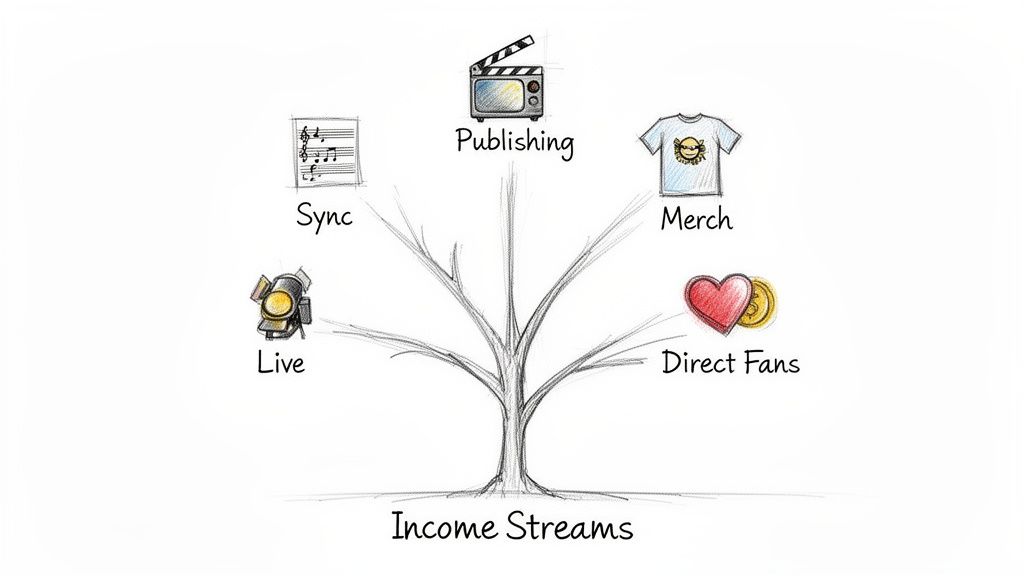
So, what does this actually look like? Here are the main pillars of income for any working artist today:
Digital Royalties: This is the money you earn when people stream your music on platforms like Spotify, Apple Music, and YouTube. For many, this becomes the foundation of their passive income.
Publishing and Licensing: This is where you get paid for the song itself—the melody and lyrics. A huge part of this is sync licensing, which is when your music gets placed in TV shows, movies, video games, or ads. This can be a game-changer.
Live Performances and Touring: From sweaty club gigs to festival stages, playing live is still a massive income source. This includes ticket sales, guarantees, and of course, selling merch at the show.
Merchandise Sales: T-shirts, vinyl, hats, posters... you name it. Selling physical items directly to your fans is a high-profit-margin business that also strengthens your connection with them.
Direct-to-Fan Platforms: Using services like Patreon or Bandcamp lets you cut out the middleman. You can offer subscriptions, exclusive content, and digital downloads straight to your most loyal supporters.
The big takeaway here is that there's no single magic bullet. Earning a real living from music is about strategically layering these different opportunities. It’s about building a resilient career that can handle industry shifts and give you the freedom to keep creating for the long haul.
Once you get a handle on how each of these pieces works, you can start putting together a financial strategy that fits your music and your goals. In the next sections, we'll dive deeper into each of these areas and give you a clear plan to maximize your earnings.
Artist Revenue Streams at a Glance
To make it even clearer, let's break down the main income channels for artists. This table gives you a quick snapshot of what each stream involves, its potential, and what it really takes to succeed. Think of this as your cheat sheet for building a diversified music career.
Revenue Stream | Earning Potential | Primary Platform or Method | Key Success Factor |
|---|---|---|---|
Streaming Royalties | Low to High | Spotify, Apple Music, YouTube | High stream volume and playlist placements |
Publishing & Sync | Medium to Very High | PROs (ASCAP, BMI), Sync Agents | Strong songwriting and industry networking |
Live Performance | Medium to Very High | Gigs, Tours, Festivals | Building a dedicated live following |
Merchandise | Medium to High | Online Store, Live Shows | Strong brand identity and fan engagement |
Direct-to-Fan | Low to Medium | Patreon, Bandcamp, Substack | Cultivating a core community of super-fans |
Brand Partnerships | High to Very High | Social Media, Endorsements | Large, engaged audience and brand alignment |
Each of these channels offers a unique opportunity. While streaming might provide a steady trickle of passive income, a single sync placement could fund your next album. By understanding and pursuing a mix of these, you create a much more stable and scalable business around your music.
How Your Spotify Streams Turn into Real Money
Ever looked at your Spotify stream count and wondered how those plays actually turn into cash in your bank account? You’re not alone. It’s one of the most confusing parts of the modern music business, mostly because there's no simple, fixed "per-stream" rate.
The best way to think about it is like a giant, constantly changing pizza. Every month, Spotify pools all the money it makes from subscriptions and ads. That's the pizza. Your earnings aren't a set fee for each play; they are your slice of that pizza.
The size of your slice is determined by your "streamshare"—basically, your percentage of the total streams across the entire platform that month. This "pro-rata" model is exactly why your payout is never the same month to month. It's always shifting based on a few key factors.
Decoding the Royalty Puzzle
When someone streams your song, it doesn't just create one payment. It actually triggers two different kinds of royalties that travel down separate paths before they ever get to you. Getting a handle on these two streams is critical to making sure you're collecting everything you've earned.
Here are the two main royalties in play:
Recording Royalties (Master Rights): This is the money paid for the actual sound recording—the finished track you uploaded. Spotify pays this to whoever owns the master rights. For signed artists, that's usually the label. If you're independent, it’s your digital distributor (like DistroKid or TuneCore), who then takes their cut and pays you the rest.
Publishing Royalties (Composition Rights): This is the money paid for the underlying song itself—the lyrics and melody. It’s owed to the songwriters and publishers. This piece of the pie is split even further into different types of royalties that are collected by different organizations.
The bottom line is that every single stream creates a financial ripple. It generates multiple tiny payments that have to navigate a complex web of distributors and collection societies. Your job is to make sure you’re set up to catch all the money owed to you for both the recording and the song.
This visual breaks down the major income streams, showing how royalties are just one piece of a much bigger puzzle that includes merch, licensing, and more.
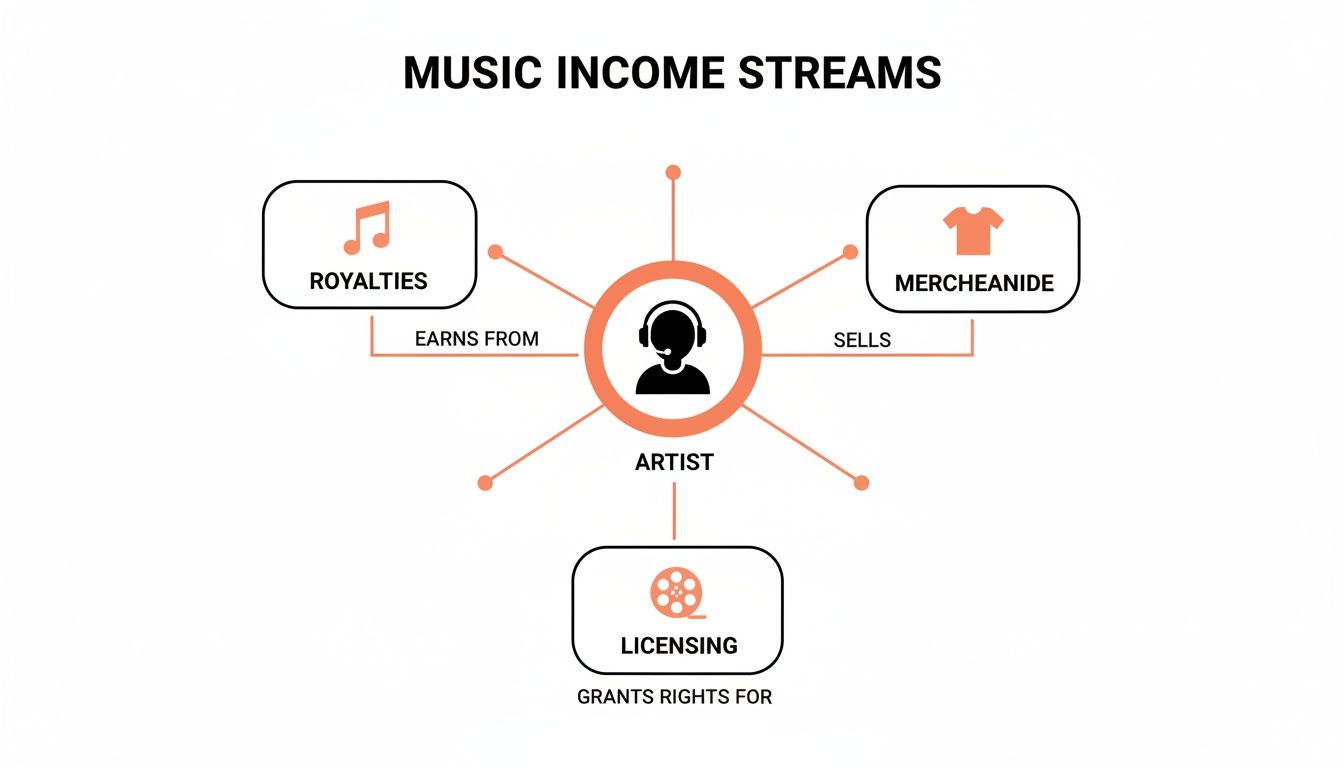
As you can see, a sustainable music career is built on multiple pillars. Relying only on streams is a risky game; the real pros balance all of these revenue channels.
The Key Players in Your Payout
To grab all your publishing money, you need to be hooked up with a Performance Rights Organization (PRO), like ASCAP, BMI, or SESAC in the US. These groups track when your music is played publicly—on the radio, in a coffee shop, and on streaming services—to collect performance royalties for you.
But that's not all. Every stream also generates a mechanical royalty, which is for the "reproduction" of your song. In the U.S., a group called The Mechanical Licensing Collective (The MLC) is in charge of collecting these from services like Spotify and getting them to publishers and songwriters.
The global music industry is a massive machine, projected to hit $38.2 billion in revenue. Streaming is the engine, with recorded music revenues climbing to $29.6 billion, and a whopping $20.4 billion (that's 69%) of that coming directly from streaming.
For you, this means that even a tiny per-stream rate, like Spotify's rough average of $0.003-$0.005, can add up to real money if you build a large enough audience.
Why Your Per-Stream Rate Changes
So, why isn't every stream worth the same amount? It all comes down to the value of the listener who hit play.
A few big variables are constantly tweaking what you earn per stream:
Listener's Subscription Type: A stream from a Spotify Premium user is worth a lot more than one from someone listening on the free, ad-supported plan.
Listener's Geographic Location: Payouts change from country to country. This is tied to local subscription prices, ad revenue, and currency exchange rates.
Your Distributor's Agreement: The deal your distributor has with Spotify can also have a small impact on the final rate you see.
Once you understand these moving parts, it becomes clear why your streaming income isn't some fixed number. It’s a dynamic total that reflects who your audience is and how they listen. For a deeper dive, check out our guide on how much Spotify pays per stream.
Expanding Your Income Beyond Streaming
Relying solely on Spotify streams is like trying to build a house with only one type of material—it’s possible, but it’s not very stable. To build a lasting career and actually generate serious money from music, you need to diversify.
Think of streaming as your foundation. It's essential, but it's just the start. Now, let’s build the rest of the structure with other powerful income sources that create a more predictable cash flow and turn your art into a sustainable business.
Unlocking Publishing and Performance Royalties
Beyond the master recording royalties Spotify pays out, there's a whole other world of publishing royalties. This is the money earned by the song’s composition—the melody and lyrics—anytime it gets used. We're talking about radio airplay, a cover band playing your song at a bar, or even having it on in the background at a restaurant.
To collect this cash, you need to be signed up with a Performance Rights Organization (PRO) like ASCAP or BMI. They track all these public performances and make sure you get paid. It's passive income that can really add up, especially as your music starts to get more traction.
Then you have live shows. This is a massive piece of the puzzle. Live Nation, for example, just pulled in $23.1 billion from 151 million fans at over 54,000 events. At the same time, music publishing kicked in another €15.8 billion globally. For an artist blowing up on Spotify, the path is clear: that streaming success can and should lead to sold-out venues and bigger publishing checks.
The Power of Sync Licensing
Ever discovered a new favorite band because you heard their song in a movie, a TV show, or a video game? That’s sync licensing in action. A sync deal is basically an agreement to "synchronize" your music with some kind of visual media, and it can be one of the most lucrative paydays out there.
A single sync placement in a big Netflix show or a national ad campaign can often earn an artist more than millions of streams combined. It’s a potential game-changer for your bank account and your visibility.
Getting into the sync game involves a few key steps:
Professional Masters: Your tracks have to be mixed and mastered to a high, broadcast-ready standard. No exceptions.
Instrumental Versions: Always, always have instrumental-only versions of your songs ready to go. Music supervisors ask for these constantly.
Networking: Start connecting with music supervisors, sync agents, and publishers. These are the gatekeepers who place music in media.
Building Direct-to-Fan Revenue
Honestly, the most reliable income often comes straight from the people who love your music the most: your fans. Direct-to-fan (D2F) models cut out the middlemen, which means you keep a much bigger slice of the pie while building a stronger community around your music.
A solid D2F strategy has a few different angles:
Merchandise: Selling t-shirts, vinyl, posters, and hats is a classic for a reason. The profit margins are great, and it lets your fans physically show their support.
Exclusive Content: Platforms like Patreon or Bandcamp Subscriptions are perfect for offering behind-the-scenes videos, early access to new music, or exclusive demos in exchange for a monthly fee.
Digital Products: Get creative here. You could sell digital goods like sample packs, sheet music, or even online workshops teaching your craft.
By combining these pillars—publishing, performance, sync, and direct-to-fan sales—you start to build a robust financial ecosystem around your music. This diversified approach is the key to moving from just getting by to truly thriving as a modern musician. For a deeper dive, check out our complete guide to modern revenue streams.
Proven Strategies to Grow Your Spotify Revenue
Knowing how the numbers work is one thing. Actually making them grow is a completely different game. This is where you shift from just passively earning to actively building your career on Spotify. Growing your revenue isn’t about some lucky break—it's about a consistent, smart approach to getting your music in front of the right ears.
To make real money from music on Spotify, you need a solid plan built on three pillars: discoverability, promotion, and protection. That means you have to nail your playlist pitching, tune up your profile so new fans can actually find you, and make damn sure every stream you get is legit and hits your bottom line.
Master Your Playlist Pitching Game
Let’s be real: playlists are the most powerful engine for growth on Spotify, period. Landing on a single popular, well-curated playlist can send a massive wave of new listeners your way. But getting there isn't about blasting your track to every curator you can find. That's a surefire way to waste your time and burn bridges.
The first step is finding the right targets. You're looking for authentic playlists in your specific niche, packed with engaged, real listeners—not some junk list propped up by bot farms. This is where a dedicated Playlist Search tool from artist.tools becomes your secret weapon. It lets you slice through millions of playlists to find the perfect ones that match your sound, vibe, and audience.
Once you have your hit list, you've got to craft a pitch that someone will actually open and read. Curators are drowning in hundreds of submissions a day. Your message has to be sharp, professional, and straight to the point. An AI Pitch Generator can be a huge help here, letting you create personalized, effective pitches that show you've actually listened to their playlist and know your song is a good fit.
Optimize Your Presence with Spotify SEO
Here’s something most artists miss: Spotify is a search engine. Every day, listeners are typing in keywords for genres, moods, and activities to find their next favorite song. If you're not optimizing for these searches, you’re leaving a ton of money on the table.
This is what we call Spotify SEO. It's all about strategically placing the right keywords in the right places on your profile to pop up in search results. Think about what a potential fan would search for to find music like yours—"chill lofi beats for studying," "upbeat indie workout," or "sad acoustic songs."
The Goal of Spotify SEO: Make it ridiculously easy for Spotify's algorithm and its users to connect your music with the exact sound they're looking for. This drives a steady stream of organic, long-term fans who are genuinely into your vibe.
To pull this off, you need data, not guesswork. A Keyword Explorer tool built for Spotify shows you what terms people are actually searching for. You can take these high-potential keywords and weave them into:
Your Artist Bio: Describe your sound, your influences, and the feeling your music creates.
Your Public Playlists: Create and name your own playlists using search-friendly titles.
Your Song Titles (if applicable): While you shouldn't mess with your artistic vision, you can use descriptive titles for things like remixes or instrumental versions.
Protect Your Revenue with Platform Hygiene
As you start gaining traction, you’ll run into the biggest threat to your income: fake streams. Bots and scammy playlists might look like they're boosting your numbers, but it's a trap. Spotify's algorithms are smart and will sniff out this fake activity, which can get your tracks pulled and your royalties frozen.
Keeping your profile clean is non-negotiable. You have to vet every third-party promoter or playlist you work with to ensure every single stream comes from a real human being. A Bot Detection tool is essential for this. It scans playlists for red flags like weird follower jumps or zero engagement, helping you dodge the fraudsters.
You can see just how much this matters by forecasting your potential earnings with a tool like the Spotify Royalties Calculator.
This simple calculation shows how even a modest increase in legitimate daily streams can dramatically boost your income, proving why real growth is the only kind that matters.
To bring it all together, here's a checklist of practical steps you can take using these strategies to get more legitimate streams and grow your earnings.
Spotify Growth Strategy Checklist
Strategy | Action Item | Tool to Use (artist.tools) | Impact on Earnings |
|---|---|---|---|
Playlist Pitching | Identify and pitch to 10-15 authentic, niche-specific user playlists per week. | Playlist Search & AI Pitch Generator | High (Short-Term): Can trigger immediate stream spikes from new audiences. |
Spotify SEO | Find 5-7 relevant keywords and integrate them into your artist bio and public playlist titles. | Keyword Explorer | Medium (Long-Term): Builds a steady flow of organic streams over time from search. |
Platform Hygiene | Before pitching, run every target playlist through a bot detection scan to verify its authenticity. | Playlist Analyzer (Bot Detection) | Crucial (Protective): Prevents royalty freezes and protects your account's standing. |
Performance Tracking | Monitor your daily and monthly stream counts to measure the impact of your campaigns. | Essential (Informative): Shows what's working so you can double down on effective strategies. |
Following this checklist isn't about ticking boxes; it's about building a sustainable system for growth. By focusing on authentic promotion and protecting your account, you're not just earning more in the short term—you're investing in the long-term health of your music career.
How to Forecast and Track Your Music Earnings
If you're serious about your music, at some point you have to stop just making music and start managing your career. That means treating your art like a business. It’s a huge mindset shift—one that puts data, forecasting, and tracking at the center of everything you do.
When you really dig into the numbers, you can start turning unpredictable income streams into a real financial plan. This is how you take control and transform your passion into something that can actually sustain you.
It all starts with ditching the guesswork. Instead of just wondering what your streams are worth, you can use modern tools to set tangible, data-driven goals and get a clear picture of your financial health.
Forecasting Your Potential Revenue
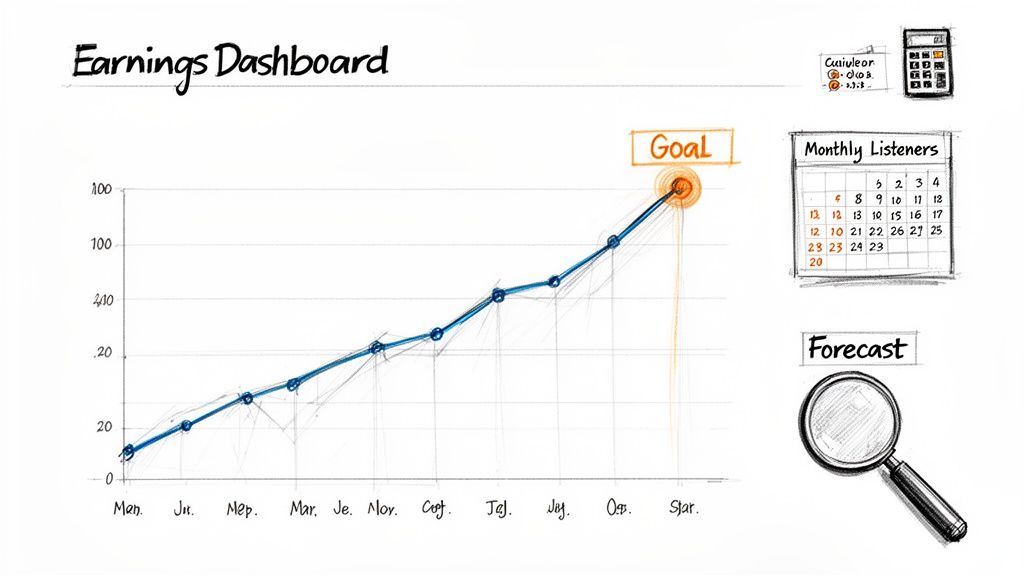
Forecasting isn't about perfectly predicting the future—it's about setting realistic targets so you know what to aim for. Figuring out what a million streams could actually earn you is what turns vague hopes into actionable marketing plans and realistic budgets. A Spotify Royalties Calculator is the perfect tool for this.
Just pop in your current stream counts (or a target you're aiming for), and you can get an instant estimate of your potential monthly and yearly earnings. It’s a simple calculation that brings those abstract streaming numbers down to earth, connecting your artistic goals directly to your financial ones.
Let's say you set a goal to earn $1,000 per month from Spotify. The calculator might show you that you'll need to hit roughly 250,000 streams per month to get there. Boom. Now you have a clear, measurable target for all your promotional efforts.
Connecting Promotion to Profit
Once you've got a number in mind, the next step is to figure out what’s actually working. Every single promo campaign—from playlist pitching to social media ads—needs to be measured against its impact on your streams. This is where a Stream Tracker becomes your best friend.
A stream tracker gives you a real-time view of your daily stream counts, so you can see immediate spikes or dips. Did that new playlist placement actually move the needle? Did your latest TikTok drive new listeners to your profile? With a stream tracker, you can answer these questions with hard data, not just a gut feeling.
Data-driven decisions are the cornerstone of a modern music business. By monitoring your streams, you can identify which marketing channels deliver the best return and decide where to put your time and money more effectively.
Monitoring Long-Term Audience Growth
While daily streams are great for checking on short-term campaigns, long-term success is all about audience growth. You need a way to see the bigger picture, and that's what a Monthly Listeners Tracker is for. It gives you that broader perspective on your career's momentum.
This metric is a powerful signal of your overall reach and how much your audience is engaged. Here’s how you can use it to guide your strategy:
Assess Overall Health: Are your monthly listeners growing consistently? That's a great sign your music is resonating and your promo efforts are building a real fanbase.
Identify Trends: Do you see seasonal peaks or dips in listenership? Understanding these patterns can help you plan your release schedule more strategically.
Set Bigger Goals: Tracking this number over time helps you set ambitious but achievable career milestones for the long run.
By combining forecasting with daily and monthly tracking, you create a powerful feedback loop. You can set clear financial goals, launch targeted campaigns, measure their direct impact, and tweak your strategy based on what the data tells you. To get started, you can learn more about how a Spotify artist earnings calculator can unlock your true revenue.
Building a Real Business Plan for Your Music
Knowing all the ways you can make money from music is one thing. But turning that knowledge into a real, workable business plan that actually fits your career? That's the real challenge.
A sustainable music career isn't about getting lucky with one viral hit. It’s built brick-by-brick with smart planning, diversifying your income, and treating your art with the respect of a real business.
Your strategy will naturally shift as you grow. If you're just starting out, maybe 80% of your energy goes into pure Spotify growth—hustling for playlist spots, nailing your artist SEO, and just getting those first few thousand listeners. But for an established artist with a solid fanbase, the focus might pivot to a high-margin merch drop or mapping out a small, profitable tour.
Prioritizing Your Revenue Channels
There's no magic formula here. The right path for you depends entirely on your genre, who your audience is, and what you're naturally good at.
Start by sketching out all your potential income streams. Then, rank them based on what can make you money now versus what will build wealth over the long haul.
Short-Term Focus (The next 3-6 months): What can you do to generate cash flow fast? This is usually stuff like direct-to-fan sales on Bandcamp, a limited run of t-shirts for your die-hard fans, or booking some local gigs.
Mid-Term Goals (6-18 months): This is where you really dig into scaling your streaming game and start seriously hunting for sync licensing deals. These moves take time to gain traction, but the payoff can be huge.
Long-Term Vision (2+ years): Think bigger. This is where national touring, building up a publishing catalog that pays you while you sleep, and landing brand partnerships come into play.
Setting Goals and Reinvesting in Yourself
Once you have a rough plan, set simple, achievable goals for each quarter. For example, "I want to increase my streaming income by 15% this quarter by getting on three new playlists." Or, "My goal is to sell $500 in merch by pushing this new design to my email list."
The most crucial part of any business plan is reinvestment. As money starts coming in, you have to put a piece of it back into the business. That could mean better recording gear, a targeted ad campaign for your next single, or hiring a PR person to get the word out.
This creates a powerful growth loop. Your music makes money, you use that money to reach more people, and that, in turn, helps you make more money. That’s how you build a resilient, long-lasting career.
Getting to the point where you're making serious money from music is a marathon, not a sprint. It's all about strategy, knowing your numbers, and showing up every day.
Your Top Questions About Music Royalties, Answered
Jumping into the world of music royalties can feel like trying to solve a puzzle in the dark. If you're just getting a handle on how to actually make money from your music, it’s easy to get overwhelmed. Let's shed some light on the questions we hear most often.
How Much Does Spotify Actually Pay Per Stream?
This is the big one, but there’s no single, fixed answer. The payout you'll see from Spotify usually lands somewhere in the $0.003 to $0.005 per stream range, but that number is constantly shifting.
Why the variation? A few key things come into play: the listener's country, whether they're on a Premium plan (which pays more than an ad-supported one), and the specific agreement your distributor has with Spotify. It's not a flat fee—it’s a dynamic system based on a shared pool of revenue.
What Is the Fastest Way to Make Money as a New Artist?
For artists just starting out, the quickest way to get cash flowing is with a two-part strategy. First, get your music on streaming platforms like Spotify through a good distributor. This is you laying the groundwork for long-term, passive income.
At the exact same time, you need to go direct-to-fan. Platforms like Bandcamp or even a simple personal website are goldmines for selling digital downloads, limited-edition merch, or physical copies right to the people who believe in you first. This approach can bring in real money now while your streaming numbers slowly build momentum.
Think of it this way: direct sales are your immediate gig money, and streaming is your long-term investment. Combining the two creates a much more stable financial foundation right from day one, helping you fund your career without waiting on royalties to trickle in.
How Can I Protect My Music From Fake Streams?
Keeping your music safe from bots isn't just a good idea—it's essential for protecting your income and your reputation. The first step is to be extremely picky about any third-party promotion services. If a service guarantees a specific number of streams, run the other way.
Get in the habit of checking your Spotify for Artists dashboard regularly. See any weird, sudden spikes in plays from odd locations? That’s a massive red flag. Even better, get proactive. Use a playlist analysis tool to check any playlist for bot activity before you even think about pitching your music. This one move ensures you’re only connecting with legitimate curators, which keeps your account safe from penalties and protects the money you’ve actually earned.
Ready to take real control of your Spotify growth and keep your earnings safe? artist.tools delivers the data you need to make smarter moves, from top-tier bot detection to deep playlist analysis. Start building your music career on a solid foundation at https://artist.tools.
.png)
I like how this breaks down modern music income streams. Streaming alone is clearly not enough, and I’ve also been experimenting with direct-to-fan models and sync ideas. Streaming alone is clearly not enough, and I’ve also been experimenting with direct-to-fan models and sync ideas. Having a flexible setup like a USDT Wallet helps me manage cross-platform payouts and keep everything organized while scaling revenue from different sources.