Pitching a Song: pitching a song to playlists made simple
- Jan 7
- 15 min read
Getting your music heard is less about luck and more about having a solid game plan. Pitching a song is how you get your music in front of the people who can actually make a difference—playlist curators, bloggers, music supervisors, and radio DJs. It’s a strategic process, and this guide is your complete blueprint for nailing every single step.
Your Blueprint for a Successful Song Pitch
Look, in today's insanely crowded music scene, just dropping a track and hoping for the best is a fast track to nowhere. A killer pitch turns your release from a shot in the dark into a targeted campaign, hitting the right people with a message that actually connects.
Pitching isn't just one action; it’s a whole campaign that breaks down into three core phases: getting your assets ready, finding the right people to target, and finally, crafting the pitch itself.
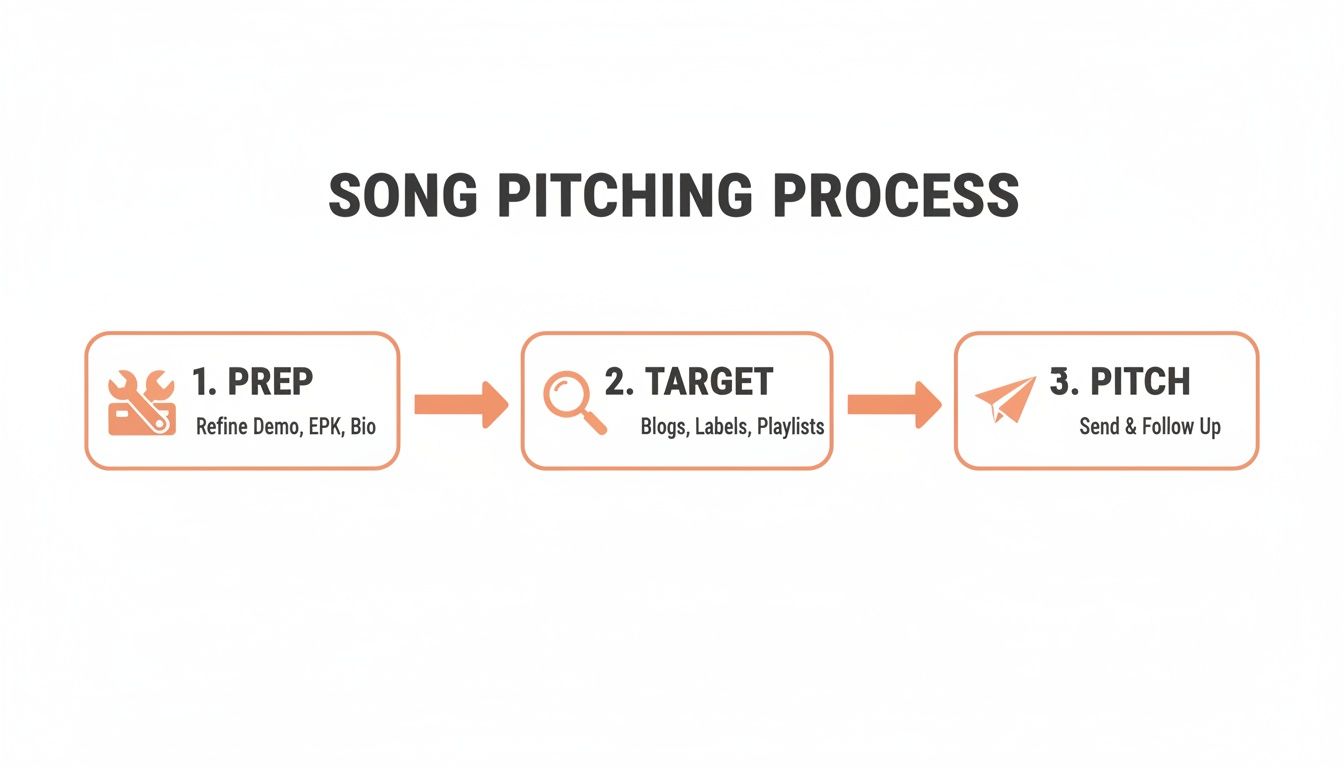
This workflow shows that the real work starts long before you ever hit "send" on an email. Each stage builds on the one before it, giving your music the best possible shot at getting the attention it deserves.
Know Your Targets: Who Are You Pitching To?
Before you write a single word, you have to know who's on the other end. Every gatekeeper in the industry has different goals, timelines, and things they're looking for. Your approach has to change for each one.
Spotify Editorial Curators: These are the folks at Spotify managing the big-name playlists like Today's Top Hits. The only way to reach them is through your Spotify for Artists dashboard, and you need to submit at least one week before your release. They care about data, cultural buzz, and top-notch production.
Independent Playlist Curators: This is a huge group of individuals, brands, and blogs with their own influential playlists. You'll find their contact info and pitch them directly via email or a submission form. They're usually passionate about a specific niche, mood, or genre and are looking for tracks that fit their vibe perfectly.
Music Bloggers & Radio DJs: These are the tastemakers looking for a story. Your pitch needs to be more than just the song; it's about your artist narrative, your press photos, and what makes you unique. Give them an angle they can run with.
Sync Agents & Music Supervisors: This crew is all about placing music in TV, films, ads, and video games. A sync pitch is a different beast altogether. You'll need instrumental versions, clean edits, and perfectly organized metadata. Their decision is 100% based on whether your song fits the emotion and context of a specific scene.
To help you keep it all straight, here’s a quick breakdown of the main avenues for pitching your music.
Key Pitching Avenues at a Glance
Pitch Target | Primary Goal | Key Assets Needed | Typical Lead Time |
|---|---|---|---|
Spotify Editorial | High-impact placements, algorithm boost | A clean track, detailed metadata, a compelling story | 1-4 weeks pre-release |
Indie Curators | Niche audience growth, steady streams | Streaming links, artist bio, social links | 2-4 weeks pre-release |
Blogs & Radio | Building press, telling your story | EPK, press photos, artist narrative, private stream | 4-6 weeks pre-release |
Sync (TV/Film) | Licensing revenue, mass exposure | High-quality WAVs, instrumentals, metadata (stems) | 6+ months pre-release |
Each path requires a unique strategy, from the assets you prepare to how far in advance you start your outreach.
Key Takeaway: Pitching a song is not a one-size-fits-all game. The difference between getting heard and getting ignored is how well you customize your pitch, your assets, and your timing for each specific target.
We'll get into the nitty-gritty of how to approach each of these gatekeepers. From building a pro-level press kit to writing an email that actually gets a response, you'll get the real-world tactics to turn your next release into a massive opportunity.
Building Your Professional Pitch Toolkit
Before you even think about hitting 'send' on a single pitch, you need to get your house in order. Pitching your music is a lot like applying for a job; you wouldn't show up to an interview without a resume, right? Your professional assets are your resume in the music world, and they’re your first and best chance to make a powerful impression.
This is the foundational work that separates the artists who get noticed from the ones who get deleted. It’s about making it dead simple for a busy curator or music supervisor to say "yes." When they're interested, they need everything at their fingertips, no friction.
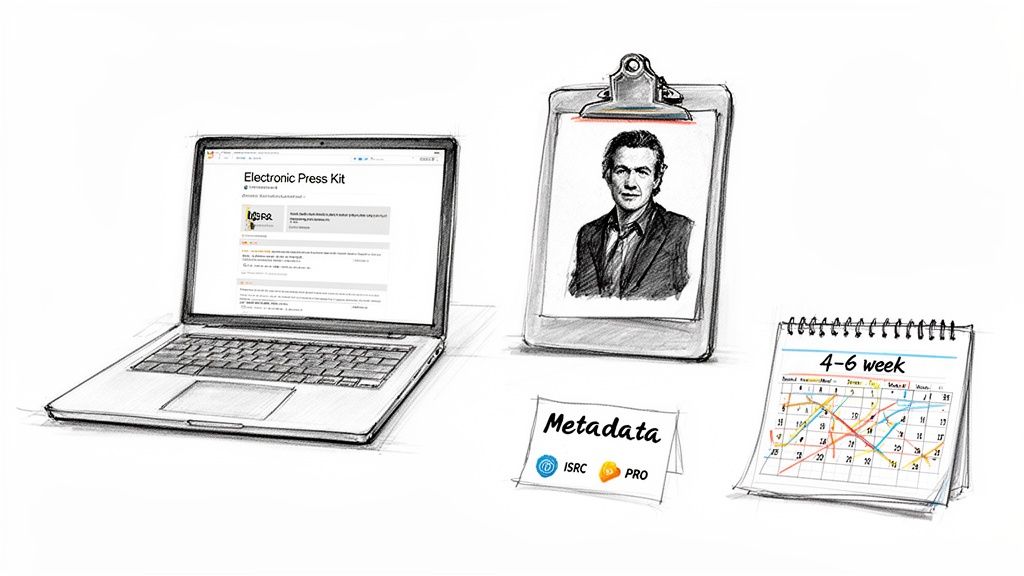
The Cornerstone: Your Electronic Press Kit
Your Electronic Press Kit (EPK) is your digital business card, your professional resume, and your story all rolled into one. It’s the central hub for anyone who matters—curators, bloggers, bookers—to find out who you are. A flimsy or incomplete EPK screams amateur. A sharp, well-put-together one tells them you’re a pro.
Don't just think of it as a folder of files. A great EPK tells a compelling story. At the absolute minimum, it needs to have:
High-Resolution Photos: Have a few options ready to go. Think professional headshots, candid studio shots, and maybe some killer live photos. Give them choices.
Your Artist Bio: You need two versions. A punchy, short bio (around 100 words) to hook them, and a longer, more detailed version for when they want to dig deeper.
Direct Links to Your Music: Make it easy. Clearly labeled links to your Spotify, Apple Music, SoundCloud—wherever your music lives. Don’t make them hunt for it.
Key Accomplishments: This is your highlight reel. Mention any press coverage, previous playlist spots, cool gigs, or collaborations.
This is so critical that we’ve built an entire guide around it. For a full breakdown, check out our post on how to create an EPK for artists.
Mastering Your Metadata
Metadata is the invisible engine that makes the music industry run. It’s all the data baked into your audio files that ensures you get credited and, more importantly, paid. For opportunities in sync licensing and radio, messy metadata is an instant dealbreaker.
Picture this: a music supervisor for a Netflix show loves your track, but they can't find your publisher info in the file. They aren't going to play detective. They're just going to move on to the next song in the pile. You can’t afford to lose a placement over a simple clerical error.
Critical Metadata ChecklistBefore you pitch anyone, make sure this information is organized and embedded in your files:- ISRC Codes: The unique fingerprint for each specific recording.- ISWC Codes: The unique ID for the song's composition (the melody and lyrics).- PRO Affiliation: Your Performing Rights Organization (like ASCAP, BMI, SESAC).- Publisher and Writer Splits: A clear breakdown of who owns what percentage.
Timing Your Pitch for Maximum Impact
Your release timeline isn't just a calendar; it's a strategic weapon. Dropping a song with zero lead time is practically guaranteeing it will be released to the sound of crickets. You absolutely have to give curators, editors, and bloggers enough time to listen, consider, and schedule your track.
The industry standard is to give yourself a 4-6 week window between starting your outreach and the actual release date. This buffer is your friend. It gives you the time you need to build momentum and coordinate your campaign. For Spotify's official editorial submission, you need to submit via Spotify for Artists at least one week in advance, but seriously, aim for three to four weeks.
Getting on a major Spotify editorial playlist is a long shot—industry data suggests acceptance rates are incredibly low. But the payoff is life-changing. A single placement on a list like Today's Top Hits (with its 35+ million followers) can completely transform an artist's career overnight.
This is where the right tools give you a serious advantage. For example, artist.tools' AI Editorial Pitch Generator is trained on hundreds of successful pitches. It takes your track details and marketing angles to help you craft the kind of compelling pitch that gets an editor’s attention, giving your official submission a much better fighting chance.
Finding the Right Curators for Your Music
Just blasting your music out into the void and hoping for the best is a one-way ticket to disappointment. If you want to pitch a song successfully, it isn't just about what you say, but who you say it to. Mass, generic outreach is the fastest way to get your email ignored. The real momentum comes from targeted, thoughtful research.
The goal here is to build a hand-picked list of people who are already pushing artists in your specific sonic universe. Think of it less like casting a wide net and more like finding the perfect key for a very specific lock. You're searching for genuine fans who just happen to have an audience.
Moving Beyond Guesswork with Smart Tools
Manually scrolling through Spotify, trying to eyeball playlists that might fit your sound, is an absolute grind. It’s slow and wildly inefficient. Thankfully, powerful data platforms can now do the heavy lifting for you, letting you slice through millions of playlists to find your perfect matches.
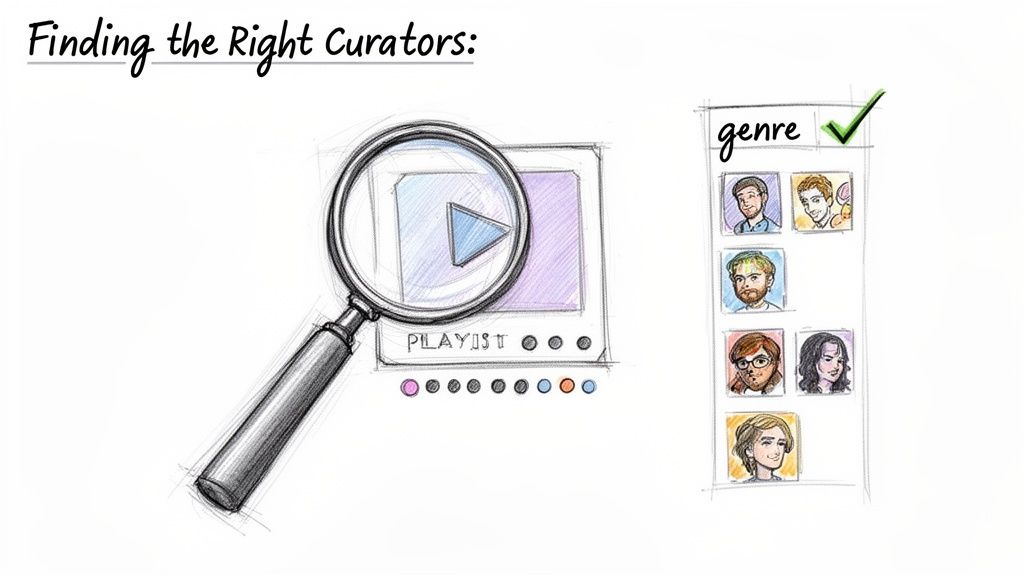
Tools built for artists, like the Playlist Search feature in artist.tools, let you get incredibly specific. You can search by genre, mood, keywords, and even similar artists to uncover playlists that would be a natural home for your track. This data-driven approach pulls the guesswork out of the equation and points you straight toward your most receptive audience.
What you’re seeing in a tool like this isn't just a list of names; it's a dashboard of real opportunities. Each entry comes with vital data points like follower counts and, most importantly, contact availability, which is crucial for the next phase: vetting.
Vetting Playlists and Spotting Red Flags
Okay, so you've found some promising playlists. Now comes the most critical step: making sure they're legit. The music promotion world is, unfortunately, littered with "playlists" that are nothing but a collection of fake followers and bot-driven streams. Getting on one of these can actually do more harm than good to your Spotify profile.
A playlist with 100,000 followers and zero real listeners is worthless. A playlist with 1,000 highly engaged, passionate fans can change your career. Always focus on genuine engagement, not vanity metrics.
The number one red flag is unnatural follower growth. A real playlist grows organically over time with steady gains. A botted one will often show massive, sudden spikes in followers seemingly overnight.
This is where a Playlist Analyzer tool becomes essential. By looking at a playlist's two-year follower history, you can easily spot these suspicious jumps. If the graph looks like a hockey stick—flatlining and then shooting straight up out of nowhere—stay far away. That's a dead giveaway for fake followers, and any streams you get from it will be meaningless. A healthy playlist shows a gradual, consistent upward curve.
Finding Contacts and Crafting Your Angle
Once you have a solid list of healthy, relevant playlists, the final piece of the puzzle is figuring out how to actually reach the curator. Many will list an email address or a submission link right in their playlist description or on their social media profiles.
This research phase is so important that we’ve dedicated an entire article to mastering it. You can dive deeper into advanced techniques in our complete guide on how to find Spotify playlist curators.
But this isn't just about grabbing an email. It's about finding a real, personal connection. Actually listen to their playlist. Find a specific track you genuinely love that shares a vibe with your song. This is your "in." It's what separates your email from the hundreds of others in their inbox.
For instance, instead of a generic pitch, you can now write something that feels human:
"Hey, I’m a huge fan of your 'Midnight Lo-Fi' playlist. The way you transitioned from [Artist A's Song] into [Artist B's Song] was brilliant. My new track, '[Your Song Title],' shares that same hazy, introspective feel, and I thought it might be a great fit."
This simple act of personalization shows you’ve done your homework and respect their work. It instantly turns a cold pitch into a warm introduction, dramatically increasing your chances of getting a real listen and, ultimately, a placement.
How to Write a Pitch That Gets Opened and Read
You’ve done all the hard work: you’ve prepped your assets, dialed in your metadata, and spent hours finding the perfect curators. Now comes the moment of truth—the pitch itself. This email is your one shot to make an impression.
A great pitch isn't about some magic formula. It’s about crafting a message that respects a curator's time, shows you've actually listened to their playlist, and makes it incredibly easy for them to just press play.
Crafting a Subject Line That Stands Out
Let’s be real: your subject line is the gatekeeper. Curators are drowning in emails, most of which are lazy, generic submissions. Subject lines like "Music Submission" or "Check Out My New Song" are the fastest way to get your email ignored. They’re digital junk mail.
Your goal is to give the curator all the critical info before they even open the message. I’ve found a simple format that works wonders:
Submission: [Artist Name] - "[Song Title]" (For your '[Playlist Name]' playlist)
Why does this work so well? It immediately answers the important questions:
What is this? A music submission.
Who is it from? Your artist name and song title.
Why me? You’re showing you’re familiar with their specific playlist.
That tiny bit of personalization proves you're not just blasting a random list. It signals respect for their work and instantly puts you ahead of the pack.
The Anatomy of the Email Body
Once they open your email, you have seconds to get to the point. Forget long, rambling stories about your life's journey—that's a one-way ticket to the archive folder. Your pitch needs to be personal, direct, and scannable.
Here's a simple flow that consistently gets results:
The Personal Hook (1-2 sentences): Kick things off by mentioning their playlist. Name-drop a specific song you love on it. This simple act proves you’re a real listener, not a bot.
The Quick Intro (1 sentence): Briefly introduce yourself and your new track. No need for your life story here.
The Vibe Check (1 sentence): In one compelling line, describe your song's sound. Use relatable artists or moods, like "hazy indie pop with a Tame Impala vibe" or "driving alt-rock built for a late-night drive."
The Call to Action (1 sentence): Give them a clear, direct link to listen. Always use a private streaming link from a platform like SoundCloud or Disco. Never, ever attach an MP3 file.
The Closer (1 sentence): A simple "thanks for your time and consideration" is all you need.
Pro Tip: Keep the entire email under 100 words. Brevity is the ultimate sign of respect for a busy curator. A short, punchy pitch will always beat a long-winded essay.
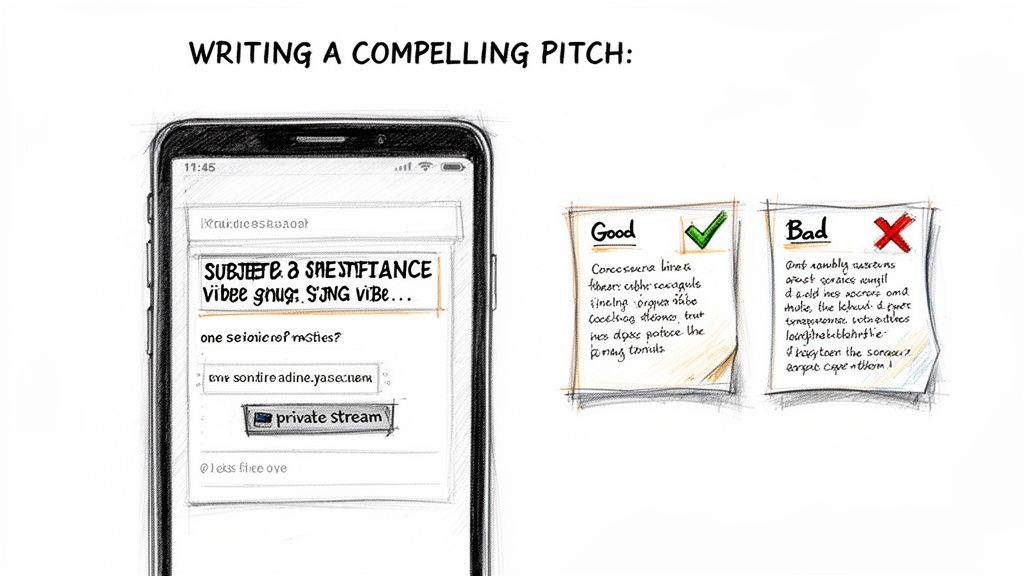
Effective vs. Ineffective Pitch Examples
Let's see what this looks like in the real world. The difference between a good and bad pitch is night and day.
The Ineffective Pitch (What to Avoid):
Subject: Music SubmissionHey,Check out my new single! I’m an artist from Ohio and have been making music for 10 years. This song is really special to me and I poured my heart and soul into it. I think your listeners would love it.[Spotify link to a song that's already released]Thanks,The Artist
This pitch is destined for the trash folder. It’s generic, offers zero context, and uses a public link for a pre-release pitch, which is a big no-no.
The Effective Pitch (Your Goal):
Subject: Submission: Kinematic - "City Lights" (For your 'Synthwave Dreams' playlist)Hi Alex,I'm a huge fan of your 'Synthwave Dreams' playlist—the inclusion of The Midnight's "Sunset" is perfect.My name is Kinematic, and my new single, "City Lights," shares that same nostalgic, retro-futuristic vibe. It’s an instrumental synthwave track with driving basslines and atmospheric pads, perfect for a night drive.You can listen here: [Private SoundCloud Link]Thanks for your time and consideration.Best,Kinematic
See the difference? This version is specific, respectful, and makes the curator's job a breeze. It shows genuine interest and provides a clear, concise description. Personalization is the key that unlocks the door.
For an even deeper dive into outreach, our guide on how to contact Spotify curators effectively covers more advanced strategies to help you connect.
Managing Your Outreach and Following Up Like a Pro
You've done the research, you've written the perfect pitch. Now comes the moment of truth: execution. Kicking off a full-blown outreach campaign can feel like taking on another full-time job, but with a solid workflow, you can turn that mountain into a series of manageable steps. This isn't about blasting out a hundred emails and hoping for the best; it's about strategic, professional communication that builds real relationships.
First things first, get organized. A simple spreadsheet will be your command center. Set up columns for the playlist or blog name, the curator's name, their contact email, the date you sent your pitch, and a date for a follow-up. This dashboard is your safeguard against accidentally spamming someone and gives you a bird's-eye view of your entire campaign.
Timing Your Pitches for Peak Visibility
When you hit "send" matters way more than most artists realize. Firing off a pitch on a Friday afternoon is a surefire way to get it buried in a weekend avalanche of emails. Curators, like most of us, are most active and open to new things midweek.
Try to send your pitches between Tuesday and Thursday mornings. You'll catch them right when they're actively looking for fresh music to update their playlists for the upcoming weekend. I'd recommend avoiding Mondays—they're usually swamped with administrative catch-up—and weekends are typically off-limits when curators are trying to disconnect.
Key Insight: A well-timed pitch respects the curator's workflow. Sending your email during their peak productivity hours means you're much more likely to get their full attention while they're actually in a music-discovery mindset.
The Subtle Art of the Follow-Up
Hearing nothing but crickets after you send a pitch is completely normal. It doesn't always mean "no." Curators are incredibly busy, and a polite little nudge can be the reminder they need. But there's a fine line between persistent and pest.
Give it 7-10 days after your initial email before you even think about following up. This gives them plenty of time to work through their submissions. When you do reach out, just reply to your original email chain—don't start a new one. Keep it short and sweet.
Here’s a simple, non-pushy way to do it:
Subject: Re: [Your Original Subject Line]
Body: "Hi [Curator's Name], just wanted to gently bump this in your inbox in case it got buried. Hope you have a great rest of your week!"
This is respectful, brief, and gets the job done. If you still don't hear back after one follow-up, it's time to let it go. Pushing any harder will only burn that bridge for future releases.
Reading the Results and Tracking Your Wins
Once your campaign is live, you'll get one of three results: a placement, a polite "no," or silence. Handle every outcome like a pro. If you land a spot, send a quick thank-you note and share the playlist on your socials (tagging the curator is a great touch). If you get a "no," thank them for their time anyway.
But getting the placement is just the beginning. The real measure of success is engagement. A great campaign of pitching a song is what fuels your long-term growth metrics—things like saves, new followers, and the algorithmic triggers that turn casual listeners into actual fans. For example, one deep-dive case study found that editorial and algorithmic playlists drove a staggering 65% of a song's total streams. But here's the catch: low save rates (under 30%) made a Release Radar boost completely fizzle out, proving that your pitches have to connect with listeners enough to earn repeat plays. You can discover more insights about how pitching impacts Spotify's algorithm and artist growth.
This is where a platform like artist.tools becomes your secret weapon. You can use its Spotify SEO Research features to see how new playlist adds are impacting your search visibility. The historical data also lets you track your popularity scores over time, so you can see if you’re getting closer to triggering those powerful algorithmic playlists.
Burning Questions About Pitching a Song
When you're trying to get your music out there, a ton of questions pop up. It's totally normal. Getting straight answers is the key to building a campaign that actually works and avoiding those simple, rookie mistakes that can kill your momentum. Let's tackle the big ones.
How Far in Advance Should I Actually Start Pitching?
Honestly, timing is everything. For Spotify's own editorial playlists, the absolute bare minimum is submitting through your Spotify for Artists account at least seven days before release day. But if you're serious, you need way more runway than that.
The real professional standard is giving yourself a solid three to four-week window.
Why so long? Because you're not just hitting up Spotify. For the independent curators, the music bloggers, and the radio programmers, a four to six-week lead time is the sweet spot. This gives them actual time to open your email, listen, see where it fits, and schedule it without feeling like you just threw a last-minute request on their pile.
What Are the Biggest Mistakes Artists Make When Pitching?
I see the same handful of mistakes sink great songs all the time, and they're almost always avoidable. The number one killer? A total lack of personalization. Starting your email with "Hey curator" is an instant signal that you've just blasted this out to a hundred other people.
Another massive one is just lazy research. Pitching your heavy rock track to a chill lofi blog is a waste of your time and theirs. Other red flags that will get your email trashed immediately include:
Boring Subject Lines: "New Music" is the fastest way to get ignored. It screams zero effort.
Attaching Audio Files: Never, ever attach an MP3 or WAV. This is a huge email faux pas. Use a private streaming link from SoundCloud or Disco.
Being a Pest: It's okay to send one polite follow-up after a week or so. Anything more than that is just annoying and will get you blocked.
Not Listening First: This one is huge. Pitching a playlist you've never listened to is disrespectful. Mentioning a specific song you liked on their playlist shows you did your homework and actually care about their curation.
How Can I Tell if a Playlist Is Full of Fake Bots?
The biggest giveaway for a botted playlist is a sudden, totally unnatural spike in follower growth. Real playlists grow organically over time. If you see a playlist jump from 500 followers to 50,000 in a week, run. It's almost guaranteed to be fake.
Here's the truth: follower count is a vanity metric. What you should care about is engagement. A playlist with 50,000 followers but only a few dozen monthly listeners is a ghost town. The streams are worthless and could even get you in trouble with Spotify.
The only reliable way to know for sure is to use a playlist analysis tool. When you can look at a playlist’s two-year follower history, those fake jumps stick out like a sore thumb, and you can dodge a bullet before you even waste time on a pitch.
Should I Ever Pay for a Playlist Placement?
Let's be crystal clear: No. Paying for a guaranteed spot on a playlist is a direct violation of Spotify's terms of service. More often than not, it's a flat-out scam. These "pay-for-play" schemes almost always use bot-filled playlists that generate fraudulent streams, which can get your music completely removed from Spotify.
But there's an important difference here. Legitimate music PR and promotion companies charge for their expertise, their relationships, and the time they spend pitching your music. They are selling a service, not a guaranteed placement. Pour your budget and energy into building real relationships with curators who can give your music the authentic audience it deserves.
Ready to stop guessing and start pitching with data-driven precision? artist.tools provides the industry's most powerful suite of tools to find legitimate curators, analyze playlist health, and build a campaign that gets real results. Take control of your music promotion at https://artist.tools.
.png)
Comments