
Social Media Marketing for Musicians Guide
Welcome to the new stadium tour—your social media feed. In today’s music world, your online presence is just as critical as your live show. Let’s be clear: effective social media marketing for musicians isn’t about chasing empty numbers. It’s about building a real community of fans who will stream your tracks, buy your merch, and actually show up for your gigs.
Your Stage Is Now Digital
The days of relying solely on record labels and radio stations to find an audience are long gone. Today, platforms like TikTok, Instagram, and YouTube have become the venues where careers are built and connections are forged. This guide is all about redefining social media for musicians, shifting your mindset from just promoting to performing, connecting, and building a community online.
It’s about making authentic connections that translate into a real-world career.
The goal here is simple: turn casual listeners into die-hard fans. That takes more than just dropping a link to your new single. It means showing them the person behind the music, sharing your creative process, and inviting your audience to come along for the ride. This is how you create content that truly resonates on a human level, algorithms be damned.
From Passive Listeners to Active Community
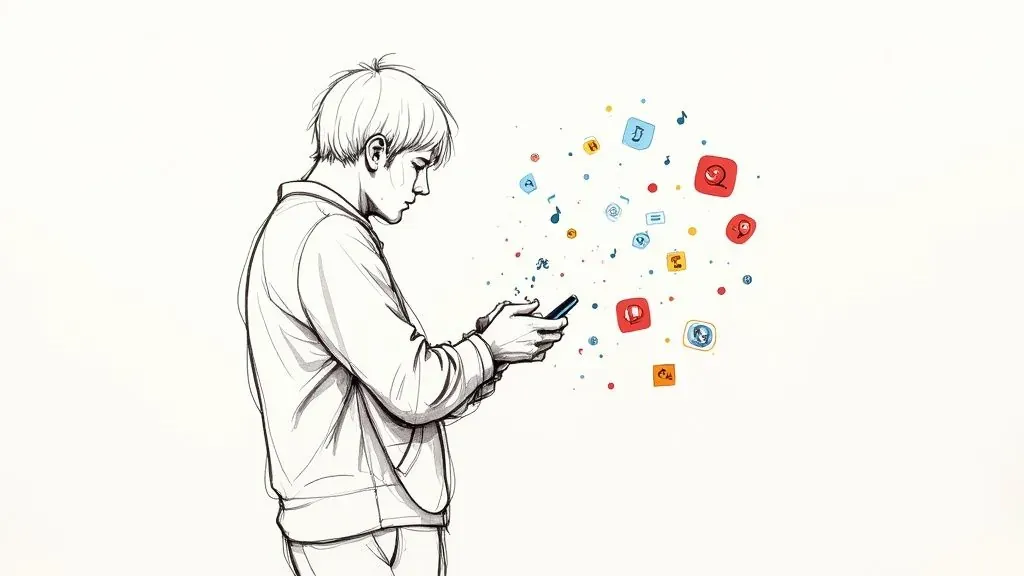
Start thinking of your social media profiles not as billboards, but as backstage passes. Every post, story, and live stream is a chance to give your audience an exclusive peek into your world. This creates a powerful sense of belonging that just listening on a streaming platform can never replicate.
The most powerful social media marketing for musicians boils down to one thing: turning followers into a family. When fans feel seen and valued, they become your best advocates, sharing your music simply because they genuinely believe in it.
This guide will give you actionable strategies to navigate this new landscape. We’re going to cover:
- Platform Selection: Pinpointing the social media channels where your ideal fans already hang out.
- Content Creation: Crafting posts that highlight your music, your personality, and your artistic journey.
- Community Building: Fostering genuine interactions that create loyal supporters for life.
- Effective Measurement: Tracking the metrics that actually matter for career growth, like streams and ticket sales.
Think of this guide as your roadmap to building a sustainable career using the most powerful tools available to artists today. Let’s get started.
Choosing the Right Platforms for Your Music
Trying to be everywhere at once on social media is a surefire way to burn out. A much smarter play is to focus your energy where it’ll actually make a difference. Think of it like booking a gig—you wouldn’t book your punk band at a quiet jazz club, right?
The secret is matching who you are as an artist with the platforms where your future fans are already hanging out. Instead of spreading yourself thin, the goal is to pick two or three key platforms and really own them.
This focused approach lets you build much deeper connections with your audience and create content that’s perfectly tuned for each platform’s unique vibe and algorithm.
Understanding the Main Stages
Every social media platform has its own personality. To really make them work, you need to get what each one is for. Let’s break it down with an analogy.
- TikTok as Your Street Performance: This is where people discover you. It’s all about raw, spontaneous, and viral moments. A killer 15-second clip can put your music in front of millions of people who’ve never heard of you.
- Instagram as Your Visual Album: Think of this as your curated art gallery. It’s where you build your brand’s aesthetic with high-quality photos and connect with your audience through slick Stories and Reels. It’s less about new discovery and more about going deeper with the fans you already have.
- YouTube as Your Documentary: This is the home for your long-form content, like official music videos. It’s your artist documentary, where you can show off your deeper artistry, share behind-the-scenes footage, and host live Q&As.
When you understand these roles, you can build a content plan that plays to each platform’s strengths. It ensures your message is always hitting the right note with the right audience. This is more important than ever, especially since video content now makes up nearly 90% of all internet traffic. To get a better handle on this, check out these great insights on social media promotion for musicians.
To make this even clearer, let’s compare the major players side-by-side. Think of this table as your guide to picking the best stage for your sound.
Platform Strategy for Musicians
| Platform | Best For | Key Content Formats | Audience Focus |
|---|---|---|---|
| TikTok | Viral discovery & reaching new, younger audiences. | Short-form videos (15-60 seconds), trends, challenges, duets. | Gen Z & Millennials, trend-followers. |
| Building a strong brand aesthetic & community engagement. | High-quality photos, Reels, Stories, Carousels, Live sessions. | Millennials & Gen Z, visually-driven fans. | |
| YouTube | Long-form storytelling & housing official music content. | Music videos, behind-the-scenes vlogs, live streams, tutorials. | Broad demographic, dedicated fans seeking deeper content. |
| Reaching an older demographic & community management. | Live videos, event promotion, text updates, photos. | Gen X & Baby Boomers, established fanbases. | |
| X (Twitter) | Real-time updates & direct fan interaction. | Short text posts, memes, quick video clips, polls. | Engaged fans who want direct, unfiltered access. |
Each platform offers a unique opportunity. Your job isn’t to master them all, but to choose the one or two that feel like a natural home for your music and your message.
Matching Your Vibe to the Platform
So, how do you decide? Let’s connect the dots between your music and the right platform. Are you a folk singer-songwriter who loves telling stories, or a DJ dropping high-energy beats? Your style points the way.
Ask yourself these questions:
- Where do my fans hang out? If you’re targeting a younger crowd, TikTok and Instagram are non-negotiable. If your audience skews a bit older, Facebook can still be a goldmine.
- What content do I actually *like* making? If you love filming quick, funny, or trend-based videos, TikTok will feel like home. If you’re more into polished visuals and in-depth stories, Instagram and YouTube are your best bet.
- What’s my main goal right now? Are you trying to get discovered? Sell merch? Promote a tour? Different platforms are built for different goals.
The most effective social media strategy isn’t about being everywhere. It’s about being in the right places with the right message, creating a powerful vibe that fans can instantly connect with.
The chart below shows just how massive the potential audience is on these platforms, highlighting where you can find the largest pools of listeners.
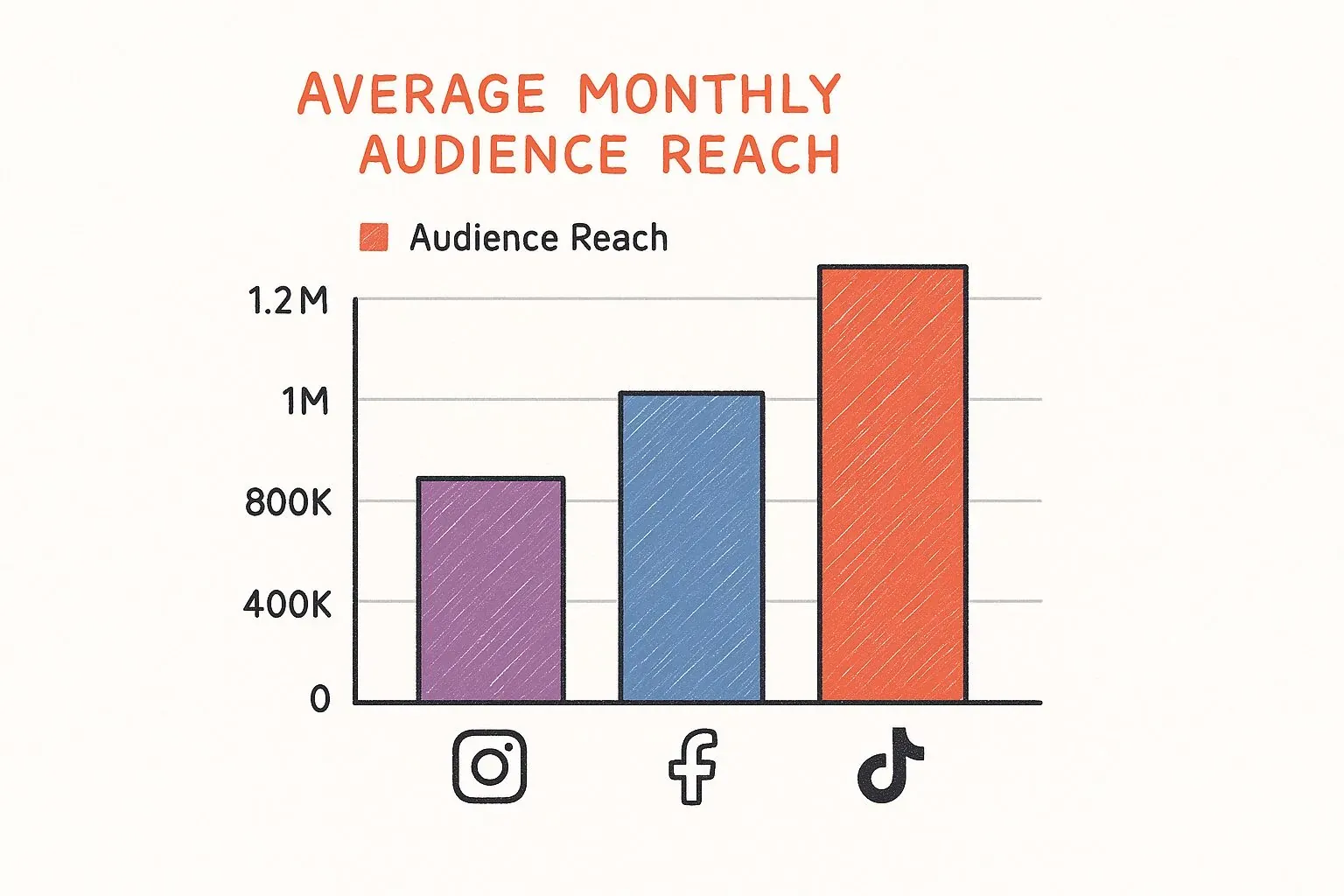
As you can see, TikTok currently offers insane potential for organic reach, making it an essential tool for getting discovered. Your final choice should be a balance between that potential reach and what feels authentic to you and the community you want to build. Choose wisely—it’s the foundation for your entire career.
Creating Content That Connects with Fans
We’ve all heard the generic advice to “post consistently.” That’s great, until you’re staring at a blank screen wondering what on earth to actually post. The secret to effective social media marketing for musicians isn’t just showing up; it’s about showing people the different sides of who you are, both as an artist and a human being.
Think of it this way: your social media shouldn’t feel like a constant sales pitch. It should feel like an invitation into your world. A great way to do this is to build your content around four core pillars: The Music, The Process, The Person, and The Community. By rotating through these, you create a narrative that turns casual listeners into true fans.
The Music Pillar: Showcasing Your Sound
This is your bread and butter, the reason anyone followed you in the first place. But so many artists just drop a “new song out now” post and call it a day. That’s a huge missed opportunity. You need to give fans new ways to experience the art they already love.
Here are a few ways to bring your music to life on social:
- Lyric Breakdowns: Hop on a Reel or TikTok and explain the story behind a really powerful line or verse. This adds a ton of emotional weight and gives fans a whole new appreciation for your songwriting.
- Acoustic Stripped-Downs: Post a raw, one-take acoustic version of a song that’s usually heavily produced. It’s a great way to showcase your raw talent and give the track a totally different vibe.
- Release Teasers: In the days leading up to a new release, build some hype. Share short, compelling clips of the track to get people excited for what’s coming.
The Process Pillar: The Making Of
People are endlessly fascinated by the creative journey. When you pull back the curtain and show them how the sausage gets made, it creates a powerful bond. Suddenly, you’re not just a finished product on Spotify; you’re a real, relatable creator.
Authentic behind-the-scenes content is your secret weapon. It’s raw, imperfect, and deeply human, reminding fans that there’s a real person with a real passion behind every song they stream.
Let people see the work that goes into your art:
- Songwriting Sessions: Share a quick video of you fumbling through a new chord progression or trying to nail a lyric. It doesn’t need to be polished—in fact, the rawness is what makes it so good.
- Studio Bloopers: A clip of a funny mistake or a moment of frustration in the studio can be incredibly endearing. It shows you don’t take yourself too seriously.
- Gear Walkthroughs: Film a short video showing off your favorite guitar, pedal, or piece of software and explain why you love it. Nerds will love it, and everyone else will get a peek into your world.
The Person Pillar: Beyond the Music
Your fans want to connect with you, the person. Sharing bits of your life outside of music builds a personality they can actually relate to. This is how you build a community that’s invested in your success as a human, not just your next song.
Simple ways to show who you are:
- Host a Q&A: Jump on Instagram Live or use the Stories sticker for a casual “Ask Me Anything” session. Let people ask about your hobbies, influences, or what you had for breakfast.
- Share Your Hobbies: Are you a big gamer, a coffee snob, or a die-hard hiker? Posting about your other passions makes you way more relatable.
- Tell Personal Stories: Talk about a challenge you overcame or a funny memory. Storytelling is one of the most powerful tools for connection, period.
The Community Pillar: Celebrating Your Fans
This is the most overlooked—and maybe the most important—pillar. Your social media has to be a two-way street, not a megaphone. When you actively celebrate and engage with your fans, you make them feel seen. You turn them into your biggest champions.
Make your fans the heroes of your story:
- Feature Fan Content: If someone draws fan art, covers one of your songs, or posts a photo in your merch, share it! Always credit them and show them some love.
- Respond to Comments: Make it a habit to reply to comments and DMs. It’s a small gesture that shows you’re actually listening and that you care.
- Run Interactive Polls: Let your fans have a say. Ask them to vote on the next merch design or which cover song you should play on your next livestream.
When you weave these four pillars together, you’re not just posting content; you’re telling a complete story. It’s a strategy that builds a real, loyal community, one authentic post at a time.
Building a Community, Not Just a Following
A massive follower count might look good on paper, but it doesn’t pay the bills or build a lasting career. The real power on social media kicks in when you stop chasing followers and start building a genuine community.
What’s the difference? A follower is passive. A community member is emotionally invested. They’re an active participant in your story.
This isn’t just semantics—it’s everything. Followers might stream your new song if they see it. Community members buy the vinyl, share your tour dates with three friends, and scream the lyrics at your shows. They feel like they’re part of something, and that feeling is one of the most valuable things you can build as an artist.
So, how do you make that happen? It all starts with turning your social media from a megaphone into a conversation.
Foster Genuine Interaction and Connection
Real engagement is the foundation of any community. It’s about showing up consistently and making your fans feel like you actually see them. It’s the small, daily actions that prove there’s a real human behind the account who appreciates their support.
Start simple: make it a habit to reply to as many comments and DMs as you can. It’s a small gesture, but it means the world to a fan. Beyond that, start pulling your audience into your world with more interactive content.
- Create a Unique Fan Hashtag: Give your crew a name and a digital hangout spot. Something simple like #TheMidnightTribe or #[YourBandName]Crew gives them a way to find each other and lets you easily see and share their posts.
- Run Interactive Polls: Let your fans have a say. Use Instagram or X polls to get their vote on a new t-shirt design, the next cover song you should learn, or which track deserves a stripped-down acoustic version.
- Host Regular Q&A Sessions: Jump on Instagram Live or use the Q&A sticker in your Stories to answer questions directly. It completely breaks down the barrier between you and your fans, making you way more relatable.
Your goal is to create a space where fans feel comfortable not just consuming your content, but contributing to it. This participatory culture is what separates a passive audience from a true community.
Harness the Power of User-Generated Content
One of the best signs of a healthy, growing community is when fans start creating user-generated content (UGC). This is the holy grail: your fans using your music as the soundtrack to their own lives. Encouraging this is a powerful way to connect with people and grow your reach at the same time.
Next time you drop a new track, don’t just tell people to listen—tell them to use it. Create a simple prompt or challenge for TikTok or Instagram Reels. It could be a dance, a specific camera angle, or just asking them to create a video that fits the song’s vibe.
And when they do it, celebrate them! Repost your favorites to your Stories, create a dedicated “Fan Cam” Highlight on your Instagram profile, or duet their TikToks. This not only makes them feel seen but it also shows everyone else that you’re paying attention, which encourages more people to join in. This kind of social proof is one of the most powerful music business marketing tips out there because it builds momentum that feels completely real and organic.
Identify and Reward Your Superfans
In every community, you’ll find an inner circle of your most dedicated supporters—your superfans. These are the people who comment on every post, show up to every livestream, and probably know the lyrics to your B-sides better than you do. Finding these people and giving them a little extra love can turn them into advocates for life.
Pay attention to the patterns. Who’s always the first to like your posts? Who shares your music in their Stories without you even asking? Make a mental list of these ride-or-dies.
Once you know who they are, find small ways to make them feel special:
- Use Instagram’s “Close Friends” Feature: Add your top fans to your Close Friends list and share stuff just for them. It could be a 15-second snippet of a new demo, a behind-the-scenes photo, or a first look at a new music video.
- Create a Private Fan Group: Think about starting a dedicated group on a platform like Discord or Geneva. This gives your most loyal fans a direct line to you and a place to connect with each other, making them feel even more invested.
When you put time and energy into your community, you’re not just building an audience. You’re building an army of people who are genuinely rooting for you to win.
Using Paid Ads to Amplify Your Sound
Relying only on your existing followers to get the word out about new music is like playing to a packed house with a broken microphone. Sure, your die-hard fans in the front row will hear you, but the message won’t ever reach the back of the room—let alone the new people waiting to discover you.
This is where paid ads come in. Think of them as your sound system, amplifying your music across the entire digital venue.
In the early days of social media, you could get pretty far on organic reach alone. Those days are long gone. Today’s platforms are essentially “pay-to-play,” with algorithms that heavily favor paid content. The reality is, organic reach for artists has hit rock bottom, making it almost impossible to connect with fresh, engaged audiences without putting some money behind your posts.
This isn’t a sign of failure; it’s just that the rules of the game have changed. Paid ads aren’t an optional extra anymore. They’re a core part of your toolkit for cutting through the noise.
Starting Smart with a Small Budget
The idea of running ads can feel overwhelming, especially if you don’t have a label-sized bank account. But here’s the good news: you don’t need thousands of dollars to get real results.
Even a small, strategic budget of $5-$10 per day can make a massive difference. The trick is knowing exactly who you’re trying to reach and what you want them to do.
Precision is everything. Instead of spraying your ad to a huge, generic audience, you can focus your budget on a super-specific group of people who are already primed to love your sound. This targeted approach means every dollar is spent efficiently, reaching potential fans instead of getting lost in the digital static.
Think of paid ads not as an expense, but as a strategic investment in finding your next superfan. A small, focused campaign is far more powerful than a large, unfocused one.
Setting Up a High-Impact Ad Campaign
Let’s walk through a simple, high-impact campaign for your next single release. The goal is straightforward: drive listeners directly to your track on Spotify and turn ad views into streams.
Here’s a simple three-step process to get it done:
- Define a Clear Objective: When you set up an ad on a platform like Meta (for Facebook and Instagram), it’ll ask for your campaign objective. You’ll want to choose “Traffic” and set the destination URL to your song’s Spotify link. This tells the algorithm exactly what you want: clicks to that specific page. Simple.
- Target a Lookalike Audience: This is your secret weapon. Instead of just guessing who might like your music, you can tell the platform to find people who are similar to your existing fans. A killer strategy is to target fans of three to five other artists with a sound similar to yours. For instance, if you make indie-folk music, you could target fans of Bon Iver, The Lumineers, and Fleet Foxes.
- Use Compelling Creative: Your ad’s visual has to stop the scroll. Use a high-quality, 15-second vertical video clip—maybe from your music video or a live performance—that really captures the energy of the track. Slap some bold, clear text on the screen that says something like “New Music Out Now” and include a direct call to action like “Listen on Spotify.”
By following these steps, you’re creating a laser-focused campaign that sends the right people to the right place. Paid ads are one of the https://www.artist.tools/post/9-best-way-to-promote-your-music-in-2025-spotify-beyond because they give you the control to bypass the algorithmic gatekeepers and connect directly with your future audience.
Measuring What Actually Grows Your Career

Likes are nice, but they don’t sell tickets. A huge follower count looks impressive, but it doesn’t guarantee a single stream on Spotify. These numbers are what we call vanity metrics—they feel good to look at, but they do almost nothing to build a sustainable career.
The real key is learning to track the numbers that actually connect to your bottom line. You have to start thinking like your own data analyst. Your job isn’t to celebrate every new follower, but to understand which social media posts are actually driving people to your music, your merch store, and your shows.
This shift in focus is what separates artists who are just popular online from those who are building a real business. Instead of getting hyped about a video that got 100,000 views, you need to ask the real question: how many of those viewers actually clicked the link in your bio?
Moving From Vanity to Actionable Metrics
To start measuring what really matters, you have to know where to look. Every platform—from Instagram Insights to TikTok Analytics—has a built-in dashboard that’s a goldmine of data. The trick is to ignore the flashy numbers at the top and dig deeper for the metrics that show true fan investment.
These are the numbers that prove your content isn’t just being seen—it’s inspiring people to do something.
Here are the key metrics you should be tracking:
- Click-Through Rate (CTR): This is the percentage of people who saw your post and then clicked the link in your bio. It’s the single best indicator of whether your content is successfully pushing traffic to your Spotify, website, or ticket page.
- Shares: When someone shares your post, they’re giving a personal recommendation to their entire network. This is a far more powerful signal than a simple like. It’s word-of-mouth in the digital age.
- Saves: A save is a huge sign of value. It means someone found your content so compelling they want to come back to it later. For a musician, this could be a clip of an unreleased song or an announcement for tour dates.
By focusing on clicks, shares, and saves, you shift from measuring passive consumption to measuring active engagement. These are the metrics that show you’re not just making noise; you’re making an impact that can lead to real income.
Key Performance Indicators for Musicians
It’s easy to get lost in the sea of social media data. This table breaks down the most important metrics, helping you distinguish between the numbers that just look good (vanity) and the numbers that actually drive your career forward (actionable).
| Metric | What It Tells You | Why It Matters for Musicians |
|---|---|---|
| Follower Count | The total number of accounts that follow you. | A classic vanity metric. A large following doesn’t guarantee engagement or sales. |
| Likes/Reactions | How many people tapped the “like” button on a post. | Another vanity metric. It shows passive approval but little active interest. |
| Reach/Impressions | How many unique accounts saw your post (reach) vs. the total number of times it was seen (impressions). | Useful for gauging brand awareness, but it’s a vanity metric unless it leads to a specific action. |
| Click-Through Rate (CTR) | The percentage of viewers who clicked a link in your post or bio. | An actionable metric. This directly measures your ability to drive traffic to Spotify, merch stores, or ticket sites. |
| Shares | The number of times your post was shared to someone’s story or sent via direct message. | A powerful actionable metric. Shares are digital word-of-mouth and expand your reach organically. |
| Saves | The number of times users saved your post to a private collection. | A key actionable metric. It signals your content is valuable enough for someone to revisit. |
| Comments | The number of comments on a post. | Can be both. Meaningful conversations are actionable, but spam or generic comments are vanity. |
Focusing on the actionable metrics in this table will give you a much clearer picture of what’s working and what’s not.
Connecting Social Media to Career Growth
Once you start tracking these actionable metrics, you can connect the dots between your social media strategy and your actual career goals.
For instance, if you notice your “behind-the-song” videos consistently get the most saves and drive the highest CTR to Spotify, that’s a crystal-clear signal from your audience. It’s a data-driven instruction to make more of that exact content.
This approach lets you double down on what works and stop wasting energy on what doesn’t. You’ll make smarter decisions based on real fan behavior, not just chase the latest viral trend. Ultimately, understanding these numbers is a critical step in learning how to make money as a musician in a super crowded industry.
You Asked, We Answered
Diving into social media as a musician can feel like learning a whole new instrument. There are a lot of questions that come up along the way. Here are some of the most common ones we hear, with straight-up, practical answers to help you build your strategy with confidence.
How Often Should a Musician Post on Social Media?
Forget what you’ve heard about posting every single day. When it comes to social media, consistency will always beat frequency.
It’s way more effective to share 3-5 high-quality posts a week that actually get people talking than it is to churn out seven forgettable updates just to hit a quota. The goal is to create a sustainable schedule you can stick with for the long haul, not burn yourself out in a month. Peek at your analytics to see when your audience is online, then schedule your best stuff for those peak hours to get the most mileage out of every post.
Do I Need a Big Budget for Social Media Ads?
Not at all. You can get some serious traction with a small, laser-focused ad budget. Seriously, even just $5 to $10 a day can move the needle in a big way if you know who you’re talking to.
The secret is precision. Don’t waste your money trying to reach everyone. Instead, target fans of three to five artists who sound a lot like you. A small, targeted spend with a clear goal—like getting more streams on Spotify—is way more powerful than a huge budget thrown at a generic audience.
Think of a small ad budget as a spotlight in a dark room. It’s not about lighting up the entire space, but about perfectly illuminating the one person you know will connect with your music.
This approach makes sure every dollar you spend is working its hardest to find your next superfan.
What Is the Best Way to Handle Negative Comments?
The fastest and most effective move is to simply ignore and delete any hateful or spammy comments. Don’t even think about it. Engaging with trolls just gives them the attention they want, drains your creative energy, and pollutes the space you’re trying to build for your real fans.
If you get a piece of criticism that feels genuine or constructive, you can choose to reply politely if it feels right. Or you can just let it go. Remember, your social media is your space, your stage. You get to decide what the vibe is. Focus your energy on the people who show up to support you.
Should I Post the Same Video on TikTok and Instagram Reels?
You can absolutely start with the same video, but you’ll want to tweak it for each platform. The absolute bare minimum? Remove the watermark from whatever app you created it on. Algorithms on competing platforms are notorious for burying content that has another app’s logo on it.
To really get the best results, spend an extra two minutes customizing a few things:
- Captions: Write something fresh. The vibe and length of a good TikTok caption is different from an Instagram one.
- Hashtags: Research what’s actually trending on each app. Don’t just copy and paste.
- Audio: If you can, use a trending sound that’s native to that platform. It’s a huge visibility booster.
That little bit of customization makes a huge difference. A video that pops off on TikTok might fall completely flat on Reels if you don’t adapt it.
At artist.tools, we build the tools you need to connect the dots between your social media hustle and real career growth. From analyzing playlist quality to tracking your streaming performance, our platform gives you the data and insights to make smarter marketing moves. Take control of your music career today by exploring our full suite of tools at https://artist.tools.