

Legit
SoundCampaign
Is SoundCampaign legit? Our 2026 review covers dynamic pricing, paid curator reviews, protection credits, real campaign results, and risks.
Placed through SoundCampaign?
Our scorecard
Reviewed October 2026
- Good:What you pay
- Dynamic quote, about $100 on average
- Good:What you get
- Curator reviews, no guaranteed adds
- Good:Transparency
- Clear process and campaign reports
- –Mixed:Refunds
- Credit (not cash) for unreviewed pitches
- –Mixed:Bot risk
- Low: playlists screened, but check each one
soundcampaign.comVisit SoundCampaign
Is SoundCampaign Legit?
SoundCampaign is a legitimate music-promotion service that pitches songs to independent Spotify curators and also offers TikTok and Meta campaigns. Its process is clear, but playlist results vary and a reviewed rejection is not refundable.
Is SoundCampaign legit?
Yes. SoundCampaign is a legitimate paid-review platform. Artists pay to have a track considered by independent Spotify playlist curators; the curators provide feedback and make their own placement decision.
The company also offers TikTok creator campaigns and Meta advertising, but its best-known product is Spotify curator pitching. SoundCampaign does not promise a placement, a stream total, or a refund simply because a campaign performs poorly.
That makes the company legitimate without making every campaign a good investment. Results depend on the song, genre selection, available curators, and the actual activity of any playlists that accept it.
How SoundCampaign works
An artist creates a campaign and submits a track for A&R review. After approval, the artist selects genres and a budget. SoundCampaign then estimates how many relevant curators can be reached.
Curators are paid to review music and consider it for their playlists. Current curator rewards range from $1 to $14 per review based on the playlist’s rank. Curators are not paid for a guaranteed add.
Spotify campaigns run for up to 14 days. Partial results arrive during the campaign and the final report appears after it ends.
SoundCampaign pricing in September 2026
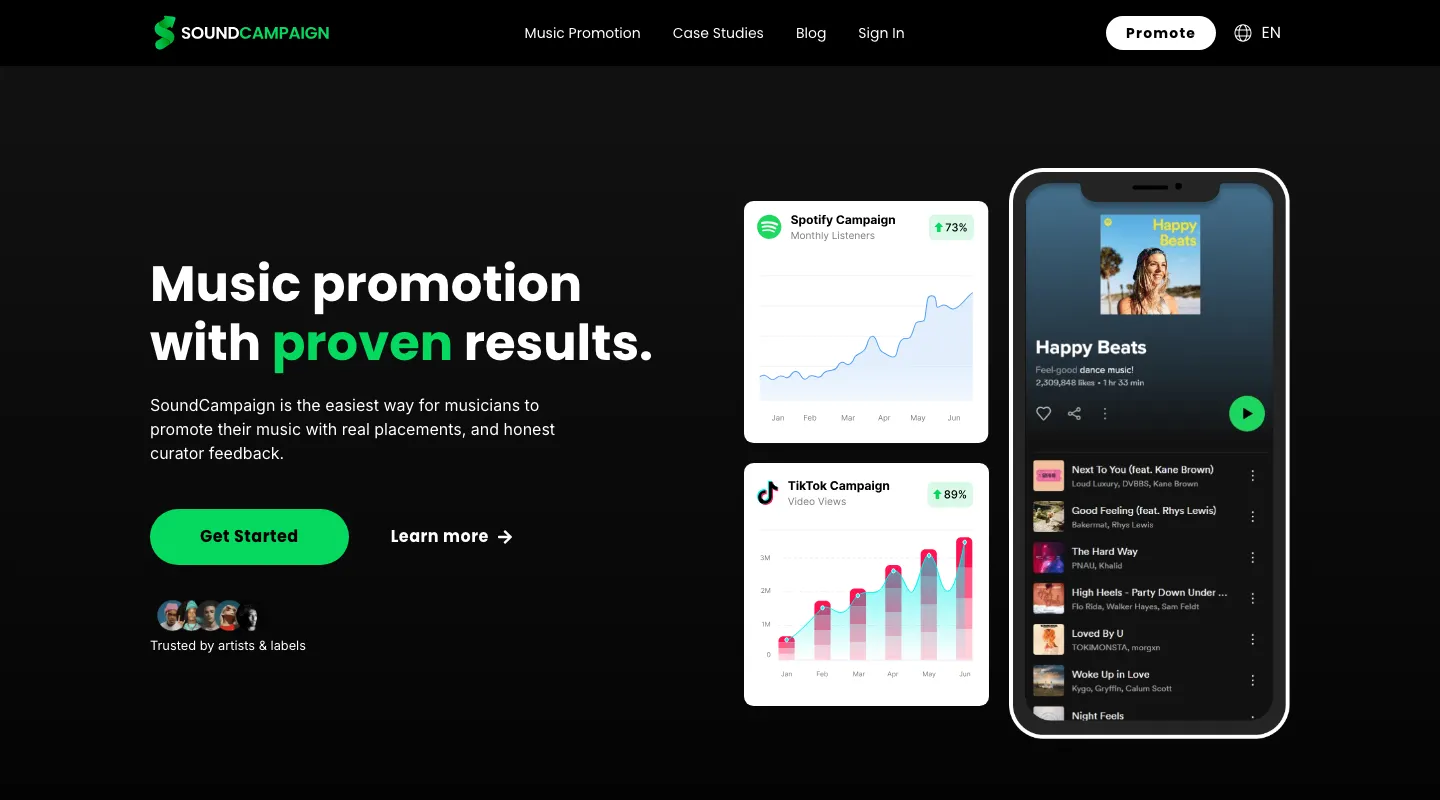
Pricing is dynamic. SoundCampaign says the quote depends on selected genres and the number of available playlist curators. Its public pricing page describes roughly $100 as an average campaign cost, but an artist must submit the track and receive A&R approval before seeing the specific reach and budget options.
Payment is one-time rather than a subscription.
Because the number of matching curators varies by genre, artists should evaluate the actual quote rather than treating the public average as a standard package.
What the Artist Protection Program covers
SoundCampaign credits the unspent portion of a campaign when a curator does not review the song. The credit appears in the account after the campaign and can be used for a later Spotify or TikTok campaign.
It is not a cash refund. It also does not apply when a curator reviews the song but declines it, or when a placement generates fewer streams than the artist hoped.
That protection is useful, but the name should not be read as a performance guarantee.
What an independent campaign found
Jon Anderson of Two Story Melody ran a SoundCampaign test in 2023. He spent $155 after the dashboard estimated that the song could reach about 21 curators. Ten curators reviewed it, two playlists added it, and the placements produced 188 streams in the measured window, about $0.83 per stream.
He described the campaign result as poor but the process as solid. He also inspected the playlists and found them apparently natural rather than obviously botted. His conclusion was that the company appeared legitimate while the value of his campaign was disappointing.
That is one song and an older test, not a universal benchmark. It is still useful because it shows the exact risk in this model: a real review process and real-looking playlists can produce a weak financial outcome.
SoundCampaign pros
- Clear paid-review model with no guaranteed-placement promise.
- Dynamic reach based on genre and available curators.
- Written curator feedback and campaign reporting.
- Account credit when a curator does not review.
- The company says it screens playlists and investigates complaints.
- Spotify, TikTok, and Meta campaign types are available from one provider.
SoundCampaign drawbacks
- Artists do not select each individual playlist.
- Genre selection is important and can be difficult for hybrid music.
- A reach estimate is not the number of placements.
- Reviewed rejections and weak performance are non-refundable.
- Account credit keeps the money inside the platform.
- A legitimate playlist can still have little active listening.
How to reduce the risk
Start with the smallest campaign that gives the song a meaningful genre match. Avoid stretching the genre selection just to increase the number of reachable curators.
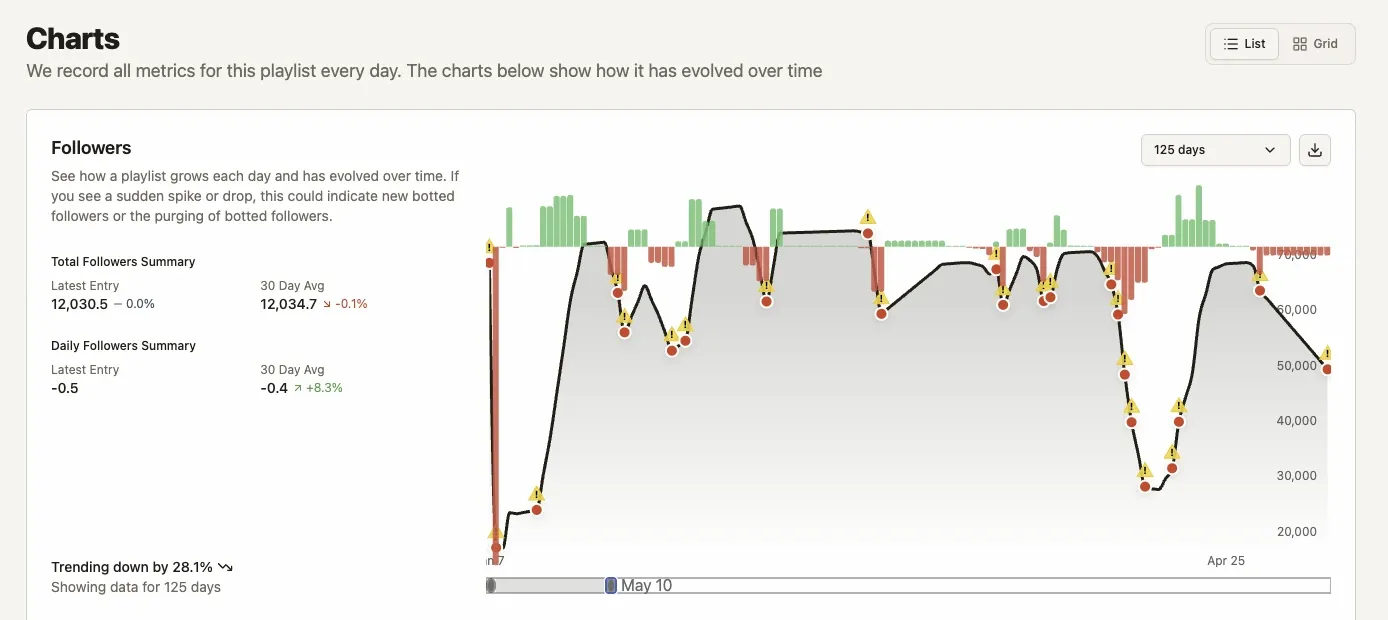
When placements arrive, check them independently with the Artist.Tools Playlist Analyzer and Artificial Streaming checker. Look for follower spikes, weak listener-to-follower ratios, broad or incoherent curation, unusual countries, and a mismatch between playlist size and actual Spotify for Artists traffic.
Then measure saves, profile visits, follows, and repeat listeners. Streams without continued interest are exposure, not fan growth.
Artists who want direct control over each curator should also review our SubmitHub comparison. Those models solve different problems.
Who should use SoundCampaign?
SoundCampaign can fit an artist with a polished Spotify release, a clearly defined genre, and a budget that can tolerate a variable result. The interface and managed distribution reduce manual work.
It is less attractive for an artist who needs to approve every destination, expects royalties to repay the campaign, or has a song that sits between several niches.
Final verdict
SoundCampaign is legit. Its model pays curators for reviews rather than guaranteed adds, and its protection program credits pitches that are never reviewed.
The uncertain part is value. Independent testing has shown that a well-run process can still yield only modest streams. Treat the campaign as a controlled test, choose genres conservatively, and verify every placement before calling it a win.
